• Pilgrims offer prayer.
    Pilgrims offer prayer.
  • The Kaaba in 1975.
    The Kaaba in 1975.
  • Pilgrims rest during Haj 1975.
    Pilgrims rest during Haj 1975.
  • Mecca was a different place then, more mountainous, no skyscrapers, strewn with traditional homes along its terrain. Besides the actual risks from illnesses, fires, and stampedes, the trip to the holy city was riddled with difficulties and danger, including highwaymen and scam artists.
    Mecca was a different place then, more mountainous, no skyscrapers, strewn with traditional homes along its terrain. Besides the actual risks from illnesses, fires, and stampedes, the trip to the holy city was riddled with difficulties and danger, including highwaymen and scam artists.
  • Haj pilgrim's tent city around Mecca in 1975.
    Haj pilgrim's tent city around Mecca in 1975.
  • In 1975 the weather was cool during Haj with a million and a half pilgrims, compared to today’s three million plus worshippers.
    In 1975 the weather was cool during Haj with a million and a half pilgrims, compared to today’s three million plus worshippers.
  • Every year Saudi Arabia spends millions on expansions to accommodate the growing number of pilgrims.
    Every year Saudi Arabia spends millions on expansions to accommodate the growing number of pilgrims.
  • The five star hotels around the Grand Mosque, the shops and commercialisation of Mecca has transformed a once simple town into a bustling and expensive modern city.
    The five star hotels around the Grand Mosque, the shops and commercialisation of Mecca has transformed a once simple town into a bustling and expensive modern city.
  • A haj pilgrim estimates it cost him about Dh1000 per person to do Haj in1975. Costs have gone up at least twenty five times since then.
    A haj pilgrim estimates it cost him about Dh1000 per person to do Haj in1975. Costs have gone up at least twenty five times since then.
  • Pilgrims who have gone back to Mecca after many years say they barely recognise it from these photographs of nearly 40 years ago.
    Pilgrims who have gone back to Mecca after many years say they barely recognise it from these photographs of nearly 40 years ago.

The month of Hajj: a Muslim pilgrimage and the first 10 days


  • English
  • Arabic

For the second year in a row, the annual pilgrimage of Hajj is being transformed by the coronavirus.

Before the pandemic, vast crowds dressed in white, unstitched robes circled the black Kaaba, chanting in unison for hours on end: “Allah, here I am. You have no equal, here I am. Verily, all praise and blessings are Yours and all sovereignty. You have no equal.”

With internal restrictions and measures to curb the spread of the coronavirus in place, a decision was made to allow only Saudi Arabian citizens and residents of the kingdom to perform the pilgrimage this year under a strict set of regulations and permits.

When does Hajj begin?

Hajj starts on the ninth day of Dhu Al Hijja (That of Hajj) under the Islamic lunar calendar, corresponding this year with July 11 on the Gregorian calendar.

The first 10 days leading to the pilgrimage carry significant and meaningful milestones for Muslims in the 12th and final month of their lunar year.

In Dhu Al Hijja, and the three other sacred months of the year, Muslims are banned from going to war except as an act of self-defence, and are encouraged to engage in more forms of worship than usual.

After Islam was established and the people of Makkah entered the faith, Prophet Mohammed and his companions performed Hajj on this month.

During that pilgrimage, Muslims witnessed the ideal application of the rituals of Hajj and attempt to mimic Prophet Mohammed's enactment to this day.

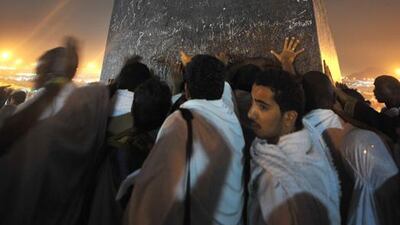
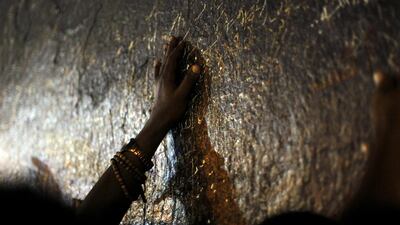
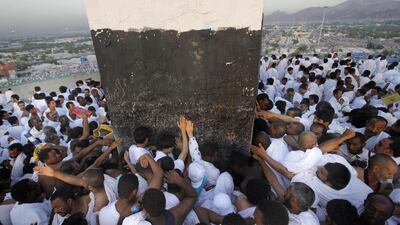
  • Muslim pilgrims touch the rock atop of Mount Arafat, near the holy city of Mecca, as they pray ahead of the haj main ritual, on October 14, 2013. AFP Photo/Fayez Nureldine
    Muslim pilgrims touch the rock atop of Mount Arafat, near the holy city of Mecca, as they pray ahead of the haj main ritual, on October 14, 2013. AFP Photo/Fayez Nureldine
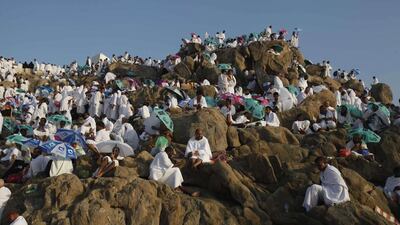
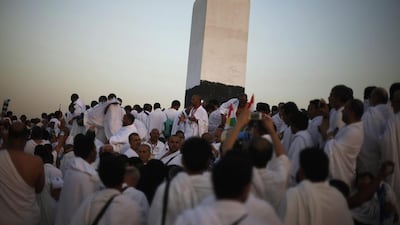
  • Muslim pilgrims gather atop Mount Mercy on the plains of Arafat during the peak of the annual haj pilgrimage, near the holy city of Mecca. Reuters /Ibraheem Abu Mustafa
    Muslim pilgrims gather atop Mount Mercy on the plains of Arafat during the peak of the annual haj pilgrimage, near the holy city of Mecca. Reuters /Ibraheem Abu Mustafa
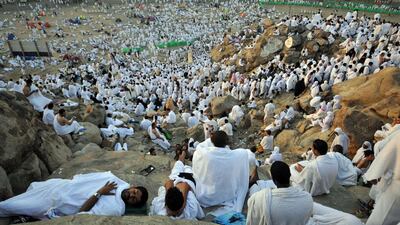
  • Pilgrims in their hundreds of thousands thronged Mount Arafat in Saudi Arabia from early morning for the climax of the annual hajj pilgrimage, arriving on foot, by train or in vehicles. AFP Photo /Fayez Nureldine
    Pilgrims in their hundreds of thousands thronged Mount Arafat in Saudi Arabia from early morning for the climax of the annual hajj pilgrimage, arriving on foot, by train or in vehicles. AFP Photo /Fayez Nureldine
  • A Muslim pilgrim touches a marker at the top of a rocky hill called the Mountain of Mercy, on the Plain of Arafat. AP Photo/Amr Nabil
    A Muslim pilgrim touches a marker at the top of a rocky hill called the Mountain of Mercy, on the Plain of Arafat. AP Photo/Amr Nabil
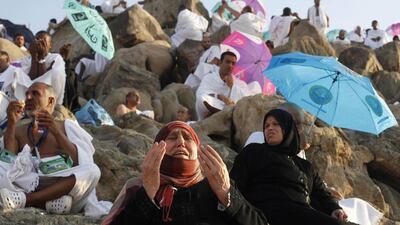
  • Muslim pilgrims pray on a rocky hill called the Mountain of Mercy, some touching a marker at its peak, on the Plain of Arafat, near the holy city of Mecca, Saudi Arabia. AP Photo/Amr Nabil
    Muslim pilgrims pray on a rocky hill called the Mountain of Mercy, some touching a marker at its peak, on the Plain of Arafat, near the holy city of Mecca, Saudi Arabia. AP Photo/Amr Nabil
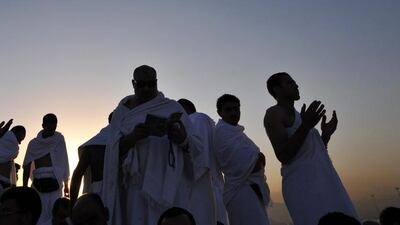
  • A Muslim pilgrim prays atop Mount Mercy on the plains of Arafat during the peak of the annual haj pilgrimage, near the holy city of Mecca. Reuters /Ibraheem Abu Mustafa
    A Muslim pilgrim prays atop Mount Mercy on the plains of Arafat during the peak of the annual haj pilgrimage, near the holy city of Mecca. Reuters /Ibraheem Abu Mustafa
  • Muslim pilgrims rest as others climb Mount Arafat, near the holy city of Mecca, ahead of the haj main ritual. AFP Photo/Fayez Nureldine
    Muslim pilgrims rest as others climb Mount Arafat, near the holy city of Mecca, ahead of the haj main ritual. AFP Photo/Fayez Nureldine
  • A Muslim pilgrim prays atop Mount Mercy on the plains of Arafat during the peak of the annual haj pilgrimage. Reuters/Ibraheem Abu Mustafa
    A Muslim pilgrim prays atop Mount Mercy on the plains of Arafat during the peak of the annual haj pilgrimage. Reuters/Ibraheem Abu Mustafa
  • A Muslim pilgrim helps another climb Mount Mercy on the plains of Arafat during the peak of the annual haj pilgrimage. Reuters / Ibraheem Abu Mustafa
    A Muslim pilgrim helps another climb Mount Mercy on the plains of Arafat during the peak of the annual haj pilgrimage. Reuters / Ibraheem Abu Mustafa
  • Muslim pilgrims climb Mount Mercy on the plains of Arafat during the peak of the annual haj pilgrimage, near the holy city of Mecca. Reuters/Ibraheem Abu Mustafa
    Muslim pilgrims climb Mount Mercy on the plains of Arafat during the peak of the annual haj pilgrimage, near the holy city of Mecca. Reuters/Ibraheem Abu Mustafa
  • Muslim pilgrims gather atop Mount Mercy on the plains of Arafat during the peak of the annual haj pilgrimage. Reuters/Ibraheem Abu Mustafa
    Muslim pilgrims gather atop Mount Mercy on the plains of Arafat during the peak of the annual haj pilgrimage. Reuters/Ibraheem Abu Mustafa

The first 10 days

Mentioned in the Quran for their importance, Muslim scholars have placed a tremendous weight on good deeds performed during the first 10 days of the month.

Fasting from dawn until dusk is one of the most beloved acts of worship in that period. In contrast to the month of Ramadan, this fast is not mandatory but is 'mustahab', or recommended.

The majority of practicing Muslims fast on the day that pilgrims ascend the mount of Arafat – which will fall on Monday, July 19 this year.

This marks the start of the journey of Hajj, where pilgrims head to the mount where they remain until sunset.

Prayers are believed to be answered on this day, which is considered one of the holiest days of the Islamic year.

During the first third of the month, Muslims recite the Quran, and dhikr [praising Allah]. Giving alms, and for Makkah's residents, providing supplies for the pilgrims are among the most virtuous deeds.

During Hajj, pilgrims are not encouraged to fast because of the difficulty some might find in performing all of the tenets of the pilgrimage.

Eid Al Adha

Day 10 of Dhu Al Hijjah marks the first day of Eid Al Adha.

The name Eid Al Adha is derived from the Arabic word Al Udhiya, which means animal sacrifice.

Each year during these days, Muslims who have the financial means sacrifice their best halal domestic animals – usually a cow, camel, goat, sheep or ram depending on the region – as a symbol of the Prophet Abraham's willingness to sacrifice his only son, Ismail.

The meat is typically divided among the executor and their family, and those in need. A person can also arrange for the sacrifice to be held in another region or country where meat is less abundant or cheaper.

Unlike Eid Al Fitr, which marks the end of Ramadan, Eid Al Adha is four days long. On the first day, Eid prayers are usually performed in the morning before the sacrifice is carried out.

But this year as countries impose different measures regarding congregational prayers, it is unclear whether socially distanced Eid prayers will be permitted.


Company Profile

Name: JustClean

Based: Kuwait with offices in other GCC countries

Launch year: 2016

Number of employees: 130

Sector: online laundry service

Funding: $12.9m from Kuwait-based Faith Capital Holding

Avatar: Fire and Ash

Director: James Cameron

Starring: Sam Worthington, Sigourney Weaver, Zoe Saldana

Rating: 4.5/5

Labour dispute

The insured employee may still file an ILOE claim even if a labour dispute is ongoing post termination, but the insurer may suspend or reject payment, until the courts resolve the dispute, especially if the reason for termination is contested. The outcome of the labour court proceedings can directly affect eligibility.


- Abdullah Ishnaneh, Partner, BSA Law 

APPLE IPAD MINI (A17 PRO)

Display: 21cm Liquid Retina Display, 2266 x 1488, 326ppi, 500 nits

Chip: Apple A17 Pro, 6-core CPU, 5-core GPU, 16-core Neural Engine

Storage: 128/256/512GB

Main camera: 12MP wide, f/1.8, digital zoom up to 5x, Smart HDR 4

Front camera: 12MP ultra-wide, f/2.4, Smart HDR 4, full-HD @ 25/30/60fps

Biometrics: Touch ID, Face ID

Colours: Blue, purple, space grey, starlight

In the box: iPad mini, USB-C cable, 20W USB-C power adapter

Price: From Dh2,099

COMPANY PROFILE
Name: Kumulus Water
 
Started: 2021
 
Founders: Iheb Triki and Mohamed Ali Abid
 
Based: Tunisia 
 
Sector: Water technology 
 
Number of staff: 22 
 
Investment raised: $4 million 
Multitasking pays off for money goals

Tackling money goals one at a time cost financial literacy expert Barbara O'Neill at least $1 million.

That's how much Ms O'Neill, a distinguished professor at Rutgers University in the US, figures she lost by starting saving for retirement only after she had created an emergency fund, bought a car with cash and purchased a home.

"I tell students that eventually, 30 years later, I hit the million-dollar mark, but I could've had $2 million," Ms O'Neill says.

Too often, financial experts say, people want to attack their money goals one at a time: "As soon as I pay off my credit card debt, then I'll start saving for a home," or, "As soon as I pay off my student loan debt, then I'll start saving for retirement"."

People do not realise how costly the words "as soon as" can be. Paying off debt is a worthy goal, but it should not come at the expense of other goals, particularly saving for retirement. The sooner money is contributed, the longer it can benefit from compounded returns. Compounded returns are when your investment gains earn their own gains, which can dramatically increase your balances over time.

"By putting off saving for the future, you are really inhibiting yourself from benefiting from that wonderful magic," says Kimberly Zimmerman Rand , an accredited financial counsellor and principal at Dragonfly Financial Solutions in Boston. "If you can start saving today ... you are going to have a lot more five years from now than if you decide to pay off debt for three years and start saving in year four."

Where to donate in the UAE

The Emirates Charity Portal

You can donate to several registered charities through a “donation catalogue”. The use of the donation is quite specific, such as buying a fan for a poor family in Niger for Dh130.

The General Authority of Islamic Affairs & Endowments

The site has an e-donation service accepting debit card, credit card or e-Dirham, an electronic payment tool developed by the Ministry of Finance and First Abu Dhabi Bank.

Al Noor Special Needs Centre

You can donate online or order Smiles n’ Stuff products handcrafted by Al Noor students. The centre publishes a wish list of extras needed, starting at Dh500.

Beit Al Khair Society

Beit Al Khair Society has the motto “From – and to – the UAE,” with donations going towards the neediest in the country. Its website has a list of physical donation sites, but people can also contribute money by SMS, bank transfer and through the hotline 800-22554.

Dar Al Ber Society

Dar Al Ber Society, which has charity projects in 39 countries, accept cash payments, money transfers or SMS donations. Its donation hotline is 800-79.

Dubai Cares

Dubai Cares provides several options for individuals and companies to donate, including online, through banks, at retail outlets, via phone and by purchasing Dubai Cares branded merchandise. It is currently running a campaign called Bookings 2030, which allows people to help change the future of six underprivileged children and young people.

Emirates Airline Foundation

Those who travel on Emirates have undoubtedly seen the little donation envelopes in the seat pockets. But the foundation also accepts donations online and in the form of Skywards Miles. Donated miles are used to sponsor travel for doctors, surgeons, engineers and other professionals volunteering on humanitarian missions around the world.

Emirates Red Crescent

On the Emirates Red Crescent website you can choose between 35 different purposes for your donation, such as providing food for fasters, supporting debtors and contributing to a refugee women fund. It also has a list of bank accounts for each donation type.

Gulf for Good

Gulf for Good raises funds for partner charity projects through challenges, like climbing Kilimanjaro and cycling through Thailand. This year’s projects are in partnership with Street Child Nepal, Larchfield Kids, the Foundation for African Empowerment and SOS Children's Villages. Since 2001, the organisation has raised more than $3.5 million (Dh12.8m) in support of over 50 children’s charities.

Noor Dubai Foundation

Sheikh Mohammed bin Rashid Al Maktoum launched the Noor Dubai Foundation a decade ago with the aim of eliminating all forms of preventable blindness globally. You can donate Dh50 to support mobile eye camps by texting the word “Noor” to 4565 (Etisalat) or 4849 (du).

Updated: July 11, 2021, 8:42 PM