



Worshippers have shared their joy at being part of a historic papal visit to the Arabian Gulf's largest Roman Catholic church.
Pope Francis thanked the people of Bahrain for their care for the country's Catholic contingent during an address at Our Lady of Arabia Cathedral on Friday evening.
He took part in a prayer for peace to round off the second day of his milestone tour of the kingdom.
The pontiff entered the vast place of worship to rapturous applause from a congregation thrilled to see the revered head of their flock in person.
After the Pope left the cathedral, those in attendance told of the thrill of hearing him deliver his message.

"We were so excited and thrilled to see him deliver this holy Mass," said Fatima Desouza, 52, an executive secretary from India.
Vinel Marripudi, 15, a pupil who also comes from India, spoke about the importance of the occasion, saying "today was a wonderful experience, we witnessed history in this moment."
Roland Gabriel, from Lebanon, was enthralled by the chance to see the pontiff in person.
"The Pope's visit to Bahrain is something unique. I'm sure everyone enjoyed it just as much as we did."
The 36-year-old, who works as a regional human resources manager in Bahrain, hailed the leader of the world's Catholics as "a very humble influential figure".
"And that's what we love the most about him," he said.
Amani Haddad, from Jordan, was cherishing the Pope's momentous visit.
"I hope this is a great visit for Bahrain and for us. I am making sure to attend every event where the Pope will be while in Bahrain."
Father Nedumpurath Johnson, from the Salmiya Parish, travelled from Kuwait to attend the service.
"It was wonderful. The holy father spoke about unity and diversity. He tells us about how to live together as one family."

Phillip Ian Pamintuan was a member of the choir that sang in the cathedral as the Pope entered, and as he made his exit.
He says he was overwhelmed and blessed to be a part of the choir, adding that "it was a great gathering of many cultures and people."
The Pope will deliver a public Mass before a crowd of more than 20,000 at the Bahrain National Stadium on Saturday.
Pope's Bahrain visit — in pictures
-
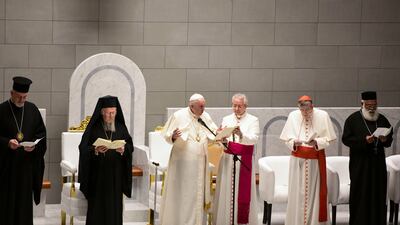
Pope Francis leads Mass at the Cathedral of Our Lady of Arabia, in Bahrain. Khushnum Bhandari / The National -

The cathedral is the largest in the region. Khushnum Bhandari / The National -
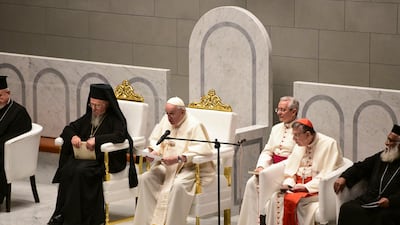
Pope Francis stressed the need for the world to cast aside self interest and political ideologies to address injustice and world hunger. Khushnum Bhandari / The National -
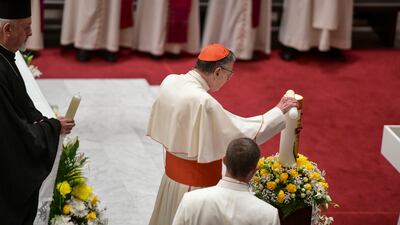
Priests light candles during the Pope's visit. Khushnum Bhandari / The National -
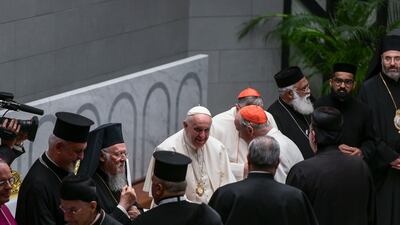
The pontiff greets priests. Khushnum Bhandari / The National -

The leader of the world's Catholics also took aim at the growing divide between the rich and poor. Khushnum Bhandari / The National -
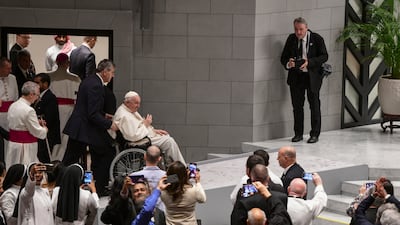
There's always time for a selfie. Khushnum Bhandari / The National -

Pope Francis writes in the visitors' book at the cathedral. Khushnum Bhandari / The National -
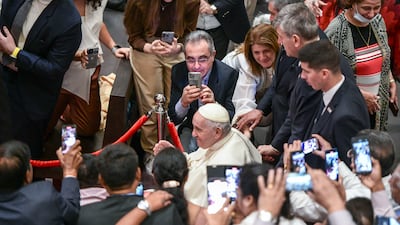
Pope Francis greets the attendees as he enters at the Cathedral of Our Lady of Arabia, Bahrain. Khushnum Bhandari / The National -

Members of the choir sing as they await the arrival of the Pope. Khushnum Bhandari / The National -

Priests and worshippers wait for the Pope. Khushnum Bhandari / The National -

Pope Francis and Grand Imam of Al Azhar Dr Ahmed El Tayeb speak at a meeting of the Muslim Council of Elders. Reuters -

Pope Francis and Dr Ahmed El Tayeb, Grand Imam of Al Azhar, attend a meeting with council members at the mosque in Sakhir Palace. AP -

Pope Francis and the Grand Imam attend a meeting with the members of the council in the courtyard of the mosque at Sakhir Palace. Reuters -

Pope Francis arrives at the mosque at Sakhir Palace, alongside the Grand Imam of Al Azhar. AFP -

The cathedral slowly fills before the Pope’s arrival. A friar speaks after the choir finishes singing a hymn. Faisal Salah / The National -
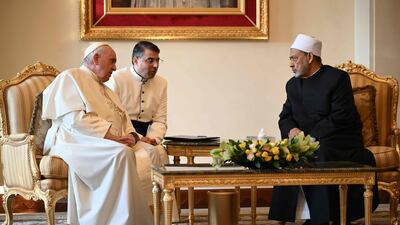
Pope Francis meets the Grand Imam of Al Azhar mosque near the Sakhir Royal Palace in Bahrain. AFP -

The Pope meets the Grand Imam, Dr Ahmed Al Tayeb. Reuters -
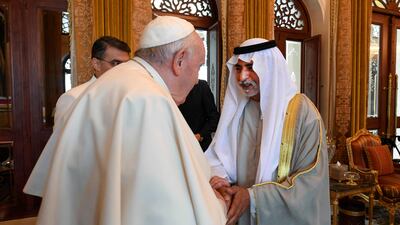
Pope Francis meets Sheikh Nahyan bin Mubarak, Minister of Tolerance and Coexistence, in Bahrain. AFP -

Pope Francis and King Hamad attend the Bahrain Forum for Dialogue at the Sakhir Royal Palace. Reuters -

Dr Ahmed El Tayeb delivers a speech at the palace in Manama. AFP -
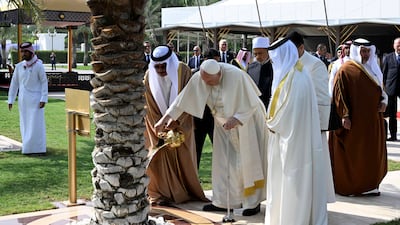
King Hamad, Crown Prince Salman bin Hamad and Pope Francis attend the Bahrain Forum for Dialogue at the Sakhir Palace. Reuters -

Pope Francis, King Hamad and other dignitaries at a ceremony at the palace. AFP -

Onlookers film on their phones as Pope Francis attends the closing session of the dialogue. AP Photo -
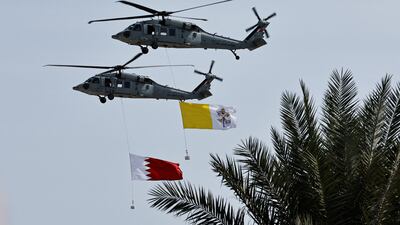
The Royal Bahraini Air Force flies the flags of Vatican City and Bahrain. Reuters -

Pope Francis attends the closing ceremony of the Bahrain Forum for Dialogue at Sakhir Palace. Reuters -

Bahrain's King Hamad, right, and Dr Ahmed El Tayeb, the Grand Imam of Al Azhar, talk as they wait for the arrival of the Pope at the closing session of the forum. AP -

Security officers wait for the Pope to arrive. AP Photo -

The theme of the forum was 'East and West for Human Co-existence'. Reuters -
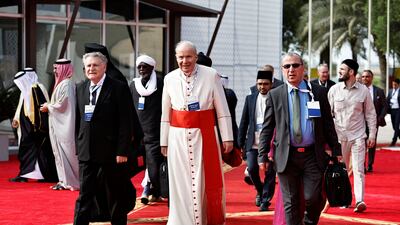
More than 200 global faith leaders and scholars took part in the conference. Reuters -

Discussions covered the role of religious heads in addressing global challenges, as well as interfaith dialogue as a way to ensure world peace. Reuters -
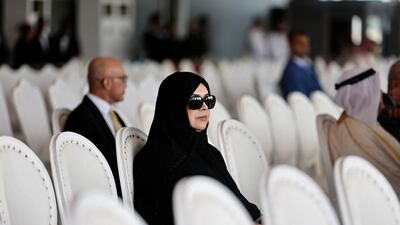
The Pope was scheduled to speak at the closing session of the forum. -
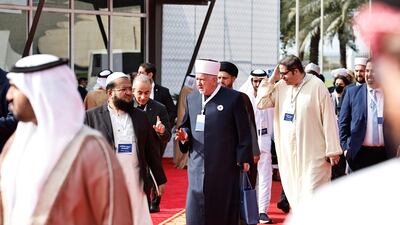
Guests arrive for the closing ceremony of the forum. Reuters



