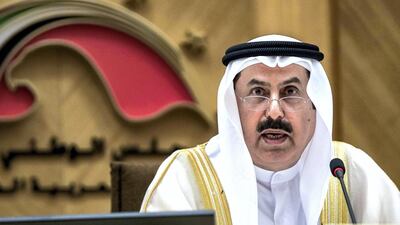

The Arab Parliament on Wednesday condemned Israeli attempts to undermine the Islamic and Christian character of Jerusalem and paint the crisis in the city as a property dispute.
The pan-Arab body held an online session hosted by the UAE and led by the head of the Arab Parliament and Speaker of the UAE Federal National Council, Saqr Ghobash.
Speakers from member states strongly condemned Israeli attacks on Palestinian worshippers in Al Aqsa Mosque and the attempts by Jewish settler groups to confiscate Palestinian land in East Jerusalem’s Sheikh Jarrah neighbourhood.
“We are condemning Israel for its human rights violations in Jerusalem and forced evictions of Palestinians in Sheikh Jarrah,” Mr Ghobash said.
“We will stand up with the Palestinians against Israel’s relentless efforts to implement its Judaisation of Jerusalem scheme, which directly obliterates the sanctity of both Muslim and Christian holy sites in Al Quds.”
The speaker of the Jordanian parliament said that what Israel calls a "real-estate dispute" is a microcosm of the disproportionate use of force and the unbalanced Israeli-Palestinian conflict.
Tension rose in Jerusalem over the threatened evictions of Palestinian families living in Sheikh Jarrah and clashes erupted inside Al Aqsa Mosque when Israeli security forces entered the compound during Friday prayers.
Action not words
The Arab League created the Arab Parliament in 2001. Its headquarters was in Damascus until 2012, when many countries cut ties with Syria at the start of the civil war.
The parliament’s statements are non-binding.
The heads of Arab parliaments said that, since Israel illegally annexed East Jerusalem after the 1967 war, the country has enacted policies and plans to create an “Israeli-Jewish Jerusalem”.
Several speakers used strong language in fiery speeches, labelling Israel an enemy as tension in the region continues to boil.
The Lebanese representative used part of his speech to recite an Arab poem that speaks of love for Jerusalem.
-
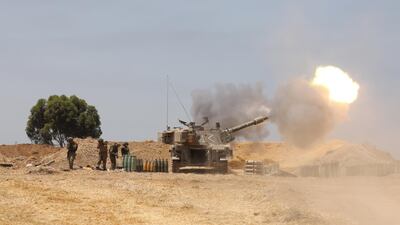
Israeli artillery in action as the escalation continues between the Israeli army and Hamas at the Gaza Border. EPA -
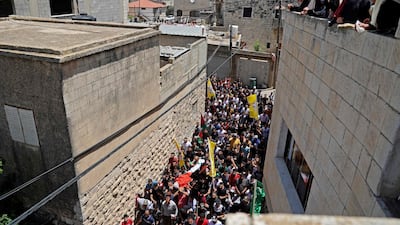
Mourners attend the funeral of Palestinian Rashid Abu Ara, 16, who was killed during clashes with Israeli troops in village of Aqaba near Nablus, north of the West Bank. AFP -
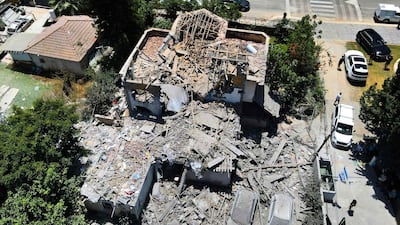
A heavily damaged house in a residential area in the city of Yehud, in central Israel. AFP -
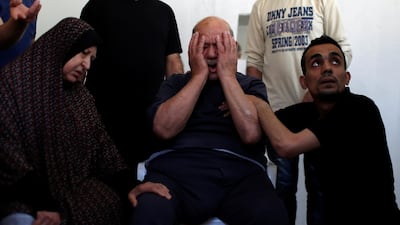
Parents of Palestinian man Abdulsalam Al-Ghazali, who was killed amid a flare-up of Israeli-Palestinian violence, react during their son funeral in Gaza City. Reuters -
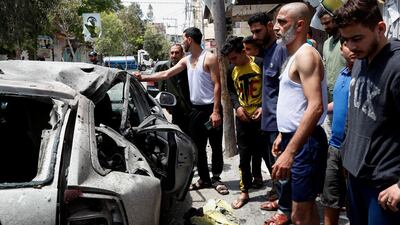
Residents look at a car that was hit in an Israeli air strike, on the main road in Gaza City. Three people who were in the vehicle died. AP -
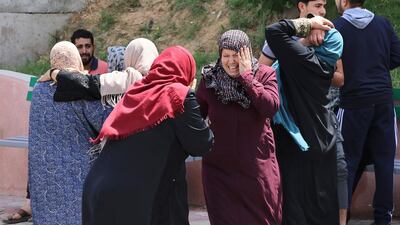
Palestinians mourn the death of relatives outside a hospital in Beit Lahia following a series of Israeli air strikes on the Hamas-controlled Gaza Strip. AFP -
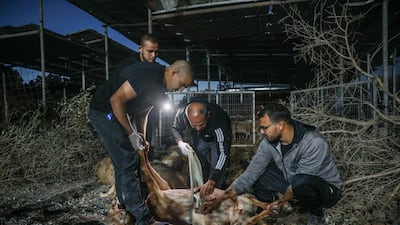
Israeli Arabs treat a sheep that was wounded by a rocket fired from the Gaza Strip, where nearby a father and his daughter were killed, in the village of Dahmash near the Israeli city of Lod. AP -
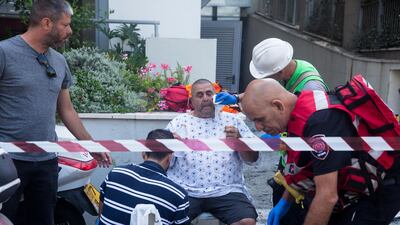
An injured man receives treatment at the scene after a rocket launched from the Gaza strip struck in Giv'atayim, Israel. Getty -
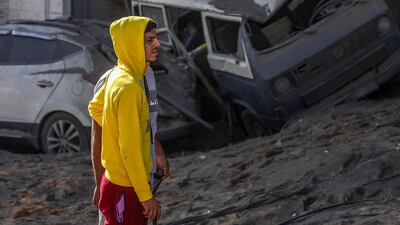
A man looks at the damage in the aftermath of overnight Israeli air strikes on Gaza. EPA -
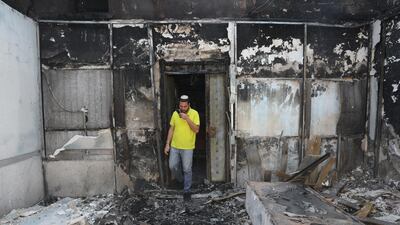
A Jewish man at a burnt-out synagogue after overnight riots between Arab and Jewish residents in Lod, Israel. EPA -
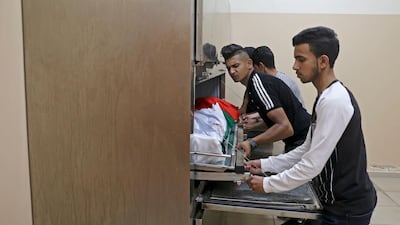
Relatives of Palestinian Rashid Abu Arra, 16, who was killed during clashes with Israeli troops in the village of Aqqaba near Nablus at the hospital morgue in Tubas in the occupied West Bank. AFP -
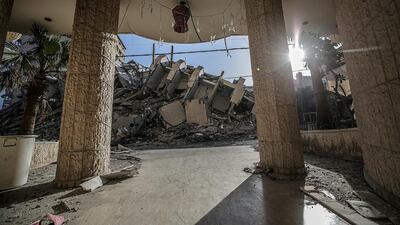
Rubble from the Hanadi tower after an Israeli air strike on Gaza City. EPA -
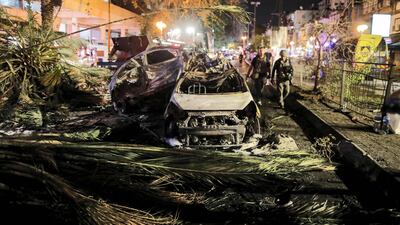
Israeli security forces pass burnt-out vehicles in Holon near Tel Aviv. AFP -
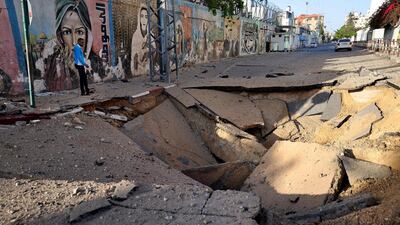
A huge crater in Gaza City caused by the Israeli air strikes. AFP -
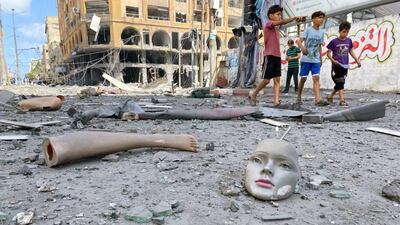
A broken mannequin near a tower building in Gaza City that was hit by Israeli air strikes during the flare-up of Israeli-Palestinian violence. Reuters -
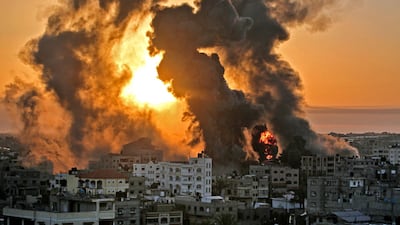
Fires at sunrise in Khan Yunish after an Israeli air strike on targets in the southern Gaza strip. AFP -
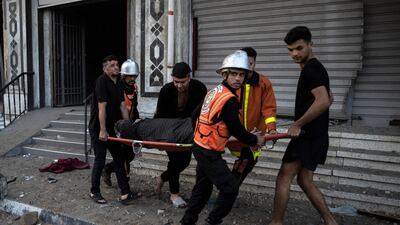
Palestinian rescuers move an elderly woman from a building in Gaza City after Israeli air strikes in the area. AP Photo -
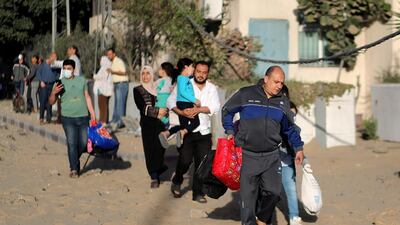
Palestinians evacuate after their tower building was hit by Israeli air strikes, in Gaza City. Reuters -
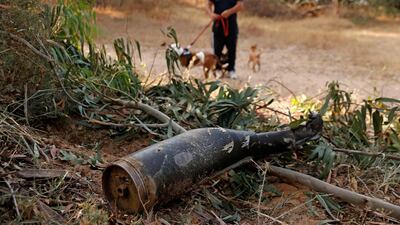
The remains of a rocket, destroyed by Israel's Iron Dome aerial defence system, which was fired by the Palestinian Islamist group Hamas from the Gaza strip. AFP -
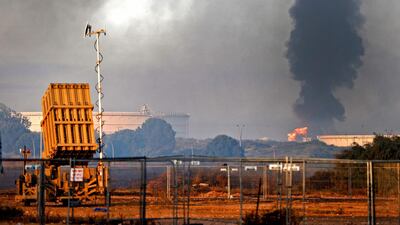
An Iron Dome aerial defence system battery is seen in the foreground as fire rages at Ashkelon's refinery, which was hit by Hamas rockets the previous day, in the southern Israeli city. AFP -
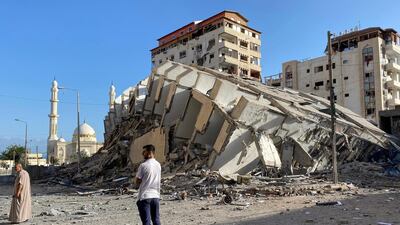
Palestinians stand next to the remains of a tower building which was destroyed in Israeli air strikes, in Gaza City. Reuters -

A Palestinian man holds an injured girl awaiting medical care at al-Shifa hospital, after an Israeli air strike in Gaza city. AFP -
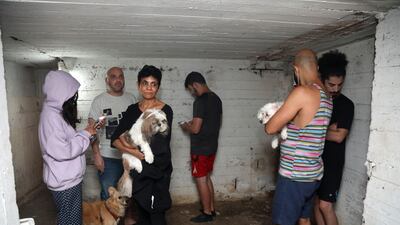
People take shelter in the basement of a building in the Israeli city of Tel Aviv as alarm sirens wailed after 3:00 a.m. after rockets were launched towards Israel from the Gaza Strip. AFP -
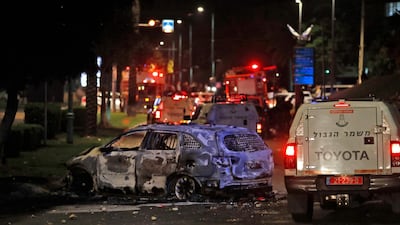
Israeli border police vehicles drive past an extinguished burnt vehicle in Lod near Tel Aviv, after rockets were launched towards Israel from the Gaza Strip controlled by the Palestinian Hamas movement. AFP -

An Israeli police officer gestures to a Palestinian woman and her daughter, frightened by clashes outside of the Damascus Gate to the Old City of Jerusalem. AP Photo -

Israeli firefighters walk by a car with a fallen tree on it after it was hit by a rocket fired from Gaza towards Holon, Israel. Reuters -
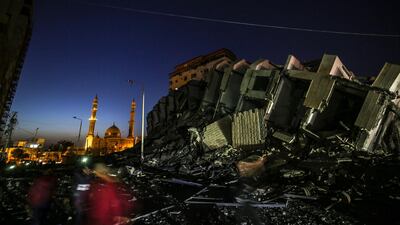
Palestinians inspect a destroyed Hanadi tower after Israeli airstrike in Gaza City. EPA -
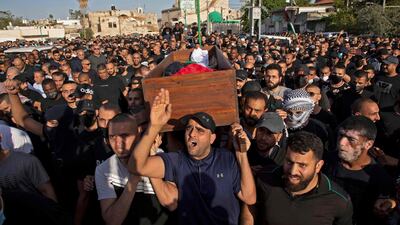
Arab Israelis gesture and wave Palestinian flags during the funeral of Mousa Hassouna in the central Israeli city of Lod near Tel Aviv. Hassouna was killed during clashes with Israeli security following an anti-Israel demonstration over tensions in Jerusalem. AFP -
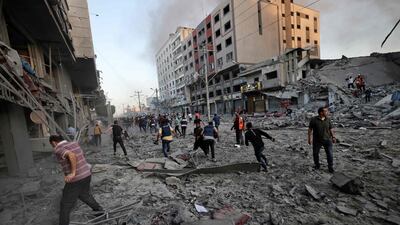
Rescuers rush to help among the rubble in front of Al Sharouk tower, that collapsed after being hit by an Israeli air strike, in Gaza city on Wednesday. AFP -
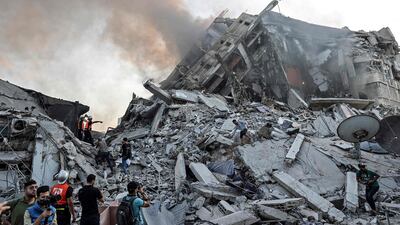
Palestinians view the smouldering remains of Al Sharouk tower, which collapsed after being hit by an Israeli air strike. AFP -
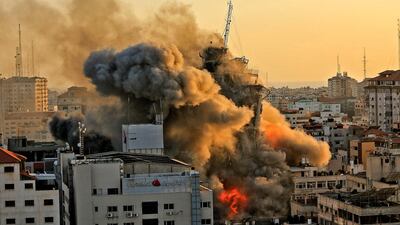
Smoke and flames rise from Al Sharouk tower, as it collapses after being hit by an Israeli air strike in Gaza City. AFP -
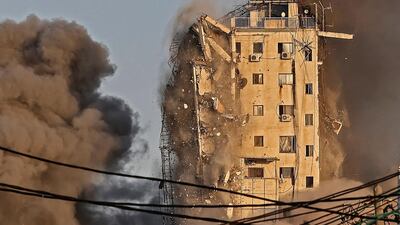
Al Sharouk tower block collapses after being hit by an Israeli air strike. AFP -
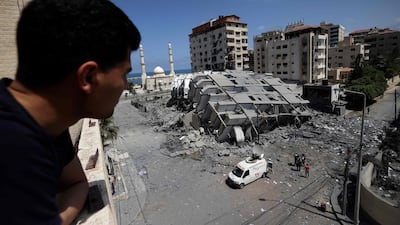
A man peers out to survey destroyed buildings in Gaza city, following Israeli air strikes. AFP -
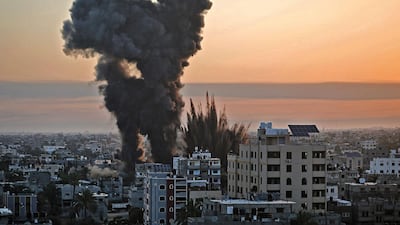
A plume of black smoke rises into the air in Khan Yunis, in the southern Gaza Strip, following an Israeli air strike on the area, which is controlled by the militant Hamas movement. AFP -
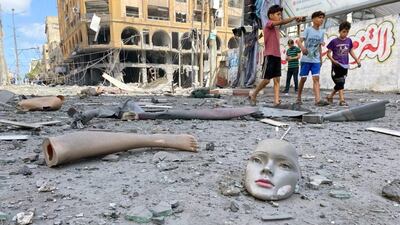
Parts of a broken mannequin lie scattered near a building that was hit by Israeli air strikes in Gaza city. Reuters -
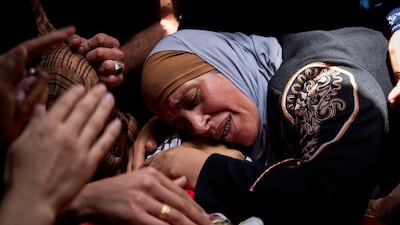
A Palestinian woman mourns her son Rasheed Abu Arra, who was killed during confrontations with Israeli forces, at his funeral in the village of Aqaba, near the West Bank town of Tubas. AP Photo -
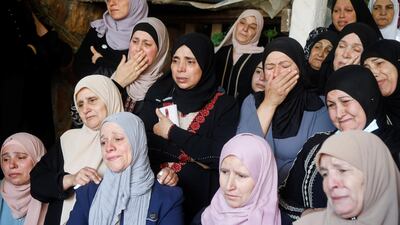
Women mourn at the funeral of Palestinian Rasheed Abu Arra, who was killed during confrontations with Israeli forces, in the town of Aqaba, near Tubas, in the West Bank. Reuters -
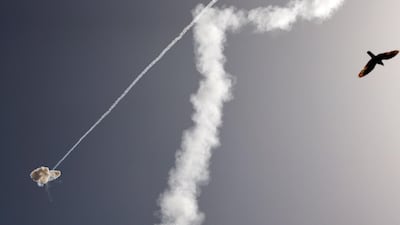
Israel's Iron Dome air defence system intercepts a rocket launched from the Gaza Strip, above the southern Israeli city of Ashdod. AFP


But the Palestinian delegate, the secretary general of the Palestinian Legislative Council, Mohamed Sobeih, told the session they wanted actions not words.
“Israelis’ racist fires have been raging in Al Quds while the people of Gaza are coming under a new aggression from a pariah state.”
The head of the Qatari Consultative Assembly, Ahmed Al Mahmoud, said: "We want to restore the trust of the Arab peoples. It's high time we acted now and there should be no compromise about the Palestinian cause."
Speaker of the Kuwaiti Parliament, Marzouk Al Ghanim, said any symbolic act in the Arab world helps to support the Palestinian cause.
“You are not alone in this struggle,” he said, addressing the Palestinians.
The latest violence and hostilities in Jerusalem and the Gaza strip are the most intense in years.
Militant groups, including Hamas and Palestinian Islamic Jihad, launched more than 1,000 rockets, including hundreds aimed at Tel Aviv, according to the Israeli Army.
Israel responded with devastating air strikes on Gaza, killing dozens of Palestinians, including children and at least two senior Hamas leaders.
The wave of clashes in mixed Jewish-Arab towns fuelled fears that the violence could spiral into a third intifada.

