



New strides have been made in studying ancient stone-built animal traps, known as ‘desert kites’, after decades of debate on the origins and function of these huge structures.
A team of experts and researchers have been working with Saudi Arabia's Royal Commission of AlUla to better determine the function of these illusive shapes and structures that have been discovered in the thousands across the region, stretching from Kazakhstan up to the western deserts of the kingdom.
New research has revealed that the kites were used for extensive hunting of wild animals from the late Neolithic and shows the ingenuity of the region’s people. A Royal Commission for AlUla (RCU)-sponsored team, the Aerial Archaeology in the Saudi Arabia — AlUla, detected 207 previously unknown kites in the AlUla region.
The triangle-looking structures have been found mainly concentrated near the Harrat Khaybar, an upland area with an extinct volcano, with some that date back to the fourth and seventh centuries BC. The structures were named ‘kites’ by aviators in the 1920s because, observed from above, their form is reminiscent of old-fashioned children’s kites with streamers.
Led by Rebecca Repper, an archaeologist specialising in aerial surveying, these kites have reached new horizons thanks to the teams ability to adopt a multilevel approach in studying the structures from above and on the ground.
“The work done here in with the help of RCU has been transformative, thanks to aerial surveying using helicopters, whereas the long practice method of using satellite imagery has been less successful in locating most of the kites structures.” Ms Repper said.
She explained that those who had built the kites to trap animals as hunting methods built the kite walls, which are made of short linear rubble formations that followed landscapes and terrains closely, making it more difficult to identify using satellite images alone.
All kites in the region have driving lines of low stone walls that converge to funnel animals — mostly gazelles and ibex —towards a trap such as a pit or precipice.
Once helicopter reconnaissance was successful, the team would then apply on-the-ground surveying to confirm location, dimensions, and the type of traps used.
“The study and discovery of these structures over the past decade and more so now with the discoveries in Saudi Arabia, have showed distinct characteristics reflecting the hunters’ adaptation to their rugged landscape and local game.” she said.
On average, the lines of the AlUla kites are approximately 200m long, but in other areas, they can stretch for kilometres. Ms Repper says the shorter length shows the local knowledge of the hunters, who placed the traps in areas where existing landscapes naturally restricted animal movements.
-
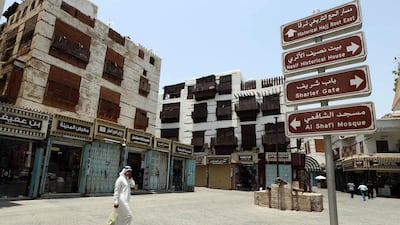
The Red Sea port location of Historical Jeddah is included on the Unesco World Heritage List -
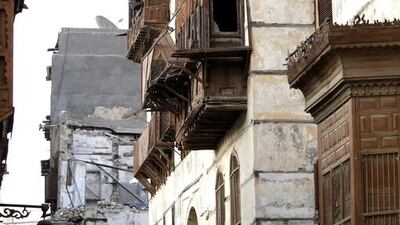
Historical Jeddah used to be hub of traders and Muslim pilgrims -
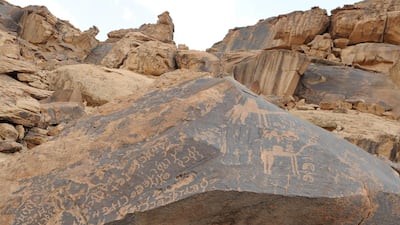
Rock art in the Al Hail Region shows inscriptions and camels on a rock at the base of Jebel Umm Sinman in Saudi Arabia -

A mud brick building from the Unesco World Heritage Site Al Turaif in Ad Diriyah -
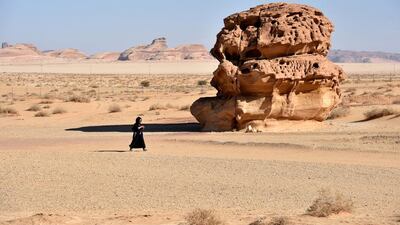
A woman walking past rose-coloured sandstone in Hegra, a Unesco World Heritage site, near Saudi Arabia's northwestern town of Al Ula -
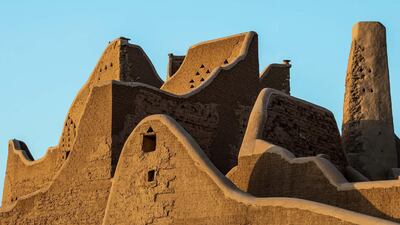
The undulating architecture of Al Turaif in Ad Diriyah -
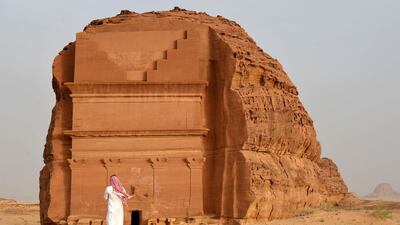
Hegra, also known as Madain Saleh, was the first archaeological site in Saudi Arabia to join Unesco's World Heritage List -
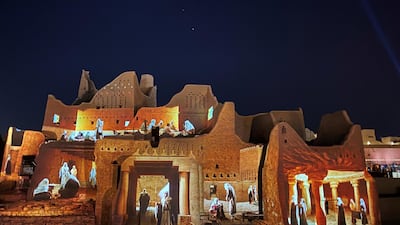
Welcome ceremony for annual G20 Summit World Leaders is projected onto Salwa Palace in Al Turaif, one of Saudi Arabia’s Unesco World Heritage sites, in Diriyah -

A mud-brick building in Unesco World Heritage Site Al Turaif in Ad Diriyah -
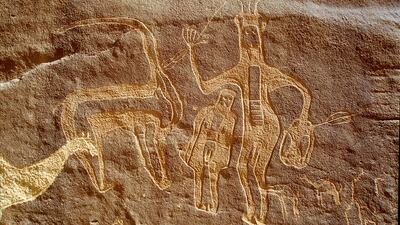
Al Hima Cultural Area is home to more than 30 sites of historical rock art -
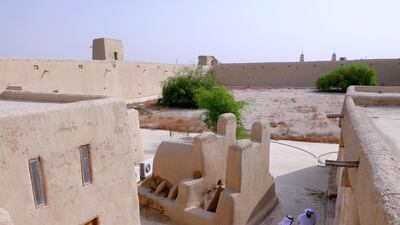
A traditional well in the Qasr Sahood neighbourhood of the Al Ahsa Oasis, Saudi Arabia -
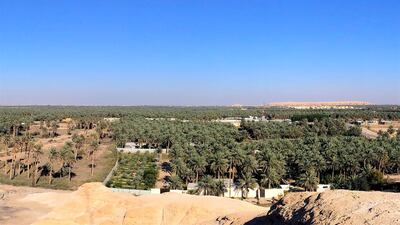
A view of the Al Ahsa Oasis in the desert of Saudi Arabia


Kites have been discovered and recorded in large numbers from Kazakhstan to Yemen and across the Sahara from Mali to Libya.
A 2020 study counted 6,023 kites across all regions. Since then, discoveries in KSA have added 835 kites to that number.
Dr Remy Crassard, a leading expert on desert kites, said the kites found in Khaybar are some of the largest ancient structures of their era.
The oldest kites, in southern Jordan, have been dated to 7,000 BCE. The age of newly found kites in north-west Arabia is still being determined but appears to straddle the transition from the Late Neolithic to the Bronze Age (5000 - 2000 BCE).
“I have worked as part of the Globalkites Project research team for almost a decade, and have identified numerous kites spanning the Mena and western Asia region, but we mostly relied on satellite imagery followed by one the ground surveying. Access to a helicopter wasn't always feasible.”
The team found that a distinct type of V-shaped kite was the dominant form in their study area, in contrast to kites found elsewhere in the region. Kites have been described in a variety of shapes, including V, ‘sock’, ‘hatchet’ and W-shaped.
“The RCU's commitment to this project was instrumental in uncovering the role of trapping in the hunting strategies of prehistoric, protohistoric and historic human groups.”

