


Samsung Electronics is in a position to develop a portless smartphone, but is keeping tabs on the progress of necessary technology such as wireless charging before taking action, a senior executive has said.
Such a device would eliminate physical connectivity, making it dependent on wireless transfers and charging, meaning it needs to be prevalent and reliable for the new category to grow, Minseok Kang, vice president of product planning at the Suwon-based company, told The National.
“If we want to launch it, I think right now we can prepare the device, but we should consider the normal user situations for using the device,” he said at the Galaxy Unpacked in Brooklyn on Wednesday. “Definitely wireless charging should be essential for the device.”
Wireless charging is slower and less common compared to the use of wires, with USB-C ports the current standard.
The idea of portless smartphones is not new, with a patent for it filed by HZO Inc in the US in 2014, according to the US Patent and Trademark Office. It has since been abandoned.
Issues include the slow pace of wireless charging, and the reliability and incompatibility of Bluetooth transfers – Apple has its own Airdrop technology exclusive to its devices, for instance.
-

A multimedia board shows the history of Samsung Electronics, stretching more than five decades, at the company's Unpacked event in Brooklyn. All photos: Alvin R Cabral / The National -
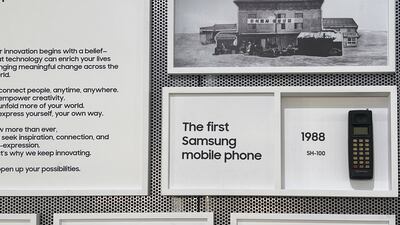
Samsung's first mobile phone, the SH-100, was launched in 1988. -
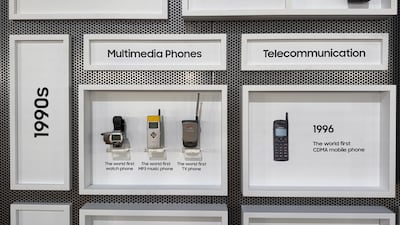
In the 1990s, Samsung started making multimedia phones, including the world's first mobiles with watch, MP3 and TV. -
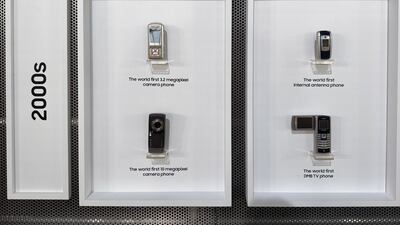
The early 2000s saw Samsung focusing on competitive camera features on its cellular phones. -

The year 2010 would mark a turning point for Samsung with the launch of the original Galaxy S – which would become the main rival of Apple's iPhone. -
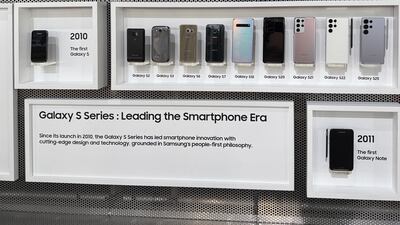
Samsung stepped up its game throughout the 2010s as it improved the Galaxy S line-up and launched the Galaxy Note. -
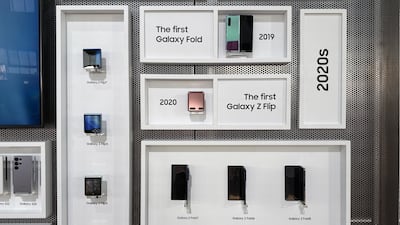
In 2019, Samsung entered the foldable smartphone genre with the first Galaxy Fold, which would soon be followed by the Galaxy Flip.


Apple is said to have considered a portless design for the unconfirmed and purportedly slimmer iPhone 17 Air, Bloomberg has reported.
Wireless charging stations – even though they are increasingly found in public spaces, most notably coffee shops – are still much less common than wired and power bank rentals.
It could leave users in need of a charger unable to find one, Mr Kang said.
Portless smartphones can be “good options” because of their unique design, he added. The move could also lead to slimmer devices, as USB-C ports are among the thickest components.
“This is one of the candidates for a future device, but engineering readiness can also be possible in short term,” he said. “We need to think about what users want and what are the real convenience for them.”
Meanwhile, Samsung hopes to launch its tri-fold smartphone – said to be called the Galaxy G Fold – by the end of the year, Mr Kang said, in what is the first official confirmation on the record.
The company is keeping its expectations for the launch date flexible as it continues to fine-tune the long-rumoured device, he added.
“Definitely the device is developing internally in Samsung … but when we launch a new device or new form factor, one important thing is its completeness [for] user satisfaction and readiness for mass production,” he said.
“We are checking the key points for the final decision to commercialise the device. I can say current target is by end of this year, so we will try to launch the device to the market [by then].”

