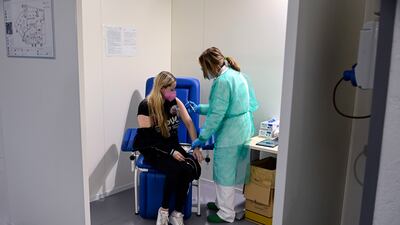
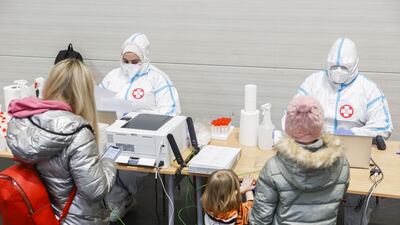
The number of people with Covid-19 in hospital in England has climbed back above 10,000, with all regions recording a steady rise in patients, latest figures show.
A total of 10,576 people were in hospital as of 8am on March 14, up 19 per cent from the previous week, National Health Service England said.
The last time the number was above 10,000 was almost a month ago, on February 15.
The total dropped to almost 8,000 towards the end of February, but has been rising again in recent days.
Patient levels in England are still some way below the peak reached at the start of this year during the Omicron wave of infections (17,120) and well below the peak of the second wave in January 2021 (34,336).
But the overall total conceals some sharp differences in trend between the regions.
Most areas are now seeing patient numbers back at about the level of four to five weeks ago but in south-east England, the total is the highest for two months.
And in south-west England, numbers are now their highest for nearly a year, with 1,081 patients as of March 14 – more than at any point since 1,109 patients were recorded on February 12, 2021.
The figures are more evidence that the coronavirus is again becoming more prevalent throughout the country.
Data published on Friday by the Office for National Statistics showed infection levels rising in all four nations of the UK for the first time since the end of January this year.
Health Secretary Sajid Javid said on Monday that a rise in infections was to be expected after the easing of coronavirus restrictions in England.
“We are now open as a country and there’s more social mixing, but there’s nothing in the data at this point in time that gives us any cause for concern,” Mr Javid told Sky News.
The number of Covid-19 patients with symptoms serious enough to be placed in ventilation beds has yet to show signs of an increase, figures show.
A total of 239 people were in ventilator beds in hospitals in England on March 14, unchanged from the previous week and well below the 797 recorded at the peak of the Omicron wave, and the 3,736 at the peak of the second wave, in January 2021.
More than half of all Covid-19 patients in hospital trusts in England are being treated primarily for something else, up from a quarter in autumn 2021.
All patients who have tested positive for Covid-19 need to be treated separately from those who do not have the virus, regardless of what they are in hospital for.
But the growing proportion of patients who are in hospital “with” Covid-19 rather than “for” Covid-19 – 57 per cent as of March 8 – is another sign that the current wave of the virus has not led to the same sort of pressure on critical care as previous waves.

Ten tax points to be aware of in 2026
1. Domestic VAT refund amendments: request your refund within five years
If a business does not apply for the refund on time, they lose their credit.
2. E-invoicing in the UAE
Businesses should continue preparing for the implementation of e-invoicing in the UAE, with 2026 a preparation and transition period ahead of phased mandatory adoption.
3. More tax audits
Tax authorities are increasingly using data already available across multiple filings to identify audit risks.
4. More beneficial VAT and excise tax penalty regime
Tax disputes are expected to become more frequent and more structured, with clearer administrative objection and appeal processes. The UAE has adopted a new penalty regime for VAT and excise disputes, which now mirrors the penalty regime for corporate tax.
5. Greater emphasis on statutory audit
There is a greater need for the accuracy of financial statements. The International Financial Reporting Standards standards need to be strictly adhered to and, as a result, the quality of the audits will need to increase.
6. Further transfer pricing enforcement
Transfer pricing enforcement, which refers to the practice of establishing prices for internal transactions between related entities, is expected to broaden in scope. The UAE will shortly open the possibility to negotiate advance pricing agreements, or essentially rulings for transfer pricing purposes.
7. Limited time periods for audits
Recent amendments also introduce a default five-year limitation period for tax audits and assessments, subject to specific statutory exceptions. While the standard audit and assessment period is five years, this may be extended to up to 15 years in cases involving fraud or tax evasion.
8. Pillar 2 implementation
Many multinational groups will begin to feel the practical effect of the Domestic Minimum Top-Up Tax (DMTT), the UAE's implementation of the OECD’s global minimum tax under Pillar 2. While the rules apply for financial years starting on or after January 1, 2025, it is 2026 that marks the transition to an operational phase.
9. Reduced compliance obligations for imported goods and services
Businesses that apply the reverse-charge mechanism for VAT purposes in the UAE may benefit from reduced compliance obligations.
10. Substance and CbC reporting focus
Tax authorities are expected to continue strengthening the enforcement of economic substance and Country-by-Country (CbC) reporting frameworks. In the UAE, these regimes are increasingly being used as risk-assessment tools, providing tax authorities with a comprehensive view of multinational groups’ global footprints and enabling them to assess whether profits are aligned with real economic activity.
Contributed by Thomas Vanhee and Hend Rashwan, Aurifer
COMPANY%20PROFILE
%3Cp%3E%3Cstrong%3ECompany%20name%3A%3C%2Fstrong%3E%20Switch%20Foods%3Cbr%3E%3Cstrong%3EStarted%3A%3C%2Fstrong%3E%202022%3Cbr%3E%3Cstrong%3EFounder%3A%3C%2Fstrong%3E%20Edward%20Hamod%3Cbr%3E%3Cstrong%3EBased%3A%3C%2Fstrong%3E%20Abu%20Dhabi%2C%20UAE%3Cbr%3E%3Cstrong%3EIndustry%3A%3C%2Fstrong%3E%20Plant-based%20meat%20production%3Cbr%3E%3Cstrong%3ENumber%20of%20employees%3A%3C%2Fstrong%3E%2034%3Cbr%3E%3Cstrong%3EFunding%3A%3C%2Fstrong%3E%20%246.5%20million%3Cbr%3E%3Cstrong%3EFunding%20round%3A%3C%2Fstrong%3E%20Seed%3Cbr%3E%3Cstrong%3EInvestors%3A%3C%2Fstrong%3E%20Based%20in%20US%20and%20across%20Middle%20East%3C%2Fp%3E%0A
Honeymoonish
%3Cp%3E%3Cstrong%3EDirector%3A%3C%2Fstrong%3E%20Elie%20El%20Samaan%3C%2Fp%3E%0A%3Cp%3E%3Cstrong%3EStarring%3A%20%3C%2Fstrong%3ENour%20Al%20Ghandour%2C%20Mahmoud%20Boushahri%3C%2Fp%3E%0A%3Cp%3E%3Cstrong%3ERating%3A%3C%2Fstrong%3E%203%2F5%3C%2Fp%3E%0A
%20Ramez%20Gab%20Min%20El%20Akher
%3Cp%3E%3Cstrong%3ECreator%3A%3C%2Fstrong%3E%20Ramez%20Galal%3C%2Fp%3E%0A%3Cp%3E%3Cstrong%3EStarring%3A%3C%2Fstrong%3E%20Ramez%20Galal%3C%2Fp%3E%0A%3Cp%3E%3Cstrong%3EStreaming%20on%3A%20%3C%2Fstrong%3EMBC%20Shahid%3C%2Fp%3E%0A%3Cp%3E%3Cstrong%3ERating%3A%20%3C%2Fstrong%3E2.5%2F5%3C%2Fp%3E%0A
CONFIRMED%20LINE-UP
%3Cp%3EElena%20Rybakina%20(Kazakhstan)%3Cbr%3EOns%20Jabeur%20(Tunisia)%3Cbr%3EMaria%20Sakkari%20(Greece)%3Cbr%3EBarbora%20Krej%C4%8D%C3%ADkov%C3%A1%20(Czech%20Republic)%3Cbr%3EBeatriz%20Haddad%20Maia%20(Brazil)%3Cbr%3EJe%C4%BCena%20Ostapenko%20(Latvia)%3Cbr%3ELiudmila%20Samsonova%3Cbr%3EDaria%20Kasatkina%3Cbr%3EVeronika%20Kudermetova%3Cbr%3ECaroline%20Garcia%20(France)%3Cbr%3EMagda%20Linette%20(Poland)%3Cbr%3ESorana%20C%C3%AErstea%20(Romania)%3Cbr%3EAnastasia%20Potapova%3Cbr%3EAnhelina%20Kalinina%20(Ukraine)%3Cbr%3EJasmine%20Paolini%20(Italy)%3Cbr%3EEmma%20Navarro%20(USA)%3Cbr%3ELesia%20Tsurenko%20(Ukraine)%3Cbr%3EEmma%20Raducanu%20(Great%20Britain)%20%E2%80%93%20wildcard%3C%2Fp%3E%0A
Marathon results
Men:
1. Titus Ekiru(KEN) 2:06:13
2. Alphonce Simbu(TAN) 2:07:50
3. Reuben Kipyego(KEN) 2:08:25
4. Abel Kirui(KEN) 2:08:46
5. Felix Kemutai(KEN) 2:10:48
Women:
1. Judith Korir(KEN) 2:22:30
2. Eunice Chumba(BHR) 2:26:01
3. Immaculate Chemutai(UGA) 2:28:30
4. Abebech Bekele(ETH) 2:29:43
5. Aleksandra Morozova(RUS) 2:33:01
More coverage from the Future Forum