

Live updates: follow the latest news on Covid-19 variant Omicron
Prime Minister Boris Johnson has ruled out immediately tightening coronavirus lockdown measures as the UK comes under attack from the highly contagious Omicron mutation.
But he warned the public to expect new controls amid fears the NHS could be overwhelmed.
In a TV interview, Mr Johnson said the Government would not hesitate to take further action, adding that it was monitoring the data hour by hour.
The prime minister is under pressure from scientists pushing for tougher measures to be introduced immediately, while millions of Britons hope they will not see a second Christmas ruined by restrictions.
Amid widespread speculation that a new lockdown would come into force by December 27, Mr Johnson has so far remained non-committal.
"The arguments either way are finely balanced," he said, noting that cases of Omicron are "surging and hospitalisations are rising quite steeply in London".
"We won't hesitate to take action. It could not be more urgent,” he said. "Please exercise caution as you go about your lives."
-
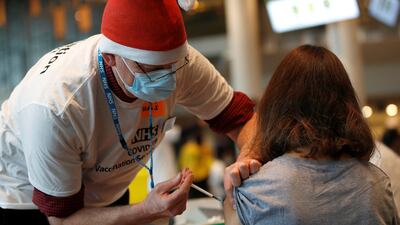
A healthcare professional administers a booster shot at a pop-up vaccination centre at Wembley Stadium, London. Britain’s Health Secretary has refused to rule out tougher restrictions before Christmas amid the rapid rise of Omicron infections. Reuters -
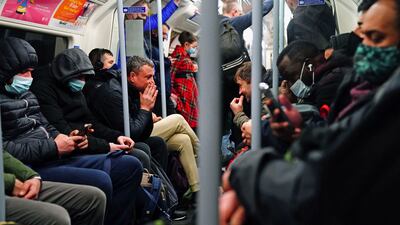
Commuters, some wearing face masks, sit in a London Underground train during rush hour. PA -

Anti-vaccination protesters scuffle with police during a protest on Whitehall, central London. AP -

Shoppers at a Christmas market in London on the final Saturday before Christmas. PA -
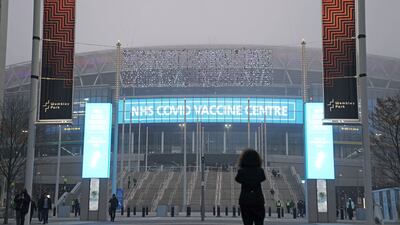
Wembley Stadium in London is being used as a vaccination centre. AP -

Commuters wait for Oxford Circus station to open in London. EPA -
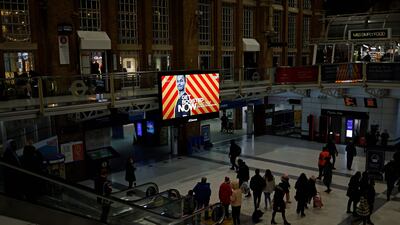
Pedestrians walk past a screen displaying a government advertisement promoting the Covid-19 vaccine booster programme at Liverpool Street train station in central London. AFP -
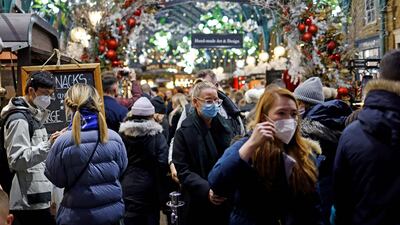
Shoppers, some wearing face coverings, walk past stalls and shops in the Apple Market in Covent Garden, central London. AFP -
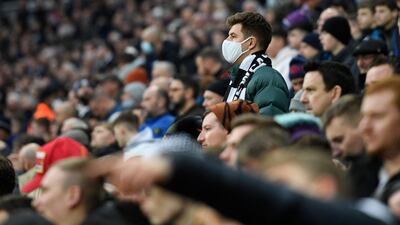
A fan wearing a face covering during the English Premier League football match between Newcastle United and Manchester City at St James' Park in Newcastle. AFP -

Members of the public arrive for vaccinations and boosters at the NHS Scotland Vaccine Centre in Edinburgh. PA -
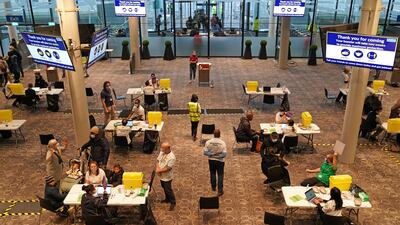
Staff at a vaccination centre in Wembley Stadium, London help administer Covid-19 booster shots. PA


Pressed on why he was not acting now given the warnings from his scientific advisers, Mr Johnson said: “There are still some things that we need to be clearer about before we decide to go further."
A further 91,743 lab-confirmed Covid-19 cases have been recorded in the UK as of 9am on Monday, the Government said.
A further 44 people had died within 28 days of testing positive for Covid-19.
Separate figures published by the Office for National Statistics show there have now been 172,000 deaths registered in the UK where Covid-19 was mentioned on the death certificate.
Across Europe, there has been a raft of new restrictions, including a Dutch lockdown and a German ban on most travel from Britain.
New restrictions in other European countries including Belgium and Germany have prompted mass protests.
Mr Johnson chaired a Cabinet meeting on Monday afternoon, which was attended by Chris Whitty, England’s chief medical officer, and Sir Patrick Vallance, the government’s chief scientific adviser, to discuss whether to tighten restrictions before the busy festive season.
He urged people to follow Plan B restrictions while his government attempted to bring the latest wave under control.
"I have to say to the British public, and I say to everybody, we will not exclude the possibility of going further if we have to do things to protect the public," Mr Johnson said.
"We will have to reserve the possibility of taking further action to protect the public."
"I can certainly say we're looking at all kinds of [restrictions]... to keep Omicron under control and we will rule nothing out."
Before the Cabinet meeting, Justice Secretary Dominic Raab said people would have a “much better Christmas than last year” because of the high rate of adults who are vaccinated and the swift moving booster campaign.
On Monday, there were 844,486 booster doses delivered, about 60,000 down on the record 904,598 achieved the previous day, meaning the government is not yet at its target 1 million daily doses.
Among the outbreak was 8,044 newly confirmed Omicron cases.
"We have got cases of Omicron surging across the country now. We have got hospital admissions rising quite steeply in London and the obvious conclusion is that it was right to go fast with Plan B in the way that we did and also right to double the speed of the booster rollout," Mr Johnson said.
"In view of the balance of risks and uncertainties, particularly around the infection, hospitalisation rate of Omicron – how many people does Omicron put in hospital - and some other uncertainties to do with the severity, the effectiveness and so on we agreed that we should keep the data from now on under constant review."
London Mayor Sadiq Khan said that if restrictions were not brought in soon, the NHS could be “on the verge of collapse”, with sickness affecting workforce levels.
At the weekend, Mr Johnson is understood to have been presented with three options aimed at curbing the spread of the new variant as infections surged.
The Treasury announced on Sunday that funding to tackle Covid-19 across Scotland, Wales and Northern Ireland had been doubled to £860 million ($1.13 billion).
Advice from the Scientific Advisory Group for Emergencies, or Sage, published at the weekend, said there were probably already hundreds of thousands of new Omicron infections every day in England.
It said that hospital admissions with the variant in the UK were “probably around one tenth of the true number” because of a lag in reporting.
Although the booster vaccination rate is rising, about one million shots a day are needed if every adult is to be offered a third shot by the end of the year.
-
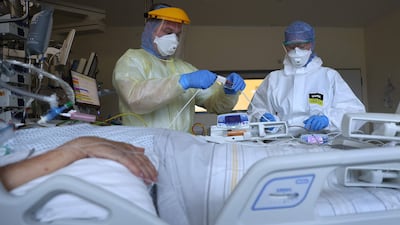
Medical staff take care of a Covid-19 patient in the intensive care unit at the University Medical Centre Magdeburg in Magdeburg, eastern Germany. AFP -

Pedestrians on a pedestrian crossing in the Shibuya district of Tokyo, Japan. AP Photo -
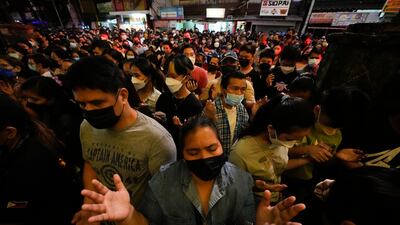
Worshippers at the first of nine daily dawn masses before Christmas day at the St Joseph parish church in suburban Las Pinas city, Philippines. AP Photo -
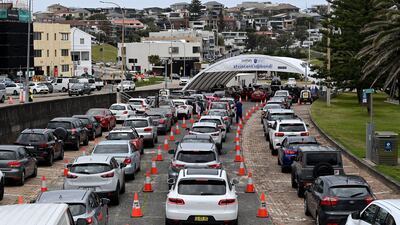
The queue for a Covid-19 test at St Vincent's Hospital drive-through testing clinic at Bondi Beach in Sydney, Australia. EPA -
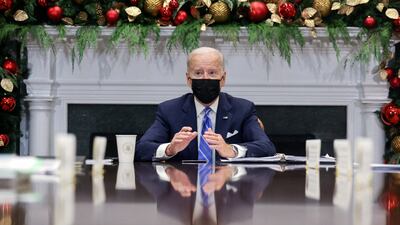
US President Joe Biden meets members of the White House Covid-19 Response Team to discuss latest developments related to the Omicron variant in the Roosevelt Room in the White House in Washington, DC. Reuters -
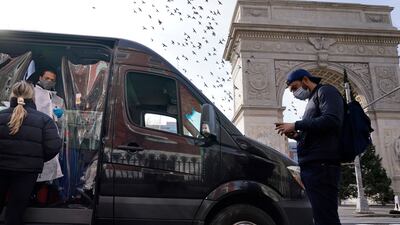
A mobile testing site near the NYU campus in New York. AP Photo -
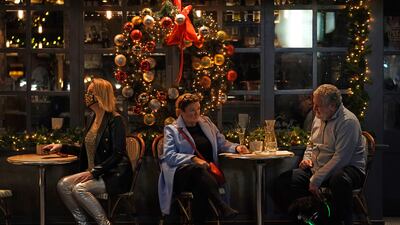
Outdoor tables at a restaurant on Old Compton Street in Soho, London. PA -
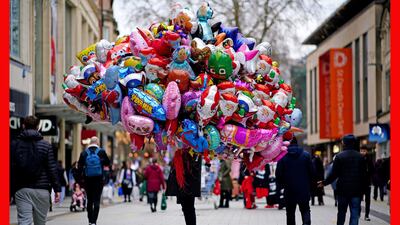
A balloon vendor and Christmas shoppers in the centre of Cardiff, Wales. PA -
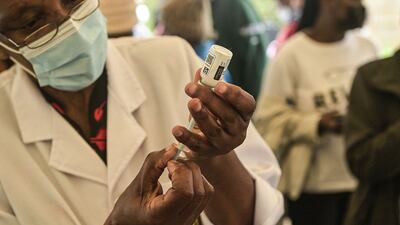
A healthcare worker prepares a dose of Moderna Covid-19 vaccine in Nairobi, Kenya. AFP -

Medical staff prepare an isolation ward for Covid-19 patients at a government hospital in Chennai, India. AFP -
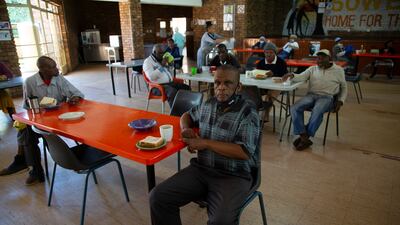
Residents of the Soweto Home for the Aged social distancing during breakfast in Johannesburg. AP Photo -
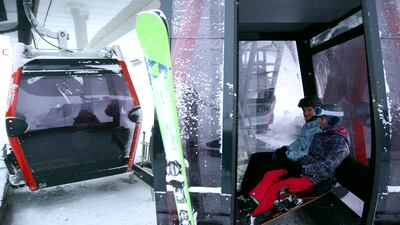
Skiers ride a lift line on Mount Jahorina, Bosnia and Herzegovina. AP Photo


Experts have warned against a delay in bringing in measures.
Prof Stephen Reicher, a member of Scientific Pandemic Insights Group on Behaviours, said Omicron’s faster transmissibility means it is “coming at us like an express train”, and called for clear messaging to the public.
“A good clear message is more important now than ever before of how serious the crisis is," Prof Reicher told BBC News.
“Good information from the government, combined with good support from the government” would probably lead to people accepting “the measures that are necessary to bring this thing under control."

