Follow the latest updates on the Covid-19 pandemic here
The Covid-19 pandemic brought about a massive change in the ways we live, work, play – and dine.
The virus and its fallout resulted in changes to every aspect of our lives, not least our social lives. Among the biggest shifts was how we eat.
As global lockdowns ensued, popping into a local cafe for lunch or dinner with friends was put on hold. Dining out, if allowed, became a lonelier and less sociable experience. Instead, 2020 became the year of carry-outs and cooking.
With social distancing still in place and health and hygiene standards under the spotlight as never before, there is no doubt Covid-19 will have a lasting effect on dining. But as countries gradually reopen, restaurant tables are being booked and chefs are back doing what they do best.
Here’s a look at some of the trends that arose from the pandemic.
Delivery apps and QR codes
A heavy reliance on technology was one of the biggest themes to come out of the Covid-19 pandemic.
As people working from home shifted to Zoom and Microsoft Teams for business meetings, the dining world took advantage of the digital approach to life.
Cash was discouraged and contactless payment took hold.
Necip Camcigil, who founded One Life Kitchen in Dubai Design District, said the radical change in consumer preference towards online ordering had persisted, even when restaurants opened again for dine-in custom.
Dining in the UAE:
“In terms of changes to the dining space, legally we have had to spread out tables for social distancing reasons, so from that perspective there is more space inside,” he said.
“We also introduced QR codes on the tabletops, where customers can place their order through a mobile application without speaking to a staff member.”
In most cases, ordering went online. Customers browsed dishes on their phones instead of passing menus from person to person.
Safety comes first for diners
The pandemic has greatly changed the perspective of the diners about their eating experiences.
Rohith Muralya is a director at SFC Group, which owns a number of restaurants in Dubai including 49ers, Manhattan Cafe and Just Dosa.
He said diners now seek restaurants that are “extremely transparent about their cleanliness procedures”.
Disinfectant at entrance and exit points are now commonplace across the emirate.
Staff members also don masks and, in some establishments gloves, to limit the spread of Covid-19.
“Restaurants have had to invest in more single-use menus, disposable cutlery, hand-sanitising stations and masks and gloves to the staff uniform,” he said.
“All the above have been done to ensure the diners’ safety and make them feel at peace as they dine out with their friends and family.”
Mr Camcigil said customers are now “inspecting restaurants in terms of standards of hygiene” and are more inclined to give feedback if they don’t feel comfortable with the way masks are worn or tables wiped down.
Dining al fresco more in demand than ever
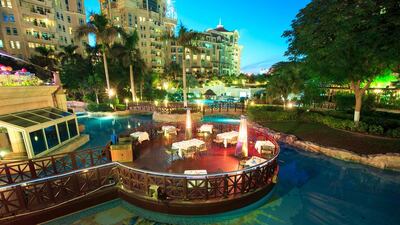
When lockdowns lifted and the hospitality sector had the green light reopen, in some parts of the world dining outside was the only option.
As such, restaurants invested in refurbishing or introducing outside eating areas.
The move made people feel more comfortable as being in the open air reduced the risk of coronavirus transmission.
In some cities, planning rules were waived to allow restaurants to place chairs and tables on pavements and pedestrianised roads, to give diners more space.
Panchali Mahendra is the general manager of Atelier House, a hospitality consultancy in the US and UAE.
“Whether NYC or Dubai, outside seating and investing in the look and feel became more important,” she said.
“Many times, owners ignore horticulture but the pandemic taught me [to have] an eye for detail and we wanted our guests to feel the value for money and service and ambience, even whilst seated outside.”
Customer interaction has taken a hit
While most of the changes to come from the pandemic have had a positive impact on the dining out experience – with cleanliness and convenience top of the list – face-to-face interaction has taken a hit.
Restaurateurs and managers said communication between staff and guests had become strained at times by social distancing etiquette and face masks.
Mr Camcigil, from One Life Kitchen, said that when restaurants reopened, he noticed an increase in mistakes being made during the order process.
“It would be simple things like mishearing what a customer asked for and bringing them something different,” he said.
“People were understanding because it was a new experience for us all, communicating via masks, but now we have learnt to triple-check orders with guests.
“It’s not fun having to shout through a mask and it has taken away a bit of that personal customer service experience.”

Haircare resolutions 2021
From Beirut and Amman to London and now Dubai, hairstylist George Massoud has seen the same mistakes made by customers all over the world. In the chair or at-home hair care, here are the resolutions he wishes his customers would make for the year ahead.
1. 'I will seek consultation from professionals'
You may know what you want, but are you sure it’s going to suit you? Haircare professionals can tell you what will work best with your skin tone, hair texture and lifestyle.
2. 'I will tell my hairdresser when I’m not happy'
Massoud says it’s better to offer constructive criticism to work on in the future. Your hairdresser will learn, and you may discover how to communicate exactly what you want more effectively the next time.
3. ‘I will treat my hair better out of the chair’
Damage control is a big part of most hairstylists’ work right now, but it can be avoided. Steer clear of over-colouring at home, try and pursue one hair brand at a time and never, ever use a straightener on still drying hair, pleads Massoud.
Visit Abu Dhabi culinary team's top Emirati restaurants in Abu Dhabi
Yadoo’s House Restaurant & Cafe
For the karak and Yoodo's house platter with includes eggs, balaleet, khamir and chebab bread.
Golden Dallah
For the cappuccino, luqaimat and aseeda.
Al Mrzab Restaurant
For the shrimp murabian and Kuwaiti options including Kuwaiti machboos with kebab and spicy sauce.
Al Derwaza
For the fish hubul, regag bread, biryani and special seafood soup.
Who's who in Yemen conflict
Houthis: Iran-backed rebels who occupy Sanaa and run unrecognised government
Yemeni government: Exiled government in Aden led by eight-member Presidential Leadership Council
Southern Transitional Council: Faction in Yemeni government that seeks autonomy for the south
Habrish 'rebels': Tribal-backed forces feuding with STC over control of oil in government territory
RESULT
RS Leipzig 3
Marcel Sabitzer 10', 21'
Emil Forsberg 87'
Tottenham 0
Mobile phone packages comparison
The%20specs
%3Cp%3E%3Cstrong%3EEngine%3A%20%3C%2Fstrong%3ESingle%20front-axle%20electric%20motor%3Cbr%3E%3Cstrong%3EPower%3A%20%3C%2Fstrong%3E218hp%3Cbr%3E%3Cstrong%3ETorque%3A%20%3C%2Fstrong%3E330Nm%3Cbr%3E%3Cstrong%3ETransmission%3A%20%3C%2Fstrong%3ESingle-speed%20automatic%3Cbr%3E%3Cstrong%3EMax%20touring%20range%3A%20%3C%2Fstrong%3E402km%20(claimed)%3Cbr%3E%3Cstrong%3EPrice%3A%20%3C%2Fstrong%3EFrom%20Dh215%2C000%20(estimate)%3Cbr%3E%3Cstrong%3EOn%20sale%3A%20%3C%2Fstrong%3ESeptember%3C%2Fp%3E%0A
More on animal trafficking
'THE WORST THING YOU CAN EAT'
Trans fat is typically found in fried and baked goods, but you may be consuming more than you think.
Powdered coffee creamer, microwave popcorn and virtually anything processed with a crust is likely to contain it, as this guide from Mayo Clinic outlines:
Baked goods - Most cakes, cookies, pie crusts and crackers contain shortening, which is usually made from partially hydrogenated vegetable oil. Ready-made frosting is another source of trans fat.
Snacks - Potato, corn and tortilla chips often contain trans fat. And while popcorn can be a healthy snack, many types of packaged or microwave popcorn use trans fat to help cook or flavour the popcorn.
Fried food - Foods that require deep frying — french fries, doughnuts and fried chicken — can contain trans fat from the oil used in the cooking process.
Refrigerator dough - Products such as canned biscuits and cinnamon rolls often contain trans fat, as do frozen pizza crusts.
Creamer and margarine - Nondairy coffee creamer and stick margarines also may contain partially hydrogenated vegetable oils.
UAE currency: the story behind the money in your pockets
Cryopreservation: A timeline
- Keyhole surgery under general anaesthetic
- Ovarian tissue surgically removed
- Tissue processed in a high-tech facility
- Tissue re-implanted at a time of the patient’s choosing
- Full hormone production regained within 4-6 months
The Energy Research Centre
Founded 50 years ago as a nuclear research institute, scientists at the centre believed nuclear would be the “solution for everything”.
Although they still do, they discovered in 1955 that the Netherlands had a lot of natural gas. “We still had the idea that, by 2000, it would all be nuclear,” said Harm Jeeninga, director of business and programme development at the centre.
"In the 1990s, we found out about global warming so we focused on energy savings and tackling the greenhouse gas effect.”
The energy centre’s research focuses on biomass, energy efficiency, the environment, wind and solar, as well as energy engineering and socio-economic research.
UAE Falcons
Carly Lewis (captain), Emily Fensome, Kelly Loy, Isabel Affley, Jessica Cronin, Jemma Eley, Jenna Guy, Kate Lewis, Megan Polley, Charlie Preston, Becki Quigley and Sophie Siffre. Deb Jones and Lucia Sdao – coach and assistant coach.
Infiniti QX80 specs
Engine: twin-turbocharged 3.5-liter V6
Power: 450hp
Torque: 700Nm
Price: From Dh450,000, Autograph model from Dh510,000
Available: Now
The%20specs%3A%202024%20Mercedes%20E200
%3Cp%3E%3Cstrong%3EEngine%3A%20%3C%2Fstrong%3E2.0-litre%20four-cyl%20turbo%20%2B%20mild%20hybrid%0D%3Cbr%3E%3Cstrong%3EPower%3A%20%3C%2Fstrong%3E204hp%20at%205%2C800rpm%20%2B23hp%20hybrid%20boost%0D%3Cbr%3E%3Cstrong%3ETorque%3A%20%3C%2Fstrong%3E320Nm%20at%201%2C800rpm%20%2B205Nm%20hybrid%20boost%0D%3Cbr%3E%3Cstrong%3ETransmission%3A%20%3C%2Fstrong%3E9-speed%20auto%0D%3Cbr%3E%3Cstrong%3EFuel%20consumption%3A%20%3C%2Fstrong%3E7.3L%2F100km%0D%3Cbr%3E%3Cstrong%3EOn%20sale%3A%20%3C%2Fstrong%3ENovember%2FDecember%0D%3Cbr%3E%3Cstrong%3EPrice%3A%20%3C%2Fstrong%3EFrom%20Dh205%2C000%20(estimate)%3C%2Fp%3E%0A
THE%20SPECS
%3Cp%3EEngine%3A%203-litre%20V6%20turbo%20(standard%20model%2C%20E-hybrid)%3B%204-litre%20V8%20biturbo%20(S)%0D%3Cbr%3EPower%3A%20350hp%20(standard)%3B%20463hp%20(E-hybrid)%3B%20467hp%20(S)%0D%3Cbr%3ETorque%3A%20500Nm%20(standard)%3B%20650Nm%20(E-hybrid)%3B%20600Nm%20(S)%0D%0D%3Cbr%3EPrice%3A%20From%20Dh368%2C500%0D%3Cbr%3EOn%20sale%3A%20Now%3C%2Fp%3E%0A
Killing of Qassem Suleimani
Biography
Favourite drink: Must have karak chai and Chinese tea every day
Favourite non-Chinese food: Arabic sweets and Indian puri, small round bread of wheat flour
Favourite Chinese dish: Spicy boiled fish or anything cooked by her mother because of its flavour
Best vacation: Returning home to China
Music interests: Enjoys playing the zheng, a string musical instrument
Enjoys reading: Chinese novels, romantic comedies, reading up on business trends, government policy changes
Favourite book: Chairman Mao Zedong’s poems
The specs
Price: From Dh180,000 (estimate)
Engine: 2.0-litre turbocharged and supercharged in-line four-cylinder
Transmission: Eight-speed automatic
Power: 320hp @ 5,700rpm
Torque: 400Nm @ 2,200rpm
Fuel economy, combined: 9.7L / 100km