


All over-16s in Britain will be offered the first dose Covid-19 Pfizer-BioNTech vaccine, paving the way for an inoculation drive before teenagers return to school.
Britain's Joint Committee on Vaccination and Immunisation said it was updating initial advice given last month in light of changes in the spread of the disease in younger groups.
“After carefully considering the latest data, we advise that healthy 16- to 17-year-olds are offered a first dose of Pfizer-BioNTech vaccine. Advice on when to offer the second vaccine dose will come later,” said Wei Shen Lim, the committee's Covid-19 head.
The committee said that the benefits of keeping children healthy and in school were paramount, though there would also be positive impacts on society more broadly.
Children aged 12 to 15 with specific underlying health conditions will continue to be offered vaccines, but this list could soon be expanded to those without pre-existing conditions.
Jonathan Van Tam, England's deputy chief medical officer, said there was “no time to waste” in administering the shots to over-16s and said he wanted it to happen as fast as possible.
He said he expected that the vaccines would become available to teenagers within the weeks before the reopening of schools, and added that the project was “full steam ahead".
As 16 is the age of consent in the UK, children of this age and older do not need parental permission to take the vaccine.
Health Secretary Sajid Javid said he accepted the advice but said no decision has been made on vaccinating younger children.
“Today’s advice from the independent Joint Committee on Vaccination and Immunisation means more young people aged 16 and over can benefit from Covid-19 vaccines,” he said.
“I have accepted their expert recommendations and I have asked the NHS to prepare to vaccinate those eligible as soon as possible.
“The [committee] has not recommended vaccinating under-16s without underlying health conditions but will keep its position under review based on the latest data.”
More than 220,000 children in England have already had a Covid-19 vaccine, figures show, with a number of under-18s eligible if they have certain health conditions or live with someone with a weak immune system.
Some countries, including the US, Canada and France, have begun to vaccinate people 12 years old and over.
-
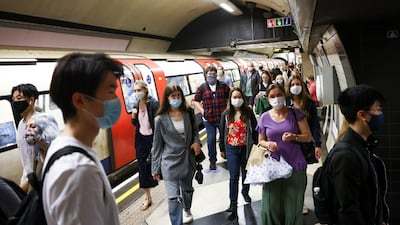
People walk along a platform on the London Underground. -
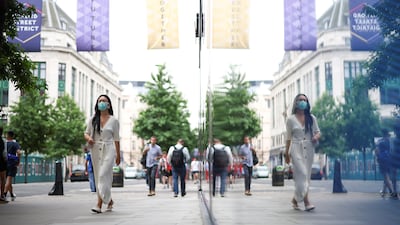
People walk along Oxford Street in central London. England lifted most Covid-19 restrictions on July 19. -
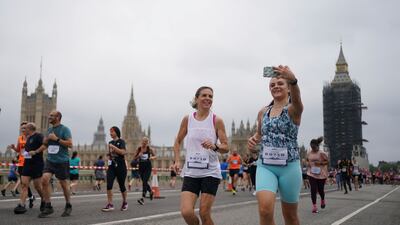
Participants run across Westminster Bridge in London during the Asics London 10km marathon. -
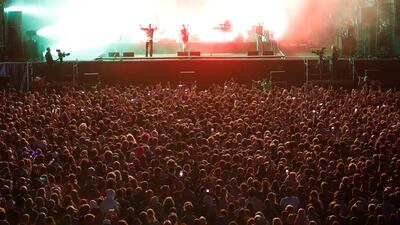
Festival-goers watch Wolf Alice perform at Latitude Festival at Henham Park. -
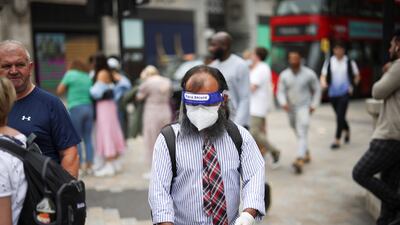
A person wearing a protective face shield and face mask walks through Oxford Circus in London. -
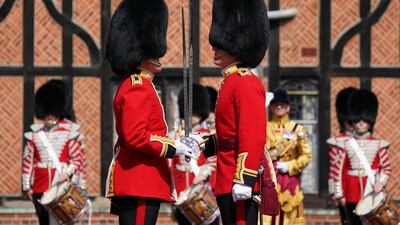
The Changing of the Guard at Windsor Castle takes place for the first time since the start of the pandemic. -
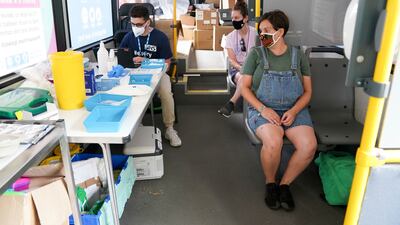
Festival-goers wait to receive a vaccine on board a bus at the Latitude Festival. -

Empty shelves in a supermarket in London. Brexit lorry shortages combined with large numbers of retail staff isolating have cause shortages of household staples in parts of the UK . -
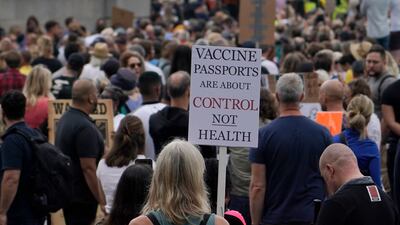
Demonstrators hold up banners as they listen to speeches during a "Rally for freedom" protest in London.


Ministers fears that September and October will be a risky time for transmission as children return from summer holidays and the weather becomes colder.
Scientists say younger people are more likely to spread the virus to more vulnerable people even though they themselves are less likely to become seriously ill.
A University College London study released on Thursday showed vaccinated people were three times less likely to catch the virus.
Prof Paul Elliott, director of the React study, said the highest infection rates in the study involving 98,000 people were seen in those up to the age of 24.
“The increase in the virus was being driven by these younger age groups,” he told BBC's Radio 4 Today programme on Thursday.
“Anything we can do to reduce transmission in that group would be helpful.”
He said declining infection rates could be put at risk when children return to school.
“Things are going in the right direction now as schools have closed, people are on holiday and people are mixing outdoors more,” he said.
“The big issue is what’s going to happen in the autumn.”
Geoff Barton, general secretary of the Association of School and College Leaders, underlined the importance of suppressing Covid in schools.
“Distinctively, what you’ve got in a school or college is large groups of younger people who have not been vaccinated with adults there,” he said.
“They congregate in big groups and they are not expected to wear face coverings. To suddenly move from quite a lot of control measures to almost no control measures seems pretty reckless.”
A new report by the Institute for Government on Wednesday found the government's “refusal” to make contingency plans for exams in the summer of 2020 was the “most unforgivable aspect” of its handling of education during the pandemic.
It said the pandemic was “easily the most disruptive period in children’s education since at least the start of the Second World War”.
Mr Barton expected that over-16s would welcome the offer to receive a Covid-19 vaccine to prevent any further disruption to their education.
“I’m sure many parents … will think at last we are giving some priority to their education,” he said.
Scottish First Minister Nicola Sturgeon said on Tuesday: “I am hoping, possibly veering towards expecting, updated advice from the [committee] literally in the next day or so.
“I am hoping, but this is the [committee's] advice, that they will recommend further vaccination of people in the 12- to 18-year-old age group. I’m particularly hopeful that we will see some updated recommendations as the first part of this for 16- and 17-year-olds.”
Appointments are expected to begin within two weeks because Britain has sufficient reserves of vaccines to extend the programme to younger people.
The committee had not planned to revisit its ruling until the end of this month, but it is understood that this has been brought forward for over-16s.
There are 1.45 million children aged 16 and 17 in the UK.
Ministers are increasingly concerned about the vaccination rate among young people, which is tailing off with a third of under-40s still unprotected.
On Monday, 26,114 people were vaccinated with a first dose, with daily numbers having fallen 83 per cent since the end of June.
Prime Minister Boris Johnson last week risked provoking fury among his back bench MPs by announcing that vaccine passports for nightclubs and other events will be introduced next month, but there has been no clear sign that this tougher tone has led to a sustained increase in vaccine uptake.

