


The UAE's decision to impose further restrictions on single-use plastics comes amid growing global concern about their impact on the environment.
From the 14 million tonnes of plastic that ends up in the world’s oceans each year to the vast amounts dumped in landfill — potentially breaking down into tiny particles that contaminate soil and waterways — the problem is vast.
Each year, according to figures published by the Earth Day charity, the world produces five trillion plastic bags and 500 billion plastic cups, while people get through 1.2 million plastic bottles a minute.
Many campaigners are therefore keen to see governments across the globe take a tougher line on plastics.
The UAE has said that from January 1, 2024, plastic bags will be banned. It follows the introduction last summer in Dubai of a 25 fils charge and a ban on most bags in Abu Dhabi. Sharjah was already due to outlaw plastic bags next year.
In addition, a ban on the importation of plastic cutlery, drinks cups, styrofoam and boxes takes effect from January 1, 2026.
-

Shoppers pack goods into long-life bags at the checkout. Abu Dhabi's authorities opted for a total ban instead of a charge per bag. -

Shaikha Salem Al Dhaheri, centre, white mask, secretary general of Environment Agency Abu Dhabi, visits Lulu Supermarket in Mushrif Mall on the first day of a ban on plastic shopping bags. All photos: Chris Whiteoak / The National -

Long-life shopping bags made of jute and cotton on display at Lulu in Mushrif Mall, Abu Dhabi. -

Signs at Spinneys on Abu Dhabi's Muroor Road inform the public that from June 1, 2022, shops cannot stock single-use plastic bags. -

Shoppers are encouraged to bring their own but can also buy long-life bags in shops. -

Exceptions to the ban include plastic packaging used to wrap meats and thin poly bags for vegetables and grains. -

Supermarket staff pose for a photo with trolleys full of long-life bags.


A new perspective on plastics
The measures send a message to the private sector that they need to do more to reduce their impact on the environment, said Habiba Al Marashi, co-founder and chairperson of Emirates Environmental Group. Efforts so far to reduce plastic bag use, such as the 25 fils charge, have been shown to work, she added.
“In retail outlets, shopping malls, supermarkets and hypermarkets you can see it’s been very, very effective, with people now bringing their bags and reusing bags,” she said.
“The supermarkets don’t even have plastic bags on the counter. Only if a person asks are they provided. It’s played a major role in changing the perspective of people.”
The UAE’s measures are not a “fully fledged ban on single-use plastics”, said Kenzie Azmi, a campaigner at Greenpeace Mena, but “an excellent first step” towards an eventual ban on eliminating plastics altogether, except for industries such as medicine or food transport that require them.
How much of a step forward it represents will depend, she said, on issues such as whether the plastics targeted are the most polluting forms, or just the ones that are easiest to eliminate.
“These types of bans can be very effective if we know which industries are most polluting, start with those, and provide sustainable alternatives to the banned materials, such as refill and reuse, that protect the welfare of people dependent on those sectors,” she said.
In the 70 years that it has existed, plastic has transformed consumer culture, in some ways for the better, such as by improving convenience and helping to preserve food.
But single-use plastics continue to litter the natural environment for centuries.
Decades of damage to the environment
WWF, the environmental organisation, says that takeaway coffee cups have a lifespan of 30 years, plastic straws of 200 years and plastic bottles and cups of 450 years.
While HDPE (high density polyethylene) and PET (polyethylene terephthalate) plastics are widely recycled, most plastics cannot be, and much recyclable plastic is thrown away.
In Australia, for example, less than 12 per cent of the three million tonnes of plastic produced each year gets recycled.
“While systems have been developed for recycling single-use plastics, the reality is that every year more and more single-use plastic is placed on the market,” said Dan Eatherley, a UK-based environmental consultant who has carried out projects on reducing plastic waste for organisations including Google.
When disposing of plastic that does not get recycled, one option is incineration, he said, but while this provides energy, it also emits greenhouse gases.
“It can go into landfill, but it’s just sitting there,” Mr Eatherley said. “You’re creating waste that later generations will have to deal with.”
Plastic and other waste in landfills may leach toxins, while plastic items released into the environment can harm wildlife and be broken down into microplastics which find their way into crops, human bodies and even rain.
Animals may mistake plastic waste for food. Many camels in the UAE have died after accumulating plastic made from bags and rope in their stomachs. These polybezoars, as they are called, can weigh more than 50kg.
Caps on consumption required
-

Plastic bags have been banned in France since July 2016. Reuters -

Ukraine banned plastic bags in December 2021. Getty Images -
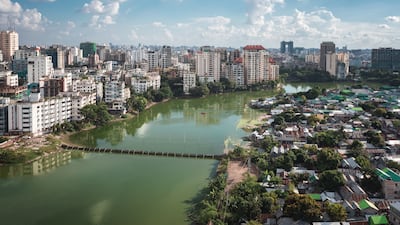
Bangladesh was one of the first countries to ban them, back in 2002. Getty Images -

Plastic bags have been banned in Austria since 2020. AFP -

Thailand made the decision to ban plastic bags in 2021. AFP -

The Maldives banned them in June 2021. -

Kenya's government banned plastic bags in August 2017. AP


To really get to grips with plastic pollution, governments need to take measures that reduce the amount of plastic produced and sold, according to Steve Hynd, policy manager of City to Sea, an organisation that campaigns against plastic pollution.
“The most important thing is an overarching strategy that includes legally binding limits on consumption and production,” he said.
“Underneath that there’s a series of policy measures, for example deposit-return schemes.”
Deposit-return schemes see customers receive money off a subsequent purchase when they return an empty bottle. Among a growing number of initiatives worldwide, Coca-Cola runs a scheme in Brazil where plastic bottles can be used up to 25 times before being recycled.
“They are particularly hard-wearing plastic bottles that they use,” Mr Hynd said. “The solutions are there — you just need the political will and business drive to make it happen.”
Such “reuse” measures fit into an overall “waste hierarchy”, at the top of which sits what campaigners see as the best option — reducing plastic use.
The second component involves reusing plastic or other materials, as this consumes much less energy than recycling, which is the third part of the “reduce, reuse and recycle” hierarchy.
Bans such as the one the UAE is introducing are seen as being part of a “reduce” strategy.
In England a ban on single-use plastic knives, forks and plates has also been announced this week, although this has been criticised for leaving out, for example, single-use bottles.
Much can be done to help businesses to reduce plastic use, Mr Hynd said. His organisation, for example, worked with a hotel chain, advising it to no longer automatically put a straw in drinks served to customers.
And instead of having a box of straws available for people to take from, the company was advised to put the box beneath or at the back of the serving area, so that only customers who asked for a straw use one.
Such simple but effective “reduce” measures, he said, should be applied to all single-use materials, whatever they are made from.
“Even paper or cardboard or bamboo, they all have an environmental footprint,” he said.
New forms of bio-based packaging, such as compostables, are sometimes seen as preferable to “traditional” plastic from fossil fuels. But Mr Eatherley said because current waste management systems were not set up to deal with them, in practice they could hinder recycling.
“Trying to prevent waste from arising in the first place should be the priority,” he said.
Greenpeace’s Ms Azmi said other measures that could reduce plastic waste included finding sustainable alternatives to materials considered to be disposable, and “holding corporate polluters accountable”.
Wealthier nations should, she suggested, be required to lead a transition to zero waste and help other countries make similar changes. Such initiatives could be included in a global plastics treaty, Ms Azmi said.
Greater efforts to develop recyclable plastic should also be a focus, Ms Al Harashi said, but ultimately people need to return to a society that does not throw so much away.
“We need to go back to old ways which were more environmentally friendly,” she said. “This habit of being a disposable society is very dangerous.”

