The sun sets behind a coal-fired power plant in Gelsenkirchen, Germany. AP

Earth set to warm by well over 2°C as world 'nowhere near' climate targets


  • English
  • Arabic

Current government plans to cut greenhouse gases are not nearly enough to prevent catastrophic climate change, putting Earth on course for between 2.1°C and 2.9°C warming by the end of the century, a UN report published on Wednesday found.

Despite some progress in the past year, governments need to take urgent action by 2030 to ensure that temperature increases are kept below 2°C and ideally 1.5°C as laid out in the 2015 Paris Agreement.

United Nations Framework Convention on Climate Change analysed plans submitted by governments around the world on how they will try to cut emissions and compared that to the scientific models.

These plans show that emissions will rise 10.6 per cent on 2010 levels by 2030.

However, UN climate experts say that to meet the target of no more than 1.5°C of temperature rise compared to pre-industrial levels, the world needs to slash emissions by 45 per cent.

"We are still nowhere near the scale and pace of emission reductions required to put us on track toward a 1.5°C world," said Simon Stiell, executive secretary of UN Climate Change.

"To keep this goal alive, national governments need to strengthen their climate action plans now and implement them in the next eight years."

The planet is already being battered by climate-enhanced heatwaves, storms and floods after 1.2°C of warming.

Scientists have warned that any rise above 1.5°C risks the collapse of ecosystems and the triggering of irreversible shifts in the climate system.

However, the report found that if all governments met their pledges on emission cuts, then total output would be 52.4 billion tonnes of carbon-dioxide equivalent in 2030, down 0.3 per cent from 2019 levels.

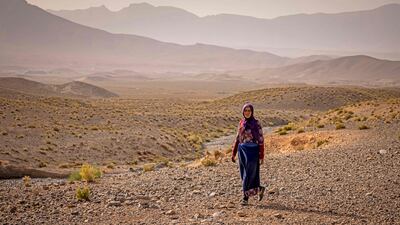
Morocco's last nomads are struggling with climate change - in pictures

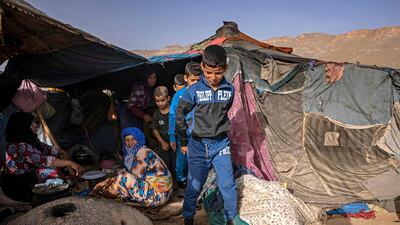
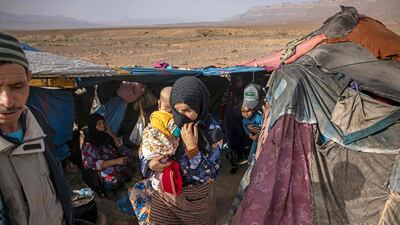
  • Amazigh Ida Ouchaali at an encampment near the village of Amellagou, where some of the last people to keep Morocco's nomadic traditions reside. They say their ancient lifestyle has become impossible to sustain as climate change brings ever more intense droughts. All photos: AFP
    Amazigh Ida Ouchaali at an encampment near the village of Amellagou, where some of the last people to keep Morocco's nomadic traditions reside. They say their ancient lifestyle has become impossible to sustain as climate change brings ever more intense droughts. All photos: AFP
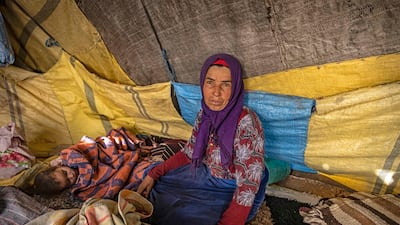
  • Amazigh Ida Ouchaali belongs to a community of about 25,000 people at the last census in 2014. Its numbers are down by two-thirds in a decade.
    Amazigh Ida Ouchaali belongs to a community of about 25,000 people at the last census in 2014. Its numbers are down by two-thirds in a decade.
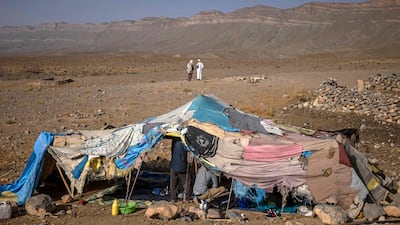
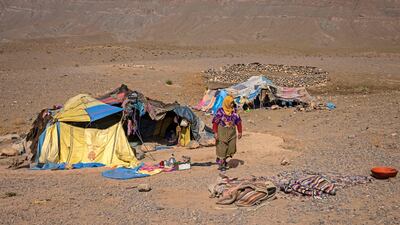
  • Amazigh tents near the village of Amellagou in Morocco. Ida Ouchaali's tribe spent centuries roaming the country to find food for their animals, but their way of life is steadily disappearing. Ms Ouchaali says she is 'exhausted' by her fight for survival.
    Amazigh tents near the village of Amellagou in Morocco. Ida Ouchaali's tribe spent centuries roaming the country to find food for their animals, but their way of life is steadily disappearing. Ms Ouchaali says she is 'exhausted' by her fight for survival.
  • Amazigh women in Amellagou carry out their daily chores.
    Amazigh women in Amellagou carry out their daily chores.
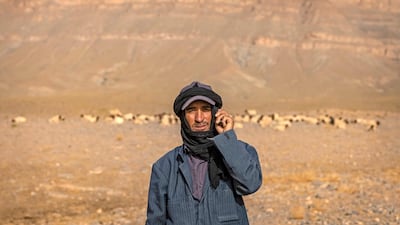
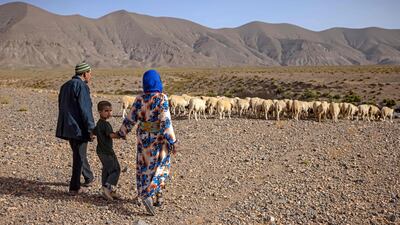
  • An Amazigh man poses for a picture next to a herd of sheep near the village of Amellagou. Water for livestock is hard to find and the harsh climate threatens his way of life.
    An Amazigh man poses for a picture next to a herd of sheep near the village of Amellagou. Water for livestock is hard to find and the harsh climate threatens his way of life.
  • Amazigh families at Amellagou worry about the future of their children. One teenager says the young want to 'turn the page on nomadism'.
    Amazigh families at Amellagou worry about the future of their children. One teenager says the young want to 'turn the page on nomadism'.
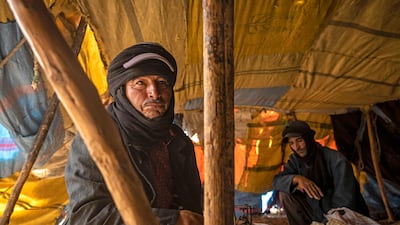
  • Amazigh Moha Ouchaali is in his 50s. 'Everything has changed,' he says. 'I don't recognise myself anymore in the world of today.'
    Amazigh Moha Ouchaali is in his 50s. 'Everything has changed,' he says. 'I don't recognise myself anymore in the world of today.'
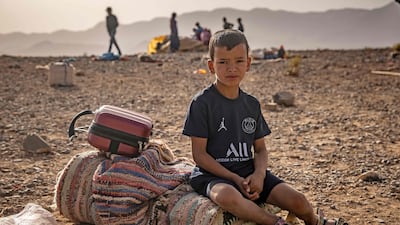
  • An Amazigh boy and his belongings in the Moroccan desert.
    An Amazigh boy and his belongings in the Moroccan desert.
  • Children of Amazigh families grow up in a shrinking community. At one time there were nearly 500 tents around the village of Amellagou but now there are less than a tenth of that.
    Children of Amazigh families grow up in a shrinking community. At one time there were nearly 500 tents around the village of Amellagou but now there are less than a tenth of that.
  • Each generation of Amazigh face social and economic changes that make their lives more difficult. Laws passed by Morocco that would defend the nomadic way are simply ignored by other people, they say.
    Each generation of Amazigh face social and economic changes that make their lives more difficult. Laws passed by Morocco that would defend the nomadic way are simply ignored by other people, they say.
  • Amazigh sheltering at Amellagou say they recall a time when nomadic people were welcomed by settled communities but such hospitality is largely gone.
    Amazigh sheltering at Amellagou say they recall a time when nomadic people were welcomed by settled communities but such hospitality is largely gone.
  • Driss Skounti says he has little hope for the future. 'Nomadic life has an identity and a tradition steeped in history, but is doomed to disappear within 10 years.'
    Driss Skounti says he has little hope for the future. 'Nomadic life has an identity and a tradition steeped in history, but is doomed to disappear within 10 years.'

This indicated that Co2 emissions could peak at the end of this decade and start to reduce before 2050 – a rosier picture than last year’s report, which suggested that emissions would continue to grow beyond 2030.

However, even if all the promises were fulfilled, there would still be an excess of 16 billion tonnes of Co2 above the threshold required to keep global warming at 2°C.

The wide range in the warming estimates on what this means — an increase between 2.1°C and 2.9°C — is due to uncertainty over whether countries can implement their plans.

If emissions are not reduced sufficiently by 2030, cuts will need to be much sharper after that date to compensate for the slow start on the path to net zero, the requisite for halting global warming, the UNFCCC report said.

“We’re bending the curve on emissions downwards, they are projected to go in the right direction,” Mr Stiell said. “But they are not going down enough fast enough, far enough.”

A second report by the UN found that emissions could be about 68 per cent lower in 2050 than they were in 2019 if all the countries’ commitments were implemented. However, it warned that action must not be delayed as some countries were aiming for a slower start and deeper cuts towards the middle of the century.

“Nations must strengthen their plans now and implement them in the next eight years,” Mr Stiell said.

When nations met in Glasgow last year for a previous round of climate negotiations, they agreed to speed up their climate pledges to cut carbon pollution and increase financial flows to vulnerable developing nations.

But only 24 countries out of 193 had updated their plans at the time of the report, which Mr Stiell said was "disappointing".

"Government decisions and actions must reflect the level of urgency, the gravity of the threats we are facing and the shortness of the time we have remaining to avoid the devastating consequences of runaway climate change," he said.

From 2020 to 2021, the increase in levels of Co2, the main greenhouse gas emitted through human activities and the primary driver of climate change, was larger than the average annual growth rate over the past decade.

Levels continue to rise this year. Methane concentrations in 2021 saw the biggest year-on-year jump since measurements began four decades ago.

“The continuing rise in concentrations of the main heat-trapping gases, including the record acceleration in methane levels, shows that we are heading in the wrong direction,” said Petteri Taalas, secretary general of the World Meteorological Organisation.

“There are cost-effective strategies available to tackle methane emissions, especially from the fossil fuel sector, and we should implement these without delay.”

While methane has 28 times greater warming potential than CO2, it dissolves in the atmosphere in less than a decade, meaning its effect on climate is reversible if methane emissions are slashed fast, Mr Taalas said.

In contrast, Co2 remains in the atmosphere for centuries, so gases emitted today will continue warming the planet in the future, even if humanity manages to eliminate net emissions within the coming decades.


Tamkeen's offering
  • Option 1: 70% in year 1, 50% in year 2, 30% in year 3
  • Option 2: 50% across three years
  • Option 3: 30% across five years 
How to apply for a drone permit
  • Individuals must register on UAE Drone app or website using their UAE Pass
  • Add all their personal details, including name, nationality, passport number, Emiratis ID, email and phone number
  • Upload the training certificate from a centre accredited by the GCAA
  • Submit their request
What are the regulations?
  • Fly it within visual line of sight
  • Never over populated areas
  • Ensure maximum flying height of 400 feet (122 metres) above ground level is not crossed
  • Users must avoid flying over restricted areas listed on the UAE Drone app
  • Only fly the drone during the day, and never at night
  • Should have a live feed of the drone flight
  • Drones must weigh 5 kg or less
The President's Cake

Director: Hasan Hadi

Starring: Baneen Ahmad Nayyef, Waheed Thabet Khreibat, Sajad Mohamad Qasem 

Rating: 4/5

The biog

Occupation: Key marker and auto electrician

Hometown: Ghazala, Syria

Date of arrival in Abu Dhabi: May 15, 1978

Family: 11 siblings, a wife, three sons and one daughter

Favourite place in UAE: Abu Dhabi

Favourite hobby: I like to do a mix of things, like listening to poetry for example.

Favourite Syrian artist: Sabah Fakhri, a tenor from Aleppo

Favourite food: fresh fish

THE%20SPECS
%3Cp%3EEngine%3A%203-litre%20V6%20turbo%20(standard%20model%2C%20E-hybrid)%3B%204-litre%20V8%20biturbo%20(S)%0D%3Cbr%3EPower%3A%20350hp%20(standard)%3B%20463hp%20(E-hybrid)%3B%20467hp%20(S)%0D%3Cbr%3ETorque%3A%20500Nm%20(standard)%3B%20650Nm%20(E-hybrid)%3B%20600Nm%20(S)%0D%0D%3Cbr%3EPrice%3A%20From%20Dh368%2C500%0D%3Cbr%3EOn%20sale%3A%20Now%3C%2Fp%3E%0A
A timeline of the Historical Dictionary of the Arabic Language
  • 2018: Formal work begins
  • November 2021: First 17 volumes launched 
  • November 2022: Additional 19 volumes released
  • October 2023: Another 31 volumes released
  • November 2024: All 127 volumes completed
Expert advice

“Join in with a group like Cycle Safe Dubai or TrainYAS, where you’ll meet like-minded people and always have support on hand.”

Stewart Howison, co-founder of Cycle Safe Dubai and owner of Revolution Cycles

“When you sweat a lot, you lose a lot of salt and other electrolytes from your body. If your electrolytes drop enough, you will be at risk of cramping. To prevent salt deficiency, simply add an electrolyte mix to your water.”

Cornelia Gloor, head of RAK Hospital’s Rehabilitation and Physiotherapy Centre 

“Don’t make the mistake of thinking you can ride as fast or as far during the summer as you do in cooler weather. The heat will make you expend more energy to maintain a speed that might normally be comfortable, so pace yourself when riding during the hotter parts of the day.”

Chandrashekar Nandi, physiotherapist at Burjeel Hospital in Dubai
 

Dark Souls: Remastered
Developer: From Software (remaster by QLOC)
Publisher: Namco Bandai
Price: Dh199

The National's picks

4.35pm: Tilal Al Khalediah
5.10pm: Continous
5.45pm: Raging Torrent
6.20pm: West Acre
7pm: Flood Zone
7.40pm: Straight No Chaser
8.15pm: Romantic Warrior
8.50pm: Calandogan
9.30pm: Forever Young

Graduated from the American University of Sharjah

She is the eldest of three brothers and two sisters

Has helped solve 15 cases of electric shocks

Enjoys travelling, reading and horse riding


Children who witnessed blood bath want to help others

Aged just 11, Khulood Al Najjar’s daughter, Nora, bravely attempted to fight off Philip Spence. Her finger was injured when she put her hand in between the claw hammer and her mother’s head.

As a vital witness, she was forced to relive the ordeal by police who needed to identify the attacker and ensure he was found guilty.

Now aged 16, Nora has decided she wants to dedicate her career to helping other victims of crime.

“It was very horrible for her. She saw her mum, dying, just next to her eyes. But now she just wants to go forward,” said Khulood, speaking about how her eldest daughter was dealing with the trauma of the incident five years ago. “She is saying, 'mama, I want to be a lawyer, I want to help people achieve justice'.”

Khulood’s youngest daughter, Fatima, was seven at the time of the attack and attempted to help paramedics responding to the incident.

“Now she wants to be a maxillofacial doctor,” Khulood said. “She said to me ‘it is because a maxillofacial doctor returned your face, mama’. Now she wants to help people see themselves in the mirror again.”

Khulood’s son, Saeed, was nine in 2014 and slept through the attack. While he did not witness the trauma, this made it more difficult for him to understand what had happened. He has ambitions to become an engineer.

Timeline

2012-2015

The company offers payments/bribes to win key contracts in the Middle East

May 2017

The UK SFO officially opens investigation into Petrofac’s use of agents, corruption, and potential bribery to secure contracts

September 2021

Petrofac pleads guilty to seven counts of failing to prevent bribery under the UK Bribery Act

October 2021

Court fines Petrofac £77 million for bribery. Former executive receives a two-year suspended sentence 

December 2024

Petrofac enters into comprehensive restructuring to strengthen the financial position of the group

May 2025

The High Court of England and Wales approves the company’s restructuring plan

July 2025

The Court of Appeal issues a judgment challenging parts of the restructuring plan

August 2025

Petrofac issues a business update to execute the restructuring and confirms it will appeal the Court of Appeal decision

October 2025

Petrofac loses a major TenneT offshore wind contract worth €13 billion. Holding company files for administration in the UK. Petrofac delisted from the London Stock Exchange

November 2025

180 Petrofac employees laid off in the UAE

Updated: October 26, 2022, 3:10 PM