


Preserving almost 17,000 key conservation sites around the globe could prevent the continued devastating loss of species, scientists have said in a study.
They have identified 16,825 "Conservation Imperative" locations that cover 1.2 per cent of the world’s land surface that, if protected, could ensure the survival of the most threatened or rare species.
Scores of these sites are on the Arabian Peninsula, including in Yemen, which is among the world’s top 30 countries when measured by the number of sites that should be protected.
The research could address concerns among conservationists that while progress is being made when it comes to preserving areas for nature, many conserved sites are not rich in biodiversity.
"Conservation Imperatives occupy only a small portion of the emerging global conservation portfolio but offer high-quality opportunities to protect the diversity of life on Earth," the scientists wrote in their study, published on Tuesday in Frontiers in Science.

Protecting the highlighted sites, which cover a total of 164 million hectares, could prevent all forecast extinctions, the researchers said.
This would help to curtail what is often described as the sixth mass extinction in geological history, which biologists have said the world is currently experiencing.
The most recent mass extinction was some 66 million years ago, when the dinosaurs were wiped out.
Scientists have for many decades linked their extinction to a comet or asteroid strike.
How much investment is needed?
The authors identified 78 Conservation Imperative locations in Yemen in need of protection, along with 70 in Syria and others elsewhere in the region, including in Saudi Arabia.
About 38 per cent of the locations are next to or within 2.5km of an existing protected area, which could make it cheaper and easier to acquire and manage land.
Conserving all the sites around the world would cost $263 billion, the researchers said, while the bill for protecting those in the tropics alone would be $169 billion.
In line with these figures, Andy Lee, of an NGO called Resolve, said that the annual cost of protecting tropical sites would be about $34 billion.
"This represents less than 0.2 per cent of the United States’ GDP, less than nine per cent of the annual subsidies benefiting the global fossil fuel industry, and a fraction of the revenue generated from the mining and agroforestry industries each year," Mr Lee said.
In the Kunming-Montreal Global Biodiversity Framework, adopted by more than 190 countries in 2022, a target was set for 30 per cent of natural environments on land and sea to be protected by 2030, often referred to as 30x30.

Among the many animals around the world that face an uncertain future are the giant pangolin, Przewalski's horse, the Fernandina giant tortoise and Lynch's Colombian tree frog, efforts to preserve all of which have been supported by the Mohamed bin Zayed Species Conservation Fund in the UAE.
The research highlights dozens of types of habitat that contain important conservation sites, among them humid, sub-humid and dry forests in Madagascar, montane grasslands in Ethiopia, lowland rainforests in Borneo, steppes in Kazakhstan and lowland rainforests on the Indonesian island of Sulawesi.
Is enough being done?
Nicolas Heard, acting director general of the Mohamed bin Zayed Species Conservation Fund, said that this commitment "whilst crucial in helping to address the biodiversity crisis, may not in itself necessarily protect those species most threatened with extinction" or ensure that protected areas are rich enough in biodiversity.
"This article highlights and assesses this potential discrepancy, and provides a solution through the newly termed Conservation Imperatives," Mr Heard told The National.
"These are areas which the authors have identified as being crucial to protect as part of the drive towards 30x30 to ensure that the world’s most threatened species are conserved – benefiting from that habitat protection."
Mr Heard said the study also brought to attention that while there is genuine progress being made towards the 30x30 goal, "many of the areas [are] poor in biodiversity".
"The article reiterates the need for a rich variety species as essential to a healthy habitat, and on the need for the global conservation community to redouble efforts to specifically conserve species," he said.

Brendan Godley, a professor of conservation science at the University of Exeter in the UK who was not connected with the study, said that "species are being lost much faster than they’re appearing" as a result of habitat loss and degradation, overexploitation, pollution and invasive species.
"With the advent of big data, people are able to look at where there are a lot of species concentrated and these are areas that should be protected whether on land, freshwater or in the sea," Prof Godley said.
He said that there was "a lot of momentum" in efforts to preserve natural environments because it was increasingly realised that "business is a wholly owned subsidiary of the environment".
This means that people now recognise that nature provides "ecosystem services" – benefits that humans get from healthy natural environments – such as clean water, materials, energy and food.
Prof Godley said the aim of preserving 30 per cent of the world’s area for nature was "probably more likely to happen in the oceans".

"The momentum is really building for 30 per cent marine protection by 2030 in the global ocean," he said.
While most of the oceans typically do not face some pressures that have squeezed natural environments on land, such as building houses, Prof Godley said they have tended to not have the same protection, either.
"There’s a growing realisation there should be international agreements on the protected areas beyond national jurisdictions because of the importance of the oceans," he said.
"The seas lagged behind the land with regard to protection and they seem to be catching up."
One concern with trying to protect natural environments, particularly on land, is that the world’s population is continuing to grow and is not expected to peak until the second half of this century.
Prof Godley said that while population growth was a concern when it came to preserving natural environments, possibly more important was how people lived their lives and their levels of consumption.
"[It depends on] whether we create circular systems for the materials we use or we continue with rampant consumerism and a throwaway culture," he said.
Endangered species - in pictures
-

The golden toad has been categorised as extinct on the IUCN's Red List. Getty Images -

The dodo is a flightless bird native to Mauritius and is listed as extinct. Getty Images -
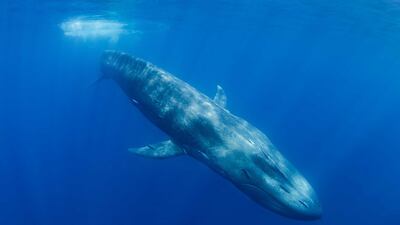
The blue whale, the world's biggest animal, is listed as endangered. However, the population is increasing in size. Getty Images -

The jaguar saw an estimated 20 to 25 per cent drop in numbers in the two decades or so up to its most recent assessment in 2016. EPA -
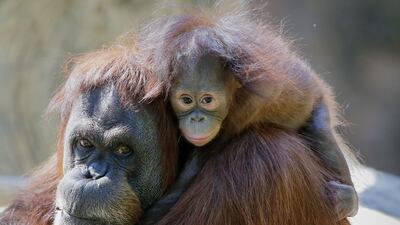
Three species of orangutan – the Bornean, the Sumatran and the Trapanuli, are all critically endangered. EPA -
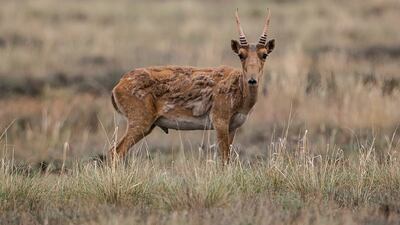
The saiga antelope has moved from critically endangered to near threatened, a three-category improvement. AFP -
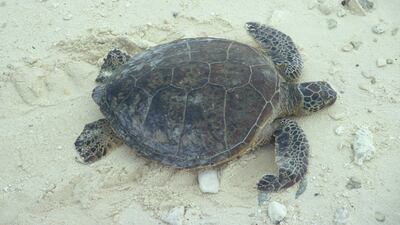
The Eastern Pacific green turtle is listed as vulnerable to extinction. USFWS -
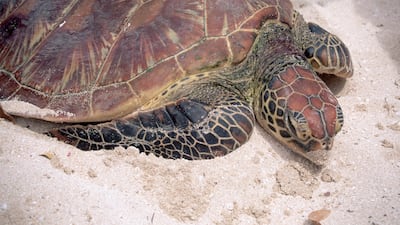
Green Sea Turtle in Fiji. Getty Images -

The scimitar-horned oryx, is now thriving in the wild in large part thanks to breeding efforts in the UAE. Reuters



