


The words "zombie virus discovered in Russian ice" sounds like something straight out of a horror film ― although after the pandemic, it's pretty difficult to shock any of us.
But scientists recently published research that shows viruses frozen for tens of thousands of years in Siberian permafrost are being revived.
Researchers from France, Germany and Russia revived 13 new types of virus that had been on ice in Siberian soil for between 27,000 and 48,500 years.
They said their work posed negligible risk to people ― unlike that of other scientists looking for ancient viruses in frozen remains of mammoths, woolly rhinoceroses or prehistoric horses.
Department of Clinical Microbiology, Umea University, Sweden
But their results could, they wrote, "be extrapolated to many other DNA viruses capable of infecting humans or animals".
"It is thus likely that ancient permafrost … will release these unknown viruses upon thawing," they said in bioRxiv, an online research portal, in December.
"How long these viruses could remain infectious once exposed to outdoor conditions and how likely they will be to encounter and infect a suitable host in the interval, is yet impossible to estimate.
"But the risk is bound to increase in the context of global warming, when permafrost thawing will keep accelerating, and more people will be populating the Arctic in the wake of industrial ventures."
'Back-from-the-dead' viruses
The so-called zombie viruses are no threat to people, being types that infect only micro-organisms, but other pathogens released in future as permafrost melts could, scientists say, pose risks to humans.
Reports from Greenpeace, the environmental organisation, have even asked if such "back-from-the-dead" pathogens could lead to a new pandemic.
The findings are an echo of the 1993 film Jurassic Park, in which scientists cloned dinosaurs using DNA taken from insects preserved in amber ― only for the creatures to wreak havoc on humankind.
Permafrost, or permanently frozen soil, is mostly found in Alaska, Canada and Siberia, and covers about a quarter of the Northern Hemisphere, but areas are thawing as the climate warms.
Numerous other research groups are looking at pathogens, including bacteria, and larger organisms being released as a result.
__________________________________
How the climate crisis is changing our world - in pictures
-
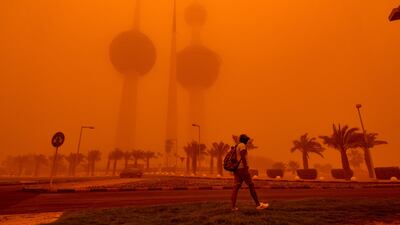
The Kuwait Towers are shrouded amid a sandstorm. The world has seen more extreme weather in the past decade, with the Gulf witnessing cyclones, flooding and extreme heat. EPA -
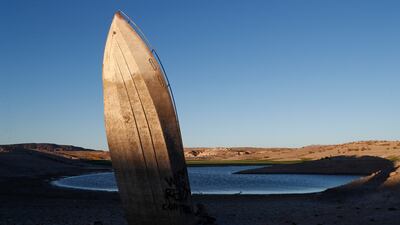
A formerly sunken boat sits upright on the shore of Lake Mead, Nevada, where water levels have dropped. EPA -
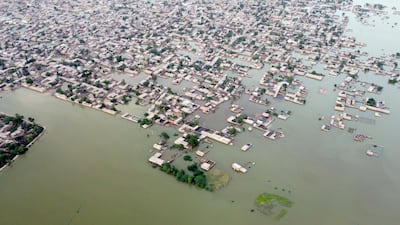
Homes surrounded by floodwater in Pakistan's south-western Baluchistan province earlier this year. AP Photo -
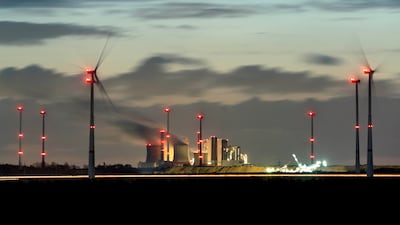
Steam rises from a coal-fired power plant near Grevenbroich, Germany. AP Photo -

Activists display prints replicating solar panels during a rally to mark Earth Day in Washington. AP Photo -
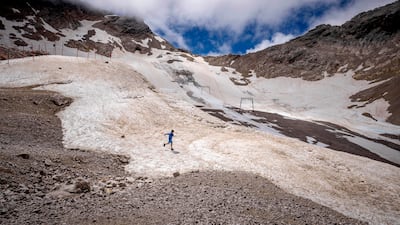
A glacier, which has lost most of its ice in the past few years, on Mount Zugspitze, Germany. AP Photo -
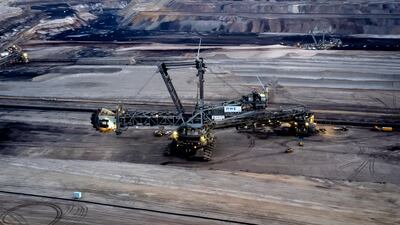
A bucket wheel excavator mining coal at an open-cast mine in Luetzerath, Germany. AP Photo -
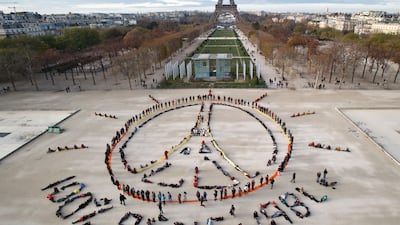
Climate activists form a human chain spelling out '100% renewable', at Cop21 in Paris in 2015. AP -

US president George W Bush and first lady Barbara Bush sign a pledge to protect the Earth in Rio de Janeiro in 1992. AP Photo -
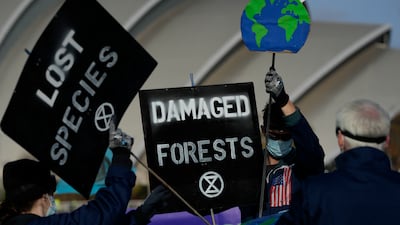
Extinction Rebellion activists holds placards at Cop26 last year in Glasgow, Scotland. AP Photo -

Demonstrators hold banners calling for a reduction in greenhouse gas emissions in Kyoto, Japan, in 1997. AP Photo -
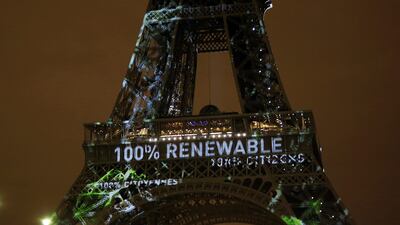
An artwork entitled 'One Heart One Tree' by Naziha Mestaoui is displayed on the Eiffel Tower before the 2015 Paris climate conference. AP Photo -
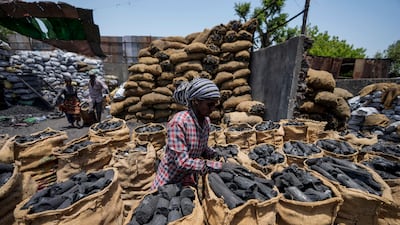
A woman works at a coal depot in Ahmedabad, India, in May. AP Photo -
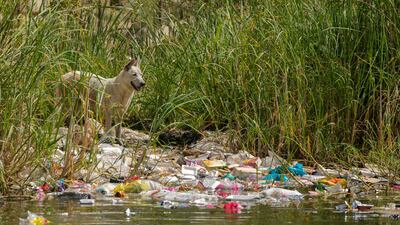
Plastic waste on the banks of the Nile in Cairo in September. AP Photo -
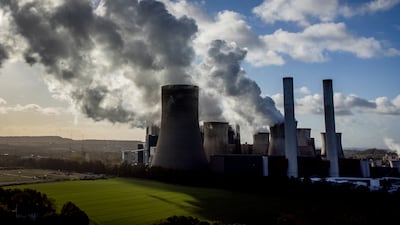
Steam rises from a coal-fired power plant Niederaussem, Germany. AP Photo -

Lake Poopo, home to the Uru Murato indigenous community in Bolivia, has largely become a desert. AFP -
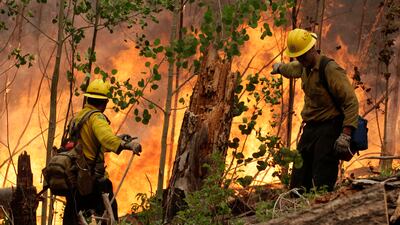
US firefighters battle a blaze near Los Alamos, New Mexico, in 2011. AP Photo -
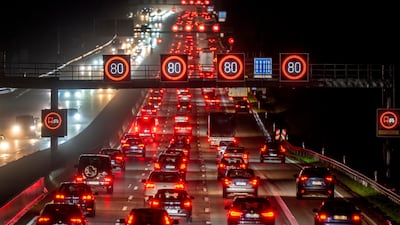
Cars on motorway in Frankfurt, Germany. Vehicle emissions are a contributor to climate change. AP Photo -
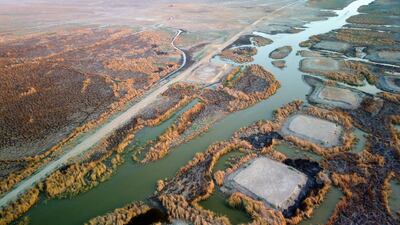
The rapidly drying marshes of Chibayish in Iraq's southern Dhi Qar province. AFP


__________________________________
Viruses dating back 15,000 years have been discovered in an ice cap in Tibet, research published last year revealed.
Even more extraordinarily, 2018 reports indicated that tiny nematode worms had been brought back to life from Siberian soil samples frozen for up to 42,000 years.
The researchers behind that study were confident that the creatures, which began to move and eat after being kept at 20°C in Petri dishes containing a nutrient medium, were not there because of contamination of samples.
Among those interested in the disease threats from permafrost micro-organisms is Prof Birgitta Evengard, of the Department of Clinical Microbiology at Umea University in Sweden.
Prof Evengard helped to organise a 2019 conference, Understanding and Responding to Global Health Security Risks from Microbial Threats in the Arctic.
Pandora's box
She said it was not possible to say that some pathogens found in thawing permafrost would definitely pose a threat to people, but there was a chance that they would.
"There’s a Pandora’s box ― they have the potential to be human pathogens," she said, adding that there would be spillover into the environment.
"In Siberia you have three rivers bringing out debris from permafrost into the Bering Sea, ocean currents that are quite busy.
"They will take it around the world in a couple of weeks. People don’t realise that. The world is very, very connected by all ecosystems ― the oceans, terrestrial and the air."
The risks are increased because research released a few months ago revealed that the Arctic has, since 1979, warmed nearly four times faster than the globe as a whole, a finding that Prof Evengard described as alarming.
"This means what’s happening in the Arctic is the driver for what’s going to happen in the rest of the world," she said.
It was important, she added, for scientists to have access to regions such as Siberia so that they could analyse what was happening.
Aside from potentially releasing pathogens into the environment and causing areas of land to collapse, the permafrost thawing risks accelerating climate change.
As ground thaws these microbes cause the release of carbon dioxide and methane, both greenhouse gases, because they consume organic matter in the soil.
This article was first published in December, 2022

