Planes at Ronald Reagan Washington National Airport in Arlington, Virginia. Business travellers say they are more frequently blending business and personal travel than they did in 2019. AFP

Global business travel spending to surpass pre-Covid levels of $1.4 trillion in 2024


Deena Kamel
  • English
  • Arabic

Business travel spending globally is rebounding at a faster-than-expected rate and is forecast to exceed its pre-Covid levels of $1.4 trillion in 2024 and grow to nearly $1.8 trillion by 2027 amid stable economic conditions.

The accelerated pace of recovery is due to pent-up demand, the return of in-person meetings and widespread economic recessions failing to materialise, according to the Global Business Travel Association (GBTA)'s latest annual outlook report.

The recovery is taking place faster than the previously projected timeline of mid-2026.

Global business travel spending in 2022 rose 47 per cent year-on-year to $1.03 trillion and is expected to grow 32 per cent in 2023 to $1.36 trillion, GBTA said.

“The headwinds that were anticipated to impact the rebound of global business travel over the past year didn’t materialise and that is good news," said Suzanne Neufang, chief executive of the GBTA.

The report findings indicate "an accelerated return to pre-pandemic spending levels sooner than anticipated as well as growth ahead in the coming years".

The report, published by the GBTA in collaboration with Visa, covered 72 countries and 44 industries. It surveyed 4,700 business travellers across North America, Latin America, Western and emerging Europe, and Asia Pacific.

Companies worldwide, from multinationals to smaller family-owned businesses, rely on travel to meet clients, boost revenue or connect with their employees in global offices.

Over the past 18 months, the most important factor driving the pace of the global business travel recovery is the progress made fighting the Covid-19 pandemic.

The two biggest drivers in the industry’s stabilisation in the past six months have been the return of in-person meetings and corporate events, and the recovery of some international business travel capacity and volumes, the report said.

In terms of regions, Western Europe was the fastest-growing region in 2022 for the recovery of business travel.

North America and Latin America's business travel spending growth also accelerated significantly in 2022.

However, emerging Europe continues to lag in its recovery, challenged by the war in the Ukraine, the report found.

Regionally, Asia Pacific was the "big laggard" last year due to the delayed reopening of the Chinese economy, it said.

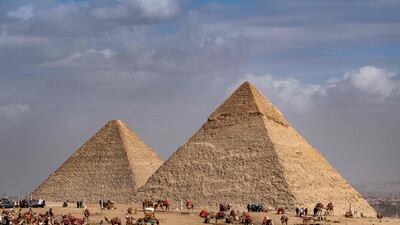
  • 1. Egypt is the most sought after destination for Mena travellers for the ninth consecutive year, according to online travel company Wego. AFP
    1. Egypt is the most sought after destination for Mena travellers for the ninth consecutive year, according to online travel company Wego. AFP
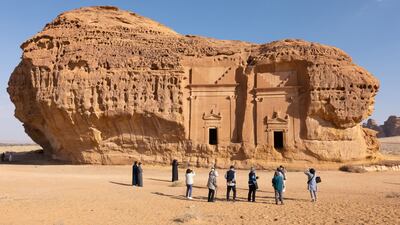
  • 2. Saudi Arabia: Tourists visit the ancient archaeological site of Hegra in AlUla. Bloomberg
    2. Saudi Arabia: Tourists visit the ancient archaeological site of Hegra in AlUla. Bloomberg
  • 3. India: Tourists visit the Taj Mahal during early morning in Agra. AFP
    3. India: Tourists visit the Taj Mahal during early morning in Agra. AFP
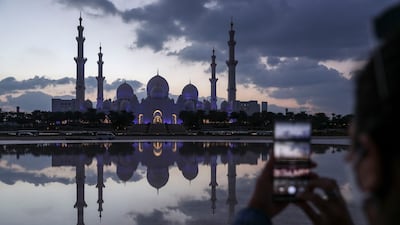
  • 4. UAE: Sheikh Zayed Grand Mosque on a cool evening in Abu Dhabi. Khushnum Bhandari / The National
    4. UAE: Sheikh Zayed Grand Mosque on a cool evening in Abu Dhabi. Khushnum Bhandari / The National
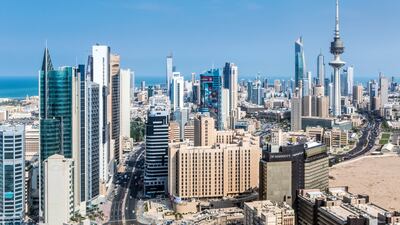
  • 5. Kuwait: The skyline and central business district of Kuwait City. Getty Images
    5. Kuwait: The skyline and central business district of Kuwait City. Getty Images
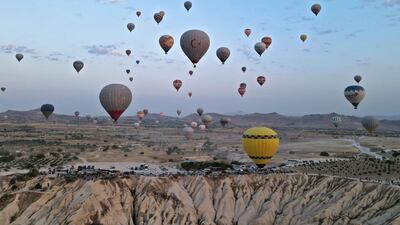
  • 6. Turkey: Hot-air balloons fly over Goreme Historical National Park in central Turkey's Cappadocia region. AFP
    6. Turkey: Hot-air balloons fly over Goreme Historical National Park in central Turkey's Cappadocia region. AFP
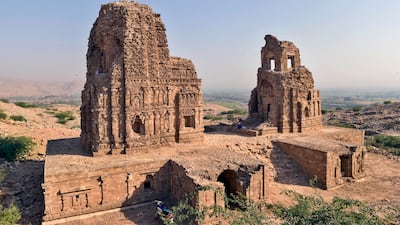
  • 7. Pakistan: The ancient ruins of Kafir Kot, Hindu temples in Dera Ismail Khan, Punjab province. AFP
    7. Pakistan: The ancient ruins of Kafir Kot, Hindu temples in Dera Ismail Khan, Punjab province. AFP
  • 8. Jordan: The ancient city of Petra, south of Amman. Reuters
    8. Jordan: The ancient city of Petra, south of Amman. Reuters
  • 9. Thailand: Tourists enjoy Phra Nang Beach in Krabi. AFP
    9. Thailand: Tourists enjoy Phra Nang Beach in Krabi. AFP
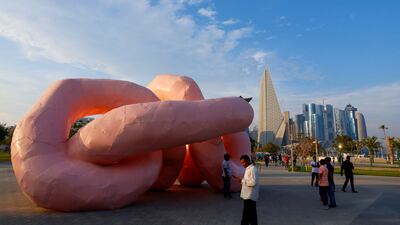
  • 10. Qatar: The Gekrose sculpture by Austrian artist Franz West, at the Doha seafront. AFP
    10. Qatar: The Gekrose sculpture by Austrian artist Franz West, at the Doha seafront. AFP

Chinese business travel spending fell 4.6 per cent last year, pushing the country to the number two business travel market in the world for the first time since 2014, the group said.

However, China is expected to recover back to being the top business travel market in the world by the end of 2023, according to its forecast.

In terms of industries, construction, education, and professional, scientific and technical activities showed the most resiliency in spending on work trips.

'Promising' outlook but challenges remain

"Looking forward, numerous challenges remain, including the war in Ukraine, persistent inflation in certain areas, much tighter global financial conditions and deterioration in the manufacturing sector," the report said.

While a "promising" rebound is expected, the industry's longer-term forecast will be affected by an increased focus on sustainability initiatives, widespread adoption of meeting technologies, growth in the remote workforce and the rise of blended travel.

The factors are "potential game changers" in the future of business travel, though currently there is not enough data to solidly forecast the potential impact on business travel spending and volume, the GBTA said.

Eighty-two per cent of the GBTA survey respondents said that business travel was very or moderately worthwhile in achieving their business objectives.

Business travellers globally currently estimate their own business travel spending, on average, amounts to $1,018 per person per trip. On average, accommodation accounts for $391, while food and beverage is $189. Air travel averages $182, while ground transportation ($136) and miscellaneous expenses ($120) rounds out the total.

About 62 per cent of the surveyed business travellers say they are more frequently blending business and personal trips, known as "bleisure" travel, than they did in 2019, with 42 per cent adding additional leisure days to their business trips. Up to 79 per cent of these travellers stay at the same accommodation for the business and holiday portions of their trip.

In terms of payment methods for business travel, 66 per cent of business travellers say their company provides them with a corporate credit card – of that percentage, about one-third say their company mandates its use for booking business travel.

For those provided a corporate card, 64 per cent have uploaded their card to a mobile wallet. Almost 87 per cent use their mobile wallet for at least 10 per cent of their business transactions.

“As travel continues to rebound, we expect digital payments to continue to grow because they make it easier and more secure to do things like purchase plane tickets for business travel or split a check at dinner,” said Gloria Colgan of Visa Commercial Solutions.


Ten tax points to be aware of in 2026

1. Domestic VAT refund amendments: request your refund within five years

If a business does not apply for the refund on time, they lose their credit.

2. E-invoicing in the UAE

Businesses should continue preparing for the implementation of e-invoicing in the UAE, with 2026 a preparation and transition period ahead of phased mandatory adoption. 

3. More tax audits

Tax authorities are increasingly using data already available across multiple filings to identify audit risks. 

4. More beneficial VAT and excise tax penalty regime

Tax disputes are expected to become more frequent and more structured, with clearer administrative objection and appeal processes. The UAE has adopted a new penalty regime for VAT and excise disputes, which now mirrors the penalty regime for corporate tax.

5. Greater emphasis on statutory audit

There is a greater need for the accuracy of financial statements. The International Financial Reporting Standards standards need to be strictly adhered to and, as a result, the quality of the audits will need to increase.

6. Further transfer pricing enforcement

Transfer pricing enforcement, which refers to the practice of establishing prices for internal transactions between related entities, is expected to broaden in scope. The UAE will shortly open the possibility to negotiate advance pricing agreements, or essentially rulings for transfer pricing purposes. 

7. Limited time periods for audits

Recent amendments also introduce a default five-year limitation period for tax audits and assessments, subject to specific statutory exceptions. While the standard audit and assessment period is five years, this may be extended to up to 15 years in cases involving fraud or tax evasion. 

8. Pillar 2 implementation 

Many multinational groups will begin to feel the practical effect of the Domestic Minimum Top-Up Tax (DMTT), the UAE's implementation of the OECD’s global minimum tax under Pillar 2. While the rules apply for financial years starting on or after January 1, 2025, it is 2026 that marks the transition to an operational phase.

9. Reduced compliance obligations for imported goods and services

Businesses that apply the reverse-charge mechanism for VAT purposes in the UAE may benefit from reduced compliance obligations. 

10. Substance and CbC reporting focus

Tax authorities are expected to continue strengthening the enforcement of economic substance and Country-by-Country (CbC) reporting frameworks. In the UAE, these regimes are increasingly being used as risk-assessment tools, providing tax authorities with a comprehensive view of multinational groups’ global footprints and enabling them to assess whether profits are aligned with real economic activity. 

Contributed by Thomas Vanhee and Hend Rashwan, Aurifer

START-UPS%20IN%20BATCH%204%20OF%20SANABIL%20500'S%20ACCELERATOR%20PROGRAMME
%3Cp%3E%3Cstrong%3ESaudi%20Arabia%3C%2Fstrong%3E%3C%2Fp%3E%0A%3Cp%3E%3Cstrong%3EJoy%3A%3C%2Fstrong%3E%20Delivers%20car%20services%20with%20affordable%20prices%3C%2Fp%3E%0A%3Cp%3E%3Cstrong%3EKaraz%3A%3C%2Fstrong%3E%20Helps%20diabetics%20with%20gamification%2C%20IoT%20and%20real-time%20data%3C%2Fp%3E%0A%3Cp%3E%3Cstrong%3EMedicarri%3A%3C%2Fstrong%3E%20Medical%20marketplace%20that%20connects%20clinics%20with%20suppliers%3C%2Fp%3E%0A%3Cp%3E%3Cstrong%3EMod5r%3C%2Fstrong%3E%3A%20Makes%20automated%20and%20recurring%20investments%20to%20grow%20wealth%3C%2Fp%3E%0A%3Cp%3E%3Cstrong%3EStuck%3A%3C%2Fstrong%3E%20Live%2C%20on-demand%20language%20support%20to%20boost%20writing%3C%2Fp%3E%0A%3Cp%3E%3Cstrong%3EWalzay%3A%3C%2Fstrong%3E%20Helps%20in%20recruitment%20while%20reducing%20hiring%20time%3C%2Fp%3E%0A%3Cp%3E%3Cstrong%3EUAE%3C%2Fstrong%3E%3C%2Fp%3E%0A%3Cp%3E%3Cstrong%3EEighty6%3A%20%3C%2Fstrong%3EMarketplace%20for%20restaurant%20and%20supplier%20procurements%3C%2Fp%3E%0A%3Cp%3E%3Cstrong%3EFarmUnboxed%3A%20%3C%2Fstrong%3EHelps%20digitise%20international%20food%20supply%20chain%3C%2Fp%3E%0A%3Cp%3E%3Cstrong%3ENutriCal%3A%3C%2Fstrong%3E%20Helps%20F%26amp%3BB%20businesses%20and%20governments%20with%20nutritional%20analysis%3C%2Fp%3E%0A%3Cp%3E%3Cstrong%3EWellxai%3A%3C%2Fstrong%3E%20Provides%20insurance%20that%20enables%20and%20rewards%20user%20habits%3C%2Fp%3E%0A%3Cp%3E%3Cstrong%3EEgypt%3C%2Fstrong%3E%3C%2Fp%3E%0A%3Cp%3E%3Cstrong%3EAmwal%3A%3C%2Fstrong%3E%20A%20Shariah-compliant%20crowd-lending%20platform%3C%2Fp%3E%0A%3Cp%3E%3Cstrong%3EDeben%3A%3C%2Fstrong%3E%20Helps%20CFOs%20manage%20cash%20efficiently%3C%2Fp%3E%0A%3Cp%3E%3Cstrong%3EEgab%3A%3C%2Fstrong%3E%20Connects%20media%20outlets%20to%20journalists%20in%20hard-to-reach%20areas%20for%20exclusives%3C%2Fp%3E%0A%3Cp%3E%3Cstrong%3ENeqabty%3A%3C%2Fstrong%3E%20Digitises%20financial%20and%20medical%20services%20of%20labour%20unions%3C%2Fp%3E%0A%3Cp%3E%3Cstrong%3EOman%3C%2Fstrong%3E%3C%2Fp%3E%0A%3Cp%3E%3Cstrong%3EMonak%3A%3C%2Fstrong%3E%20Provides%20financial%20inclusion%20and%20life%20services%20to%20migrants%3C%2Fp%3E%0A
Which honey takes your fancy?

Al Ghaf Honey

The Al Ghaf tree is a local desert tree which bears the harsh summers with drought and high temperatures. From the rich flowers, bees that pollinate this tree can produce delicious red colour honey in June and July each year

Sidr Honey

The Sidr tree is an evergreen tree with long and strong forked branches. The blossom from this tree is called Yabyab, which provides rich food for bees to produce honey in October and November. This honey is the most expensive, but tastiest

Samar Honey

The Samar tree trunk, leaves and blossom contains Barm which is the secret of healing. You can enjoy the best types of honey from this tree every year in May and June. It is an historical witness to the life of the Emirati nation which represents the harsh desert and mountain environments

Classification of skills

A worker is categorised as skilled by the MOHRE based on nine levels given in the International Standard Classification of Occupations (ISCO) issued by the International Labour Organisation. 

A skilled worker would be someone at a professional level (levels 1 – 5) which includes managers, professionals, technicians and associate professionals, clerical support workers, and service and sales workers.

The worker must also have an attested educational certificate higher than secondary or an equivalent certification, and earn a monthly salary of at least Dh4,000. 

HOW TO WATCH

Facebook: TheNationalNews  

Twitter: @thenationalnews  

Instagram: @thenationalnews.com  

TikTok: @thenationalnews 

A meeting of young minds

The 3,494 entries for the 2019 Sharjah Children Biennial come from:

435 – UAE

2,000 – China

808 – United Kingdom

165 – Argentina

38 – Lebanon

16 – Saudi Arabia

16 – Bangladesh

6 – Ireland

3 – Egypt

3 – France

2 – Sudan

1 – Kuwait

1 – Australia
 

Conflict, drought, famine

Estimates of the number of deaths caused by the famine range from 400,000 to 1 million, according to a document prepared for the UK House of Lords in 2024.
It has been claimed that the policies of the Ethiopian government, which took control after deposing Emperor Haile Selassie in a military-led revolution in 1974, contributed to the scale of the famine.
Dr Miriam Bradley, senior lecturer in humanitarian studies at the University of Manchester, has argued that, by the early 1980s, “several government policies combined to cause, rather than prevent, a famine which lasted from 1983 to 1985. Mengistu’s government imposed Stalinist-model agricultural policies involving forced collectivisation and villagisation [relocation of communities into planned villages].
The West became aware of the catastrophe through a series of BBC News reports by journalist Michael Buerk in October 1984 describing a “biblical famine” and containing graphic images of thousands of people, including children, facing starvation.

Band Aid

Bob Geldof, singer with the Irish rock group The Boomtown Rats, formed Band Aid in response to the horrific images shown in the news broadcasts.
With Midge Ure of the band Ultravox, he wrote the hit charity single Do They Know it’s Christmas in December 1984, featuring a string of high-profile musicians.
Following the single’s success, the idea to stage a rock concert evolved.
Live Aid was a series of simultaneous concerts that took place at Wembley Stadium in London, John F Kennedy Stadium in Philadelphia, the US, and at various other venues across the world.
The combined event was broadcast to an estimated worldwide audience of 1.5 billion.

Updated: August 16, 2023, 9:43 PM