


The GCC's hospitality industry will return to pre-coronavirus levels in 2022, boosted by an increase in tourist arrivals, easing visa regulations and the hosting of big events such as the coming Fifa World Cup in Qatar.
The industry's revenue is expected to grow by 74.8 per cent a year to $26.3 billion in 2022, as regional governments invest heavily in developing business, leisure and entertainment centres, said a report by Alpen Capital that was released on Wednesday.
“Revival in business activity as economies reopened post-pandemic led to M&A [merger and acquisition] activity stirring up again in the region,” said Alpen Capital managing director Sanjay Bhatia.
“The GCC witnessed several cross-border transactions as companies focused on strengthening their geographical presence while also expanding and diversifying their service offerings.
“Going forward, consolidation in the hotel sector is likely to intensify as pressure on companies to drive earnings and gain market share continues to mount in the face of rising competition and increasing threat from online portals and alternative lodging service providers.”
Higher oil and gas prices will further support economic growth in GCC countries during the rest of this year and into 2023, bolstering a steady recovery from the coronavirus-induced slowdown that began in the second half of last year, according to KPMG's Global Economic Outlook report.
Private sector activity in the GCC, which has improved after the easing of Covid-19 restrictions, will further benefit from elevated international energy prices as they strengthen the bloc's fiscal and balance of payments accounts, KPMG said.
The outlook for hotels in the Mena region is “positive” in 2022, with most markets in the region expected to improve on last year's performance as Covid-related safety measures help to mitigate the pandemic's long-term impact on recovery, Colliers said in a separate report in March.
The Gulf region's hospitality industry is expected to expand at a compound annual rate of 6.6 per cent between 2022 and 2026 to $34bn, Alpen Capital said.
This medium-term growth will be driven by governments adopting strategies to boost tourism, economic recovery across the region, as well as increasing tourist arrivals.
The GCC's largest markets, Saudi Arabia and UAE, are expected to record compound annual growth rates of 8 per cent and 5.5 per cent, respectively, during the period.
Hotels in Kuwait, Oman and Bahrain are projected to grow at 7.1 per cent, 6.3 per cent and 2.9 per cent, respectively, between 2022 to 2026.
__________________________
Tourism in Dubai - in pictures
-
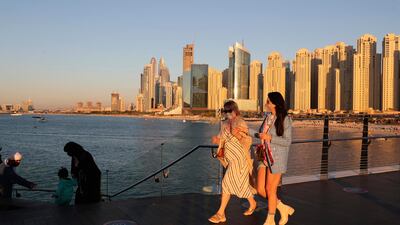
Tourists walk along the bridge from Jumeirah Beach Residence to Bluewaters Island on a cool January day. The city is one of the global hubs fully open to tourists, who have flocked there for a break from lockdown at home. AP -

Tourists and residents enjoy the sunset at Jumeirah Beach Residence, with the Dubai Eye on Bluewaters Island in the background -

Mask-clad Israeli tourists walk towards their bus after a visit to the historic Al Fahidi neighbourhood near Dubai Creek. AFP -
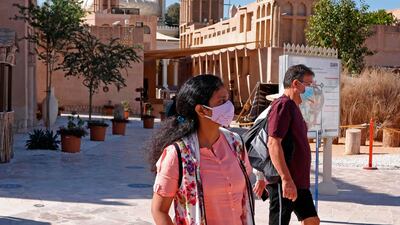
A mask-clad tourist pictured with the windtowers of Al Fahidi in the background. AFP -

A tourist sandboards down a dune in the Dubai desert -

A man slides along a zip line over the Marina -

Tourists look at the skyline at sunset. AP -
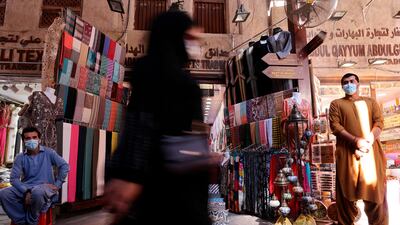
Dubai’s main souq, alongside the Creek. AFP -
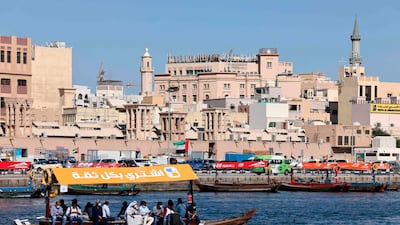
People ride an abra on the Creek between Deira and Bur Dubai. AFP


__________________________
Growth in Qatar is expected to “normalise” after the World Cup ends, with an annual expansion of 4.3 per cent between 2023 and 2026, the report said.
Other operating metrics for the hospitality industry are also set to improve in the medium term.
The average occupancy rate across hotels in the GCC is forecast to rise to 62 per cent in 2026, from 57 per cent in 2022, said Alpen Capital.
The average daily rate is projected to increase to $151 in 2026, from $145 this year.
Revenue Per Available Room (RevPar), a key performance metric for the industry, is expected to increase to $93 in 2026, from $83 this year, representing an annual growth rate of 1.1 per cent and 2.9 per cent, respectively.
However, the report also issued a warning on the impact of higher inflation on the region's hospitality industry.
The high rate of inflation is expected to affect consumer spending power while travel could also be hit by uneven Covid-19 vaccination rates and new virus strains, it said.

