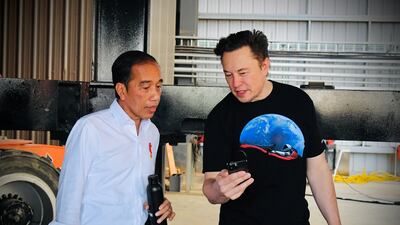
The Elon Musk “will he, won't he buy Twitter” saga has been rumbling on for a number of months now, and may have finally reached a conclusion.
The controversial deal was heading for the courtroom, after Mr Musk attempted to pull out of the $44 billion acquisition deal.
But in a late twist on Tuesday, a filing with the US Securities and Exchange Commission showed Mr Musk was going ahead with his original offer.
Twitter shares jumped more than 22 per cent to end at $52 on Tuesday.
Here's all you need to know about the situation:
The deal — and why Mr Musk did it
Having built up his stake in the company and then rejecting a seat on the board, an agreement was reached between Mr Musk, the world's richest person and chief executive of electric car maker Tesla, and Twitter's board in April for the social media platform to be sold in its entirety for $44bn.
The plan was for the company to be taken private, with stockholders receiving $54.20 per share, a 38 per cent premium over the social platform's closing stock price on April 1. A regulatory filing showed that Mr Musk was personally committing $33.5bn to the deal, which included $21bn of equity and $12.5bn from margin loans.
Mr Musk, a proponent of free speech, released a statement in which he explained his purchase.
“Free speech is the bedrock of a functioning democracy and Twitter is the digital town square where matters vital to the future of humanity are debated,” he said.
Mr Musk said he wanted to introduce new features and make algorithms open source to increase trust, “defeat the spam bots, and authenticating all humans”.
The reference to defeating the spam bots was a sign of things to come.
A new reason for him buying Twitter came to light amid his about turn on October 3. He tweeted: “Buying Twitter is an accelerant to creating X, the everything app”.
There is no further information on what X, the everything app would entail. However, he did say that “Twitter probably accelerates X by three to five years, but I could be wrong”.
Based on the billionaire’s past comments, that service could look a lot like Chinese super-app WeChat, Bloomberg reported.
He has openly admired the Tencent Holdings' app that’s grown from a messaging service to a mini-internet used daily by more than a billion Chinese.
WeChat is used to book rides, make dining reservations, order food, while users also send each other money, pay for goods and services, and even borrow money. It is basically an all-in-one service combining the uses of apps such as Facebook, Twitter, Uber, Instagram and Substack.
What was the initial reaction to the deal?
It created quite a stir across the financial world, social media and among Twitter employees who were left wondering how their jobs and workplace would be affected.
“Elon [Musk] knows one thing, and that is having things his way … [but] he hasn't given out how he wants to improve free speech,” Naeem Aslam, chief market analyst at AvaTrade, said in a note.
“If the platform is left ungoverned, it could promote racism, hurting its massive user base. There is little to no information on how Elon wants to improve Twitter's platform, although he has provided clues about what he doesn't like in the platform.”
Meanwhile, former US president Donald Trump said that he had no intention of rejoining Twitter if his account was reinstated.
And Saudi billionaire Prince Alwaleed bin Talal, who owns a stake in Twitter through his Kingdom Holding Company, said that Elon Musk would be “an excellent leader” for Twitter after he agreed to retain his $1.9bn stake.
The Wall Street Journal reported in early May that Mr Musk could take Twitter public again after he finalises the deal. He could list it as soon as three years after buying the company, the newspaper reported, citing sources.
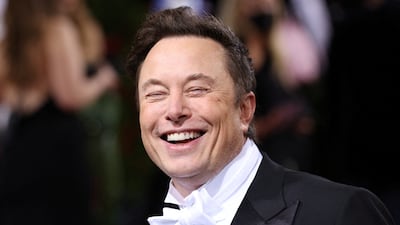
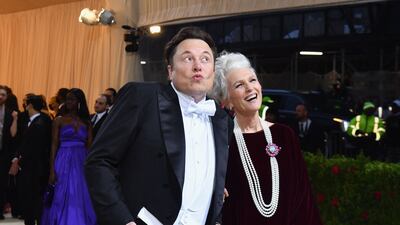
Mr Musk gave a brief insight into his plans when he appeared at the Met Gala and said: “My goal, assuming everything gets done, is to make Twitter as inclusive as possible and to have as broad a swathe of people on Twitter as possible.”
Cracks appear
The deal took a turn for the worse on May 13 when Mr Musk said it was on hold pending details on the number of fake accounts on Twitter. He tweeted that he wanted evidence that fewer than 5 per cent of users were spam/fake accounts, but said that he was “still committed to the acquisition”.
Under the agreement, if Mr Musk abandoned the deal, he would have to pay a $1bn break-up fee.
The bots
The bots have remained the thorny issue in the deal.
Twitter chief executive Parag Agrawal hit back at Mr Musk's concerns, saying that spam accounts accounted for less 5 per cent of users and that Twitter locks millions of accounts each week that it suspects could be fake.
However, a study by Israeli cyber security company Cheq showed that bots amount to up to 12 per cent of visits on the social media platform.
“The data suggests that Twitter's bot problem is probably larger than 5 per cent,” said Guy Tytunovich, founder and chief executive of Cheq.
Research company Bot Sentinel estimated that 10 per cent to 15 per cent of accounts on Twitter are inauthentic, according to a Bloomberg report, while Cyabra, a research company with a different methodology, puts the percentage of inauthentic Twitter profiles at 13.7 per cent.
The bot argument has see-sawed ever since, with Mr Musk alleging that he was misled but saying in August that if Twitter “simply provides their method of sampling 100 accounts and how they are confirmed to be real, the deal should proceed on original terms”.
'Swimming naked': a major breakdown
Proof that the deal had truly soured came on July 13, when it was confirmed that Twitter was suing Mr Musk for reneging on the deal. Lawyers for Twitter told a Delaware judge that Mr Musk had failed to honour his agreement to pay $54.20 a share.
The language became more colourful as Twitter said in an SEC filing that Mr Musk's claims he was being “hoodwinked” were “just a story, imagined in an effort to escape a merger agreement that Mr Musk no longer found attractive once the stock market, and along with it, his massive personal wealth, declined in value”.
Mr Musk's counterclaims filed in a Delaware court said: “As a long bull market was coming to a close, and the tide was going out, Twitter knew that providing the Musk Parties the information they were requesting would reveal that Twitter had been swimming naked.”
He accused the microblogging site of having played a “months-long game of hide and seek”.
The court case — what's next?
The courtroom showdown was set to take place from October 17 in Wilmington.
The judge presiding over the Delaware case has yet to publicly weigh in on Mr Musk's new proposal, but what she says could determine the next steps.
Twitter's deposition of Mr Musk — set to begin on Thursday — and even the October 17 trial itself could still go forward if Twitter isn’t assured that the deal is closing, Ann Lipton, an associate law professor at Tulane University, told The Associated Press.
“Twitter is not going to let that proceeding stop until it gets that 100 per cent reassurance,” she said.
Mr Musk doesn't own Twitter yet, and it is still not clear if or when he would take it over.
But if the deal does go through, Ms Lipton said Mr Musk could be in charge of Twitter in a matter of days — however long it takes him and his co-investors to line up the cash.
What happened this week is that his lawyer sent a letter to Twitter saying he will complete the deal as long as he lines up the promised debt financing and provided that the Delaware Chancery Court drops Twitter's lawsuit against him.
Has Mr Musk spoken to Twitter staff?
Yes, he did so in June and conversation moved into the realm of alien civilisations during the 45-minute call.
There was also some serious chat, as he discussed freedom of speech, possible job cuts, remote working and troll farms.
— Agencies contributed to this article

Mercer, the investment consulting arm of US services company Marsh & McLennan, expects its wealth division to at least double its assets under management (AUM) in the Middle East as wealth in the region continues to grow despite economic headwinds, a company official said.
Mercer Wealth, which globally has $160 billion in AUM, plans to boost its AUM in the region to $2-$3bn in the next 2-3 years from the present $1bn, said Yasir AbuShaban, a Dubai-based principal with Mercer Wealth.
“Within the next two to three years, we are looking at reaching $2 to $3 billion as a conservative estimate and we do see an opportunity to do so,” said Mr AbuShaban.
Mercer does not directly make investments, but allocates clients’ money they have discretion to, to professional asset managers. They also provide advice to clients.
“We have buying power. We can negotiate on their (client’s) behalf with asset managers to provide them lower fees than they otherwise would have to get on their own,” he added.
Mercer Wealth’s clients include sovereign wealth funds, family offices, and insurance companies among others.
From its office in Dubai, Mercer also looks after Africa, India and Turkey, where they also see opportunity for growth.
Wealth creation in Middle East and Africa (MEA) grew 8.5 per cent to $8.1 trillion last year from $7.5tn in 2015, higher than last year’s global average of 6 per cent and the second-highest growth in a region after Asia-Pacific which grew 9.9 per cent, according to consultancy Boston Consulting Group (BCG). In the region, where wealth grew just 1.9 per cent in 2015 compared with 2014, a pickup in oil prices has helped in wealth generation.
BCG is forecasting MEA wealth will rise to $12tn by 2021, growing at an annual average of 8 per cent.
Drivers of wealth generation in the region will be split evenly between new wealth creation and growth of performance of existing assets, according to BCG.
Another general trend in the region is clients’ looking for a comprehensive approach to investing, according to Mr AbuShaban.
“Institutional investors or some of the families are seeing a slowdown in the available capital they have to invest and in that sense they are looking at optimizing the way they manage their portfolios and making sure they are not investing haphazardly and different parts of their investment are working together,” said Mr AbuShaban.
Some clients also have a higher appetite for risk, given the low interest-rate environment that does not provide enough yield for some institutional investors. These clients are keen to invest in illiquid assets, such as private equity and infrastructure.
“What we have seen is a desire for higher returns in what has been a low-return environment specifically in various fixed income or bonds,” he said.
“In this environment, we have seen a de facto increase in the risk that clients are taking in things like illiquid investments, private equity investments, infrastructure and private debt, those kind of investments were higher illiquidity results in incrementally higher returns.”
The Abu Dhabi Investment Authority, one of the largest sovereign wealth funds, said in its 2016 report that has gradually increased its exposure in direct private equity and private credit transactions, mainly in Asian markets and especially in China and India. The authority’s private equity department focused on structured equities owing to “their defensive characteristics.”
German intelligence warnings
- 2002: "Hezbollah supporters feared becoming a target of security services because of the effects of [9/11] ... discussions on Hezbollah policy moved from mosques into smaller circles in private homes." Supporters in Germany: 800
- 2013: "Financial and logistical support from Germany for Hezbollah in Lebanon supports the armed struggle against Israel ... Hezbollah supporters in Germany hold back from actions that would gain publicity." Supporters in Germany: 950
- 2023: "It must be reckoned with that Hezbollah will continue to plan terrorist actions outside the Middle East against Israel or Israeli interests." Supporters in Germany: 1,250
Source: Federal Office for the Protection of the Constitution
UAE players with central contracts
Rohan Mustafa, Ashfaq Ahmed, Chirag Suri, Rameez Shahzad, Shaiman Anwar, Adnan Mufti, Mohammed Usman, Ghulam Shabbir, Ahmed Raza, Qadeer Ahmed, Amir Hayat, Mohammed Naveed and Imran Haider.
Teri%20Baaton%20Mein%20Aisa%20Uljha%20Jiya
%3Cp%3E%3Cstrong%3EDirectors%3A%3C%2Fstrong%3E%20Amit%20Joshi%20and%20Aradhana%20Sah%3C%2Fp%3E%0A%3Cp%3E%3Cstrong%3ECast%3A%3C%2Fstrong%3E%20Shahid%20Kapoor%2C%20Kriti%20Sanon%2C%20Dharmendra%2C%20Dimple%20Kapadia%2C%20Rakesh%20Bedi%3C%2Fp%3E%0A%3Cp%3E%3Cstrong%3ERating%3A%3C%2Fstrong%3E%204%2F5%3C%2Fp%3E%0A
The specs: 2018 Mazda CX-5
Price, base / as tested: Dh89,000 / Dh130,000
Engine: 2.5-litre four-cylinder
Power: 188hp @ 6,000rpm
Torque: 251Nm @ 4,000rpm
Transmission: Six-speed automatic
Fuel consumption, combined: 7.1L / 100km
The specs
Price: From Dh529,000
Engine: 5-litre V8
Transmission: Eight-speed auto
Power: 520hp
Torque: 625Nm
Fuel economy, combined: 12.8L/100km
McLaren GT specs
Engine: 4-litre twin-turbo V8
Transmission: seven-speed
Power: 620bhp
Torque: 630Nm
Price: Dh875,000
On sale: now
Empires%20of%20the%20Steppes%3A%20A%20History%20of%20the%20Nomadic%20Tribes%20Who%20Shaped%20Civilization
%3Cp%3E%3Cstrong%3EAuthor%3A%20%3C%2Fstrong%3EKenneth%20W%20Harl%3Cstrong%3E%3Cbr%3EPublisher%3A%20%3C%2Fstrong%3EHanover%20Square%20Press%3Cstrong%3E%3Cbr%3EPages%3A%20%3C%2Fstrong%3E576%3C%2Fp%3E%0A
UEFA CHAMPIONS LEAGUE FIXTURES
All kick-off times 10.45pm UAE ( 4 GMT) unless stated
Tuesday
Sevilla v Maribor
Spartak Moscow v Liverpool
Manchester City v Shakhtar Donetsk
Napoli v Feyenoord
Besiktas v RB Leipzig
Monaco v Porto
Apoel Nicosia v Tottenham Hotspur
Borussia Dortmund v Real Madrid
Wednesday
Basel v Benfica
CSKA Moscow Manchester United
Paris Saint-Germain v Bayern Munich
Anderlecht v Celtic
Qarabag v Roma (8pm)
Atletico Madrid v Chelsea
Juventus v Olympiakos
Sporting Lisbon v Barcelona
Results:
6.30pm: Handicap | US$135,000 (Dirt) | 1,400 metres
Winner: Rodaini, Connor Beasley (jockey), Ahmad bin Harmash (trainer)
7.05pm: Handicap | $135,000 (Turf) | 1,200m
Winner: Ekhtiyaar, Jim Crowley, Doug Watson
7.40pm: Dubai Millennium Stakes | Group 3 | $200,000 (T) | 2,000m
Winner: Spotify, James Doyle, Charlie Appleby
8.15pm: UAE Oakes | Group 3 | $250,000 (D) | 1,900m
Winner: Divine Image, William Buick, Charlie Appleby
8.50pm: Zabeel Mile | Group 2 | $250,000 (T) | 1,600m
Winner: Mythical Image, William Buick, Charlie Appleby
9.20pm: Handicap | $135,000 (T) | 1,600m
Winner: Major Partnership, Kevin Stott, Saeed bin Suroor
Red flags
- Promises of high, fixed or 'guaranteed' returns.
- Unregulated structured products or complex investments often used to bypass traditional safeguards.
- Lack of clear information, vague language, no access to audited financials.
- Overseas companies targeting investors in other jurisdictions - this can make legal recovery difficult.
- Hard-selling tactics - creating urgency, offering 'exclusive' deals.
Courtesy: Carol Glynn, founder of Conscious Finance Coaching
Who's who in Yemen conflict
Houthis: Iran-backed rebels who occupy Sanaa and run unrecognised government
Yemeni government: Exiled government in Aden led by eight-member Presidential Leadership Council
Southern Transitional Council: Faction in Yemeni government that seeks autonomy for the south
Habrish 'rebels': Tribal-backed forces feuding with STC over control of oil in government territory
COMPANY PROFILE
Name: Rain Management
Year started: 2017
Based: Bahrain
Employees: 100-120
Amount raised: $2.5m from BitMex Ventures and Blockwater. Another $6m raised from MEVP, Coinbase, Vision Ventures, CMT, Jimco and DIFC Fintech Fund
The specs
Engine: 2.0-litre 4-cyl turbo
Power: 247hp at 6,500rpm
Torque: 370Nm from 1,500-3,500rpm
Transmission: 10-speed auto
Fuel consumption: 7.8L/100km
Price: from Dh94,900
On sale: now
Timeline
2012-2015
The company offers payments/bribes to win key contracts in the Middle East
May 2017
The UK SFO officially opens investigation into Petrofac’s use of agents, corruption, and potential bribery to secure contracts
September 2021
Petrofac pleads guilty to seven counts of failing to prevent bribery under the UK Bribery Act
October 2021
Court fines Petrofac £77 million for bribery. Former executive receives a two-year suspended sentence
December 2024
Petrofac enters into comprehensive restructuring to strengthen the financial position of the group
May 2025
The High Court of England and Wales approves the company’s restructuring plan
July 2025
The Court of Appeal issues a judgment challenging parts of the restructuring plan
August 2025
Petrofac issues a business update to execute the restructuring and confirms it will appeal the Court of Appeal decision
October 2025
Petrofac loses a major TenneT offshore wind contract worth €13 billion. Holding company files for administration in the UK. Petrofac delisted from the London Stock Exchange
November 2025
180 Petrofac employees laid off in the UAE
Anxiety and work stress major factors
Anxiety, work stress and social isolation are all factors in the recogised rise in mental health problems.
A study UAE Ministry of Health researchers published in the summer also cited struggles with weight and illnesses as major contributors.
Its authors analysed a dozen separate UAE studies between 2007 and 2017. Prevalence was often higher in university students, women and in people on low incomes.
One showed 28 per cent of female students at a Dubai university reported symptoms linked to depression. Another in Al Ain found 22.2 per cent of students had depressive symptoms - five times the global average.
It said the country has made strides to address mental health problems but said: “Our review highlights the overall prevalence of depressive symptoms and depression, which may long have been overlooked."
Prof Samir Al Adawi, of the department of behavioural medicine at Sultan Qaboos University in Oman, who was not involved in the study but is a recognised expert in the Gulf, said how mental health is discussed varies significantly between cultures and nationalities.
“The problem we have in the Gulf is the cross-cultural differences and how people articulate emotional distress," said Prof Al Adawi.
“Someone will say that I have physical complaints rather than emotional complaints. This is the major problem with any discussion around depression."
Daniel Bardsley
HEY%20MERCEDES%2C%20WHAT%20CAN%20YOU%20DO%20FOR%20ME%3F
%3Cp%3EMercedes-Benz's%20MBUX%20digital%20voice%20assistant%2C%20Hey%20Mercedes%2C%20allows%20users%20to%20set%20up%20commands%20for%3A%3C%2Fp%3E%0A%3Cp%3E%E2%80%A2%20Navigation%3C%2Fp%3E%0A%3Cp%3E%E2%80%A2%20Calls%3C%2Fp%3E%0A%3Cp%3E%E2%80%A2%20In-car%20climate%3C%2Fp%3E%0A%3Cp%3E%E2%80%A2%20Ambient%20lighting%3C%2Fp%3E%0A%3Cp%3E%E2%80%A2%20Media%20controls%3C%2Fp%3E%0A%3Cp%3E%E2%80%A2%20Driver%20assistance%3C%2Fp%3E%0A%3Cp%3E%E2%80%A2%20General%20inquiries%20such%20as%20motor%20data%2C%20fuel%20consumption%20and%20next%20service%20schedule%2C%20and%20even%20funny%20questions%3C%2Fp%3E%0A%3Cp%3E%3Cstrong%3EThere's%20also%20a%20hidden%20feature%3A%3C%2Fstrong%3E%20pressing%20and%20holding%20the%20voice%20command%20button%20on%20the%20steering%20wheel%20activates%20the%20voice%20assistant%20on%20a%20connected%20smartphone%20%E2%80%93%20Siri%20on%20Apple's%20iOS%20or%20Google%20Assistant%20on%20Android%20%E2%80%93%20enabling%20a%20user%20to%20command%20the%20car%20even%20without%20Apple%20CarPlay%20or%20Android%20Auto%3C%2Fp%3E%0A
Secret Pigeon Service: Operation Colomba, Resistance and the Struggle to Liberate Europe
Gordon Corera, Harper Collins
MATCH INFO
Manchester City 4 (Gundogan 8' (P), Bernardo Silva 19', Jesus 72', 75')
Fulham 0
Red cards: Tim Ream (Fulham)
Man of the Match: Gabriel Jesus (Manchester City)