


Mubadala Investment Company, Abu Dhabi’s strategic investment arm, signed a preliminary agreement with French utility Engie to develop a digital platform to charge electric vehicles in the UAE capital and across the Middle East.
As part of the agreement, the two companies will collaborate on developing a joint solution for the installation and operation of charging infrastructure in Abu Dhabi and the UAE, and will explore areas related to sustainable mobility, Mubadala said on Tuesday.
“Mubadala is committed to driving sustainability in the UAE and the wider region by laying the foundation and advancing future-focused sectors in the fields of technology and mobility,” said Badr Al Olama, Mubadala’s executive director of UAE Investments.
“Our agreement with Engie will support developing a digital platform for charging electric vehicles, and creating accessible, safe and sustainable mobility solutions to support the UAE’s climate action agenda.”
The UAE is expanding efforts to shift to greener technology, most notably under its Net Zero 2050 Strategic Initiative, which calls for Dh600bn ($163.37bn) to be invested in clean and renewable energy sources in the next three decades.
EVs are expected to play a major part in this programme, as transport is the biggest contributor to carbon emissions.
Global carbon dioxide emissions reached their highest annual level in 2021, rising by 6 per cent to 36.3 gigatonnes, figures from the International Energy Agency show.
-
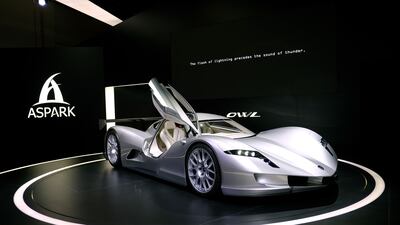
Aspark Owl, $3.6 million. Getty Images -

Pininfarina Battista, $2.6 million. Photo: Automobili Pininfarina -

Rimac Nevera, $2.5 million. AP Photo -
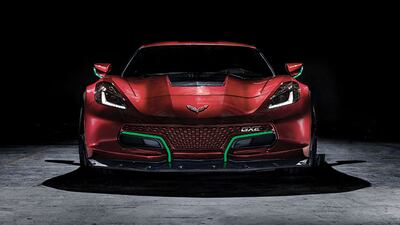
Genovation GXE, $750,000. Photo: Genovation -

Mercedes Benz SLS AMG Electric Drive, $550,000. Photo: Daimler AG -

Rolls Royce 102 EX, $500,000. Getty Images -

Lightning GT, $300,000. Alamy -
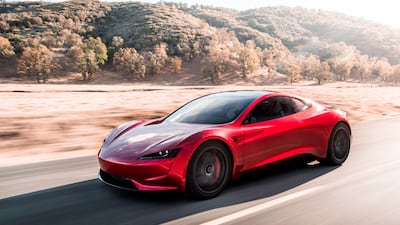
Tesla Roadster, $200,000. Reuters -

Porsche Taycan Turbo S, $185,000. AFP -
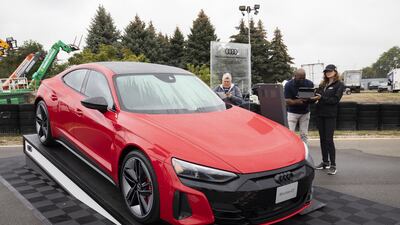
Audi e-Tron GT, $164,000. AFP


Global sales of EVs more than doubled to 6.6 million in 2021, according to the Paris-based IEA.
The willingness of consumers in the UAE to use EVs has continued to attract investments. Tesla Motors, the world’s biggest EV manufacturer, opened its showroom in Dubai in July 2017, marking its first in the Middle East.
Last month, Abu Dhabi said it would host the Mena region’s first conference focused on EVs from May 23 to May 25. The event is expected to attract important players in the EV market.
Developing an EV-friendly digital platform can play an important role in helping the UAE to achieve its net zero goals by 2050, Mubadala said.
The UAE is leading the change towards independent electric cars in the region and aims to have “about 42,000 electric cars on its streets by 2030”, said Ian Harfield, managing director of Engie Energy Solutions.
“This partnership with Mubadala is a commitment of our contribution to the UAE’s evolution towards green mobility,” he said.
“Sustainable mobility will emerge as one of the greatest challenges facing urban planners. Adoption of clean fuels and electrification of public and private transport systems will be key levers for reducing carbon emissions and pollutants in cities.”
Mubadala’s executive director of UAE Investments
Separately, Mubadala said on Tuesday that it had invested in sales engagement platform Salesloft, alongside Vista Equity Partners.
Global investment company Vista, with more than $93 billion in assets under management, took a majority stake in Salesloft in December 2021. Mubadala participated in the transaction.
The deal, valued at $2.3bn, will help sellers and sales teams to generate more revenue.
“Salesloft offers … [a] platform for sales engagement and drives significant ROI [return on investment] for its customers by increasing the productivity of their sales processes; we are very excited to invest in their business alongside Vista,” said Ali Osman, head of Technology at Mubadala.
Founded in 2011, Salesloft has about 4,000 customers, including Alphabet’s Google, IBM and Microsoft’s LinkedIn.

