

Publicly, Elon Musk has said he doesn’t care about the economics of owning Twitter.
But during a hectic, multi-day scramble to line up $46.5 billion of funds to buy the social media platform, the world’s richest person shared enough of a vision with a dozen banks to persuade them to pull out their chequebooks.
Mr Musk’s plan for loading Twitter with more debt without tipping its credit rating into the deepest levels of junk was a crucial factor in getting the banks to bet on his bid, according to people familiar with the matter.
Since they’re being asked to back an unsolicited offer, where access to the target’s books is off limits, potential lenders weren’t able to do due diligence on Twitter beyond what’s in public filings. So, in deciding whether to offer up billions of dollars in financing over a matter of days, they mostly had to rely on Mr Musk’s plans.
His advisers presented the billionaire’s investment thesis to potential lenders during a call on Monday. Some of the lenders saw a slide presentation offering Mr Musk’s ideas around how Twitter’s business could be run, as well as its financial profile and how to boost revenue, said the people, who asked not to be identified as the details aren’t public.
Mr Musk’s enthusiasm for the deal was also emphasised and he appeared on Zoom calls with some of the top lenders where he appeared engaged, some of the people said.
While he has tweeted about plans to authenticate Twitter users and stop paying its board a salary, he’s not publicly outlined much about how he’d manage the company.
After weeks of questions over Mr Musk’s Twitter bid, things got more serious on Thursday as he revealed details of how a takeover would be financed.
The Tesla mogul lined up about $13bn in debt financing and a $12.5bn margin loan commitment from Morgan Stanley and 11 other banks, and pledged an additional $21bn through equity financing. Besides Morgan Stanley, other banks that appeared on both loans include MUFG Bank, Bank of America, Mizuho, BNP Paribas, Société Générale and Barclays.
Twitter has yet to respond to his proposal beyond saying it’s conducting a comprehensive review of the offer. The company has a quarterly conference call on Thursday and investors will be watching to see whether management addresses the bid.
When Mr Musk unveiled his $54.20-per-share offer for Twitter on April 14, he said Morgan Stanley was on board as his lead adviser. As well as being the first to offer to provide debt, the Wall Street giant led the process of getting other banks involved.

Lenders were approached on Saturday, and pulled all-nighters as they rushed to get the deal together over the Easter and Passover break and into this week, people familiar with the process said. Most of the banks signed commitment letters Wednesday, which also happened to be April 20 or 4/20 — a cannabis in-joke that Musk has often referenced. The details were made public the next day.
Morgan Stanley also co-ordinated calls between Mr Musk’s family office and other lenders as they wrapped their heads around the numbers, the people said. A representative for Morgan Stanley declined to comment. Mr Musk didn’t immediately respond to a request for comment via his family office.
The quick turnaround meant that not every lender was able to get the green light fast enough to participate in all the financing, with some only signing up for a $12.5bn margin loan to Mr Musk, secured in part by his Tesla holdings.
It’s highly unusual for a package comprising both debt and a margin loan to be assembled so quickly, some of the people said, with margin loans often taking about a week to come together.
If a deal goes ahead, the margin loan would be the largest tracked by the Bloomberg Billionaires Index, a ranking of the world’s richest people.
With markets becoming turbulent in recent months amid soaring inflation and the war in Ukraine, several banks have been burnt after underwriting aggressive, debt-fuelled deals that they later struggled to offload to risk-averse investors.
Twitter isn’t exactly the type of profit machine that lenders would finance with enormous amounts of debt. It’s already junk-rated, and cash flow in recent years has been choppy. Several market participants interviewed this week say the economics wouldn’t make much sense to most private equity investors.
Banks felt good about the deal because of Mr Musk’s vision but also because the Tesla chief executive was willing to commit such a large amount of equity. The equity portion is currently more than 40 per cent of the purchase price, but could be significantly higher, some of the people said.
-
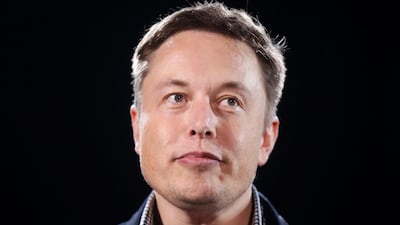
Mr Musk unveils a new all-wheel-drive version of the Model S car in Hawthorne, California, in 2014. Reuters -
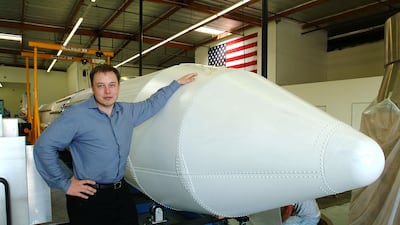
Tesla and SpaceX founder Elon Musk. Getty Images -
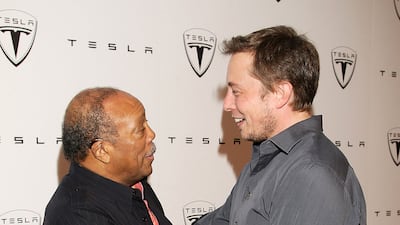
Mr Musk with music producer Quincy Jones. AFP -
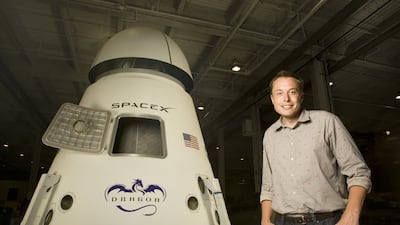
The wealthiest person in the world with a worth of $274.3 billion, Mr Musk was named 'Person of the Year' by 'Time' magazine in 2021. Getty Images -
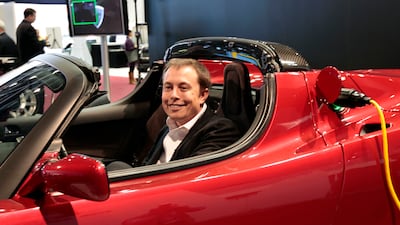
Focus on Mr Musk's taxes grew last year as Tesla achieved a rarefied $1 trillion in market value. Reuters -
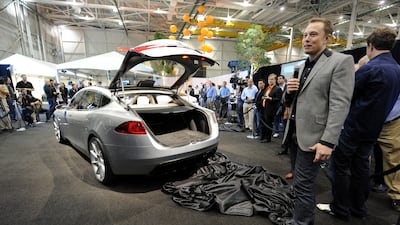
The billionaire has hit back, saying he does not draw a salary from either SpaceX or Tesla, and pays an effective tax rate of 53 per cent on stock options he exercises. AFP -
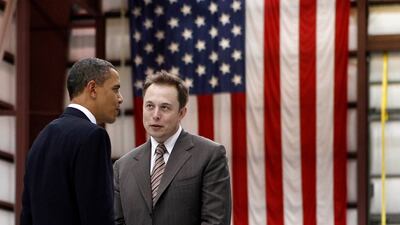
Then US president Barack Obama speaks to Mr Musk on a tour of Cape Canaveral Air Force Station in Cape Canaveral, Florida, in 2010. Reuters -
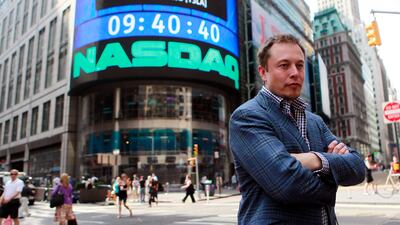
Mr Musk during a television interview after Tesla's initial public offering at the Nasdaq market in New York, in 2010. Reuters -
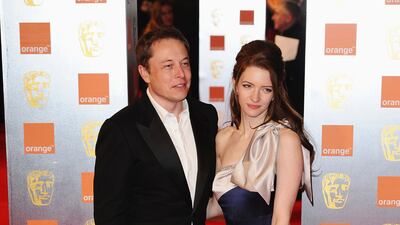
With former wife Talulah Riley at the 2011 Orange British Academy Film Awards in London. Getty Images -
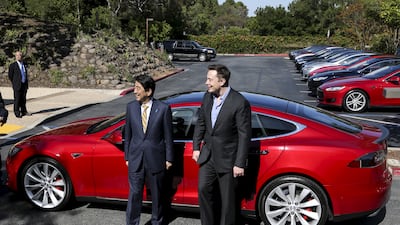
With Japan's former prime minister Shinzo Abe after a test drive of the Tesla Model S P85D in Palo Alto, California, in 2015. Reuters -
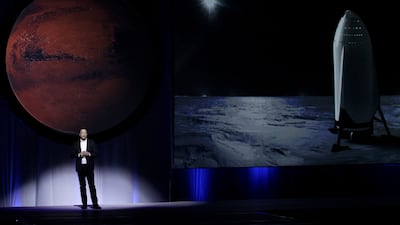
Mr Musk during the 67th International Astronautics Congress in Guadalajara, Mexico, in 2016. EPA -
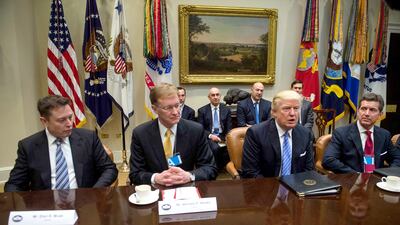
From left: SpaceX chief executive Elon Musk, Corning chief executive Wendell Weeks, then US president Donald Trump and Johnson & Johnson chief executive Alex Gorsky during a meeting at the White House. AFP -
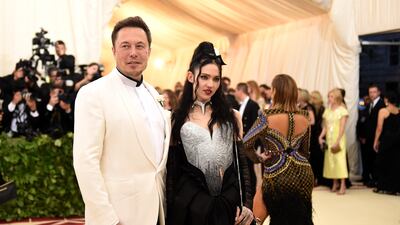
Mr Musk and former wife Grimes at The Metropolitan Museum of Art in New York City, in 2018. AFP -
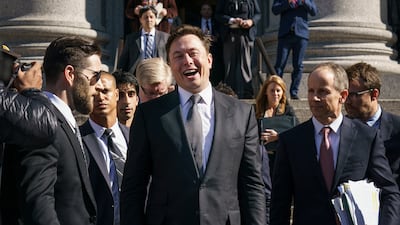
Mr Musk leaves a court in New York City, in 2019, after a hearing in a lawsuit brought against him by the US Securities and Exchange Commission. Getty Images -
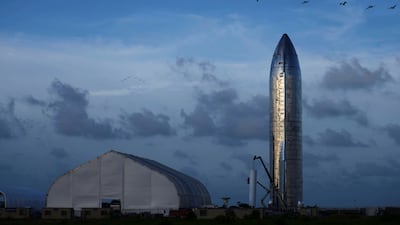
A prototype of SpaceX's Starship spacecraft is seen before Mr Musk gives an update on the company's Mars rocket Starship in Boca Chica, Texas, in 2019. Reuters -
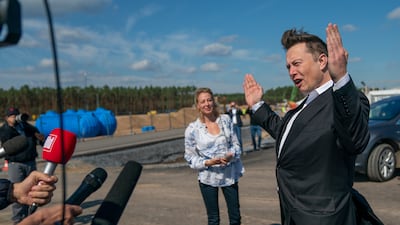
Mr Musk at the construction site of the Tesla Gigafactory in Gruenheide, near Berlin, Germany, last year. EPA -
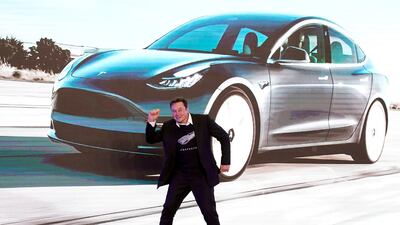
Dancing onstage during a delivery event for Tesla's China-made Model 3 cars in Shanghai. Reuters -
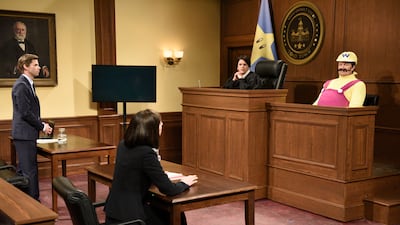
Mikey Day as a lawyer, Cecily Strong as a judge, and host Elon Musk as Wario during the "Wario" sketch on NBC's 'Saturday Night Live', in May. Getty Images -
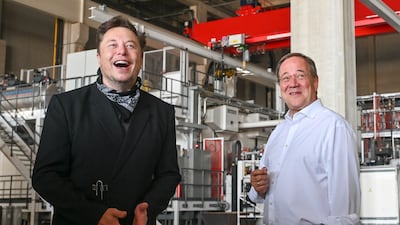
Mr Musk with Armin Laschet, CDU party federal chairman and prime minister of Germany's North Rhine-Westphalia, talk during a tour of the plant of the future foundry of the Tesla Gigafactory in Grünheide, near Berlin, Germany. Getty Images



