

Apple co-founder Steve Wozniak was reunited with a piece of history of his own making in Dubai when a private collector showed him an Apple I motherboard, a rare piece of technology history that holds both significant sentimental and monetary value.
The motherboard was presented to him by Dubai-based AAPL Collection. Mr Wozniak, who along with Steve Jobs co-founded the company in 1976 that would be responsible for the smartphone revolution with the iPhone, recognised the hardware as authentic and promptly signed it.
"That’s an Apple 1. Wow! Oh my God. Just give a nice pen and I’ll sign up here,” he said.
"Wow, wow. That's too precious. Can I sign a chip?"
The Apple I, originally released as the Apple Computer, was the first product announced by the company. Hand-built by Mr Jobs, Mr Wozniak and Ron Wayne, only 200 of these machines were built and were sold for $666.66. Only a few dozen are known to exist today and a website, Apple 1 Registry, keeps track of these.
Even rarer are those that still fully function - and these command a premium price, some up to $1.5 million.
In December 2014, the Ricketts Apple-1 Personal Computer, named after its original owner Charles Ricketts, was sold for $365,000 at Christie's. It is the only known surviving Apple-1 documented as having been sold directly by Mr Jobs to an individual from his family home in Los Altos, California, according to the auction house.
co-founder of Apple
In 2015, an intact Apple I dropped off by a woman at the Clean Bay Area recycling centre in California sold for $200,000. She found the computer, which belonged to her late husband, while cleaning out their garage, and was unaware of the piece of history she had disposed of. Per the centre's policies, she was entitled to 50 per cent of the profits.
Earlier this month, John Moran Auctioneers in California sold the Chaffey College Apple-1, whose original owner was a professor at Chaffey College, for $400,000.
___________________
Rare Apple collection in Dubai
-
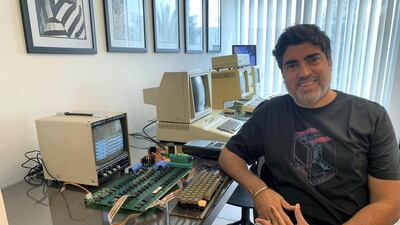
Jimmy Grewal sits in front of the incredibly rare Apple I, the first personal computer sold by Apple in 1976. Cody Combs / The National -
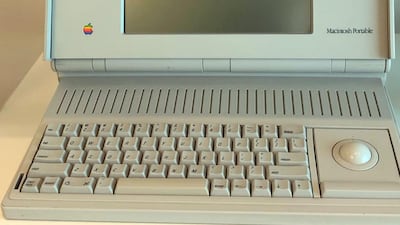
Apple's first attempt at a laptop, the Macintosh Portable, from 1989. It weighed 7 kilograms, but its battery lasted from 6 to 12 hours. Cody Combs / The National -
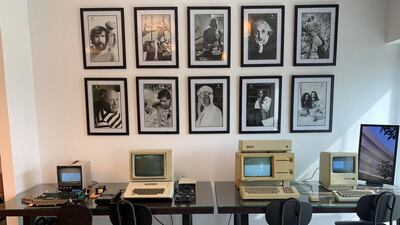
Left to right: Apple I, Apple II, Apple Lisa, Macintosh 512k. Cody Combs / The National -
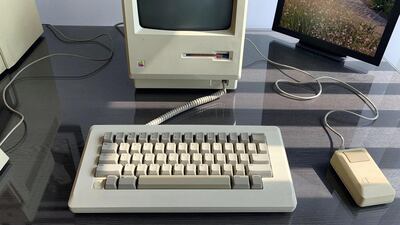
A closeup of one of the first Macintosh models. Cody Combs / The National -
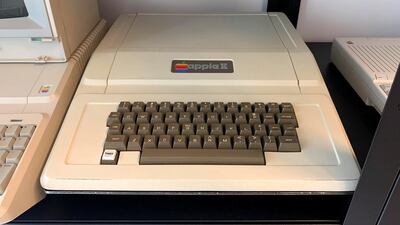
This Apple II (serial #92) has no vents on the casing, making it very rare, unlike the Apple II on the left. Grewal says only approximately a dozen of these ventless Apple IIs remain in existence. Cody Combs / The National -
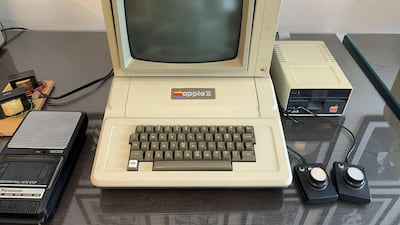
This Apple II was purchased by the American School of Dubai in 1978. Cody Combs / The National -
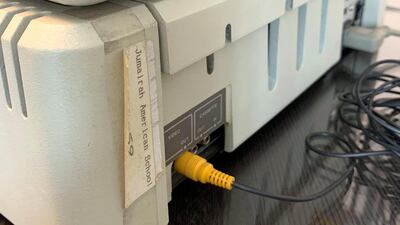
This sticker, complete with typo, shows just how old this Apple II is. Cody Combs / The National -
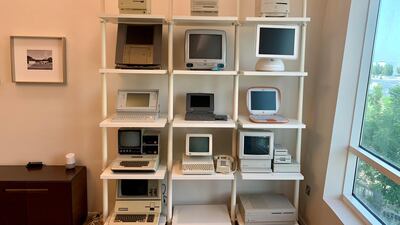
The original 128k Macintosh sits on the top left of this portion of Grewal's Apple Collection. Also pictured just below is the 20th Anniversary Macintosh. Cody Combs / The National -

Grewal's collection is still growing, prompting him to move computers to different locatins to make room. Cody Combs / The National -
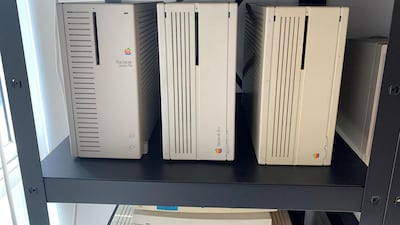
Some of Apple's first attempts at "tower" Macintosh computers, like the Macintohs Quadra, are also in Grewal's collection. Cody Combs / The National -
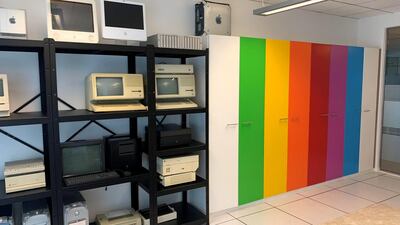
No detail was too small for Grewal in presenting his the Apple products. These cabinets were colour matched to correspond with the original rainbow Apple logo. Cody Combs / The National -
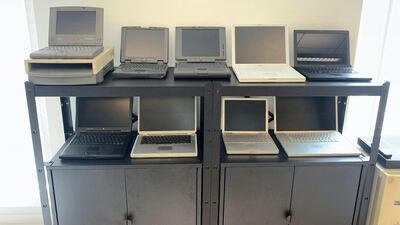
Grewal's collection of Apple laptops, ranging from the Apple Duo to the Apple PowerBooks continues to grow. Cody Combs / The National -
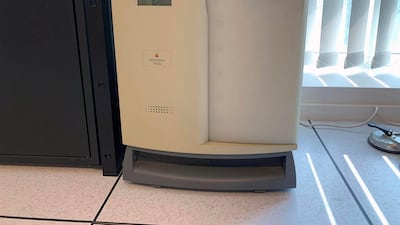
This unusually large Apple product is a rare Apple Network Server. These ran a Unix-based operating system. Cody Combs / The National -

The first Apple LaserWriter, manufactured in 1985, is one of several Apple printers in Grewal's collection. Cody Combs / The National -
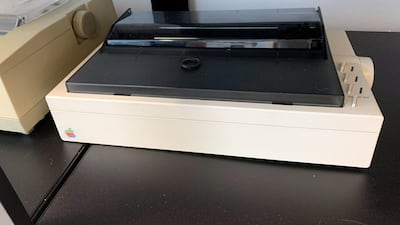
This Apple Scribe printer utilized special thermal paper. The quality was poor and the printing was slow, but the thermal paper was an innovative idea at the time. Cody Combs / The National -
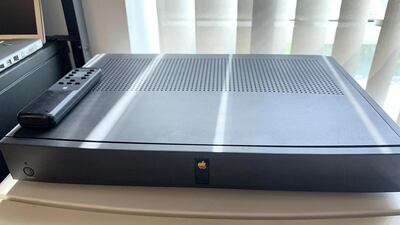
Also in Grewal's collection is an Apple Interactive Television Box from 1994. It was never released. Cody Combs / The National -
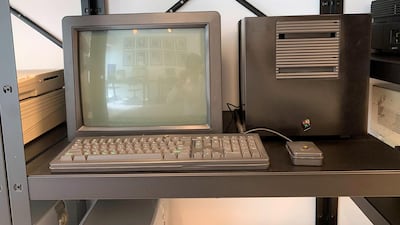
It's not technically an Apple product, but this NeXT Cube was the computer created by Steve Jobs' company, "Next", after he was fired from Apple in 1985. It's shaped almost perfectly like a cube, was very powerful, but sold poorly. Cody Combs / The National -
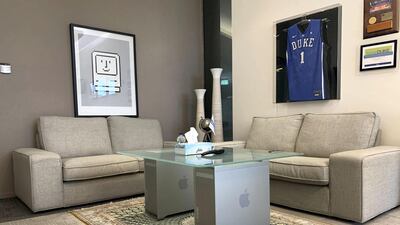
In Grewal's other office, Apple product cases are used to prop up a coffee table, and various Apple artefacts and photos are displayed on the wall. Cody Combs / The National -
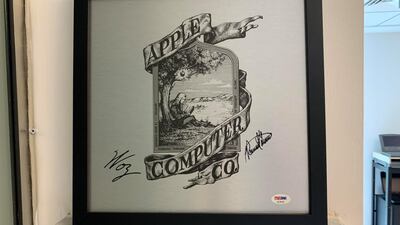
This is a rarely used early rendition of the Apple logo. It's signed by Apple co-founder Steve Wozniak, and the often forgotten co-founder Ron Wayne. Cody Combs / The National -

Inside this original Macintosh 128k, you can see the molded signatures from the original Macintosh team, including the signature of Steve Jobs. Cody Combs / The National -
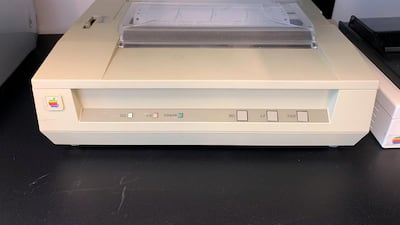
An Apple Dot Matrix Printer, first introduced in 1982. Cody Combs / The National -
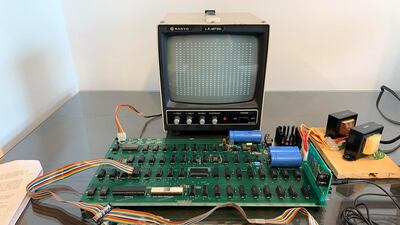
This rare Apple I was the first product shipped by Apple in 1976. This particular Apple I in Grewal's Dubai collection still works. Cody Combs / The National -
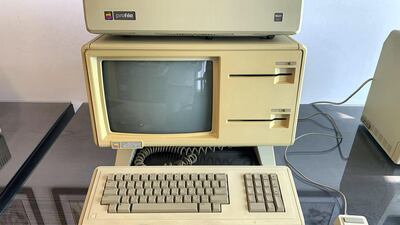
This is an original Apple Lisa in Grewal's Dubai collection. It was the first Apple computer to have a graphical user interface. Grewal says approximately 20 of the original Lisa computers remain in the world. Cody Combs / The National



