

California has ruled that all new cars sold in the most populous US state must be zero-emission from 2035, in what was billed as a nation-leading step to slash the pollutants that cause global warming.
The move has been hailed by environmentalists, who hope it will prompt other parts of the country to accelerate the adoption of electric vehicles.
Until the total ban in 13 years' time, the rules demand that an ever-increasing percentage of new cars sold to California's 40 million inhabitants produce no pollutants.
"The timeline is ambitious but achievable: by the time a child born this year is ready to enter middle school, only zero-emission vehicles or a limited number of plug-in hybrids will be offered for sale new in California," the California Air Resources Board said.
The board, which was asked to find a way to implement Governor Gavin Newsom's order to transition the state's automotive sector, said the health benefits would be significant.
"By 2037, the regulation delivers a 25 per cent reduction in smog-causing pollution from light-duty vehicles," it said.
"This benefits all Californians but especially the state's most environmentally and economically burdened communities along freeways and other heavily travelled thoroughfares."
Tesla Cybertruck - in pictures
-
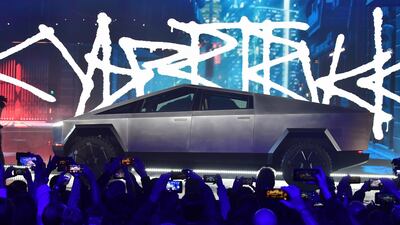
People take pictures of the newly unveiled Cybertruck in 2019. The vehicle's release to the market in 2021 was delayed by at least two years. AFP -
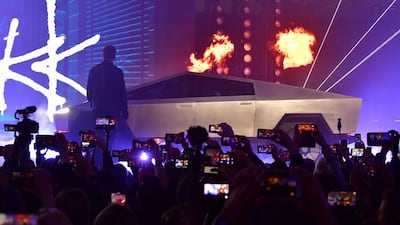
The Cybertruck was originally priced at $39,900 in 2019 - but inflationary prices have pushed other Tesla vehicles up in cost. AFP -
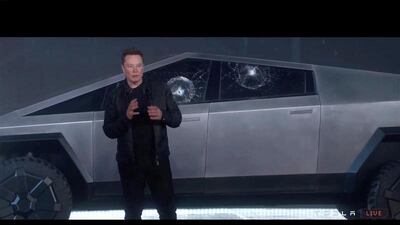
Mr Musk stands in front of Cybertruck, after a metal ball was thrown at the windows to show how tough they are. Tesla / Reuters -

Mr Musk discusses vehicle dimensions in front of the Cybertruck. AFP -
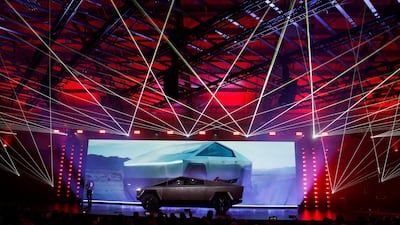
The Tesla Cybertruck is unveiled at Tesla's design studio. AP


From 2026 until 2040, the regulation is expected to result in 1,290 fewer cardiopulmonary deaths, 460 fewer hospital admissions for cardiovascular or respiratory illness and 650 fewer emergency hospital visits for asthma, it said.
California already accounts for the lion's share of electric vehicles in the US, with 1.13 million on the state's roads — 43 per cent of the nation's total.
Ten years ago, only 2 per cent of new cars sold in the state were electric; that figure is now 16 per cent and Teslas and other premium offerings — with a range of hundreds of miles — are a common sight on roads around Los Angeles and San Francisco.
Still, the vehicles remain more expensive than their fossil fuel-powered equivalents and critics say only federal subsidies of up to $7,500 make them viable for many buyers.
But supporters say the incentives are necessary short-term supports that will fade away as increased adoption boosts economies of scale and drives down prices.
Thursday's ruling comes after a climate law signed last week by US President Joe Biden, which sets aside hundreds of millions of dollars in incentives for clean energy programmes.
In recent years jurisdictions around the world, notably in Europe, have set their sights on the polluting car sector.
Norway aims to have all new cars produce zero emissions by 2025.
The UK, Singapore and Israel are eyeing 2030, while the European Union wants to end the sale of new petrol and diesel cars by 2035.

