

Car industry executives warned for years about the effects that a costly transition to electric vehicles would have on their margins.
But before its milestone potential listing, Porsche is telling investors it can become more profitable focusing on battery power.
The Volkswagen-owned sports car maker sees more potential to raise prices of its EVs than its combustion engine models, chief financial officer Lutz Meschke said during Porsche’s capital markets day this week.
He sees the manufacturer’s EV margins reaching parity with those of combustion vehicles in two years, then expanding because customers are willing to pay more for new technology.
The car maker — which plans an initial public offering in the fourth quarter — mapped out a push to grow return on sales to more than 20 per cent in the long term, up from 16 per cent last year.
Management expects eight in 10 Porsches sold by the end of this decade to run on electricity, and for EVs to account for half the luxury automotive market in 2031.
“Our target is to selectively expand higher-margin segments and to leverage electric vehicle pricing opportunities,” Porsche chief executive Oliver Blume said.
Porsche is pursuing its IPO at a time when the state of the industry is anything but normal.
Car makers are posting high returns because supply chain shocks are constraining output, leaving them with little choice but to focus on their most lucrative models and jack up prices. It’s unclear what will happen once supplies stabilise, but the premium profitability of the past few quarters will make for difficult comparisons down the road.
Porsche is well ahead of peers including Ferrari and Aston Martin when it comes to electrifying its line-up. But while its Taycan EV outsold the iconic 911 last year, the car maker still produces way fewer EVs than Tesla.
-
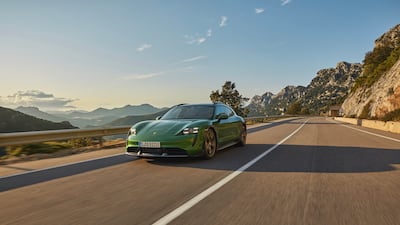
The electric Porsche Taycan CrossTurismo Turbo. All photos: Porsche -
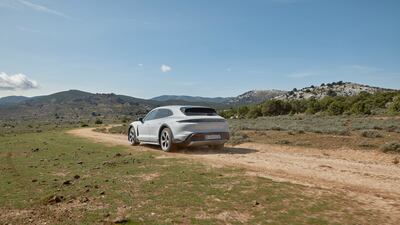
The EV is powered by a motor in each of the front and rear axles. -
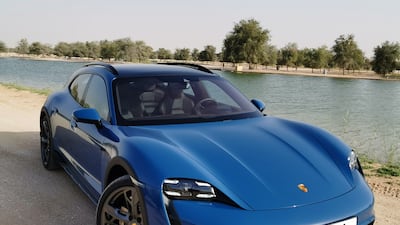
The CrossTurismo comes with the Porsche 911 Coupe's inherent good looks. -
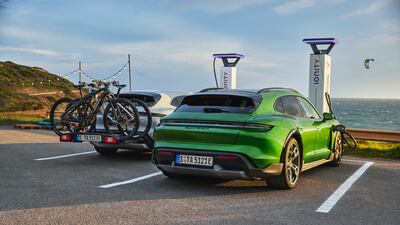
Despite the Taycan’s raised height, the centre of gravity is low thanks to the batteries being hidden in the floor. -
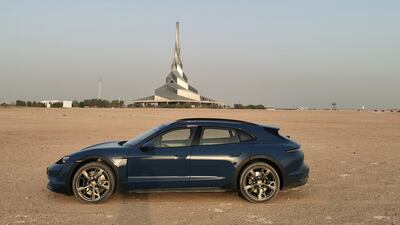
The EV goes from 0-100kph in 3.3 seconds and has a top speed of 250kph. -

Gravel Mode splits torque to the wheels, winds back the stability control and equalises the speed of each wheel to mimic a diff lock on an SUV. -
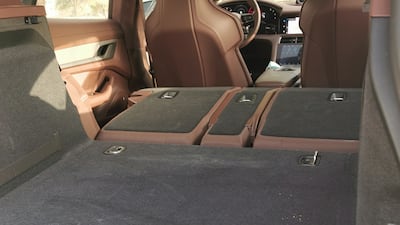
The zero-tailpipe-emission EV is a practical family wagon, offering 1,171 litres stowage in the rear and 84 litres up front. -
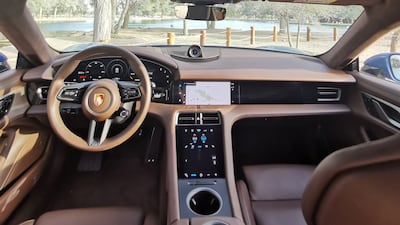
The cabin has a central, 10.9-inch infotainment display with a touchscreen that uses haptic feedback via pulses through the fingers.


A more meaningful EV expansion will take overhauling factories, retraining staff and securing increasingly scarce raw materials for batteries.
And in addition to the uncertainty about how profitability will look once supply-chain crises fades, output normalises and car makers start the EV transition in earnest, it’s also unclear what happens with pricing power once EVs aren’t the hot new thing anymore.
Legacy car makers haven’t been hugely transparent about how profitable their initial battery-powered models are. One exception is Volvo Cars, which this week got a shout-out from Bernstein analysts for its degree of disclosure.
The company’s EVs — which were 12 per cent costlier than their combustion cars — generated a 15 per cent gross margin in the second quarter, short of 21 per cent for its internal combustion engine vehicles. On the bright side, Volvo’s EV margins improved by one percentage point from the first quarter.
The exclusively combustion-powered 911 remains Porsche’s most profitable model. The car maker is preparing to introduce an electric version of its popular Macan SUV. The plug-in model is likely to be priced well above the roughly $60,000 that the base gas version commands.
Porsche is also planning a new electric luxury SUV positioned above the Cayenne, which starts at around €83,000 ($84,800).
Of course, the Macan has been delayed and won’t hit showrooms until 2024 because of software problems at VW’s Cariad unit. Porsche is now trying to chart its own path on software, but the issues still raise concerns about future EV introductions.
There’s no launch date yet for the luxury SUV, and executives said little else about the model other than that it will be made in Leipzig, Germany.
Mr Blume argues Porsche is unique because the brand holds luxury appeal and benefits from economies of scale — after all, it sold 27 times more cars than Ferrari last year.

