A secondary water and hydrogen separator inside the electrolyser area during the final stages of construction at Iberdola SA's Puertollano green hydrogen plant in Puertollano, Spain. Bloomberg.

Little-known device is key to the future of green hydrogen economy


  • English
  • Arabic

Solar power depends on the solar cell. Wind power, the wind turbine.

The key to the green hydrogen economy is a little-known machine with a name out of 1950s sci-fi — the electrolyser. And after a century of obscurity, the electrolyser’s moment has come.

Green hydrogen production involves water electrolysis. Electrolysis splits water molecules into hydrogen and oxygen, capturing and storing the hydrogen for use as fuel.

The electrolyser uses electricity to split water into hydrogen and oxygen. If that electricity comes from wind turbines, solar panels or a nuclear reactor, the whole process gives off no greenhouse gases. Factories, power plants, even jet aircraft can then burn that hydrogen without warming the earth.

There are other ways to make hydrogen fuel, from natural gas or even coal. But the ways to do it carbon-free, with no emissions that need to be trapped and stored, rely on the electrolyser.

“I don’t think people grasp what an electrolyser is,” said Andy Marsh, chief executive of Plug Power Inc, which makes the devices. “It is the building block of green hydrogen.”

Unlike wind turbines and solar cells, electrolysers aren’t immediately easy to understand. Larger ones can look like a jumble of tubes and pipes, while smaller, more modular versions are collections of electronics and machinery crammed into boxes the size of a shipping container or even a fridge.

Scientists discovered the process the electrolyser employs — electrolysis — more than two centuries ago, and commercial electrolysers hit the market in the 1920s. They were the main way to produce hydrogen until the 1960s, when a process using steam to strip hydrogen from natural gas supplanted them. Almost all of the hydrogen used around the globe today — in oil refineries, fertiliser plants and chemical industries — comes from natural gas. Demand for electrolysers dried up.

That has now changed — in just the last few years. Measured by the amount of power the machines consume, worldwide electrolyser sales doubled from 200 megawatts in 2020 to 458MW in 2021, said BloombergNEF, a clean energy research group. They’re expected to triple this year, reaching anywhere from 1,839MW to 2,464MW, BloombergNEF predicts. It may be the kind of hockey-stick moment solar power experienced a decade ago.

“It’s going to be difficult to supply all the demand,” said Amy Adams, vice president of fuel cell and hydrogen technologies at Cummins Inc, a veteran engine maker that has jumped into the business. “Can everybody scale up the supply base as fast as people would like?”

Even more explosive growth likely lies ahead. Electrolyser “gigafactories,” each able to make enough electrolysers in one year to use at least 1,000 megawatts of power, have been announced in Australia, China, India and Spain.

“When somebody says they’re going to build a gigafactory, they’re talking about in a year having more capacity than is installed in the world today,” said Patrick Molloy, a manager in the climate aligned industries programme at the US-based RMI energy and climate think tank.

The amount of hydrogen each megawatt of electricity can produce varies, making comparisons between products and projects difficult. The most popular electrolyser technology needs between 51 and 54-kilowatt hours of electricity, on average, to produce one kilogram of hydrogen, according to BNEF.

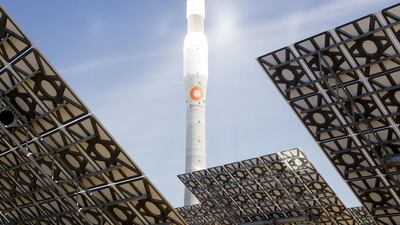
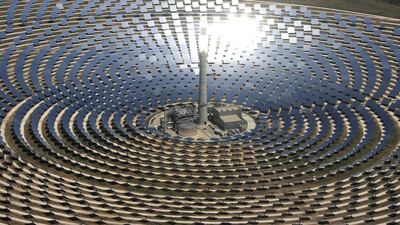
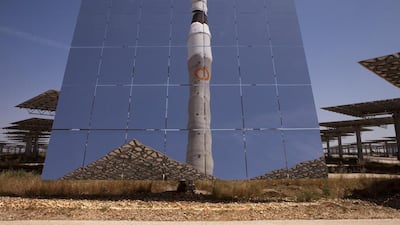
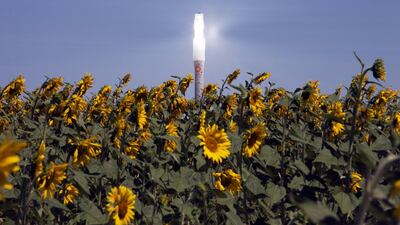
  • Gemasolar in Seville, Spain is Torresol Energy's first project to use central tower technology and heliostats. Courtesy Torresol Energy
    Gemasolar in Seville, Spain is Torresol Energy's first project to use central tower technology and heliostats. Courtesy Torresol Energy
  • Gemasolar's unique technology can shrug off even the cloudiest days - energy stored when the sun shines lets it produce electricity even during the night. Courtesy Torresol Energy
    Gemasolar's unique technology can shrug off even the cloudiest days - energy stored when the sun shines lets it produce electricity even during the night. Courtesy Torresol Energy
  • Gemasolar is the first solar station in the world that works 24 hours a day. Courtesy Torresol Energy
    Gemasolar is the first solar station in the world that works 24 hours a day. Courtesy Torresol Energy
  • Gemasolar's unique technology can shrug off even the cloudiest days - energy stored when the sun shines lets it produce electricity even during the night. Courtesy Torresol Energy
    Gemasolar's unique technology can shrug off even the cloudiest days - energy stored when the sun shines lets it produce electricity even during the night. Courtesy Torresol Energy
  • Gemasolar produces 60 per cent more energy than a solar station without storage capacity. Courtesy Torresol Energy
    Gemasolar produces 60 per cent more energy than a solar station without storage capacity. Courtesy Torresol Energy
  • Gemasolar in Seville, Spain is Torresol Energy's first project to use central tower technology and heliostats. Courtesy Torresol Energy
    Gemasolar in Seville, Spain is Torresol Energy's first project to use central tower technology and heliostats. Courtesy Torresol Energy
  • Gemasolar is the first solar station in the world that works 24 hours a day. Courtesy Torresol Energy
    Gemasolar is the first solar station in the world that works 24 hours a day. Courtesy Torresol Energy
  • Gemasolar is the first solar station in the world that works 24 hours a day. Courtesy Torresol Energy
    Gemasolar is the first solar station in the world that works 24 hours a day. Courtesy Torresol Energy
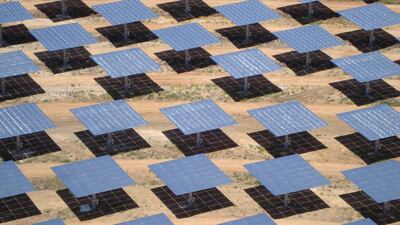
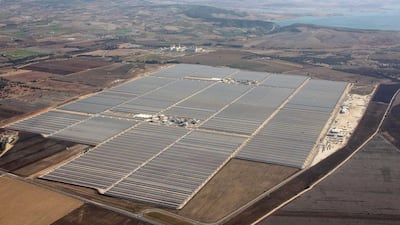
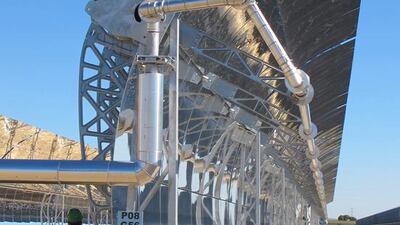
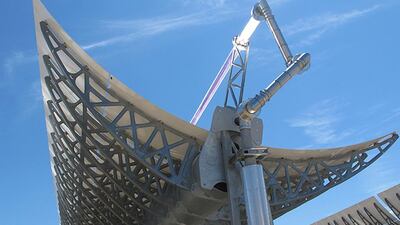
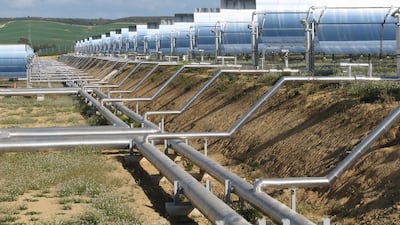
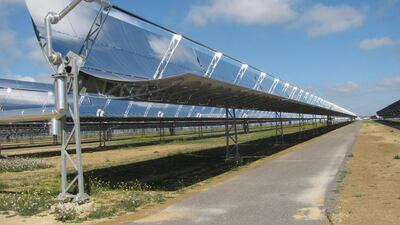
  • Valle 1 and Valle 2 in San José del Valle, Cádiz, Spain, are two adjacent thermosolar plants with parabolic trough technology. Courtesy Torresol Energy
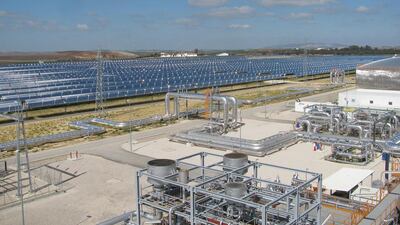
    Valle 1 and Valle 2 in San José del Valle, Cádiz, Spain, are two adjacent thermosolar plants with parabolic trough technology. Courtesy Torresol Energy
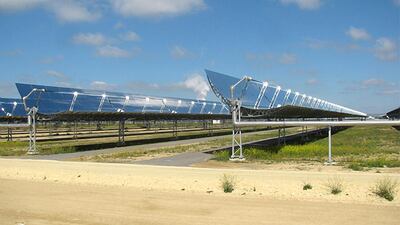
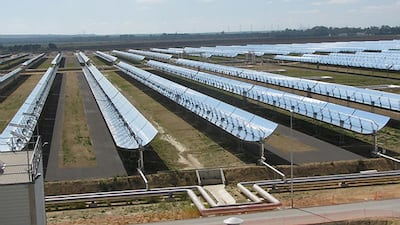
  • The parabolic trough technology permits the generation of electrical power for 4,000 hours a year. Courtesy Torresol Energy
    The parabolic trough technology permits the generation of electrical power for 4,000 hours a year. Courtesy Torresol Energy
  • The Valle 1 and Valle 2 project is one of the largest solar thermal power plants in operation. Courtesy Torresol Energy
    The Valle 1 and Valle 2 project is one of the largest solar thermal power plants in operation. Courtesy Torresol Energy
  • Construction on Valle 1 and Valle 2 began in December 2009, and was completed in December 2011. Courtesy Torresol Energy
    Construction on Valle 1 and Valle 2 began in December 2009, and was completed in December 2011. Courtesy Torresol Energy
  • Valle 1 and Valle 2 plants were connected to Spanish national grid for commercial operations in January 2012. Courtesy Torresol Energy
    Valle 1 and Valle 2 plants were connected to Spanish national grid for commercial operations in January 2012. Courtesy Torresol Energy
  • The parabolic trough technology permits the generation of electrical power for 4,000 hours a year. Courtesy Torresol Energy
    The parabolic trough technology permits the generation of electrical power for 4,000 hours a year. Courtesy Torresol Energy
  • The Valle 1 and Valle 2 project is one of the largest solar thermal power plants in operation. Courtesy Torresol Energy
    The Valle 1 and Valle 2 project is one of the largest solar thermal power plants in operation. Courtesy Torresol Energy
  • The Valle 1 and Valle 2 project is one of the largest solar thermal power plants in operation. Courtesy Torresol Energy
    The Valle 1 and Valle 2 project is one of the largest solar thermal power plants in operation. Courtesy Torresol Energy
  • Valle 1 and Valle 2 plants were connected to Spanish national grid for commercial operations in January 2012. Courtesy Torresol Energy
    Valle 1 and Valle 2 plants were connected to Spanish national grid for commercial operations in January 2012. Courtesy Torresol Energy

The underlying idea may be old, but there’s plenty of innovation. Electrolysers come in three basic flavours — alkaline, proton-exchange membrane (PEM), and solid oxide — with different pros and cons. All involve water reacting with oppositely charged electrodes and an electrolyte, sometimes liquid, sometimes solid. Competitors are vying to perfect each technology. They’re paring down the use of such expensive catalysts as iridium and figuring out better ways to build a product that, until now, was largely assembled by hand.

Driving all of this is the need for a clean, carbon-free fuel. Solar and wind power now cost less than new fossil fuel generation in much of the world, but storing that electricity in bulk remains difficult and expensive. And some things, like steel mills and jet aircraft, can’t easily run on electricity. A molecule that can be produced, stored, shipped and used without pumping heat-trapping carbon into the atmosphere would work far better. Governments and companies worldwide are betting hydrogen will be that molecule.

“You need long-term energy storage, and you need it transported place to place,” said KR Sridhar, chief executive of Bloom Energy Corp. a veteran cleantech company now diving into the electrolyser market. Large-scale batteries, he said, only provide energy for a few hours and aren’t portable. “You will not charge a big battery in Australia, ship it to Japan, discharge it and ship it back to Australia,” Sridhar said.

Hydrogen is the most common element in the universe. But here on Earth, it's typically bound together with oxygen, nitrogen, carbon or other elements. To use hydrogen as a fuel, it must be cleaved off those compounds. That can be done in a dizzying array of ways, each represented by a specific shade on a constantly expanding colour wheel.

The dominant form of hydrogen today, pulled from natural gas, is “grey hydrogen.” Capture the CO₂ from that process, and it’s called “blue.” Strip the hydrogen from water using renewable power and an electrolyser, and you get “green hydrogen.”

Plug the electrolyser into a nuclear plant, and it’s “pink.” Green hydrogen now costs far more than grey or blue: as much as $9.62 for a kilogram of green hydrogen, compared to $2.72 for blue, figures compiled by BNEF show. But that likely won’t last. BNEF predicts that by 2030, green hydrogen will be cheaper than blue in every country the analysis service tracks.

For many hydrogen advocates, the electrolyser is the missing piece to fulfil renewable power’s promise. It can take the excess electricity streaming from solar plants at noon and turn it into a fuel for use any time.

“That’s one of the things about electricity — we as consumers want it when we want it, and renewables don’t always work that way,” said Ian Russell, Bloom Energy’s director of development engineering.

  • Sheikh Khaled bin Mohamed, member of the Abu Dhabi Executive Council and chairman of the Abu Dhabi Executive Office, witnesses the signing of the agreement to develop clean hydrogen. All photos: Adnoc
    Sheikh Khaled bin Mohamed, member of the Abu Dhabi Executive Council and chairman of the Abu Dhabi Executive Office, witnesses the signing of the agreement to develop clean hydrogen. All photos: Adnoc
  • Adnoc, Masdar and BP will jointly develop clean hydrogen and tap into opportunities offered by the energy transition.
    Adnoc, Masdar and BP will jointly develop clean hydrogen and tap into opportunities offered by the energy transition.
  • Sheikh Khaled, Dr Sultan Al Jaber, Minister of Industry and Advanced Technology, and executives from Adnoc, BP and Masdar at the signing ceremony.
    Sheikh Khaled, Dr Sultan Al Jaber, Minister of Industry and Advanced Technology, and executives from Adnoc, BP and Masdar at the signing ceremony.
  • Dr Al Jaber, who is also managing director and group chief executive of Adnoc and chairman of Masdar, says the Teesside project will help to accelerate innovation in the decarbonisation of energy in industrial sectors.
    Dr Al Jaber, who is also managing director and group chief executive of Adnoc and chairman of Masdar, says the Teesside project will help to accelerate innovation in the decarbonisation of energy in industrial sectors.
  • Masdar and BP also signed a preliminary deal to explore potential collaboration on the HyGreen Teesside green hydrogen project in the UK.
    Masdar and BP also signed a preliminary deal to explore potential collaboration on the HyGreen Teesside green hydrogen project in the UK.

Each type of electrolyser has its selling points. Alkaline electrolysers, for example, tend to be the least expensive and have become the technology of choice for Chinese manufacturers. They’re trying to undercut their global competitors on price — just as happened with solar cells a decade ago — and BNEF reports that Chinese alkaline electrolysers currently cost 73 per cent less than comparable units made in the West. PEM technology uses more rare metals and costs more, but it can start faster than alkaline, something worth considering if the power source is as variable as the sun and the wind.

Hydrogen has become a priority for the Chinese government, and electrolysers are a big part of the push. Electrolyser deliveries there may top 1,600 megawatts this year, mostly on orders from state-owned businesses such as oil and gas giants Sinopec and CNPC, as well as high-emitting companies like coal-based chemical company Ningxia Baofeng Energy Group.

If anything, demand is rising faster than production. And the companies making the machines — including one of the world’s largest solar manufacturers, Longi Green Energy — don’t want to limit themselves to the Chinese market.

A worker inspects a primary water and hydrogen separator inside the electrolyser area during the final stages of construction at Iberdola SA's Puertollano green hydrogen plant in Puertollano, Spain. Bloomberg

“It’s quite difficult to order electrolysers now,” said Mao Zongqiang, a professor at the Institute of Nuclear and New Energy Technology at Tsinghua University in Beijing. “The supply can’t meet the demand.”

The customers could, in the end, span many industries. Oil companies need hydrogen for their refineries, where it helps lower the sulphur content of fuel, although many have their own way of producing it from their own natural gas.

But semiconductor and LED factories use hydrogen, too, and could benefit from on-site production. Electrolysers would provide that. Owners of solar plants and wind farms may want to add electrolysers, just as they’re adding batteries to their projects today.


Living in...

This article is part of a guide on where to live in the UAE. Our reporters will profile some of the country’s most desirable districts, provide an estimate of rental prices and introduce you to some of the residents who call each area home. 

Mercer, the investment consulting arm of US services company Marsh & McLennan, expects its wealth division to at least double its assets under management (AUM) in the Middle East as wealth in the region continues to grow despite economic headwinds, a company official said.

Mercer Wealth, which globally has $160 billion in AUM, plans to boost its AUM in the region to $2-$3bn in the next 2-3 years from the present $1bn, said Yasir AbuShaban, a Dubai-based principal with Mercer Wealth.

Within the next two to three years, we are looking at reaching $2 to $3 billion as a conservative estimate and we do see an opportunity to do so,” said Mr AbuShaban.

Mercer does not directly make investments, but allocates clients’ money they have discretion to, to professional asset managers. They also provide advice to clients.

“We have buying power. We can negotiate on their (client’s) behalf with asset managers to provide them lower fees than they otherwise would have to get on their own,” he added.

Mercer Wealth’s clients include sovereign wealth funds, family offices, and insurance companies among others.

From its office in Dubai, Mercer also looks after Africa, India and Turkey, where they also see opportunity for growth.

Wealth creation in Middle East and Africa (MEA) grew 8.5 per cent to $8.1 trillion last year from $7.5tn in 2015, higher than last year’s global average of 6 per cent and the second-highest growth in a region after Asia-Pacific which grew 9.9 per cent, according to consultancy Boston Consulting Group (BCG). In the region, where wealth grew just 1.9 per cent in 2015 compared with 2014, a pickup in oil prices has helped in wealth generation.

BCG is forecasting MEA wealth will rise to $12tn by 2021, growing at an annual average of 8 per cent.

Drivers of wealth generation in the region will be split evenly between new wealth creation and growth of performance of existing assets, according to BCG.

Another general trend in the region is clients’ looking for a comprehensive approach to investing, according to Mr AbuShaban.

“Institutional investors or some of the families are seeing a slowdown in the available capital they have to invest and in that sense they are looking at optimizing the way they manage their portfolios and making sure they are not investing haphazardly and different parts of their investment are working together,” said Mr AbuShaban.

Some clients also have a higher appetite for risk, given the low interest-rate environment that does not provide enough yield for some institutional investors. These clients are keen to invest in illiquid assets, such as private equity and infrastructure.

“What we have seen is a desire for higher returns in what has been a low-return environment specifically in various fixed income or bonds,” he said.

“In this environment, we have seen a de facto increase in the risk that clients are taking in things like illiquid investments, private equity investments, infrastructure and private debt, those kind of investments were higher illiquidity results in incrementally higher returns.”

The Abu Dhabi Investment Authority, one of the largest sovereign wealth funds, said in its 2016 report that has gradually increased its exposure in direct private equity and private credit transactions, mainly in Asian markets and especially in China and India. The authority’s private equity department focused on structured equities owing to “their defensive characteristics.”

The specs: Lamborghini Aventador SVJ

Price, base: Dh1,731,672

Engine: 6.5-litre V12

Gearbox: Seven-speed automatic

Power: 770hp @ 8,500rpm

Torque: 720Nm @ 6,750rpm

Fuel economy: 19.6L / 100km

Aayan%E2%80%99s%20records
%3Cp%3E%3Cstrong%3EYoungest%20UAE%20men%E2%80%99s%20cricketer%3C%2Fstrong%3E%3Cbr%3EWhen%20he%20debuted%20against%20Bangladesh%20aged%2016%20years%20and%20314%20days%2C%20he%20became%20the%20youngest%20ever%20to%20play%20for%20the%20men%E2%80%99s%20senior%20team.%20He%20broke%20the%20record%20set%20by%20his%20World%20Cup%20squad-mate%2C%20Alishan%20Sharafu%2C%20of%2017%20years%20and%2044%20days.%3Cbr%3E%20%3Cbr%3E%3Cstrong%3EYoungest%20wicket-taker%3C%2Fstrong%3E%3Cbr%3EAfter%20taking%20the%20wicket%20of%20Bangladesh%E2%80%99s%20Litton%20Das%20on%20debut%20in%20Dubai%2C%20Aayan%20became%20the%20youngest%20male%20cricketer%20to%20take%20a%20wicket%20against%20a%20Full%20Member%20nation%20in%20a%20T20%20international.%3Cbr%3E%20%3Cbr%3E%3Cstrong%3EYoungest%20in%20T20%20World%20Cup%20history%3F%3C%2Fstrong%3E%3Cbr%3EAayan%20does%20not%20turn%2017%20until%20November%2015%20%E2%80%93%20which%20is%20two%20days%20after%20the%20T20%20World%20Cup%20final%20at%20the%20MCG.%20If%20he%20does%20play%20in%20the%20competition%2C%20he%20will%20be%20its%20youngest%20ever%20player.%20Pakistan%E2%80%99s%20Mohammed%20Amir%2C%20who%20was%2017%20years%20and%2055%20days%20when%20he%20played%20in%202009%2C%20currently%20holds%20the%20record.%3C%2Fp%3E%0A
A cheaper choice

Vanuatu: $130,000

Why on earth pick Vanuatu? Easy. The South Pacific country has no income tax, wealth tax, capital gains or inheritance tax. And in 2015, when it was hit by Cyclone Pam, it signed an agreement with the EU that gave it some serious passport power.

Cost: A minimum investment of $130,000 for a family of up to four, plus $25,000 in fees.

Criteria: Applicants must have a minimum net worth of $250,000. The process take six to eight weeks, after which the investor must travel to Vanuatu or Hong Kong to take the oath of allegiance. Citizenship and passport are normally provided on the same day.

Benefits:  No tax, no restrictions on dual citizenship, no requirement to visit or reside to retain a passport. Visa-free access to 129 countries.

Brighton 1
Gross (50' pen)

Tottenham 1
Kane (48)

'Manmarziyaan' (Colour Yellow Productions, Phantom Films)
Director: Anurag Kashyap​​​​​​​
Cast: Abhishek Bachchan, Taapsee Pannu, Vicky Kaushal​​​​​​​
Rating: 3.5/5

SPECS
%3Cp%3EEngine%3A%20Supercharged%203.5-litre%20V6%0D%3Cbr%3EPower%3A%20400hp%0D%3Cbr%3ETorque%3A%20430Nm%0D%3Cbr%3EOn%20sale%3A%20Now%0D%3Cbr%3EPrice%3A%20From%20Dh450%2C000%0D%3Cbr%3E%3C%2Fp%3E%0A
The specs: 2018 Nissan 370Z Nismo

The specs: 2018 Nissan 370Z Nismo
Price, base / as tested: Dh182,178
Engine: 3.7-litre V6
Power: 350hp @ 7,400rpm
Torque: 374Nm @ 5,200rpm
Transmission: Seven-speed automatic
​​​​​​​Fuel consumption, combined: 10.5L / 100km

Company Fact Box

Company name/date started: Abwaab Technologies / September 2019

Founders: Hamdi Tabbaa, co-founder and CEO. Hussein Alsarabi, co-founder and CTO

Based: Amman, Jordan

Sector: Education Technology

Size (employees/revenue): Total team size: 65. Full-time employees: 25. Revenue undisclosed

Stage: early-stage startup 

Investors: Adam Tech Ventures, Endure Capital, Equitrust, the World Bank-backed Innovative Startups SMEs Fund, a London investment fund, a number of former and current executives from Uber and Netflix, among others.

Islamophobia definition

A widely accepted definition was made by the All Party Parliamentary Group on British Muslims in 2019: “Islamophobia is rooted in racism and is a type of racism that targets expressions of Muslimness or perceived Muslimness.” It further defines it as “inciting hatred or violence against Muslims”.

Results

6.30pm: Maiden Dh165,000 (Dirt) 1,600m

Winner: Celtic Prince, David Liska (jockey), Rashed Bouresly (trainer).

7.05pm: Conditions Dh240,000 (D) 1,600m

Winner: Commanding, Richard Mullen, Satish Seemar.

7.40pm: Handicap Dh190,000 (D) 2,000m

Winner: Grand Argentier, Pat Dobbs, Doug Watson.

8.15pm: Handicap Dh170,000 (D) 2,200m

Winner: Arch Gold, Sam Hitchcott, Doug Watson.

8.50pm: The Entisar Listed Dh265,000 (D) 2,000m

Winner: Military Law, Antonio Fresu, Musabah Al Muhairi.

9.25pm: The Garhoud Sprint Listed Dh265,000 (D) 1,200m

Winner: Ibn Malik, Dane O’Neill, Musabah Al Muhairi.

10pm: Handicap Dh185,000 (D) 1,400m

Winner: Midnight Sands, Pat Dobbs, Doug Watson.

WHAT ARE NFTs?


Non-fungible tokens (NFTs) are tokens that represent ownership of unique items. They allow the tokenisation of things such as art, collectibles and even real estate.


An NFT can have only one official owner at one time. And since they're minted and secured on the Ethereum blockchain, no one can modify the record of ownership, not even copy-paste it into a new one.


This means NFTs are not interchangeable and cannot be exchanged with other items. In contrast, fungible items, such as fiat currencies, can be exchanged because their value defines them rather than their unique properties.

 
Updated: July 23, 2022, 4:30 AM