


Dubai's Jumeirah Lakes Towers will soon have solar car-park shades across most of its clusters as part of a sustainability drive by its developer and operator, the Dubai Multi Commodities Centre, as it looks to support the emirate's clean-energy strategy.
Once the 6.3-megawatt project is complete, JLT will have “one of the UAE’s largest district solar car shade installations”, the DMCC said on Friday.
The project, which will cover 17 locations, is expected to save more than 7,612 megawatt hours annually and is being funded from the “cost savings achieved by the energy generation”, it said.
Work is set to begin in March 2022, with other DMCC assets and additional energy-reduction initiatives set to join the initiative in the coming period.
“As seen at Cop26, sustainability and decreasing carbon emissions are among the most critical issues that people and businesses face today,” DMCC chief operating officer Feryal Ahmadi said.
“Through initiatives such as this, we are able to deliver an enormously positive impact to the 100,000 people that live, work and enjoy the JLT district.”
The emirate is currently working on several measures to reduce emissions and diversify its energy mix under its Dubai Clean Energy Strategy 2050.
Meanwhile, the Dubai Net Zero Carbon Emissions 2050 strategy aims to ensure that 100 per cent of the emirate's energy is generated from clean sources by 2050.
The emirate is currently developing the Dh50bn Mohammed bin Rashid Al Maktoum Solar Park, the largest single-site solar project in the world, which will have a capacity of 5,000 megawatts upon completion in 2030.
In February, the Dubai Supreme Council of Energy also approved updated plans to reduce carbon emissions by 30 per cent before the end of 2030.
-
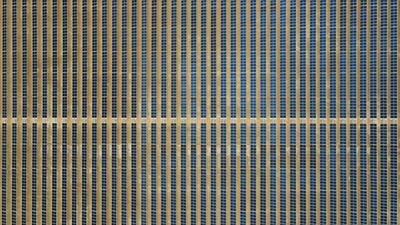
An aerial view of Mohammed bin Rashid Solar Park in Dubai in January 2022. Solar is essential to the UAE's new energy mix. All photos by Pawan Singh / The National -
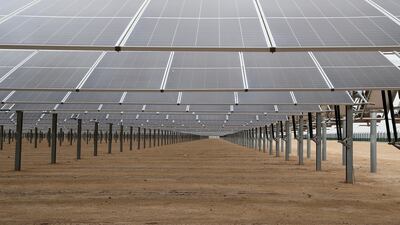
The fifth phase of a clean energy project at the Mohammed bin Rashid Solar Park will further help reduce carbon emissions. -

An aerial view of the Solar Park in the Dubai desert. -
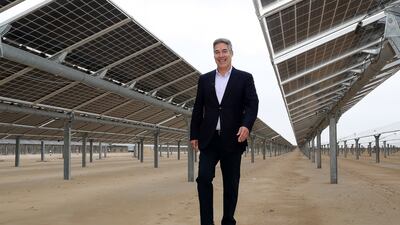
Marco Garcia, chief commercial officer of Nextracker, a US company which has provided photovoltaic technology used in the project. -
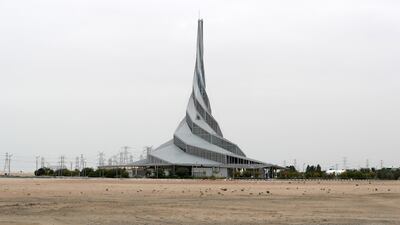
The Innovation Centre at the MBR Solar Park in Dubai, where machine learning is being utilised to track direct sunlight to maximise efficient energy capture, storage and transmission. -

The solar powered panels follow the path of the sun to help the emirate reach its clean energy transition goals. -
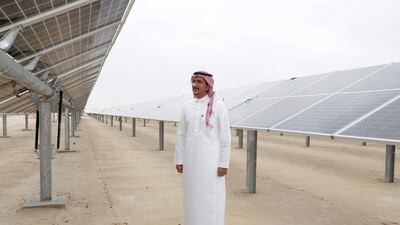
Omar Al Hassan, chief executive of Shuaa Energy 3, the company operating the scheme, says the vast project will ultimately create clean energy to power more than 250,000 houses in Dubai. -
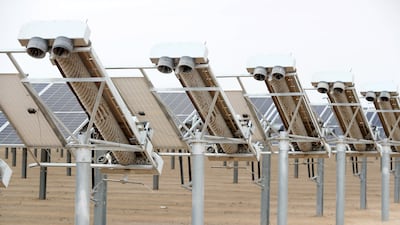
Robotic cleaning systems are installed on the solar panels. -
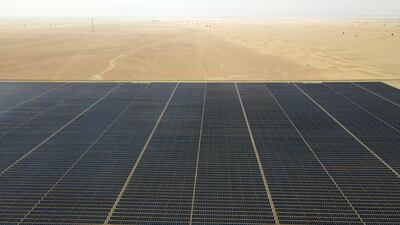
More than 2.5 million photovoltaic modules have been fitted during phase 5 of the project.


The DMCC's 20-year agreement for the solar panel project will support Dubai's clean energy goals and is also part of its own sustainability strategy, which aims reduce the business district’s impact on the environment through a focus on water and energy use.
The solar panel project in JLT will result in a “significant reduction in power consumption tariffs” for the district, making it cheaper for residents and tenants, the DMCC said.
The DMCC introduced a similar initiative at its One JLT building. It has also introduced other energy saving initiatives over the past 12 months, helping to reduce its requirements from the national energy grid by more than 30 per cent.
In August 2017, the DMCC became the first free zone in the GCC to commit to the UN Global Compact initiative. It publishes an annual sustainability report highlighting the business district’s progress in achieving sustainability targets.

