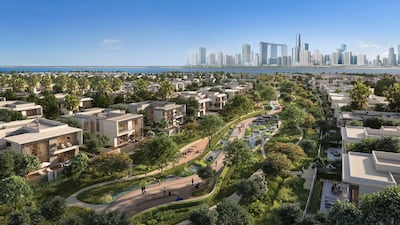

Aldar Properties, Abu Dhabi’s biggest listed developer, generated more than Dh5 billion ($1.36 billion) in sales across two new residential housing projects in Saadiyat and Yas islands.
UAE citizens accounted for 31 per cent of total buyers at the Talay and Yas Riva Reserve projects, Aldar said in a statement on Tuesday to the Abu Dhabi Securities Exchange, where its shares are traded.
People from the UK, Russia, Jordan and India were among the top buyers of the remaining proportion.

“The continued demand we are seeing, from Emiratis, residents and international buyers, reflects confidence in the emirate,” said Jonathan Emery, chief executive of Aldar Development.

Abu Dhabi’s property market continues to perform strongly despite uncertainty stemming from the Iran war.
Total real estate transactions in the first six months rose 112 per cent year-on-year to hit Dh117 billion, with transaction volumes rising 61.7 per cent to 16,838, according to the Abu Dhabi Real Estate Centre.
Property prices also rose amid higher demand from buyers.
Abu Dhabi residential prices increased by about 21.6 per cent year-on-year in the second quarter of this year, with apartment prices rising 24.4 per cent annually, a CBRE report in July showed. Prices for villas rose more modestly at 6.3 per cent, it said.
This month, Aldar announced the launch of Talay, a residential project with 351 stand-alone villas. It is part of Marsa Al Saadiyat, a Dh100 billion waterfront destination in Saadiyat Island that will be home to more than 58,000 residents once the project is complete.
It also launched Yas Riva Reserve, a gated villa community in Yas Island, with 292 four, five and six-bedroom villas.
Aldar reported strong second-quarter financial results, with profit and revenue rising for the three-month period to the end of June.
Net profit rose 10 per cent annually to Dh2.16 billion, with revenue and rental income increasing by 5 per cent year-on-year to Dh8.1 billion.
Aldar’s group development backlog reached Dh71.6 billion at the end of June, including Dh59.9 billion in the UAE, which is expected to drive revenue recognition over the next two to three years, it said.

