


Azizi Developments has begun construction of a mega-tall tower block that it says will be the second tallest in the world if it is approved.
The developer declined to say how tall Burj Azizi will be because the structure's proposed height is awaiting final approval from authorities. But the company did confirm, however, that it will be the second tallest building in Dubai.
The $1.5 billion tower, which will be on the Sheikh Zayed Road in Dubai, will feature luxury apartments and penthouses, a mall spread over several floors, a seven-star hotel, high-end F&B outlets and an observation deck.
Burj Azizi is scheduled to be completed within four years, the developer said.

“This tower will be our legacy. With Dubai having given my family and I so much – safety and abundance of opportunities – this tower, which will be the second tallest [in the world] is our way of giving back to this emirate and its remarkably hospitable and welcoming people,” said Mirwais Azizi, founder and chairman of Azizi Developments.
The 828-metre Burj Khalifa has been the world's tallest since it opened on January 4, 2010. To be the second tallest in the world, Burj Azizi will have to be taller than 679m, which is the height of Merdeka 118 in Malaysia, which opened in November.
To be the second tallest building in the city, the Burj Azizi would have to be taller than 450m, which is the height of the Franck Muller Aeternitas tower, which is currently under construction in Dubai Marina.
At present, the second tallest tower in the city, according to the Council on Tall Buildings and Urban Habitat, is Marina 101, which measures 425m in height, while the third tallest is the Princess Tower, also in Dubai Marina, which is 413m.
-
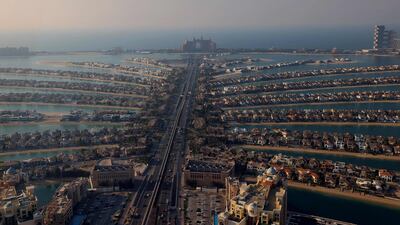
The Palm Jumeirah saw the majority of deals in luxury and super luxury sales in Dubai in 2023. AFP -
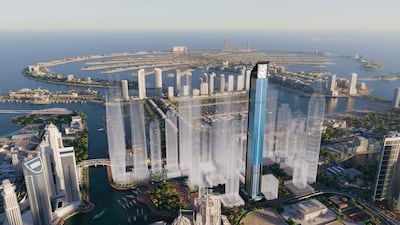
At 450m, the Franck Muller Aeternitas tower will be one of the tallest in the city when complete in 2027. It will feature 649 one, two and three-bedroom apartments, plus duplexes, over 106 floors – all topped by a giant clock. Photo: London Gate -
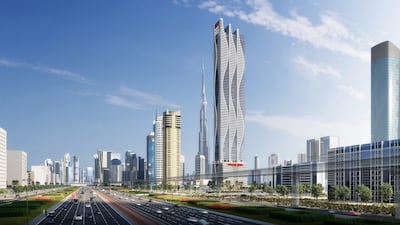
Bayz 101 by Danube will have 1,346 apartments and is the developer's largest project to date in terms of both units and overall space. Photo: Danube Properties -
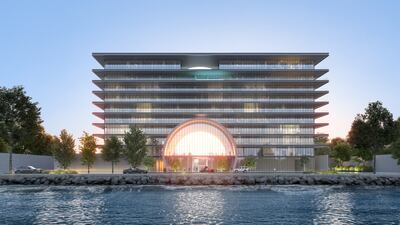
Sharjah property developer Arada has launched sales for its luxury project in Dubai, the Armani Beach Residences at Palm Jumeirah. Prices start at Dh21 million ($5.7m). Photo: Arada -
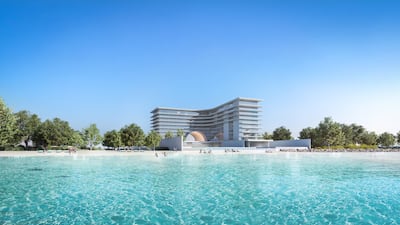
Designed by Japanese Pritzker-Prize-winning architect Tadao Ando, in collaboration with fashion icon Giorgio Armani, Armani Beach Residences features 53 two to five-bedroom residences, plus penthouses and two presidential suites. Photo: Arada -

One of the largest private penthouses in Dubai is on sale for Dh600 million. It comprises the three top-three levels and rooftop of Raffles The Palm Dubai Residences. Photo: Emerald Palace Group -
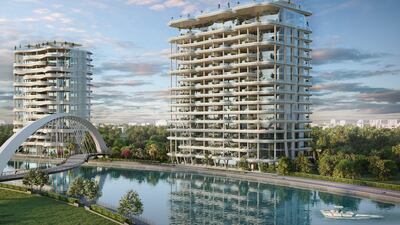
Dubai's AHS Properties has launched a $850 million project called Casa Canal, located at Dubai Water Canal. Photo: AHS Properties -

Casa Canal will have a mix of residences, including three-bedroom penthouses, four and five-bedroom villas and six-bedroom mansions. Units are priced between Dh22.5 million and Dh185 million and the project is set to be delivered in late 2025. Photo: AHS Properties -

Nakheel, the developer behind The Palm Jumeirah, launched the first waterfront villa project on the Palm Jebel Ali in 2023. Leslie Pableo / The National -
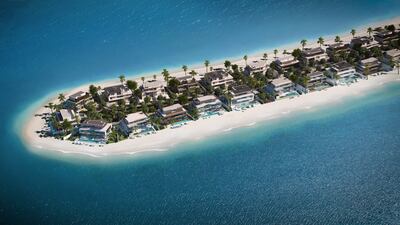
The launch of properties on four fronds of Palm Jebel Ali offer two types of homes – coral and beach villas, says Nakheel. Photo: Nakheel -
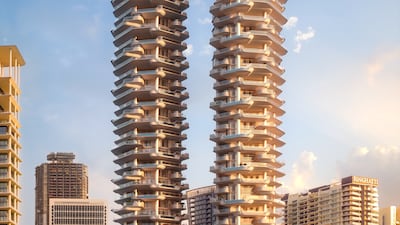
Dubai developer Sankari Properties is building a $1 billion ultra-luxury project in Marasi Business Bay. Units will start at $10 million. Photo: Sankari Properties -
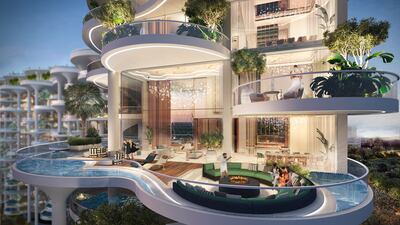
Damac launched Cavalli Couture on Dubai Water Canal in 2022. The 14-storey building features 70 units, comprising three, four and five-bedroom duplex sky villas and duplex penthouses. Photo: Damac -
Jumeirah Bay Island is one of Dubai's prime residential neighbourhoods. Photo: Bulgari -
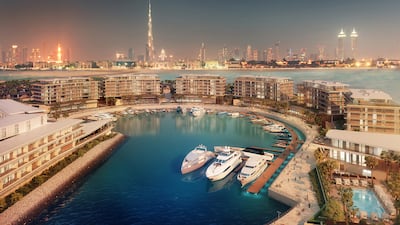
There were close to 50 sales of Jumeirah Bay Island properties in excess of $10 million in 2023. -
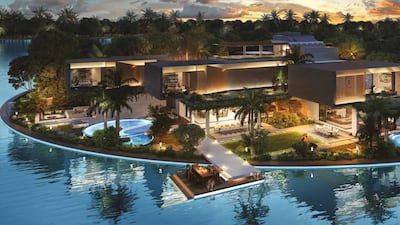
Also much sought-after is The Mansions, Lanai Islands, Tilal Al Ghaf, Dubai. Photo: Knight Frank -
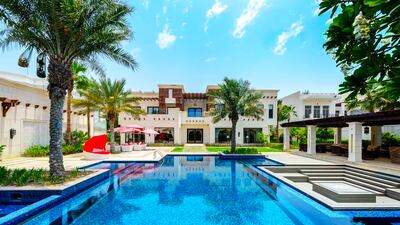
A luxury villa in Dubai's Emirates Hills sold for Dh102.8 million in 2022. Photo: Phoenix Homes


Master community
Azizi Developments previously proposed plans to develop a landmark tower on the Sheikh Zayed Road.
The developer first announced the building of the 570m skyscraper, with 122 storeys, in March 2018.
At Cityscape in 2022, the developer's chief executive, Farhad Azizi, announced plans to build the second-tallest tower in Dubai as part of a multibillion-dollar investment plan.
Mr Azizi described the tower as being "like a master community but in one tower”. In May, it announced plans to spend up to Dh60 billion on developing a portfolio of 50 luxury hotels and resorts, including a seven-star hotel, in Dubai.
Azizi currently has about 40,000 units under construction that are due to be delivered by 2027.
In September, it launched a Dh30 billion ($8.16 billion) mixed-use development called Azizi Venice, which will include more than 30,000 homes in 100 mid-rise apartment complexes and more than 400 villas and mansions.
After a record year for developers, UAE property prices are expected to continue to rise in 2024. In Dubai, average residential prices are projected to increase by 5 per cent to 7 per cent, according to ValuStrat.
However, by the summer, “we could see an inflection point where we could see a turn in the curve and if it happens then it will hit the high-end luxury market first”, said Haider Tuaima, director and head of real estate research at ValuStrat.

