


Dubai has been ranked as the world leader for branded residences, according to a new study by property adviser Savills.
The sector has grown by more than 150 per cent during the past 10 years and has proved to be resilient in the face of global uncertainty and change, Savills said in its Spotlight on Branded Residences.
There are currently 640 schemes, accounting for nearly 100,000 units globally, while supply levels are forecast to exceed 1,100 schemes by 2027.
Dubai has more than 40 completed branded residences, with a pipeline set to take that number beyond 70. South Florida and New York City are ranked second and third in terms of hotspots for completed and current pipeline.
Recent branded residence announcements in Dubai include the Mag of Life Mansions at the Ritz-Carlton Residences, Creekside, which are valued at Dh177 million each. Jumeirah Group in August unveiled its fourth branded residence in Dubai as part of the area's new Peninsula waterfront development.
Also, the Atlantis The Royal Residences are set to open next year on Palm Jumeirah, along with the 795-room hotel.
-
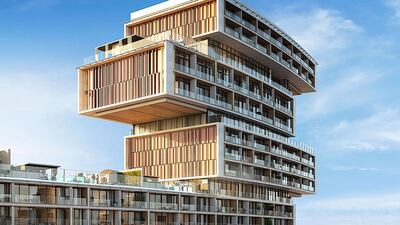
The Atlantis The Royal Residences penthouse. Photo: B1 Properties -

Atlantis The Royal development. Images are for illustrative purposes only and may not fully represent what the actual, completed penthouse will look like. Photo: LuxuryProperty.com -
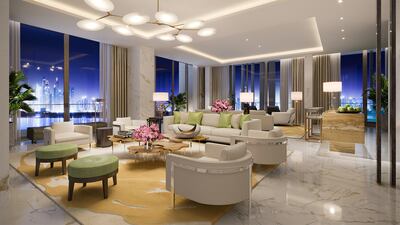
The interior will represent the height of luxury. Photo: LuxuryProperty.com -
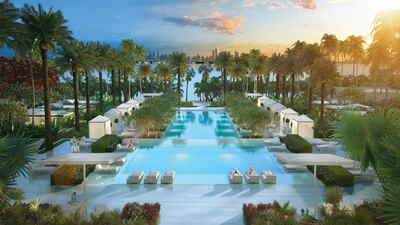
The hotel will include 90 swimming pools. Photo: LuxuryProperty.com -

Views of the Dubai Marina skyline from the property are sought after. Photo: LuxuryProperty.com -
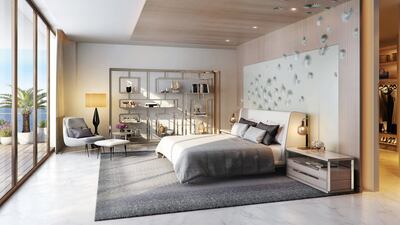
Who wouldn't want to wake up here each morning? Photo: LuxuryProperty.com -
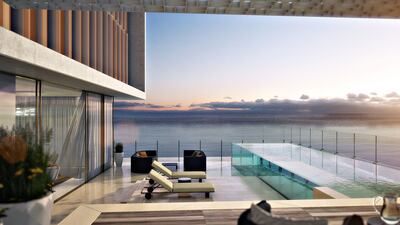
Some of the penthouses have terrace pools. Photo: LuxuryProperty.com -
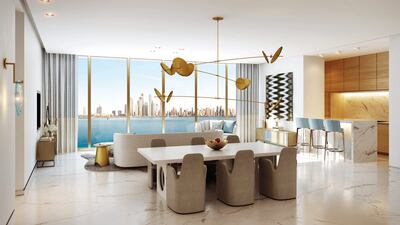
The property will come shell and core, with fit-out works left to the new owners. Photo: LuxuryProperty.com -
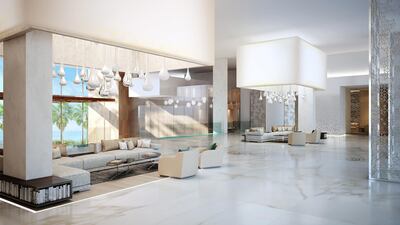
The rooms will be bright and airy. Photo: LuxuryProperty.com -
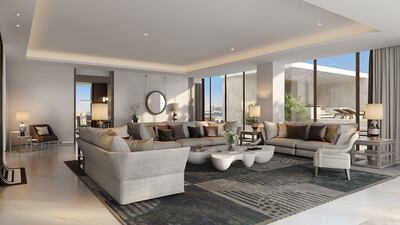
The new residences are set to be one of the top addresses in the city. Photo: LuxuryProperty.com -

The design in the renderings shows how a comfortable but stylish approach works well. Photo: LuxuryProperty.com -

It will have Atlantis, The Palm as a neighbour on the tip of The Palm Jumeirah. Photo: LuxuryProperty.com -

The penthouse was on the market for Dh180 million, while other apartment sizes are available. Photo: LuxuryProperty.com -

The property will come with five bedrooms. Photo: LuxuryProperty.com -

There will be lush grounds around the complex. Photo: LuxuryProperty.com


“Across the world, brands are looking for new locations to grow their portfolios and affluent, globally-mobile individuals will continue to drive demand for branded residences,” said Swapnil Pillai of Savills Middle East.
“Developers and brands are together identifying the hotspots of HNWI [high net worth individuals] growth to enhance their offer. Over the past five years, the highest growth rates in terms of number of HNWIs were noted in North America (53 per cent), followed by the Middle East (34 per cent) and Asia Pacific (31 per cent). This is in line with our observations with regards to the strongest increase of branded residence stock over the same period.”
The UAE is expected to record a 22 per cent rise in the number of high-net-worth households in the next five years, he said, while Saudi Arabia (13 per cent), Kuwait (51 per cent) and Qatar (22 per cent) are also likely to witness healthy growth in the number of wealthy residents.
Financial wealth in the UAE is growing at a rapid pace and is expected to accelerate at a compound annual rate of 6.7 per cent to $1 trillion in 2026, from $700 billion last year, management consultancy Boston Consulting Group said in a report in July.
The rapid expansion is being driven by growth in financial and real assets.
About 41 per cent of the UAE’s wealth was derived from HNWIs in 2021 and this is expected to grow to 43 per cent by 2026.
Although still high, branded residential development growth in the top locations of Dubai, South Florida, and New York is slowing as many brands look for expansion opportunities in emerging cities and resort locations, according to Savills.
Analysis by Savills showed that the average global premium for branded residences, over a comparable non-branded product, stands at 30 per cent on an unweighted basis.
The market in Dubai started to blossom in 2010 with the Armani Residences Burj Khalifa, the first in the emirate to introduce five-star serviced homes.
A report from Knight Frank earlier this year said that Dubai now had two clear concentrations of branded residential property: Central Dubai, which stretches outward from Downtown Dubai, along the Dubai Canal and out to Jumeirah, and New Dubai, which encompasses The Palm Jumeirah, Dubai Marina and Jumeirah Lakes Towers.
Luxury residential developers from Dubai have set their sights on markets further afield, with Damac, securing a site in Miami, while also progressing their Versace branded scheme in London’s Nine Elms.

