


Walk into a four-bedroom apartment on the 13th floor of central London's latest luxury development, The Bryanston, and the floor-to-ceiling windows offer a spectacular view of Hyde Park.
As the tallest residential address to overlook the 142-hectare park, the 18-storey development is one of the last new projects in London to offer more than 200 square metres in space, after the local council clamped down on the construction of supersize homes amid a scarcity of land.
The development’s release on to the UK property market is timely for another reason too. The official launch of its first show home came in October – a key moment coinciding with the return of the international buyer to the market.
“It has almost been perfect timing with the building completing, at the same time as restrictions lifting,” Lottie Geaves, sales manager at UK developer Almacantar, told The National.
“There was a significant step change in the market from the end of the summer when restrictions in the UK were obviously lifting, but also international travel was opening up again.”
British buyers drive the surge in transactions in 2021
However, despite the development’s location sandwiched between Oxford Street, Hyde Park and Marylebone – a popular location for Middle East visitors because of its village feel with boutique shops and independent restaurants – it is actually British buyers who are making most of the purchases.
“We've had quite a lot of interest from the Middle East and quite a bit of new growth from the Far East but these buyers haven't been as physically present in London and it has been predominantly British buyers that have been here looking and transacting,” Ms Geaves said.
-
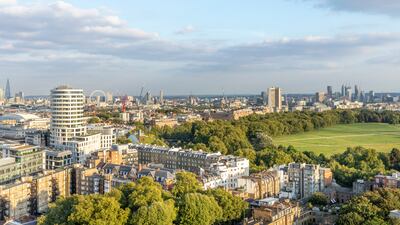
The Bryanston Hyde Park in London. All photos: Jason Hawkes -

The kitchen. -
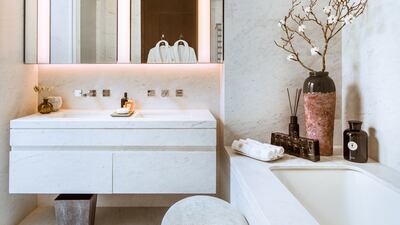
The bathroom of the main bedroom. -

The living room. -
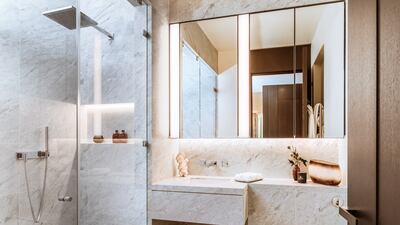
The guest bathroom. -
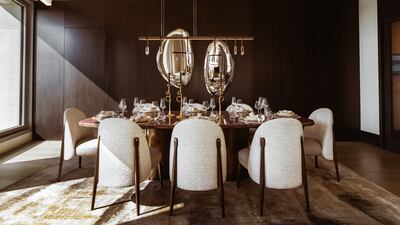
The dining room. -
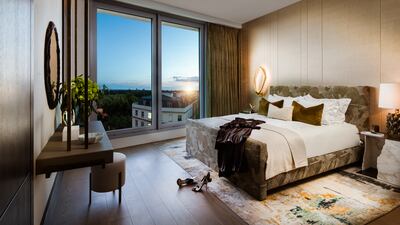
The bedroom. -
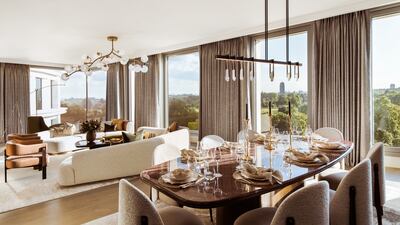
All residences benefit from panoramic views across Hyde Park -
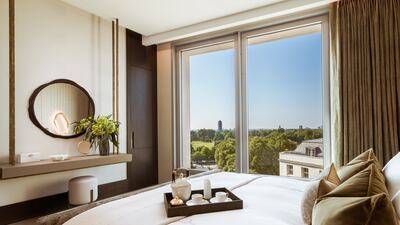
Three-bedroom apartments can be found throughout the building. -
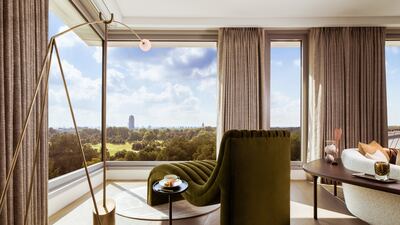
The reading corner overlooking the Hyde Park greenery. -
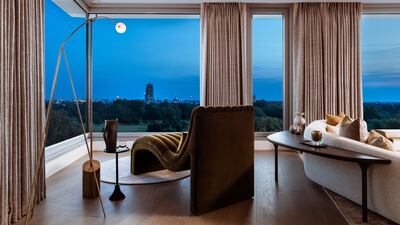
The emphasis is on opulence of space and individuality of design. -
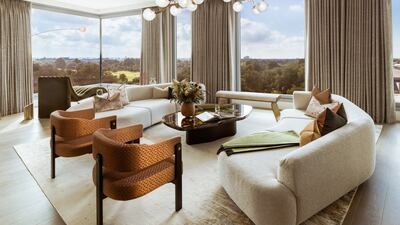
At The Bryanston, sizes of two-bedroom apartments range from 1,335 square feet to 2,401 square feet. -
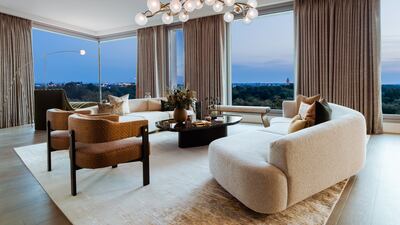
Two-bedroom apartments are arranged across levels 2 to 6. -

The dining room. -
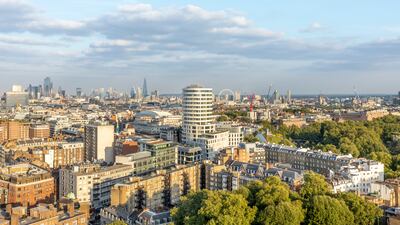
The Bryanston offers one to six-bedroom apartments at the finest address in Europe. -

The Bryanston in London's Hyde Park is a collection of 54 residences.


Camilla Dell, managing partner at Black Brick, which helps Middle East investors purchase property, predominantly in London, said 2021 has been the year of the domestic buyer.
“We've been incredibly busy with domestic clients buying houses with gardens in areas like St John's Wood, Hampstead, Primrose Hill, Richmond, Wimbledon, Dulwich and Fulham because one of the key themes has been this kind of drive outwards for space and gardens,” said Ms Dell.
“We often forget that there's a lot of wealth domestically in this country – it's not all about international buyers.”
There has been a similar theme at London's Battersea Power Station, the mega-project to regenerate the old power station into residential homes, which has achieved more than £300 million in sales this year – a record since launch – with domestic buyers driving purchases.
“We’ve certainly seen more Middle East buyers turn up, but nowhere near the scale we've seen historically. I personally think that we'll see a resurgence of that market post Ramadan next year,” Meriam Lock-Necrews, head of residential at Battersea Power Station company, told The National.
London property market 'froze' at start of year during lockdown
It has been a year of highs and lows for Britain’s property market, which started 2021 with the difficult task of navigating through the third lockdown in England and similar restrictions in the rest of the country.
While prices in 2020 soared 8.5 per cent as Britons chose houses with gardens in country locations over city-centre apartments – amid repeated lockdowns and Chancellor of the Exchequer Rishi Sunak unveiling a stamp duty holiday to bolster the market – the situation was less rosy in January this year.
A limited supply of homes for sale as some sellers waited for restrictions to ease meant buyers had few options to choose from.
Meanwhile, developers sitting on prime central London developments found the phone stopped ringing as domestic buyers fled London for country homes and international travellers were barred from entering the country.
“The market froze for us,” Gabriel York, chief executive of Lodha UK, the luxury developer behind No. 1 Grosvenor Square in London’s Mayfair, told The National earlier this year.
Across both our projects, in December, January and February the market just went. It was winter and people were locked up.”

Fast forward to the end of the year and sales of Grosvenor Square’s 44 apartments at the former US embassy “just took off”, jumping to 65 per cent sold from 30 per cent in a matter of weeks.
From September 24 to November 12, Lodha made £310m in sales with an additional £100m under offer and the team noticing a radical shift in market activity. More than £60m of those sales went to GCC buyers in November alone with parties from the region making the highest number of viewings.
Return of the international buyer came as Covid travel restrictions eased
This momentum is what The Bryanston is tuning in to with its show home on the sixth floor, after two or three years of quietly marketing the project with four units sold off-plan.
While international investors who spend a chunk of their time in the UK capital have shown interest, Middle East investors account for 30 per cent of all enquiries and 10 per cent of viewings in recent weeks.
“We've had inquiries from Kuwait, Saudi Arabia, Oman, Dubai – there has been a definite step change with people saying, we're going to be in London from early December for a few weeks,” said Ms Geaves, adding that Middle East families are attracted by the size of the apartments.
The development’s park-facing apartments are among a handful on sale across London at the moment as less than half of the buildings located along Hyde Park’s six kilometres of park frontage are residential.
This makes marketing the development's 54 apartments, which start from £2.4m, relatively straightforward for the property investment company, which has acquired more than 1.5 million square feet of prime assets in London since its launch in 2010.
While The Bryanston has entered the market at the perfect time, with British house prices accelerating 10 per cent in November compared with a year earlier and prices now almost 15 per cent higher than at the start of the pandemic, not every segment of the market has been a winner.
Ms Dell said the Covid losers have been prime central London properties in areas such as Belgravia, Mayfair, Knightsbridge and South Kensington, with the apartment market taking a particular hit.
“The flat market has been much tougher with far fewer transactions and not that many people buying in those postcodes this year because of travel restrictions and the general trend of people not wanting flats,” she said.
Prime central London prices are on the rise
In October, prime central London property prices grew at the fastest rate since September 2015, while prime outer London reached levels not seen since February 2016, according to property firm Knight Frank, as momentum returned to the market.
While growth was a relatively modest 1.2 per cent on the year, it marked the sixth consecutive month of annual prime central London growth, with the capital's premium property brokers seeing it is the start of a new chapter after the double hit of Brexit and the coronavirus pandemic put a combined squeeze on prices.
“[The] prime London property market is resuming an overdue recovery that was interrupted by the pandemic,” said Tom Bill, head of UK residential research at Knight Frank.
-

SW1 - Knightsbridge (above), Belgravia, St James’s, Westminster, Victoria, Pimlico, Sloane Square and part of Chelsea. 253 £5m+ sales between 2017 and April 2021. Getty Images -
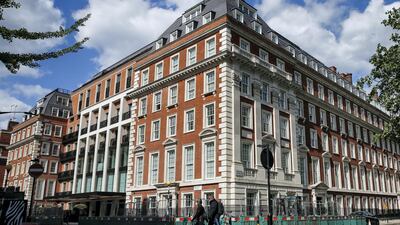
W1 - Mayfair (above), Marylebone, Fitzrovia, Soho. 220 £5m+ sales between 2017 and April 2021. Getty Images -
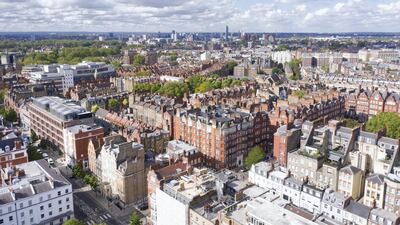
SW3 - Chelsea (above), Knightsbridge. 160 £5m+ sales between 2017 and April 2021. Getty Images -

W8 - Kensington (above), Holland Park. 156 £5m+ sales between 2017 and April 2021. Getty Images -

W11 - Notting Hill (above), Ladbroke Grove (south) and part of Holland Park. 96 £5m+ sales between 2017 and April 2021. Getty Images -
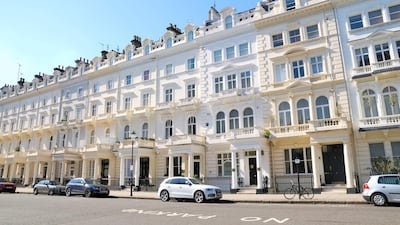
SW7 - South Kensington (above), part of Knightsbridge. 95 £5m+ sales between 2017 and April 2021. Getty Images -
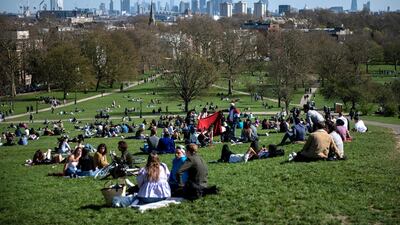
NW8 - St John’s Wood, Primrose Hill (south) (above), Marylebone (north). 87 £5m+ sales between 2017 and April 2021. Getty Images -
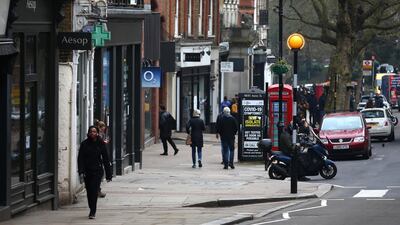
NW3 - Hampstead (above), Belsize Park, Primrose Hill (north). 74 £5m+ sales between 2017 and April 2021. Getty Images -
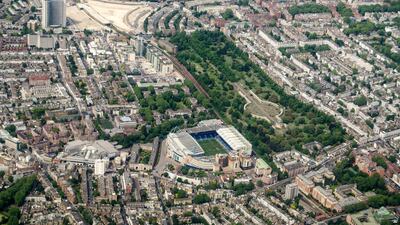
SW10 - West Brompton (above), part of Chelsea. 52 £5m+ sales between 2017 and April 2021. Alamy -
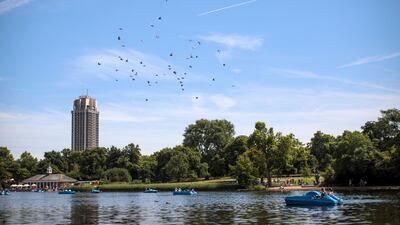
W2 - Paddington, Bayswater, Hyde Park (above), part of Little Venice, part of Notting Hill . 51 £5m+ sales between 2017 and April 2021. Getty Images


However, despite overseas travel restrictions easing, Mr Bill, said it will not be until next spring that the market feels more normal.
Meanwhile, property consultant Savills expects London’s prime central property market to grow 21.5 per cent over the next five years, upgrading its outlook for the sector over the summer to reflect pent-up demand from wealthy overseas buyers.
The company’s more positive forecast also came on the back of the extended stamp duty holiday, as well as better availability of mortgage finance and the effect of repeated lockdowns on what affluent buyers want from their homes.
Tax break incentivises the market
Stamp duty has been a big driver of the market this year, particularly for the domestic buyer, with Mr Sunak’s tax break causing mayhem in the market in the middle of the year.
The first deadline of March 30 caused transactions to soar at the start of the year with UK lenders approving 98,994 home loans in January, according to the Bank of England.
Then, an extension to the deadline of June 30, in the March budget, caused prices to rise at the strongest pace in 17 years in April, rising 2.1 per cent compared to March taking the average price to £238,831 – up almost £16,000 over the past 12 months, Nationwide said.
With the UK’s housing boom showed no signs of slowing down, activity accelerated even more in the run-up to the June 30 deadline, as buyers rushed to complete deals to cash in on a saving of up to £15,000 on the first £500,000 of a purchase.
The surge in transactions almost brought the market to a standstill as mortgage providers and conveyancers struggled to process transactions in time and removal firms were inundated with requests.
UK house prices growth then cooled over the summer with the number of mortgage approvals, a sign of future market activity also easing off.
While experts say the stamp duty deadline did little to attract international buyers as travel restrictions made it difficult for buyers to head to the country, just as the market appeared to be cooling flight restrictions eased and buyers returned from overseas.
“There's a lot of pent-up demand with a lot of people that have been thinking about buying but haven't this year, because they haven't been able to travel here and they haven't wanted to quarantine,” said Ms Dell, adding that demand from GCC buyers will ramp up even more next year.
“Now most of those travel restrictions have gone, it's much easier for clients in the GCC to come here and interest levels are extremely high, particularly on the investment front.”
Savvy developer builds replica apartment in Dubai
While many developers waited for travel restrictions to physically show buyers homes on the market, one developer came up with another idea.
In a bid to sell the remaining 20 per cent of luxurious development, One St John’s Wood, located near Regent’s Park and overlooking Lord’s Cricket Ground, developer Regal London created a replica penthouse apartment at the company’s Downtown Dubai office.
The move paid off, with 90 per cent of the building, where prices start at £995,000, now sold, with 15 per cent of the buyers from the GCC, particularly non-resident Indians based in Dubai who grew up in St. John's Wood.
“The development certainly struck a chord with individuals based in the GCC,” said Jacob Sullivan, sales and marketing director at Regal London, adding that the replica proved “fruitful".
“We managed to get several deals from that and met several clients who have then subsequently bought other products through us,” he said.
“If people can’t travel, you can’t get their full buy-in, but we’ve seen more activity from the GCC since May because of our Ramadan event and the fact that we went to the people rather than waiting for them to come to us.”

Ultimately though, Mr Sullivan said it is the domestic buyer that has been the real winner this year with a “burst of energy” in terms of viewings after the third lockdown.
As a result, the company managed to launch and complete sales of all 63 units Clapham Place, its development in the south London, during the pandemic, with the process starting in June last year “in the eye of the storm”.
While 5 per cent of the sales to GCC buyers, the rest were predominantly bought by domestic buyers looking to cash in on the stamp duty holiday.
Looking ahead, however, Mr Sullivan expects international buyers to surge next year with the Middle East set to drive the momentum, with the company's developments now receiving five visitors a week from the region, compared to the one or two seen during the pandemic.
Despite the threat posed by the Omicron variant Mr Sullivan expects the ramp-up in the vaccination booster programme to encourage more buyers from the GCC region to “get on planes and return to London”.
“More buyers are coming back to all time, and I expect there to be greater demand as we open up. We're quietly optimistic that once confidence comes back, we will see a very, very good 2022.”

