


UAE property prices are set to continue rising in 2022, driven by supportive economic reforms and an accelerated vaccination programme that has helped to hasten a rebound from the coronavirus-induced slowdown last year, according to experts.
“The UAE property market will perform in a healthy way,” Haider Tuaima, head of real estate research at ValuStrat consultancy, told The National.
“We have developers offering attractive payment plans and mortgage interest rates are low. We will see more international investors coming in to buy the property next year.”
The UAE property market, which softened due to a three-year oil price slump that began in 2014 over oversupply concerns and the ensuing pandemic, has turned a page and is recovering as people move to larger homes with outdoor amenities amid a surge in remote working and online learning.
In addition, economic support measures and government initiatives – such as residency permits for those who have retired and remote workers in addition to the expansion of the 10-year golden visa programme – have also helped to improve market sentiment.
The price increase "is sustainable but it will only be toned down by the fact we have a lot of supply coming in, particularly in the apartment submarket”, Mr Tuaima said.
Developers are expected to deliver 50,000 to 60,000 units next year amid higher demand for residential property, he said.
Majid Al Futtaim Communities chief executive Hawazen Esber expects the property market to continue to rebound next year as the government takes effective measures to contain the pandemic.
He said Dubai had succeeded in positioning itself as a safe global city due to its measures to contain the pandemic, its healthcare system and Covid-19 testing requirements.
“People feel safe and there are no lockdowns. Retail and other sectors are thriving,” he said.
The UAE, the Arab world’s second-largest economy, has been recording less than 100 new coronavirus cases every day as the government steps up vaccination programmes to inoculate its population.
It has also administered both doses of the coronavirus vaccine to more than 90 per cent of its population, according to the National Emergency Crisis and Disaster Management Authority.
Residential property prices in Dubai jumped 21 per cent in the first ten months of the year to Dh1,235 per square foot ($336.28) in October, from Dh1,021 per square foot in January, according to a recent Knight Frank study.
Ultra-high-net-worth individuals, among others, are buying property in a big way to boost the market. In Abu Dhabi, prices rose 2.2 per cent in the year to August, according to a separate report by CBRE.
Mr Esber said investors are looking to invest on a long-term basis as Dubai’s global appeal grows.
“We are seeing a lot of international demand from territories and countries, which were more of short-term investors [earlier]. But we are seeing these type of investors coming in with a much longer-term view of having a second or third home in Dubai.”
Apart from government measures, incentives offered by various developers are also attracting investors to the UAE.
Top developers such as Damac and Emaar have unveiled attractive packages that include Dubai Land Department registration fee waivers and flexible payment plans to sell their projects.
Dubai-listed Deyaar is offering incentives at its Noor District project in the Midtown development. The offers includes the cancellation of service charges for two years and a 50 per cent waiver on DLD registration fees.
The company also introduced a five-year instalment payment plan to win over customers.
“With 2022 set to be competitive as both new unit completions and off-plan sales launches rise, we expect developers to continue to explore incentives to attract buyers,” said Chris Hobden, head of strategic consultancy at Chestertons Mena.
International interest in property purchases will “remain strong” over 2022, he said.
Off-plan properties are expected to account for a greater share of total sales next year, with developers across Dubai and Abu Dhabi reporting a rise in transactions over the second half of 2021, Mr Hobden said.
“While we expect demand to continue to be broad-based over 2022, prime water-front locations will likely draw particular interest from both end-user buyers and tenants, driven partly by ongoing work-from-home practices and [the] take-up of the UAE’s remote-working visa,” he said.
Expo 2020 Dubai, which began on October 1 and continues through to March 2022, is also boosting demand, according to Cyril Lincoln, executive vice president and global head of real estate finance and advisory, investment and agency services at Mashreq Bank.
____________________
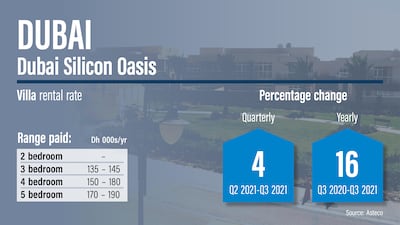
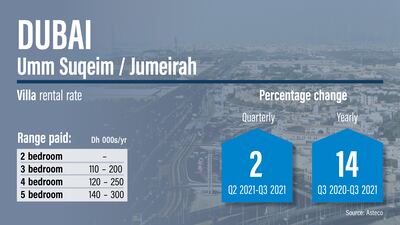
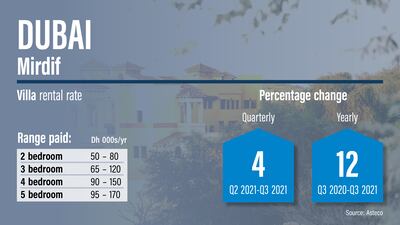
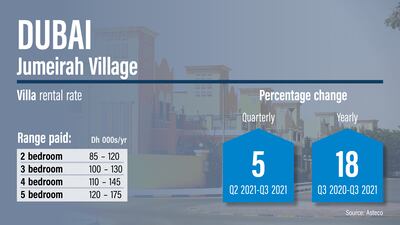
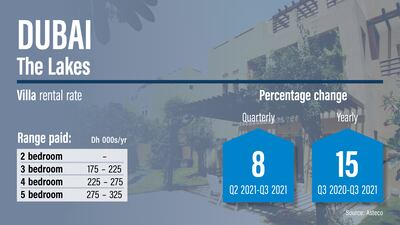
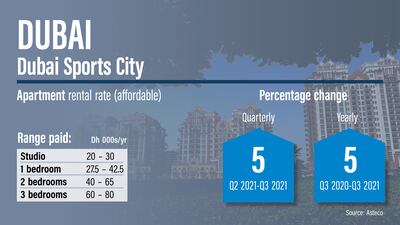
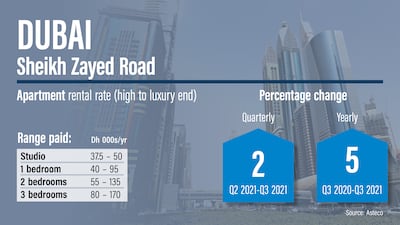
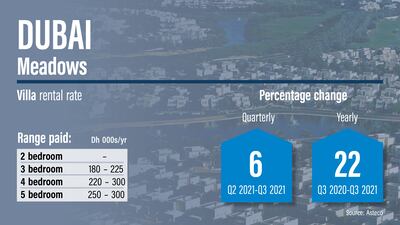
Dubai property rents: where they have risen and fallen in the third quarter of 2021
-
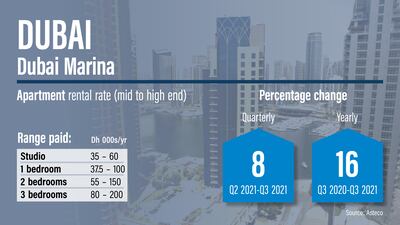
Dubai rents Q3, 2021 -
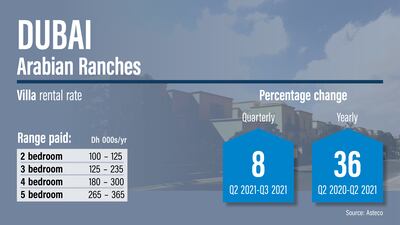
Dubai rents Q3, 2021 -
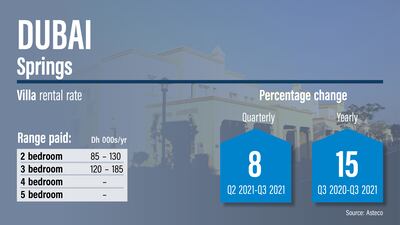
Dubai rents Q3, 2021 -
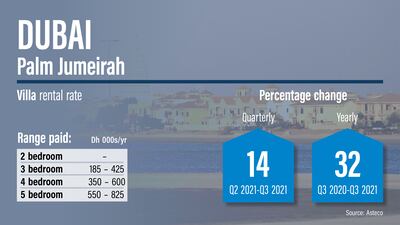
Dubai rents Q3, 2021 -
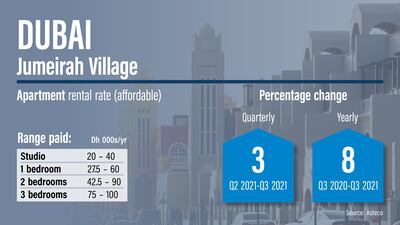
Dubai rents Q3, 2021 -
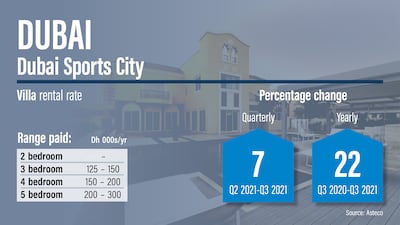
Dubai rents Q3, 2021 -
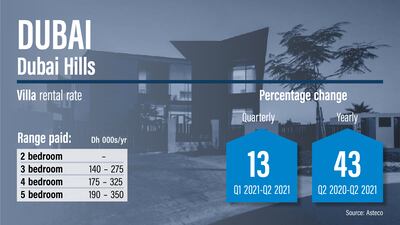
Dubai rents Q3, 2021 -
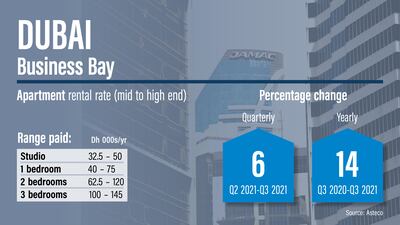
Dubai rents Q3, 2021 -

Dubai rents Q3, 2021 -
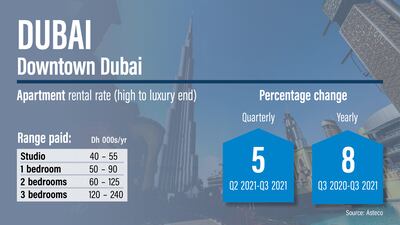
Dubai rents Q3, 2021 -
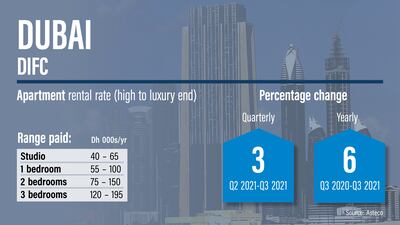
Dubai rents Q3, 2021 -
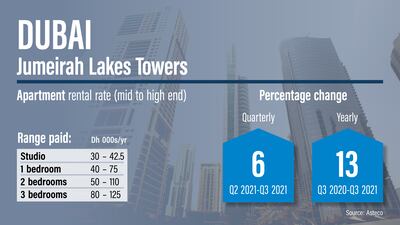
Dubai rents Q3, 2021 -
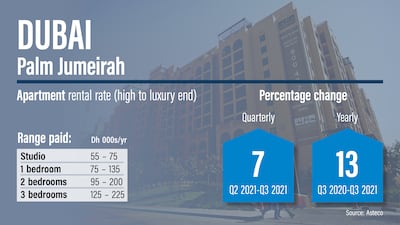
Dubai rents Q3, 2021 -
Dubai rents Q3, 2021 -
Dubai rents Q3, 2021 -
Dubai rents Q3, 2021 -
Dubai rents Q3, 2021 -

Dubai rents Q3, 2021 -

Dubai rents Q3, 2021 -
Dubai rents Q3, 2021 -

Dubai rents Q3, 2021 -

Dubai rents Q3, 2021 -
Dubai rents Q3, 2021 -
Dubai rents Q3, 2021 -
Dubai rents Q3, 2021 -

Dubai rents Q3, 2021


____________________
The world's trade fair will help to propel the property market further, with the possibility that Expo visitors could become long-term residents and investors in the property sector.
Expo 2020 recorded more than 6.3 million visits in the period up to December 13.
Last month, Dubai registered 7,000 property sales deals worth Dh17.96 billion, making it the best November in terms of total sales in eight years, according to listings portal Property Finder.
Abu Dhabi registered property transactions valued at Dh16.2bn during the third quarter of 2021, according to the Department of Municipalities and Transport.
The emirate completed 3,932 property transactions, which included Dh11.6bn in mortgages and Dh4.6bn in cash sales. About 2,224 mortgage transactions and 1,708 sales transactions were concluded in the third quarter of this year, the DMT said.
Another factor supporting demand for residential property in the UAE is the country's popularity and appeal to "digital nomads", Mr Lincoln said.
“The fact that a person can work remotely while still living in Dubai is a huge pull for people. They see the tax benefits and lifestyle opportunities and are keen to call this city their home.”
Abu Dhabi’s biggest developer Aldar Properties unveiled a number of new projects this year as demand picked up. Last month, the company started the last phase of its Yas Acres development, Dahlias, consisting of 120 villas, duplexes and town houses that are available for purchase by all nationalities.
The project launch comes after the sell-out of another Aldar project named Magnolias on Yas Acres earlier this year. Aldar registered total sales of Dh1bn from the sale of 312 residential units at Magnolias.
The company also sold all 83 villas at its development on Saadiyat island named Saadiyat Reserve, The Dunes.
Aldar also unveiled the third phase of its Noya project on Yas Island in May, which was sold out in four hours.
“[The] UAE and Abu Dhabi have [shown] a great resilience, economically and the way they dealt with the health crisis," Jonathan Emery, chief executive of Aldar Development told The National in an interview earlier this year.
These measures have boosted investors' confidence and "one of the primary asset classes" they are choosing to invest in is property, he said.
In Abu Dhabi, villa prices rose 14 per cent annually in the third quarter of this year while apartments posted a modest increase of 1 per cent, according to a report from Asteco.
Asteco recorded the delivery of about 2,200 residential units in the third quarter, including three buildings on Reem Island (with about 850 units), in addition to a number of buildings and villas located across different areas of Abu Dhabi.
More than 4,600 residential units are due for delivery in the fourth quarter of this year.
____________________
Property of the week: Dh45m Palm Jumeirah villa with a style of its own
-
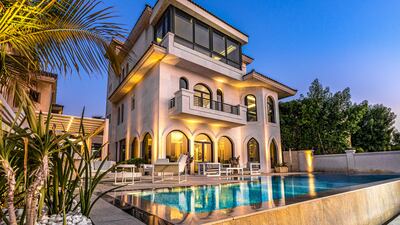
The property is set across three floors. All images courtesy LuxuryProperty.com -
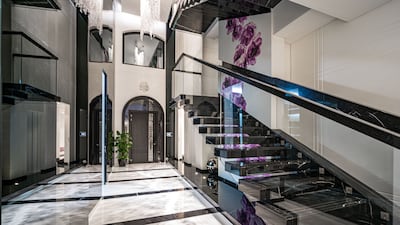
The triple-height foyer. -
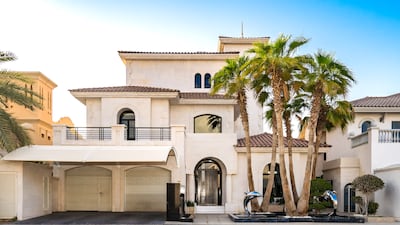
The front of the property with ornamental dolphins. -
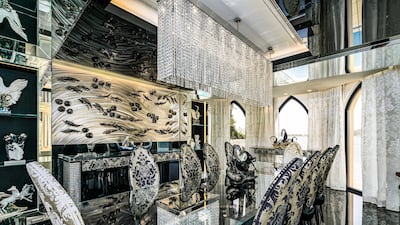
The dining area is a feast in many respects. -
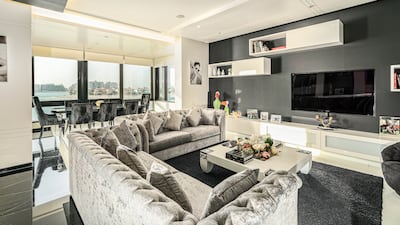
The first floor sitting room. -
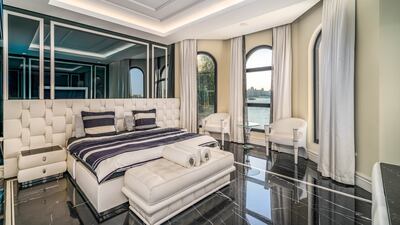
The property comes with five bedrooms. -
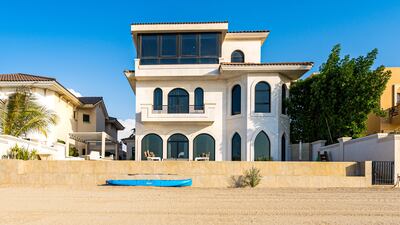
It fronts right on to the beach. -
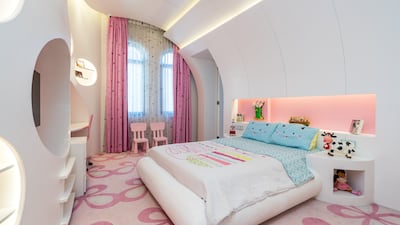
The kids' bedrooms are ready to go. -
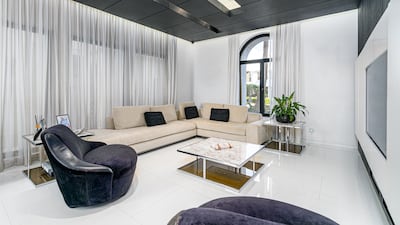
The colour scheme is predominantly black and white. -
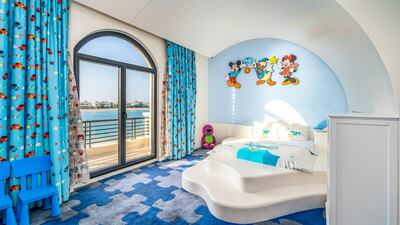
It all fits together nicely. -
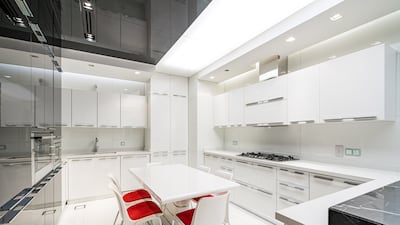
Dining can also be done in the kitchen. -
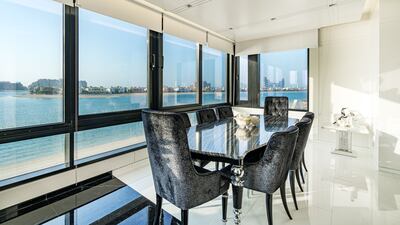
The views out across the Palm are majestic. -
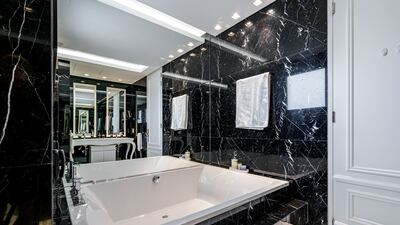
A typically marble-clad Dubai bathroom. -
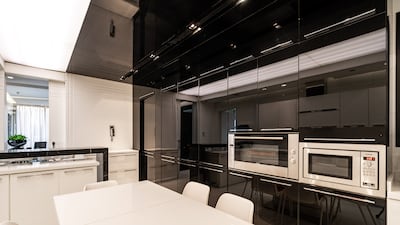
The kitchen comes with stainless steel appliances. -
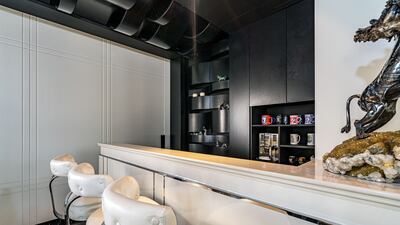
The first floor recreation room has a bar. -
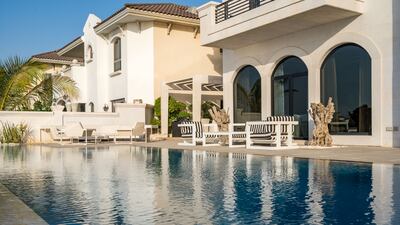
The pool overlooks the beach and is a good size. -
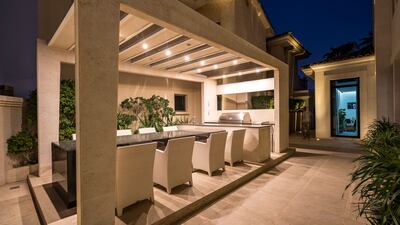
Outdoor dining is taken care of. -
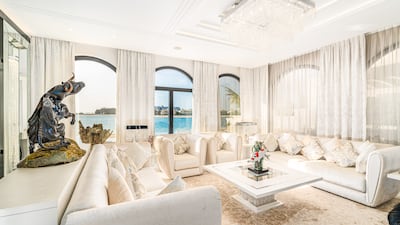
The property is on the market for Dh45m.



