


It has been more than a decade since the US Securities and Exchange Commission first rejected an application by Cameron and Tyler Winklevoss, the billionaire co-founders of cryptocurrency exchange Gemini, for a Bitcoin exchange-traded fund as it was too risky for investors.
Exactly 3,845 days after that first application – and in a major victory for the cryptocurrency sector – the regulator on Wednesday finally approved the country’s first spot Bitcoin ETFs, clearing the way for trading to begin today on the New York Stock Exchange, Cboe Global Markets and the Nasdaq and making Bitcoin more accessible to retail traders.
The price of Bitcoin initially jumped on the news, rising to $46,919.49 on Wednesday night. It has since pared those gains and was trading at $46,806.36 as of 3pm UAE time on Thursday.
The SEC’s decision marks a historic chapter in the cryptocurrency sector, according to Richard Teng, chief executive of Binance, the world’s largest cryptocurrency exchange.
“The approval illustrates a new level of acceptance, maturity and mainstreaming of the crypto market, providing the industry with more credibility and potential for further innovation,” Mr Teng says.
“Bitcoin ETFs will provide easier access to the crypto market, attracting more investors and liquidity.”
A US court ruling in August last year, which found that the SEC should have approved an application from Grayscale Investments to launch a spot Bitcoin ETF, paved the way for Wednesday's decision.
Bitcoin ETFs are similar to traditional ETFs – a basket of securities consisting of stocks, bonds, commodities or other financial assets that track global markets – but the digital token is the underlying asset, says Vijay Valecha, chief investment officer at Century Financial.
ETFs are popular with retail investors because of their low-cost fees and easy access to a range of diverse assets, enabling them to self-manage their portfolios.
“By purchasing shares of the ETF, investors can indirectly own a portion of Bitcoin without the complexities of buying and storing it themselves,” Mr Valecha says.
“This provides a convenient and regulated way to invest in Bitcoin, especially for those who may be new to cryptocurrency or face regulatory restrictions when directly investing in cryptocurrencies.”
It has been a tumultuous few years for the global cryptocurrency sector, which entered a “crypto winter” in 2022 after the collapse of a number of large platforms including Celsius, Three Arrows Capital and Sam Bankman-Fried's FTX.
The collapse of FTX, once valued at $32 billion, is the highest-profile cryptocurrency exchange failure to date, after traders pulled $6 billion from the platform in three days and rival exchange Binance abandoned a rescue deal.
Mr Bankman-Fried was convicted in November last year of defrauding customers of $8 billion in one of the biggest financial frauds on record in the US. He is scheduled to be sentenced on March 28.
Changpeng Zhao, founder of Binance, the world’s biggest cryptocurrency exchange, also pleaded guilty to criminal charges last November and resigned from the company as part of a $4.3 billion settlement with the US Department of Justice.
In a statement on Wednesday announcing the SEC’s approval of the ETFs, chairman Gary Gensler was at pains to point out that the regulator did not “approve or endorse Bitcoin”.
“Investors should remain cautious about the myriad risks associated with Bitcoin and products whose value is tied to crypto,” he said.
Here is everything investors need to know about the Bitcoin ETFs.
How does a Bitcoin ETF work?
Bitcoin ETFs function similarly to traditional ETFs and track the price of Bitcoin without direct ownership, according to Yusuf Mansawala, chief market analyst at online trading platform CPT Markets.
“They hold Bitcoin in trusts, allowing fractional ownership and easier portfolio diversification,” Mr Mansawala says.
The ETFs will track the price of Bitcoin, enabling investors to buy and sell the security on stock exchanges, including the NYSE, Nasdaq and Cboe Global Markets during market hours, Mr Valecha says.
Watch: What is Bitcoin and how did it start?
Are the ETFs less risky than investing directly in Bitcoin?
Bitcoin ETFs are expected to eliminate the risks associated with self-storage, potential hacks or fraud and legal uncertainties, while regulatory approval from the SEC lends legitimacy to the funds and provides investors with a sense of security, Mr Valecha says.
“Investing in Bitcoin ETFs presents a smart and safe alternative to directly owning Bitcoin, as it offers a regulated and straightforward approach to trading the cryptocurrency,” he adds.
“Furthermore, the liquidity of stock markets compared to crypto markets makes investing in a Bitcoin ETF a more preferable option.”
However, it's crucial to acknowledge the drawbacks, such as limited trading hours and administrative fees.
Investors will also lose the anonymity offered by direct Bitcoin ownership, as ETF investments will involve know-your-customer checks and rely on third-party custodians, Mr Valecha says.
“Nevertheless, the regulatory oversight on spot Bitcoin ETFs provides an added layer of protection and enhances their appeal, especially to institutions navigating legal considerations associated with investing in Bitcoin,” he says.
A representative of cryptocurrency exchange Crypto.com, which secured a licence to offer specified virtual asset service activities from Dubai’s Virtual Assets Regulatory Authority in November, says other risks include the correlation between the price of the ETF shares and the price of Bitcoin.
chief investment officer at Century Financial
“For example, it is possible that the price of the ETF shares deviates from tracking the Bitcoin price closely, or the shares could sometimes trade at a discount or premium to the actual underlying Bitcoin the ETF holds,” the representative says.
Meanwhile, Jeff Billingham, director of strategic initiatives at blockchain data platform Chainalysis, says the approval of Bitcoin ETFs will boost global anti-money laundering efforts by providing a regulated channel for exposure to the world’s largest cryptocurrency.
“Providers of financial services, such as brokers, will be subject to ongoing surveillance and compliance. To ensure they can conduct business unhindered, these companies will need to implement strict know-your-customer and AML policies,” he says.
What do Bitcoin ETFs mean for the crypto sector?
The approval of Bitcoin ETFs marks a pivotal moment for the sector, ushering in a regulated avenue for institutional participation – from independent broker dealers to bank wealth divisions and registered investment advisers – in the crypto asset class, according to Mr Billingham.
“The long-term impact of spot Bitcoin ETFs extends beyond immediate price action – their approval is a turning point for a rapidly maturing, institutional crypto market.”
Not only will Bitcoin ETFs provide a simplified entry point for retail investors, they will also bring in new capital and broaden the market, Mr Valecha says.
Regulatory scrutiny will also increase and signal the end of the crypto sector's “Wild West” era, ushering in more rules and oversight, Mr Valecha says.
“The entry of institutional investors through ETFs may contribute to price stability, yet the ease of trading ETFs compared to actual Bitcoin could introduce new market dynamics and potentially increase volatility,” he adds.
“Financial innovation is another outcome, as the success of Bitcoin ETFs may pave the way for other crypto-based financial products, fostering a more diverse investment landscape.”
Meanwhile, Mr Teng believes that direct investment in Bitcoin and various regulated instruments will continue to coexist, enabling diverse investment strategies and catering to various risk profiles and preferences.
“This signals an exciting new era of adoption and legitimacy, not just for Bitcoin but also for the broader crypto space,” he says.
Which companies are launching Bitcoin ETFs?
The race to launch Bitcoin ETFs involves a diverse set of players vying for a share in a potentially multibillion-dollar market, according to Mr Valecha.
Among the contenders are major asset management firms from traditional finance, including BlackRock, VanEck, Fidelity, Franklin Templeton and Cathie Wood’s ARC, all of which are offering Bitcoin ETFs with fees of about 0.3 per cent.
-
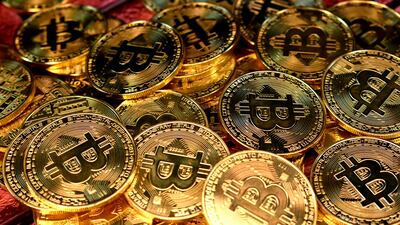
The crypto market, which includes currencies such as Bitcoin, pictured, has lost $2 trillion of its value in six months. Unsplash -

The price of Ethereum, the second largest cryptocurrency by market size, has fallen by 70 per cent this year. Investors and analysts are watching to see if it will dip below $1,000. Unsplash -
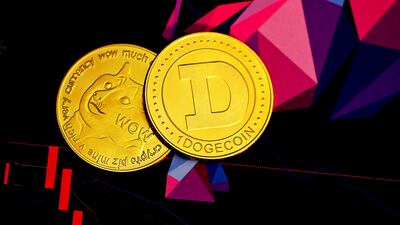
Dogecoin, supported by Elon Musk, is about 90 per cent down from May last year, yet it is outperforming Bitcoin and Ethereum in the current crash. Unsplash -
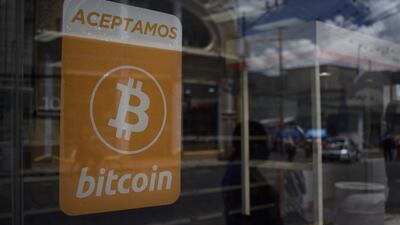
The government of El Salvador has invested $105 million in Bitcoin. President Nayib Bukele's embrace of the cryptocurrency as legal tender is being questioned as the market crashes. Getty -

Changpeng Zhao, founder of crypto exchange giant Binance, has compared the current market turmoil to the dotcom bubble of the early 2000s. Still, the company is aggressively pursuing licensing in international jurisdictions and introducing new products. Getty -
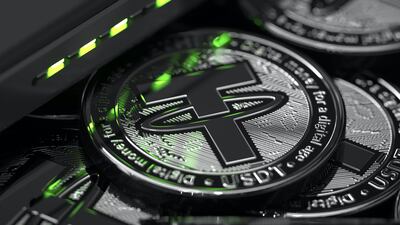
Tether is the biggest issuer of stablecoins, a type of cryptocurrency pegged to a traditionally stable asset like the US dollar. Most stablecoins are meant to maintain a constant price of $1 and are backed by real reserve funds, making it easy to convert crypto investments into cash. But Tether's financial statements show that may not be true, leaving the issuer and its investors vulnerable. Unsplash -

The recent crypto crash can in part be attributed to the collapse of TerraUSD, a stablecoin pegged to the US dollar through algorithms and linked to a "sister" cryptocurrency named Luna. When the price of Luna plummeted, TerraUSD also fell, creating a “death spiral” to practically zero for both coins. Unsplash -

On June 12 crypto lender Celsius Network said it had paused customer withdrawals, saying it needed “to stabilise liquidity and operations”. Investors are still waiting, with no signs that the current meltdown will let up. Getty


However, crypto-native players such as Bitwise and Galaxy are also leveraging their Bitcoin expertise to compete for the ETF crown, Mr Valecha says.
“Grayscale, a significant wild card, stands out as a potential front-runner with its substantial Bitcoin holdings and the ability to convert them to ETF shares swiftly upon SEC approval,” he adds.
“Grayscale's existing customer base, comprises trust shareholders, adds a structural advantage, but the high planned fee of 1.5 per cent may pose challenges in attracting new customers.”
In total, the SEC approved 11 Bitcoin ETFs and has already assigned their trading tickers:
- BlackRock iShares Bitcoin Trust (IBIT)
- ARK 21Shares Bitcoin ETF (ARKB)
- WisdomTree Bitcoin Fund (BTCW)
- Invesco Galaxy Bitcoin ETF (BTCO)
- Bitwise Bitcoin ETF (BITB)
- VanEck Bitcoin Trust (HODL)
- Franklin Bitcoin ETF (EZBC)
- Fidelity Wise Origin Bitcoin Trust (FBTC)
- Valkyrie Bitcoin Fund (BRRR)
- Grayscale Bitcoin Trust (GBTC)
- Hashdex Bitcoin ETF (DEFI)
“The competition is brutal and the industry may witness more than one winner, with winners likely taking a significant market share while others carve out niche segments,” Mr Valecha says.
Will there be increased adoption of Bitcoin now that the ETFs have been approved?
The Bitcoin ETFs will offer retail investors a valid investment option as many have been cautious about investing in the digital token, according to Mr Mansawala.
“The bolstered security measures and stricter regulatory supervision have the potential to boost investor confidence,” he says.
Further adoption by retail investors will also depend on regulatory clarity and building a trustworthy ecosystem while also balancing innovation and trader protections, the Crypto.com representative says.
Meanwhile, analysts are projecting that the approval will compel ETF issuers to acquire $100 billion worth of Bitcoin in response to burgeoning institutional demand, which will mark a significant shift in supply and demand dynamics, Mr Valecha says.
Historic analyses of other asset-class ETFs, such as the SPDR Gold Shares ETF (GLD) and ProShares Bitcoin Strategy ETF (BITO), reveal rapid asset accumulation within the first month of their launch, with GLD amassing $1.9 billion and BITO reaching around $1.5 billion in inflation-adjusted terms, he adds.
“These patterns suggest a similar trajectory for Bitcoin spot ETFs. Moreover, prevailing global economic conditions, characterised by elevated risk-free interest rates and challenging household finances, may drive mainstream adoption of spot ETFs as investors seek alternative assets,” he says.
Can investors in the UAE invest in Bitcoin ETFs?
At present, there are no Bitcoin ETFs accessible in the UAE, according to Mr Mansawala.
Investors may want to explore regulated alternatives such as Bitcoin futures products that are traded on authorised exchanges, he suggests.
The launch of spot ETFs in the UAE will depend on regulatory approval by the likes of Vara, Mr Valecha says.
How high can the price of Bitcoin climb?
Historically, the price of Bitcoin has been volatile. In November 2021, it hit a record high of more than $68,000. Just one year later – at the height of the crypto winter – it plummeted to $14,143.78.
Bitcoin is still a long way off its record high and, as ever, the outlook for the price of Bitcoin is uncertain, Mr Mansawala says.
“Approval itself could trigger a rally, but long-term price trajectory depends on broader market dynamics, technical advancements, and regulatory developments,” he adds.
However, Mr Teng is more upbeat on the cryptocurrency’s future pricing.
“While it is not easy to anticipate the scale of new entrants and market dynamics, it is useful to note that the introduction of Gold ETFs in 2004 led to seven years of positive price action after that,” he says.
“Coupled with the Bitcoin halving event this year, these events could provide a dynamic market for Bitcoin.”
Analysts are anticipating that Bitcoin ETFs could attract more than $1 billion in inflows within the first quarter of this year, with projections ranging up to $100 billion by the end of 2024.
The advent of a Bitcoin spot ETF is poised to exert a significant impact on the cryptocurrency's price dynamics and the overall liquidity of the sector, Mr Valecha says.
“This surge in demand, combined with Bitcoin's capped supply of 21 million coins, is likely to contribute to a supply squeeze, driving up Bitcoin's price,” he says.
“The potential price impact varies, with forecasts for Bitcoin to reach $50,000 in the medium term.”

