

Over recent months, several countries have made moves to bring cryptocurrencies into the fold of their regulatory frameworks, citing the need to protect consumers from volatility and losses.
Some have touted this warmer attitude towards digital assets as the catalyst needed to propel cryptocurrencies into the next bull run, yet concerns remain as tougher regulation could stifle innovation in the sector.
So far, cryptocurrency markets appear to be on the fence regarding this shift, and it remains to be seen whether greater regulatory acceptance will have a positive impact on digital asset prices.
Should a more favourable regulatory landscape unlock additional sources of liquidity, some tokens will likely soar in value.
However, while Bitcoin and Ether may benefit, it is unlikely that these developments will significantly boost the wider crypto market.
Watch: What happened to the Bitcoin price?
Stifling innovation
While this global regulatory shift does provide some much-needed clarity to institutions, it may be detrimental to the decentralised crypto community and its retail investors.
Across the globe, the rules of the game appear to favour larger, more established institutions, including large centralised exchanges.
Meanwhile, decentralised exchanges and smaller, more innovative projects, are conspicuous by their absence in this developing landscape.
Regulatory proposals often include strict capital requirements or compliance with anti-money laundering rules, making it difficult for decentralised projects to gain the necessary licences.
In fact, it appears regulators are still struggling to grasp the very concept of decentralisation, leading to confusion as to the products and services that fall under the scope of global legislation.
For example, the recently passed Markets in Crypto Assets regulation in the EU fails to provide a clear and consistent regulatory framework for decentralised finance (DeFi).
Yet it is these smaller, more innovative blockchain projects that tend to drive growth, and leaving them out of the picture threatens the future of the entire crypto ecosystem.
Avoiding another 2008
It seems there is an attempt to shoehorn cryptocurrencies into the same box with banks and other traditional financial institutions. Yet the events of 2022 revealed the error of this approach.
Far from protecting consumers, centralisation simply creates fertile ground for alleged fraudsters such as FTX’s Sam Bankman-Fried and Celsius Network's Alex Mashinski to conduct their nefarious operations.
In this set-up, the retail investor always loses out. In the best-case scenario, they invest their hard-earned money with so-called “trusted” financial institutions and pay extortionate management fees. In the worst case, they lose all their savings to a Ponzi scheme.
This happened in 2008, when millions lost their savings as a result of the reckless behaviour of banks and investment managers.
It happened again in crypto last year. And if we don’t make drastic changes to the system, it will keep happening. How could it not? Doing the same thing over and over again and expecting a different result is the very definition of madness.
The need for greater decentralisation
Yet there is another way. Instead of simply perpetuating the interests of centralised companies, global legislators could also encourage the adoption of DeFi.
DeFi has a very promising infrastructure that allows for full automation, greater efficiency and lower fees for users.
If regulators were to embrace DeFi, this could usher in an era of financial services that are open to all, without prohibitive fees and the cult of personality that plagues today’s financial landscape.
Cryptocurrencies – in pictures
-
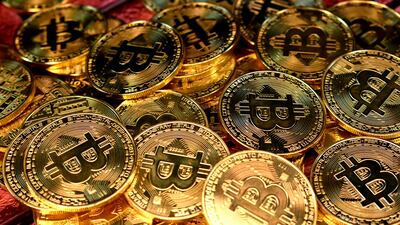
The crypto market, which includes currencies such as Bitcoin, pictured, has lost $2 trillion of its value in six months. Unsplash -

The price of Ethereum, the second largest cryptocurrency by market size, has fallen by 70 per cent this year. Investors and analysts are watching to see if it will dip below $1,000. Unsplash -
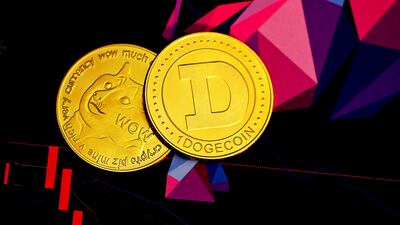
Dogecoin, supported by Elon Musk, is about 90 per cent down from May last year, yet it is outperforming Bitcoin and Ethereum in the current crash. Unsplash -
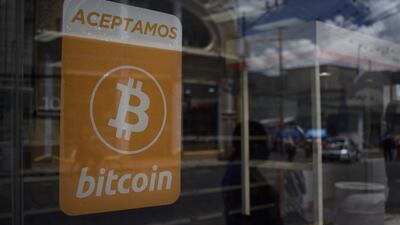
The government of El Salvador has invested $105 million in Bitcoin. President Nayib Bukele's embrace of the cryptocurrency as legal tender is being questioned as the market crashes. Getty -

Changpeng Zhao, founder of crypto exchange giant Binance, has compared the current market turmoil to the dotcom bubble of the early 2000s. Still, the company is aggressively pursuing licensing in international jurisdictions and introducing new products. Getty -
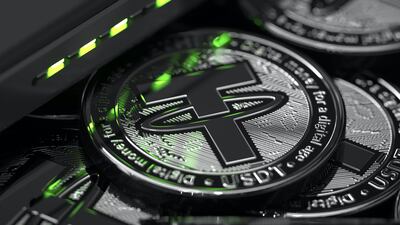
Tether is the biggest issuer of stablecoins, a type of cryptocurrency pegged to a traditionally stable asset like the US dollar. Most stablecoins are meant to maintain a constant price of $1 and are backed by real reserve funds, making it easy to convert crypto investments into cash. But Tether's financial statements show that may not be true, leaving the issuer and its investors vulnerable. Unsplash -

The recent crypto crash can in part be attributed to the collapse of TerraUSD, a stablecoin pegged to the US dollar through algorithms and linked to a "sister" cryptocurrency named Luna. When the price of Luna plummeted, TerraUSD also fell, creating a “death spiral” to practically zero for both coins. Unsplash -

On June 12 crypto lender Celsius Network said it had paused customer withdrawals, saying it needed “to stabilise liquidity and operations”. Investors are still waiting, with no signs that the current meltdown will let up. Getty


It would create a more diverse playing field, providing consumers with true choice by removing the very concept of a monopoly. And, crucially, it would empower retail investors to take control of their own financial futures.
Around the globe, we appear to be losing sight of the reasons as to why cryptocurrency was created in the first place.
Bitcoin was designed to fight the greed and corruption that caused the 2008 crash. Cryptocurrency is an equitable alternative to fiat money and it must go back to its decentralised roots to truly break the vicious cycle of market booms and busts.
Stefan Rust is chief executive of independent inflation data aggregator Truflation and former chief executive of bitcoin.com

