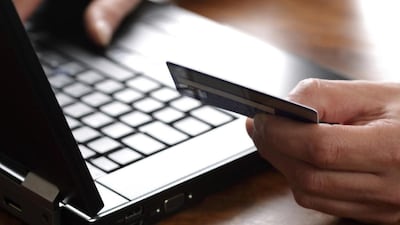
If you need to exchange money for goods or services with someone you don’t know, the safest way to do that is through credit cards, experts say. PA

Five strategies to use payment apps safely


  • English
  • Arabic

As a frequent PayPal user, I wasn’t surprised to see a payment request on the app pop up. But when I read it, I knew something was wrong.

In the message, a stranger asked me to send them $699 to get a “refund”.

While I instantly recognised the request as fraudulent, I still felt vulnerable; I didn’t immediately see any obvious way to flag the request as a fraud, and with one click, I could have accidentally sent this stranger a huge chunk of money.

I am hardly alone in my worry over security when using peer-to-peer payment apps.

About one third of people who use payment apps or websites say they are “a little or not at all confident that payment apps or sites keep people’s personal information safe from hackers or unauthorised users”, according to a Pew Research Centre survey published last September.

And an alarming 13 per cent of people who have used PayPal, Venmo, Zelle or Cash App say they have made the mistake of sending money to a fraudster.

Fraud prevention experts recommend these strategies to keep your money safe.

1. Only send money to people you know

Generally, peer-to-peer payment apps are designed to send money between friends — not strangers. If you use them to send money to someone you don’t know, then you put yourself at risk of fraud.

“You shouldn’t send money unless you’ve met people in real life and know who you are sending money to,” says Paul Benda, senior vice president of operational risk and cybersecurity at the American Bankers Association, a trade association for the banking industry.

“If you do that, and you’re careful in terms of what number you are sending money to, these apps can be a convenient, safe and efficient way to move money.”

2. Use cash and credit cards in high-risk situations

If you need to exchange money for goods or services with someone you don’t know, the safest way to do that is through cash or credit cards, says Axton Betz-Hamilton, an assistant professor in the School of Health and Consumer Sciences at South Dakota State University and author of The Less People Know About Us, a memoir about identity theft.

Credit cards, for example, come with fraud protection attached.

“I want that protection, so I don’t use these apps,” she says.

While stolen cash can be harder to recover, it may be covered by homeowners and renters insurance policies (up to your policy’s limit and depending on your policy).

3. Be wary of texts, calls or unsolicited requests

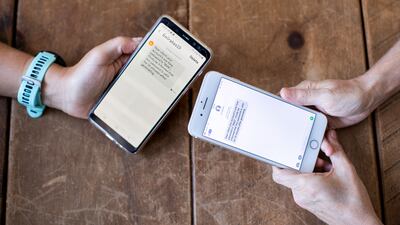
Frauds are often perpetuated when fraudsters send a text, phone call or other kind of message urging you to send money, perhaps claiming you are due a refund or late on a bill.

“Fraudsters continue to get better at what they do,” says Joel Williquette, senior vice president of operational risk policy at Independent Community Bankers of America, a trade group for community banks.

That includes sending emails that are almost indistinguishable from legitimate banking emails.

A cyber criminal might impersonate the Internal Revenue Service or FBI and ask you to send a peer-to-peer payment immediately to satisfy a debt, but Mr Williquette says legitimate agencies will never contact you by text or call your cell phone with an urgent request for money.

“Typically, they will send you a letter,” he says, and they don’t ask for payment through apps or gift cards — another red flag.

_____________________________________

From phishing to smishing: know your frauds

  • The use of technology in everyday lives has led to growth in scams and fraud. Reem Mohammed / The National
    The use of technology in everyday lives has led to growth in scams and fraud. Reem Mohammed / The National
  • Phishing is one of the most common methods used by fraudsters and it involves sending an unsolicited email that appears to be from a financial institution or online retailer. The National
    Phishing is one of the most common methods used by fraudsters and it involves sending an unsolicited email that appears to be from a financial institution or online retailer. The National
  • Smishing — the SMS equivalent of phishing — is where fraudsters falsify the telephone number so it appears to be a genuine text from a bank or well-known company. Chris Whiteoak / The National
    Smishing — the SMS equivalent of phishing — is where fraudsters falsify the telephone number so it appears to be a genuine text from a bank or well-known company. Chris Whiteoak / The National
  • Vishing is the telephone equivalent of phishing and smishing. Fraudsters may pose as bank staff, police or government officials. Getty Images
    Vishing is the telephone equivalent of phishing and smishing. Fraudsters may pose as bank staff, police or government officials. Getty Images
  • SIM swap involves fraudsters duplicating the SIM of your mobile number without your knowledge or authorisation, allowing them to conduct financial transactions with your bank. AP
    SIM swap involves fraudsters duplicating the SIM of your mobile number without your knowledge or authorisation, allowing them to conduct financial transactions with your bank. AP
  • Identity theft is where someone illegally obtains your confidential information, through various ways such as theft of your wallet, bank and utility bill statements, computer intrusion and social networks. Getty Images
    Identity theft is where someone illegally obtains your confidential information, through various ways such as theft of your wallet, bank and utility bill statements, computer intrusion and social networks. Getty Images
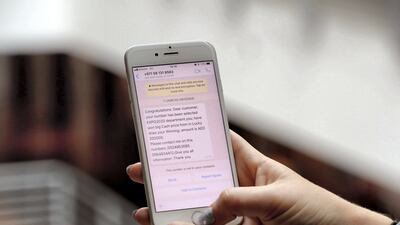
  • Prize scams involve fraudsters claiming to represent well-known organisations. They contact victims to tell them they have won a cash prize and request them to share confidential banking details to transfer the prize money.
    Prize scams involve fraudsters claiming to represent well-known organisations. They contact victims to tell them they have won a cash prize and request them to share confidential banking details to transfer the prize money.
  • Instagram influencer Ramon Abbas, known as Hushpuppi, used a technique known as business email compromise.
    Instagram influencer Ramon Abbas, known as Hushpuppi, used a technique known as business email compromise.
  • The tax authority said some bank customers in the UAE have received phishing emails impersonating financial institutions. EPA
    The tax authority said some bank customers in the UAE have received phishing emails impersonating financial institutions. EPA
  • Jenny Ross, Which? Money editor, says: ‘Scammers are relentless when it comes to wanting our personal information and ultimately our money.’ PA
    Jenny Ross, Which? Money editor, says: ‘Scammers are relentless when it comes to wanting our personal information and ultimately our money.’ PA
  • Netflix's The Tinder Swindler tells the story of three women who say they were conned out of $500. Photo: @simon_leviev_official via Instagram
    Netflix's The Tinder Swindler tells the story of three women who say they were conned out of $500. Photo: @simon_leviev_official via Instagram

A fraudulent payment request sent on a peer-to-peer payment app is “usually for a small dollar amount and might even look like it’s from a friend”, says Eva Velasquez, president and chief executive of the Identity Theft Resource Centre, a non-profit.

Ms Velasquez urges people to verify requests first by double-checking they are sending money to the correct person, and says it is easier to fall for fraud when you are distracted and multitasking.

4. Upgrade your cyber hygiene

Enabling two-factor authentication on financial accounts, adding a pin lock to your phone and using unique passwords that are at least 12 characters long can help keep you safe, Ms Velasquez says.

In addition, she suggests setting your app privacy settings to the most private option to minimise the amount of information about you that is publicly available.

5. Flag fraud attempts

According to PayPal, if you receive a payment request like the one I got, you should cancel the request without paying.

Additionally, you can take a screenshot and forward it to phishing@paypal.com.

PayPal adds that you should not reply, open links, download attachments or call any phone number included in the request.

If you mistakenly disclosed any financial or personal data to a swindler, PayPal says you should change your password immediately, alert your bank and report any unauthorised payments to PayPal.

In my case, I cancelled the payment request and never heard from my would-be fraudster again.

With enhanced security steps in place, I plan to continue to take advantage of the convenience of PayPal and other payments apps — and now I know what to do next time I get an unsolicited payment request.


Landfill in numbers

• Landfill gas is composed of 50 per cent methane

• Methane is 28 times more harmful than Co2 in terms of global warming

• 11 million total tonnes of waste are being generated annually in Abu Dhabi

• 18,000 tonnes per year of hazardous and medical waste is produced in Abu Dhabi emirate per year

• 20,000 litres of cooking oil produced in Abu Dhabi’s cafeterias and restaurants every day is thrown away

• 50 per cent of Abu Dhabi’s waste is from construction and demolition

In numbers: PKK’s money network in Europe

Germany: PKK collectors typically bring in $18 million in cash a year – amount has trebled since 2010

Revolutionary tax: Investigators say about $2 million a year raised from ‘tax collection’ around Marseille

Extortion: Gunman convicted in 2023 of demanding $10,000 from Kurdish businessman in Stockholm

Drug trade: PKK income claimed by Turkish anti-drugs force in 2024 to be as high as $500 million a year

Denmark: PKK one of two terrorist groups along with Iranian separatists ASMLA to raise “two-digit million amounts”

Contributions: Hundreds of euros expected from typical Kurdish families and thousands from business owners

TV channel: Kurdish Roj TV accounts frozen and went bankrupt after Denmark fined it more than $1 million over PKK links in 2013 

if you go

The flights

Etihad and Emirates fly direct from the UAE to Seoul from Dh3,775 return, including taxes

The package

Ski Safari offers a seven-night ski package to Korea, including five nights at the Dragon Valley Hotel in Yongpyong and two nights at Seoul CenterMark hotel, from £720 (Dh3,488) per person, including transfers, based on two travelling in January

The info

Visit www.gokorea.co.uk

SPECS
%3Cp%3E%3Cstrong%3EEngine%3A%3C%2Fstrong%3E%202-litre%204-cylinder%20turbo%0D%3Cbr%3E%3Cstrong%3EPower%3A%20%3C%2Fstrong%3E268hp%0D%3Cbr%3E%3Cstrong%3ETorque%3A%20%3C%2Fstrong%3E380Nm%0D%3Cbr%3E%3Cstrong%3EPrice%3A%20%3C%2Fstrong%3EFrom%20Dh208%2C000%0D%3Cbr%3E%3Cstrong%3EOn%20sale%3A%20%3C%2Fstrong%3ENow%0D%3Cbr%3E%3C%2Fp%3E%0A
Haemoglobin disorders explained

Thalassaemia is part of a family of genetic conditions affecting the blood known as haemoglobin disorders.

Haemoglobin is a substance in the red blood cells that carries oxygen and a lack of it triggers anemia, leaving patients very weak, short of breath and pale.

The most severe type of the condition is typically inherited when both parents are carriers. Those patients often require regular blood transfusions - about 450 of the UAE's 2,000 thalassaemia patients - though frequent transfusions can lead to too much iron in the body and heart and liver problems.

The condition mainly affects people of Mediterranean, South Asian, South-East Asian and Middle Eastern origin. Saudi Arabia recorded 45,892 cases of carriers between 2004 and 2014.

A World Health Organisation study estimated that globally there are at least 950,000 'new carrier couples' every year and annually there are 1.33 million at-risk pregnancies.

Company name: Play:Date

Launched: March 2017 on UAE Mother’s Day

Founder: Shamim Kassibawi

Based: Dubai with operations in the UAE and US

Sector: Tech 

Size: 20 employees

Stage of funding: Seed

Investors: Three founders (two silent co-founders) and one venture capital fund

Bharat

Director: Ali Abbas Zafar

Starring: Salman Khan, Katrina Kaif, Sunil Grover

Rating: 2.5 out of 5 stars

The biog

Birthday: February 22, 1956

Born: Madahha near Chittagong, Bangladesh

Arrived in UAE: 1978

Exercise: At least one hour a day on the Corniche, from 5.30-6am and 7pm to 8pm.

Favourite place in Abu Dhabi? “Everywhere. Wherever you go, you can relax.”

Central%20Bank's%20push%20for%20a%20robust%20financial%20infrastructure
%3Cul%3E%0A%3Cli%3ECBDC%20real-value%20pilot%20held%20with%20three%20partner%20institutions%26nbsp%3B%3C%2Fli%3E%0A%3Cli%3EPreparing%20buy%20now%2C%20pay%20later%20regulations%26nbsp%3B%3C%2Fli%3E%0A%3Cli%3EPreparing%20for%20the%202023%20launch%20of%20the%20domestic%20card%20initiative%26nbsp%3B%3C%2Fli%3E%0A%3Cli%3EPhase%20one%20of%20the%20Financial%20Infrastructure%20Transformation%20(FiT)%20completed%3C%2Fli%3E%0A%3C%2Ful%3E%0A
Citadel: Honey Bunny first episode

Directors: Raj & DK

Stars: Varun Dhawan, Samantha Ruth Prabhu, Kashvi Majmundar, Kay Kay Menon

Rating: 4/5

The biog

Name: Mohammed Imtiaz

From: Gujranwala, Pakistan

Arrived in the UAE: 1976

Favourite clothes to make: Suit

Cost of a hand-made suit: From Dh550


Updated: February 17, 2023, 5:00 AM