

From being the most volatile asset in the world, cryptocurrency Bitcoin has suddenly turned into the most docile.
Over the past five months, it has confused investors by going pretty much nowhere, price-wise.
The Bitcoin price has been stuck around the $20,000 mark since early June, steadfastly refusing either to crash further or stage a meaningful recovery.
Watch: what is Bitcoin and how did it start?
Investors do not expect the world’s number one cryptocurrency to flatline in this way. So, is Bitcoin dead or simply sleeping?
One year ago, on November 9, Bitcoin was on top of the world and trading at a record high of $66,938, having more than quadrupled in a year.
It has crashed this year along with almost everything else, as the war in Ukraine, post-coronavirus supply blockages and raging inflation destroy investor sentiment.
Bitcoin was a baby of the easy money era, during which central bankers and politicians lavished markets with endless monetary and fiscal stimulus to combat the global financial crisis and then Covid-19.
That era has come to an abrupt and painful close as the US Federal Reserve and others drain the market of liquidity to stamp out inflationary fires.
Cryptocurrency is far from the only asset class to take a beating. Shares, bonds and even gold have fallen while property looks like the next to suffer.
____________
Listen: why you should 'HODL' your cryptocurrency right now
The big surprise is that Bitcoin is uncharacteristically becalmed, while other asset classes are swept up in the world’s many political and economic storms.
Trading volumes have more than halved, says Matt Weller, global head of research at Forex.com and City Index.
“The BitVol gauge of volatility for Bitcoin has fallen sharply and at one point, its 30-day realised volatility dipped below the broader stock market,” Mr Weller says.
Jeremy Batstone-Carr, European strategist at advisers Raymond James, says that at one point during the recent UK gilts crisis, Bitcoin was actually “deemed less volatile than the entirety of the UK’s sovereign bond market”.
Let us first say what this does not mean. Bitcoin has not transformed itself into digital gold through some magical monetary alchemy.
Do not treat it as a safe haven in times of trouble, says Myron Jobson, senior personal finance campaigner at Interactive Investor.
“That notion was diminished by its painful start to the year, punishing anyone who saw it as a store of value,” he says.
Yet many investors could be intrigued and tempted by today’s stability. It feels as if Bitcoin is biding its time, waiting for circumstances to move in its favour.
Technology stocks have sold off again after a tough earnings season but cryptocurrencies have largely held their ground, says Simon Peters, cryptocurrency market analyst at social investing network eToro.
This is odd, given that the two asset classes have “correlated heavily” so far this year.
One theory is that the cryptocurrency crash has driven out the dabblers, with the proportion of wealth held in coins that moved in the past three months at a record low.
Wealth held by coins older than three months is now at a record high, Mr Peters says, quoting figures from Binance.
Long-term hold-on-for-dear-life (HODL) crypto investors have little incentive to sell at today’s low level, and are sitting tight.
“Whereas given stock market conditions and the negative forecasts from companies reporting earnings, there is perhaps a greater inclination to sell stocks,” he says.
Bitcoin is “stubbornly” clinging to $20,000 as volatility falls, selling slows and the price potentially “bottoms out”, says Sam Kopelman, UK country manager at global cryptocurrency exchange and wallet Luno.
____________
Cryptocurrencies — in pictures
-
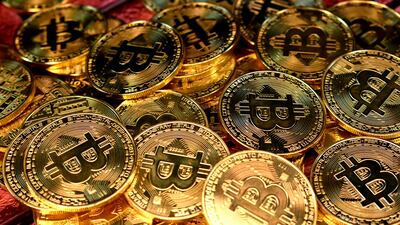
The crypto market, which includes currencies such as Bitcoin, pictured, has lost $2 trillion of its value in six months. Unsplash -
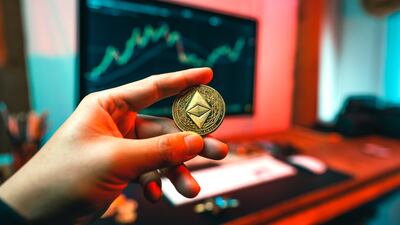
The price of Ethereum, the second largest cryptocurrency by market size, has fallen by 70 per cent this year. Investors and analysts are watching to see if it will dip below $1,000. Unsplash -
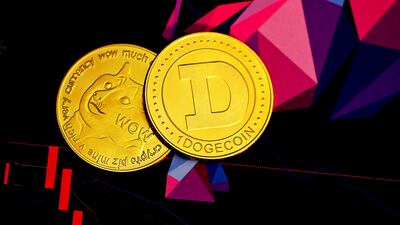
Dogecoin, supported by Elon Musk, is about 90 per cent down from May last year, yet it is outperforming Bitcoin and Ethereum in the current crash. Unsplash -
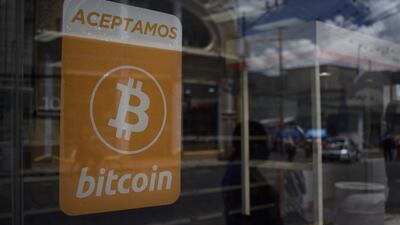
The government of El Salvador has invested $105 million in Bitcoin. President Nayib Bukele's embrace of the cryptocurrency as legal tender is being questioned as the market crashes. Getty -

Changpeng Zhao, founder of crypto exchange giant Binance, has compared the current market turmoil to the dotcom bubble of the early 2000s. Still, the company is aggressively pursuing licensing in international jurisdictions and introducing new products. Getty -
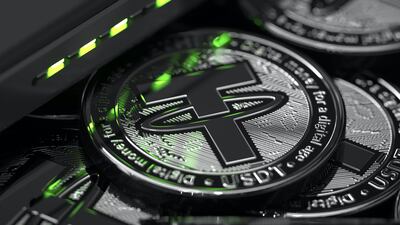
Tether is the biggest issuer of stablecoins, a type of cryptocurrency pegged to a traditionally stable asset like the US dollar. Most stablecoins are meant to maintain a constant price of $1 and are backed by real reserve funds, making it easy to convert crypto investments into cash. But Tether's financial statements show that may not be true, leaving the issuer and its investors vulnerable. Unsplash -

The recent crypto crash can in part be attributed to the collapse of TerraUSD, a stablecoin pegged to the US dollar through algorithms and linked to a "sister" cryptocurrency named Luna. When the price of Luna plummeted, TerraUSD also fell, creating a “death spiral” to practically zero for both coins. Unsplash -

On June 12 crypto lender Celsius Network said it had paused customer withdrawals, saying it needed “to stabilise liquidity and operations”. Investors are still waiting, with no signs that the current meltdown will let up. Getty


The “crypto winter” may be prolonged by global inflation, the looming recession and lack of confidence in the stock market, but is not expected to last forever.
“History shows that crypto does tend to recover after a sustained dip and investors have certainly not lost interest,” Mr Kopelman says.
There are early signs that institutional investors are edging back into riskier assets.
“Bitcoin is scarce and the cryptocurrency is limited to a quantity of 21 million, meaning it is somewhat protected from inflationary pressures.”
Investors may have to be patient, Mr Kopelman says.
“Long-term fearful sentiment in the market means that investor momentum will take a while to pick back up.”
Sentiment is still the main driver of cryptocurrency movements, as we saw during the summer’s bear market rally, when investors briefly kidded themselves that the Fed was set to take a more dovish stance. The S&P 500 briefly sparked into life. So did Bitcoin.
Investors called that wrong, and last week Fed chair Jerome Powell remained hawkish when raising the Fed funds rate by another 0.75 per cent.
UK country manager at Luno
Yet, the summer rally suggests that when interest rate increases finally peak and sentiment turns in a more positive direction in 2023, Bitcoin could benefit.
That prospect may tempt some investors to take a position in expectation of the next cryptocurrency summer, but market sentiment is not the only factor affecting its performance, Mr Kopelman says.
“Ultimately, confidence and regulatory clarity is key to crypto adoption and its resurgence,” he says.
Here, Bitcoin remains a mixed bag. Credit ratings agency Moody’s says that although this year’s cryptocurrency losses have largely been contained if leverage builds again, “it could eventually unsettle the banking system, even if banks continue distancing themselves from direct interaction with the crypto economy”.
So-called stablecoins still refuse to disclose their investments, despite growing regulatory pressure to do so.
“Liquidity risk management and other disclosures that have become commonplace for funds and banks remain lacking for digital asset service providers,” Moody’s says.
Yet, wider acceptance is growing, says Nick Root, chief executive of FinTech “toolkit” Intergiro.
____________
Watch: what is a recession?
“In 2023, we expect to see a growing number of financial institutions accept cryptocurrency as a form of payment,” he says.
Mr Root notes that Mastercard recently said it is keen to start introducing plans to make cryptocurrency an “everyday way to pay”, while Google has announced a partnership with Coinbase, allowing customers to pay for some cloud services with cryptocurrency early next year.
“With huge firms such as Google jumping on board, in 2023, we predict more banks and financial providers will join them,” he says.
For now, investors are still in the “wait-and-see” phase, with traders saying that Bitcoin is unlikely to embark on a sustained recovery until it closes above, say, $22,500.
One thing has not changed. Any investment in cryptocurrency remains highly speculative as the end-user case remains unproved.
Speculation is out of fashion for now, as everybody runs for cover ahead of the recession.
Those who still have cash to throw about may be tempted to buy Bitcoin at a time when others are fearful but as ever, only invest money you can afford to lose.
Fewer of us are in that position today.

