

Do Kwon
Terraform Labs co-founder Do Kwon, whose cryptocurrency ecosystem collapsed in a $40 billion wipeout in May, told The Wall Street Journal that he lost almost all his net worth in the crash.
“This doesn’t bother me,” he said in the interview. “I live a fairly frugal life.”
Mr Kwon told the newspaper he was probably a billionaire when the Luna token that Terraform Labs backed was trading near $100. That coin is now trading at close to zero.
Investigators in South Korea and the US are now looking into the circumstances around the unravelling of TerraUSD, the stablecoin Mr Kwon championed that crumbled from its dollar peg last month.
The event wiped out the savings of thousands of investors globally and set off a wider implosion in cryptocurrencies.
South Korea this week barred some current and former Terraform Labs employees from leaving the country, as prosecutors step up their investigation into TerraUSD. Prosecutors are also looking to invalidate Mr Kwon’s South Korean passport, according to local media.
The US Securities and Exchange Commission is also investigating whether the marketing of TerraUSD before it crashed breached federal investor protection regulations. Terraform Labs told The Wall Street Journal it would not comment on any active investigations.
In an attempted comeback, Mr Kwon unveiled a new Luna coin last month that was distributed for free to holders of the original token. The new one, called Luna 2.0, has slumped to $1.97, from a high of $18.87, according to CoinGecko.

Sam Bankman-Fried
Sam Bankman-Fried, the cryptocurrency billionaire who co-founded digital-asset exchange FTX Trading, is providing credit lines to try to stem contagions for his beleaguered industry.
Cryptocurrency lending platform BlockFi, which had been raising funds at a reduced valuation, said that it secured a $250 million revolving line of credit from FTX.
Last week, cryptocurrency exchange Voyager Digital, whose shares are down 90 per cent this year on the Toronto Stock Exchange, received a $200m credit line — a mix of cash and USDC stablecoins — as well as a separate, 15,000-Bitcoin revolving credit line from Alameda Research, Mr Bankman-Fried’s trading company.
-

Changpeng Zhao, founder and chief executive of Binance, is the world’s richest crypto billionaire with a net worth of $65 billion. Bloomberg -
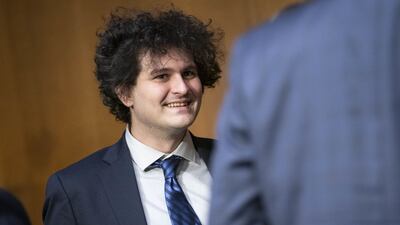
Sam Bankman-Fried, founder and chief executive of FTX cryptocurrency exchange, ranked as the second-wealthiest crypto billionaire with a personal fortune of $24bn. Bloomberg -
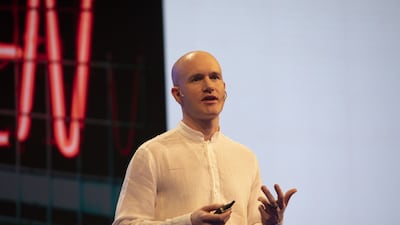
Brian Armstrong, co-founder of Coinbase, is the third-wealthiest crypto billionaire with a net worth of $6.6bn. Bloomberg -

Gary Wang, co-founder of FTX cryptocurrency exchange, ranked fourth with a net worth of $5.9bn. FTX -
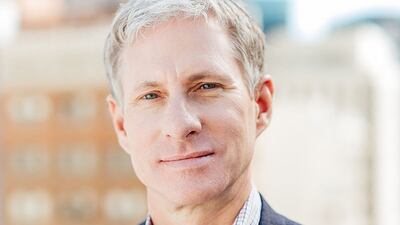
Chris Larsen, executive chairman of Ripple’s board of directors and former chief executive and co-founder of Ripple, rounded out the list of top five wealthiest crypto billionaires with a fortune of $4.3bn. Ripple -

Song Chi-hyung, founder of Upbit, the largest cryptocurrency exchange in South Korea, has a net worth of $3.7bn. Courtesy: Dunamu -
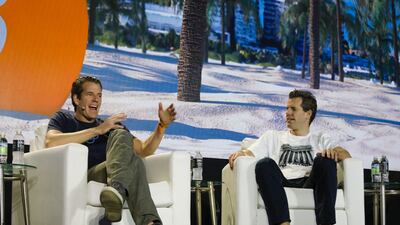
Tyler Winklevoss, chief executive and co-founder of Gemini Trust, left, and Cameron Winklevoss, president and co-founder of Gemini Trust, have a net worth of $4bn each. Bloomberg -
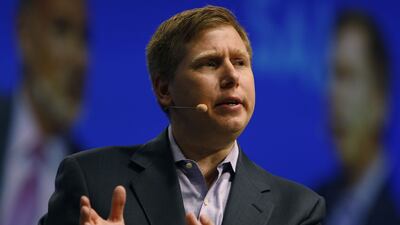
Barry Silbert, founder and chief executive of Digital Currency Group, has a net worth of $3.2bn. Bloomberg -

Jed McCaleb, founder and chief architect of the Stellar Development Foundation and co-founder of Ripple, has a net worth of $2.5bn. Courtesy: Stellar Development Foundation


A wave of liquidation has triggered fear of contagion risks in the cryptocurrency industry, after a broad-based sell-off in digital assets and the spectacular collapse of the TerraUSD and Luna tokens.
Major lenders Celsius and Babel Finance have frozen withdrawals while cryptocurrency hedge fund Three Arrows Capital is facing liquidity troubles.
“Sam Bankman-Fried is the new John Pierpont Morgan — he is bailing out cryptocurrency markets the way the original JP Morgan did after the crisis of 1907,” Anthony Scaramucci, founder of SkyBridge Capital, said, referring to that year’s banking panic, which led to the creation of the Federal Reserve System.
Mr Scaramucci said he had invested alongside Mr Bankman-Fried, who has a net worth of $8.96bn, according to the Bloomberg Billionaires Index, in several cryptocurrency ventures.
An FTX representative, when asked for comment about the credit lines, referred to a Twitter thread from Mr Bankman-Fried.
“We take our duty seriously to protect the digital asset ecosystem and its customers,” he wrote on Twitter.
In a recent interview with NPR, Mr Bankman-Fried, 30, said he has a responsibility to consider stepping in, “even if it is at a loss to ourselves”, to stem contagions and help the industry thrive.
“This past weekend was critical in terms of finding white knights who could help develop a bid to stabilise this market,” Jeff Dorman, chief investment officer at asset management company Arca, wrote in a note last week.
Major cryptocurrency players have a history of bailing out key troubled companies.
Last year, FTX provided $120m debt financing for Liquid Group after hackers stole from the Japanese cryptocurrency exchange. FTX later acquired Liquid.
In April, Binance led a $150m round for the creator of popular game Axie Infinity to help restore user funds affected by a hack.

Mukesh Ambani
India’s market regulator imposed a combined penalty of 3m Indian rupees ($38,444) on Reliance Industries and two company officials for failing to promptly disclose information about the sale of a stake in one of its units to Meta Platforms, Silver Lake Partners and Vista Equity Partners in 2020.
The Securities and Exchange Board of India (Sebi) initiated proceedings against billionaire Mukesh Ambani’s oil-to-retail conglomerate, as well as its compliance officers, Savithri Parekh and K Sethuraman, for alleged non-adherence to the fair disclosure principles around unpublished price-sensitive information, it said in an order on its website last week.
A Reliance Industries representative declined to comment on the regulatory action.
The penalty, although small, marks another instance of regulatory censure on the conglomerate led by Mr Ambani, the world's ninth-richest person with a net worth of $90.7bn, according to the Bloomberg Billionaires Index.
The group raised more than $20bn in exchange for a 33 per cent stake in Mr Ambani’s technology venture, Jio Platforms, which lured partners including Meta, then known as Facebook, and Google. Meta invested $5.7bn in Jio Platforms in 2020.
As part of its probe on stake sales in Jio Platforms, the Sebi order said that there was a lot of news flow around Meta investing in Reliance’s digital unit in March and April, 2020, before the corporate announcement on April 22.
A March 24, 2020, news report on this deal by the Financial Times was widely circulated in Indian media but Reliance and its compliance officers did not issue any clarification on the development.
Sebi regulations require that “the listed entity may, on its own initiative, also confirm or deny any reported event or information” to stock exchanges, according to the order.
Reliance announced on May 4 that Silver Lake Partners would invest about $753m in Jio Platforms. On May 8, it announced Vista’s $1.5bn investment. The two deals were announced a day after the stipulated window of disclosures, the order said.
“Companies would be unsure on the timing of making crucial disclosures, and on responding to speculation in media,” said Shriram Subramanian, founder of proxy advisory company InGovern Research Services.
“While PIT [prohibition of insider trading] regulations need to be taken seriously by companies and the principle of 'when in doubt, disclose' applies, companies may also find it hard to disclose at the time of crucial negotiations in transactions.”

Ray Dalio
It is “naive and inconsistent with how the economic machine works” to think the US Federal Reserve raising interest rates “will make things good again, once it gets inflation under control”, Ray Dalio, the billionaire founder of Bridgewater Associates, wrote on LinkedIn last week.
While tightening leads to less consumer spending, which may reduce inflation, it does not make things better, Mr Dalio said.
“It just shifts some of the squeezing of people via inflation to squeezing them via giving them less buying power,” he said.
On June 15, the US Federal Reserve’s raised interest rates by a larger-than-expected 0.75 per cent to rein in rising inflation.
founder of Bridgewater Associates
The 75 basis point increase raised the short-term federal funds rate to a range of 1.5 per cent to 1.75 per cent, with Fed officials projecting the rate to increase to 3.4 per cent by the end of this year and 3.8 per cent in 2023.
“There isn’t anything that the Fed can do to fight inflation without creating economic weakness,” Mr Dalio wrote in his conclusion.
“With debt assets and liabilities as high as they are and projected to increase due to the government deficit, and the Fed also selling government debt, it is likely that private credit growth will have to contract, weakening the economy,” he said.
“Over the long run the Fed will most likely chart a middle course that will take the form of stagflation,” he said.
Two weeks ago, Mr Dalio, who has a net worth of $16.1bn, according to the Bloomberg Billionaires Index, said central banks around the globe will be required to cut interest rates in 2024 after a period of stagflation constrains their economies.
“We believe that we are in a tightening mode that can cause corrections or downwards moves to many financial assets,” he said in an interview with the Australian Financial Review newspaper at the time.
___________________

