


RELATED: UAE petrol prices: Top five fuel-efficient cars on the road today
High inflation and the rising cost of living around the world means that many people are trying to save money on a range of necessities, including petrol.
Motorists in the UAE are not alone, with the rising cost of oil causing double-digit increases in petrol and diesel prices over the past few months.
While petrol prices in the UAE declined slightly in May, they rose by more than 10 per cent in February, 10 per cent in March and 16 per cent in April, as global oil prices surged beyond $100 a barrel.
The prices announced by the UAE Fuel Price Committee in April were the highest they have been since they were deregulated in 2015 to allow them to move in line with the market.
In 2020, prices were frozen by the Fuel Price Committee at the onset of the coronavirus pandemic. The controls were removed in March 2021 to reflect the movement of the market.
Industry experts expect crude supply to be tight owing to a demand slowdown in China and the EU’s ban on Russian oil imports, and these factors could support higher prices.
“With oil prices on the rise, car owners could be in for some hard budgeting,” says Vijay Valecha, chief investment officer at Dubai-based Century Financial.
With fuel prices rising in the UAE and going above the Dh3-a-litre mark for the first time since August 2015, residents are looking for better alternatives or tips to beat the rising fuel prices, says Ben Barber, managing director of XA Group, a solutions provider for the automotive aftersales industry.
We asked experts for tips on how consumers can beat a fuel price rise.
Opt for public transport or shared mobility
Local buses, metros and trams are excellent ways to avoid fuel price increases, decongest highways, reduce pollution and save money, Mr Valecha suggests.
“This is a more eco-friendly mode of commuting,” he says.
Buy an electric vehicle
While electric vehicles (EVs) usually have higher upfront purchase prices, owners can save on operating expenses, according to Jeff Stagg, after-sales manager at Audi Abu Dhabi.
Depending on the type of car you drive, the average cost of filling a fuel tank can be upwards of Dh270 versus Dh8.25 to fully charge an EV battery with a 110 kWh charger, he adds.
EV owners spend 60 per cent less on fuel than owners of internal combustion engine vehicles, Mr Valecha says, citing a 2020 Consumer Reports study. Owning an EV will save the typical driver $6,000 to $10,000 over the life of the vehicle, compared with owning a comparable petrol-powered vehicle, the study found.
“It is wise to look at many parameters when shopping for the right electric vehicles such as range, costs and charging,” Mr Barber says.
Most fuel-efficient cars — In Pictures
-
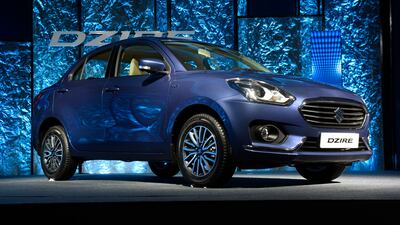
The Suzuki Dzire is one of the most fuel-efficient cars on the market with motorists getting 24.12 km per litre (km/l) from their fuel. Getty Images -
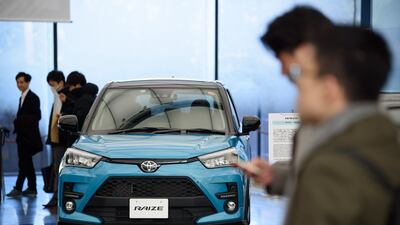
The Toyota Raize offers 18.9km/l. Bloomberg -

Toyota Yaris drivers can expect to get up to 22km/l from their car. Reuters -

The Suzuki Swift is renowned for its fuel-efficiency which works out at 23.75km/l. Bloomberg -
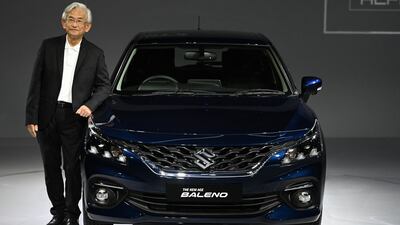
Owners of a Suzuki Baleno can expect to get 22.35km/l from their car. AFP


Know when to purchase petrol
The best time to fill up your tank is early in the morning or late in the afternoon, says Tarek Kabrit, founder and chief executive of Seez, a mobile app that aggregates vehicle listings across the UAE, Saudi Arabia, Kuwait, Pakistan and South Africa.
“Petrol density reduces in the heat, especially in warmer climates. It’s better to buy it then as it expands as it heats up,” he adds.
Consider money saving hacks
Some petrol stations have recently introduced unique reward programmes that enable customers to earn points and rewards when paying for fuel or for purchasing convenience store products, Mr Valecha says.
The points can later be redeemed to purchase gas or food and beverage products across service stations, he adds.
“Credit cards usually have cashback options when you buy gas,” Mr Kabrit says.
Ensure regular vehicle maintenance
Routine maintenance improves fuel economy and will help your car run more efficiently, says Mr Stagg.
Good maintenance — including regular inspections to check air filters, oil and brakes — can improve mileage by 40 per cent.
“Locating and fixing a minor disturbance saves time and money, especially if it is affecting how much petrol the car uses up,” says Alexander Pershikov, founder of GetTransfer.com, a booking transfers and car rental service.
“Besides, maintenance might help you find other technical ways to reduce fuel consumption for your car — such as choosing the most appropriate engine oil.”
Tyres are one of the essential components that must be taken care of, says Ramiz Islam, head of marketing at car classifieds platform CarSwitch.com.
“Correct tyre pressure keeps the rolling resistance in check, puts less strain on the engine and saves fuel. The owner’s manual is the best way to find the exact tyre pressure of your vehicle.”
Investing in a tyre with low rolling resistance can cut the fuel consumption by 3 per cent to 5 per cent, Mr Islam says.
Under-inflated tyres are one of the primary reasons for higher fuel consumption, says Mr Barber.
“You can improve your mileage by 0.6 per cent on average — up to 3 per cent in some cases — by keeping your tyres inflated to the proper pressure.”
Air conditioning is another vital feature in all cars in this part of the world, especially during summer, according to Mr Stagg.
If your AC has been used for a while without undergoing any kind of maintenance, it will no longer cool the air effectively, which, in turn, means you must run the AC for longer at cooler temperatures, making your car work harder and increasing fuel consumption, he says.
“Since AC uses the engine power to work, it puts extra load on the engine and consumes more fuel,” CarSwitch.com’s Mr Islam says. “Turn off the air conditioner while driving at low speeds and open the windows for fresh air.”
Parking in the shade or using a sunshade so that the cabin does not heat up can also help, Mr Barber suggests.
Good driving habits
Driving too fast, accelerating too quickly and stopping suddenly can lead to high fuel consumption, says Lakshmi Manoj, director of growth and strategy at Selfdrive, a car leasing and rental company.
As your speed increases, so too does your aerodynamic drag, according to Audi Abu Dhabi’s Mr Stagg.
“For most vehicles, mileage decreases exponentially above 80 kilometres per hour, according to the US Department of Energy. It is recommended to stay at or below the speed limit, drive at a consistent rate of speed and use cruise control on longer journeys,” he says.
Cruise control can help you become more fuel efficient and can save an average 7 per cent to 14 per cent of fuel. This is due to maintaining continuous speed, Ms Manoj says.
“It is recommended to avoid speeding as rapid acceleration and braking lowers your gas mileage by roughly 15 per cent to 30 per cent at motorway speeds and 10 per cent to 40 per cent in stop-and-go traffic,” says Mr Barber.
Motorists could also consider switching to a manual gearbox as automatic transmission uses more engine power and, as a result, more fuel, GetTransfer.com’s Mr Pershikov says.
“It makes sense to switch off the engine at a traffic light, where there is a pause for at least 20 seconds,” Mr Islam says. “Besides, turning the engine off in a traffic jam is also a good idea to save fuel.”
Remove unnecessary weight
Extra weight in the car creates a drag on the engine and consumes extra fuel, so it is worth taking the time to remove unnecessary items such as extra tyres, car seats, tool boxes and sports accessories, Mr Stagg says.
“Reduce some heavyweight from the boot or roof, if any. This hypermiling practice will help improve the aerodynamic efficiency and put less strain on the engine, enhancing the overall fuel economy,” Mr Islam says.
Plan your journeys smartly
Traffic jams are a curse for an engine as they require a lot of quick starts, sudden braking and idling, which eat up a lot of fuel, says Mr Pershikov.
“If possible, plan your commute and avoid rush hours. Even if the roads are clear, a glance at a map won’t hurt because you will remember your route better and will be able to accelerate more lightly, anticipating all the turns,” he says.
Use smaller vehicles
Vehicles with smaller engines can help you save money in the long run, says Mr Barber.
Using a large vehicle for a small load and short distance means you are increasing your fuel costs, Ms Manoj, of Selfdrive, says.
Tips to beat high fuel costs
- Opt for public transport or shared mobility
- Buy an electric vehicle
- Know when to purchase petrol
- Consider money-saving hacks
- Ensure regular vehicle maintenance
- Maintain optimal tyre pressure
- Regular air-conditioning checks
- Avoid rash driving, sudden braking and acceleration
- Use cruise control
- Switch to manual gearbox
- Remove unnecessary weight
- Plan your journeys smartly
- Use smaller vehicles

