



Self-made billionaire Gautam Adani has overtaken renowned investor Warren Buffett to become the world's fifth-richest person, according to the Forbes Real-Time Billionaires List.
With a net worth of $122.8 billion, the Adani Group chairman edged out Mr Buffet, chairman of Berkshire Hathaway, on Monday to join the top five billionaires club for the first time, the rich list showed. Mr Buffett, known as the "Oracle of Omaha", has a net worth of $121.7bn.
The top four richest billionaires in the world remain unchanged, with Tesla chief executive and founder Elon Musk, who is currently locked in a takeover bid for Twitter, retaining his number one ranking with a net worth of $269.7bn.
Amazon founder Jeff Bezos is the world's second-wealthiest person with a net worth of $170.2bn. He is followed by Bernard Arnault, chairman of French luxury group LVMH, with a personal fortune of $166.8bn, and Microsoft founder Bill Gates in fourth place with $130bn.
Reliance Industries chairman Mukesh Ambani is the world's eighth-richest person with a net worth of $103bn, according to the real-time Forbes index.
In total, there are 2,668 billionaires in the world, down from a record of 2,755 in 2021, Forbes said in its annual 2022 World Billionaires List. The list was released last month and used stock prices and exchange rates from March 11 to calculate the net worth of the world’s richest people.
“In all, 329 people fell off the billionaires list this year — the most since the 2009 financial crisis,” Forbes said at the time.
“The United States still has more billionaires than any other country, with 735, up from 724 last year,” it added. “China remains second, with 607, including Hong Kong and Macau, followed by India (166), Germany (134) and Russia (83).”
Meanwhile, the combined net worth of the world’s richest people slipped 3 per cent to $12.7 trillion over the past year, from a record $13.1tn in 2021. This was driven by the Russia-Ukraine crisis, Covid-19 pandemic and volatile stock markets, Forbes said in the annual report.
In February, Mr Adani, 59, was named the wealthiest person in Asia with a net worth of $88.5bn and ranked as the 10th-richest person in the world at the time, Bloomberg reported.
However, Mr Adani is one of the worlds' biggest wealth-gainers this year, adding more than $40bn to his fortune as shares of his listed companies skyrocketed, according to Forbes.
Mr Adani is a first-generation entrepreneur who began his career as a diamond trader in Mumbai in the 1980s, before helping to run his brother’s plastics business in the state of Gujarat.
In 1988, he set up Adani Enterprises — the group’s flagship company — as an agri-commodities trader.
Over the past 20 years, the group has diversified into ports, power generation and distribution, airports, data centres and digital services.
In November, the Adani Group committed to invest $70bn by 2030 across its green-energy value chain to become the world’s largest renewable energy producer.
The company is also accelerating plans for its solar-energy portfolio and ports business to be carbon neutral by 2025.
Top 10 richest people in the world
- Elon Musk: $269.7bn
- Jeff Bezos: $170.2bn
- Bernard Arnault: $166.8bn
- Bill Gates: $130bn
- Gautam Adani: $122.8bn
- Warren Buffett: $121.7bn
- Larry Ellison: $107.6bn
- Mukesh Ambani: $103bn
- Larry Page: $102.4bn
- Sergey Brin: $98.5bn
Source: Forbes Real-Time Billionaires List
_________________________
World’s top 12 youngest billionaires under 30 — in pictures
-
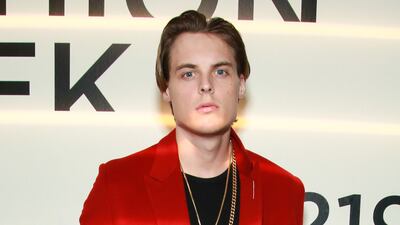
Norway’s fishing farm heir Gustav Magnar Witzoe, 28, has a net worth of $4.5 billion. Getty -
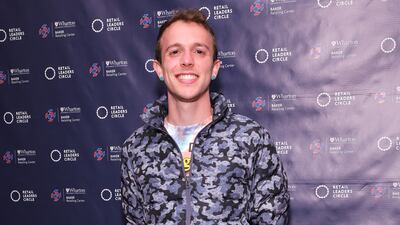
Ryan Breslow, 27, dropped out of Stanford University to set up payment software company Bolt. He has a fortune of $2bn. AFP -

Austin Russell, 27, the founder and chief executive of automotive sensor company Luminar Technologies, has a net worth of $1.6bn. Bloomberg -
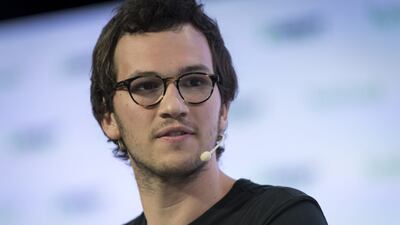
Henrique Dubugras is co-founder and co-chief executive of Brex, a FinTech that intends to overhaul the corporate credit card. He is worth $1.5bn. Bloomberg -
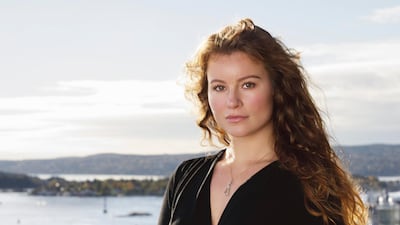
Alexandra Andresen, 25, and her sister Katharina each inherited 42 per cent of the family-owned investment company Ferd. Photo: Dag Knudsen -

Katharina Andresen, 26. She and her sister are both worth $1.3bn. Photo: Dag Knudsen -
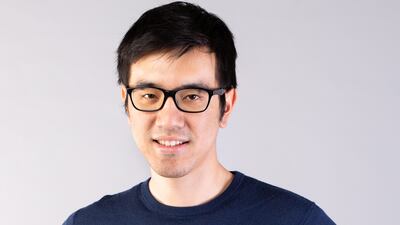
Stanley Tang is a co-founder and head of labs at restaurant delivery app DoorDash. He is worth $1.5bn. Photo: DoorDash -

DoorDash co-founder Andy Fang serves as the app's head of consumer engineering and is worth $1.5bn. Getty



