Everybody dreams of saving the world and now you can do it using the power of your pensions and investments.
Instead of investing your money in greedy, polluting companies, you can direct your funds towards clean and green businesses instead, and make the planet a better place, hopefully.
There is an acronym for this, ESG, which stands for environmental, social and governance, and a growing army of investment analysts factor them in when assessing risks and rewards.
ESG has been a hot investment trend for many years and it is hard to argue against the sentiment.
Why use your retirement savings to fund companies that may have ravaged the planet by the time you reach pension age?
But as anybody who has seen a superhero movie knows, saving the world is more complicated than it looks.
Today’s ESG movement can trace its roots to the 1960s, when Vietnam War protesters demanded university endowment funds to stop investing in military contractors.
The Pax Fund, thought to be the first ethical investment vehicle, was launched in 1971, while Friends Provident Stewardship set the UK ball rolling in 1984.
Climate change, the Covid-19 pandemic, Black Lives Matter and other social justice movements have given the trend a further nudge.
ESG used to be called ethical investing. It has also been called green, sustainable, socially responsible and impact investing but for now, the go-to name is ESG.
In the year to November 30, 2021, a record $649 billion was poured into ESG-focused funds worldwide, up from the $542bn in 2020 and $285bn in 2019, according to Refinitiv Lipper.
ESG funds now account for 10 per cent of worldwide fund assets. It is no longer a niche area but big business, which makes things even more complicated.
Can it make you richer while also soothing your conscience (and maybe even doing some actual good)? Again, it’s complicated.
The ESG tipping point came in January 2020, when Larry Fink, chief executive of BlackRock, said the world’s biggest fund manager was overhauling its investment strategy to make sustainability the “new standard”.
ESG now makes economic and social sense as companies can no longer afford to ignore climate change risk, he said.
The Covid-19 pandemic offered ESG another boost by raising fundamental questions about how we live and work, and the sort of planet we want to live in, says Keith Bowman, investment analyst at Interactive Investor.
“The Ukraine war is also having an influence, with over half of investors becoming more conscious of how their money is invested in the wake of the conflict, our data shows.”
Sceptics who argued there is a price to pay for going green, in the shape of poor performance, were blown away as ESG funds soared in 2020.
The MSCI Global Environment sector grew a staggering 96.47 per cent while its MSCI World benchmark returned only 16.50 per cent.
It didn’t last, though. The sector underperformed in 2021, returning 16.36 per cent against 22.35 per cent on MSCI World.
ESG has this in common with many investment sectors — it has a tendency to be cyclical, and 2021 was a disappointment as valuations stretched and the hype faded.
The Ukraine war has been a two-edged sword, as it has also boosted oil and gas stocks, as the West looks to wean itself off Russian energy.
Investors appear to have lost interest amid more pressing concerns elsewhere, James Clark, senior fund analyst at Hawksmoor Investment Management, says.
Yet, sustainable investment isn’t done yet, he says.
“People are not suddenly going to stop caring about climate change, using resources more efficiently, promoting social harmony and ensuring companies are well-governed.”
People are not suddenly going to stop caring about climate change, using resources more efficiently, promoting social harmony and ensuring companies are well-governed
James Clark,
senior fund analyst at Hawksmoor Investment Management
The bigger the company, the harder it is to be ethical. ESG portfolios often have a bias towards smaller companies, which brings in another layer of risks.
Everybody also has a different idea of what ethical means, which further complicates matters. Investing in fossil fuels may be a red line to some, a green light to others. The same goes for other "sinful" stocks such as tobacco and today’s big ESG dilemma, weapons.
The Ukraine invasion has shown the importance of having a strong defence industry, prompting Europe to discuss whether armaments should be classified as ESG, as the defence sector argues that failure to do so will starve it of investment.
Every sector has positive and negative outcomes, Patrick Uribe, chief executive of FinTech company Util, says.
“The defence industry is responsible for many of the inventions that improve our living standards, as well as millions of jobs in biotechnology and pharmaceuticals, electronics and telecoms. On the other hand, it has been and continues to be responsible for millions of deaths,” he says.
Mr Uribe’s personal view is that categorising weapons manufacturers as ESG-positive is a misrepresentation of the facts.
“Their purpose is warfare, which has no clear positive social outcomes.”
Others disagree, but whatever position you take, there is no question that it adds yet another layer of complexity to ESG investing, which is already hard enough.
That is before you consider the issue of “greenwashing”, where companies only pretend to be working towards a cleaner planet and fairer society.
In February, US financial company Morningstar removed more than 1,200 funds with a combined $1.4 trillion in assets from its European “sustainable universe” list.
This underlines the challenge facing investors trying to pick funds with genuine, proven sustainability credentials, Andy Harris, commercial director at the Sustainable Pension Company, says.
“Increasing interest in responsible investing has seen growing numbers of asset management firms jumping on to the ESG bandwagon, renaming existing funds to suggest a more sustainable focus than is, in practice, the case.”
It is harder than ever “to separate those who are truly walking the walk from those who are simply talking the talk”, Mr Harris says.
Increasing interest in responsible investing has seen growing numbers of asset management firms renaming existing funds to suggest a more sustainable focus than is, in practice, the case
Andy Harris,
commercial director at the Sustainable Pension Company
Yet, every investor should review their portfolio to avoid the risk of “stranded assets” as the ESG revolution rolls on.
UK pension manager Scottish Widows screened £3bn ($3.95bn) worth of assets that it says pose an ESG risk and made a “flagship commitment” to divest from tobacco companies.
Tobacco stocks risk becoming stranded assets as they face intense pressure from investors, regulators and consumers, and fail to address the social impact of their products and supply chain, Maria Nazarova-Doyle, head of responsible investments at Scottish Widows, says.
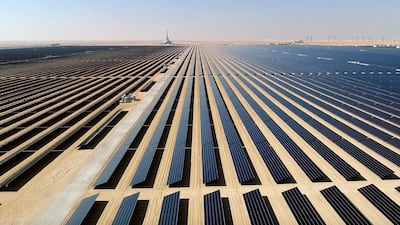
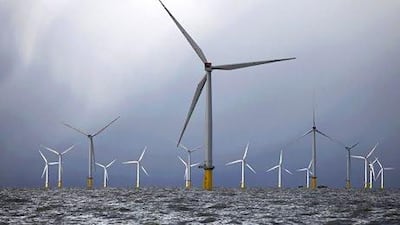
The same will happen to carbon-intensive sources of energy such as thermal coal and tar sands, which will be replaced by greener renewable sources such as wind or solar.
“Exiting these highly damaging areas and redirecting capital to more climate-aware investments makes perfect investment sense,” she says.
Private investors can now choose from a huge range of ESG-labelled actively managed funds and passive exchange-traded funds.
Big names include iShares ESG Aware MSCI USA ETF, the Vanguard FTSE Social Index Fund, the Stewart Investors Asia-Pacific Leaders Sustainability Fund and Pictet Global Environmental Opportunities.
Even with ESG, the old rules apply. Invest for the long term. Consider your personal attitude to risk. Never put all your eggs in one basket, even if it has been ethically woven. Investments can go up and down.
You can do your bit to save the world, but you must pick your way through an ethical minefield first.
If that sounds complicated, it is.

The%20specs
%3Cp%3E%3Cstrong%3EEngine%3A%20%3C%2Fstrong%3E2.3-litre%204cyl%20turbo%0D%3Cbr%3E%3Cstrong%3EPower%3A%20%3C%2Fstrong%3E299hp%20at%205%2C500rpm%0D%3Cbr%3E%3Cstrong%3ETorque%3A%20%3C%2Fstrong%3E420Nm%20at%202%2C750rpm%0D%3Cbr%3E%3Cstrong%3ETransmission%3A%20%3C%2Fstrong%3E10-speed%20auto%0D%3Cbr%3E%3Cstrong%3EFuel%20consumption%3A%20%3C%2Fstrong%3E12.4L%2F100km%0D%3Cbr%3E%3Cstrong%3EOn%20sale%3A%20%3C%2Fstrong%3ENow%0D%3Cbr%3E%3Cstrong%3EPrice%3A%20%3C%2Fstrong%3EFrom%20Dh157%2C395%20(XLS)%3B%20Dh199%2C395%20(Limited)%3C%2Fp%3E%0A
A little about CVRL
Founded in 1985 by Sheikh Mohammed bin Rashid, Vice President and Ruler of Dubai, the Central Veterinary Research Laboratory (CVRL) is a government diagnostic centre that provides testing and research facilities to the UAE and neighbouring countries.
One of its main goals is to provide permanent treatment solutions for veterinary related diseases.
The taxidermy centre was established 12 years ago and is headed by Dr Ulrich Wernery.
Islamophobia definition
A widely accepted definition was made by the All Party Parliamentary Group on British Muslims in 2019: “Islamophobia is rooted in racism and is a type of racism that targets expressions of Muslimness or perceived Muslimness.” It further defines it as “inciting hatred or violence against Muslims”.
Another way to earn air miles
In addition to the Emirates and Etihad programmes, there is the Air Miles Middle East card, which offers members the ability to choose any airline, has no black-out dates and no restrictions on seat availability. Air Miles is linked up to HSBC credit cards and can also be earned through retail partners such as Spinneys, Sharaf DG and The Toy Store.
An Emirates Dubai-London round-trip ticket costs 180,000 miles on the Air Miles website. But customers earn these ‘miles’ at a much faster rate than airline miles. Adidas offers two air miles per Dh1 spent. Air Miles has partnerships with websites as well, so booking.com and agoda.com offer three miles per Dh1 spent.
“If you use your HSBC credit card when shopping at our partners, you are able to earn Air Miles twice which will mean you can get that flight reward faster and for less spend,” says Paul Lacey, the managing director for Europe, Middle East and India for Aimia, which owns and operates Air Miles Middle East.
The National Archives, Abu Dhabi
Founded over 50 years ago, the National Archives collects valuable historical material relating to the UAE, and is the oldest and richest archive relating to the Arabian Gulf.
Much of the material can be viewed on line at the Arabian Gulf Digital Archive - https://www.agda.ae/en
Mercer, the investment consulting arm of US services company Marsh & McLennan, expects its wealth division to at least double its assets under management (AUM) in the Middle East as wealth in the region continues to grow despite economic headwinds, a company official said.
Mercer Wealth, which globally has $160 billion in AUM, plans to boost its AUM in the region to $2-$3bn in the next 2-3 years from the present $1bn, said Yasir AbuShaban, a Dubai-based principal with Mercer Wealth.
“Within the next two to three years, we are looking at reaching $2 to $3 billion as a conservative estimate and we do see an opportunity to do so,” said Mr AbuShaban.
Mercer does not directly make investments, but allocates clients’ money they have discretion to, to professional asset managers. They also provide advice to clients.
“We have buying power. We can negotiate on their (client’s) behalf with asset managers to provide them lower fees than they otherwise would have to get on their own,” he added.
Mercer Wealth’s clients include sovereign wealth funds, family offices, and insurance companies among others.
From its office in Dubai, Mercer also looks after Africa, India and Turkey, where they also see opportunity for growth.
Wealth creation in Middle East and Africa (MEA) grew 8.5 per cent to $8.1 trillion last year from $7.5tn in 2015, higher than last year’s global average of 6 per cent and the second-highest growth in a region after Asia-Pacific which grew 9.9 per cent, according to consultancy Boston Consulting Group (BCG). In the region, where wealth grew just 1.9 per cent in 2015 compared with 2014, a pickup in oil prices has helped in wealth generation.
BCG is forecasting MEA wealth will rise to $12tn by 2021, growing at an annual average of 8 per cent.
Drivers of wealth generation in the region will be split evenly between new wealth creation and growth of performance of existing assets, according to BCG.
Another general trend in the region is clients’ looking for a comprehensive approach to investing, according to Mr AbuShaban.
“Institutional investors or some of the families are seeing a slowdown in the available capital they have to invest and in that sense they are looking at optimizing the way they manage their portfolios and making sure they are not investing haphazardly and different parts of their investment are working together,” said Mr AbuShaban.
Some clients also have a higher appetite for risk, given the low interest-rate environment that does not provide enough yield for some institutional investors. These clients are keen to invest in illiquid assets, such as private equity and infrastructure.
“What we have seen is a desire for higher returns in what has been a low-return environment specifically in various fixed income or bonds,” he said.
“In this environment, we have seen a de facto increase in the risk that clients are taking in things like illiquid investments, private equity investments, infrastructure and private debt, those kind of investments were higher illiquidity results in incrementally higher returns.”
The Abu Dhabi Investment Authority, one of the largest sovereign wealth funds, said in its 2016 report that has gradually increased its exposure in direct private equity and private credit transactions, mainly in Asian markets and especially in China and India. The authority’s private equity department focused on structured equities owing to “their defensive characteristics.”
Inside%20Out%202
%3Cp%3E%3Cstrong%3EDirector%3A%C2%A0%3C%2Fstrong%3EKelsey%20Mann%3C%2Fp%3E%0A%3Cp%3E%3Cstrong%3EStarring%3A%3C%2Fstrong%3E%C2%A0Amy%20Poehler%2C%20Maya%20Hawke%2C%20Ayo%20Edebiri%3C%2Fp%3E%0A%3Cp%3E%3Cstrong%3ERating%3A%20%3C%2Fstrong%3E4.5%2F5%3C%2Fp%3E%0A
The specs
- Engine: 3.9-litre twin-turbo V8
- Power: 640hp
- Torque: 760nm
- On sale: 2026
- Price: Not announced yet
The National in Davos
We are bringing you the inside story from the World Economic Forum's Annual Meeting in Davos, a gathering of hundreds of world leaders, top executives and billionaires.
THE BIO
Favourite car: Koenigsegg Agera RS or Renault Trezor concept car.
Favourite book: I Am Pilgrim by Terry Hayes or Red Notice by Bill Browder.
Biggest inspiration: My husband Nik. He really got me through a lot with his positivity.
Favourite holiday destination: Being at home in Australia, as I travel all over the world for work. It’s great to just hang out with my husband and family.
UAE v Gibraltar
What: International friendly
When: 7pm kick off
Where: Rugby Park, Dubai Sports City
Admission: Free
Online: The match will be broadcast live on Dubai Exiles’ Facebook page
UAE squad: Lucas Waddington (Dubai Exiles), Gio Fourie (Exiles), Craig Nutt (Abu Dhabi Harlequins), Phil Brady (Harlequins), Daniel Perry (Dubai Hurricanes), Esekaia Dranibota (Harlequins), Matt Mills (Exiles), Jaen Botes (Exiles), Kristian Stinson (Exiles), Murray Reason (Abu Dhabi Saracens), Dave Knight (Hurricanes), Ross Samson (Jebel Ali Dragons), DuRandt Gerber (Exiles), Saki Naisau (Dragons), Andrew Powell (Hurricanes), Emosi Vacanau (Harlequins), Niko Volavola (Dragons), Matt Richards (Dragons), Luke Stevenson (Harlequins), Josh Ives (Dubai Sports City Eagles), Sean Stevens (Saracens), Thinus Steyn (Exiles)
U19 World Cup in South Africa
Group A: India, Japan, New Zealand, Sri Lanka
Group B: Australia, England, Nigeria, West Indies
Group C: Bangladesh, Pakistan, Scotland, Zimbabwe
Group D: Afghanistan, Canada, South Africa, UAE
UAE fixtures
Saturday, January 18, v Canada
Wednesday, January 22, v Afghanistan
Saturday, January 25, v South Africa
UAE squad
Aryan Lakra (captain), Vriitya Aravind, Deshan Chethyia, Mohammed Farazuddin, Jonathan Figy, Osama Hassan, Karthik Meiyappan, Rishabh Mukherjee, Ali Naseer, Wasi Shah, Alishan Sharafu, Sanchit Sharma, Kai Smith, Akasha Tahir, Ansh Tandon
Company%20profile
%3Cp%3EName%3A%20Tabby%3Cbr%3EFounded%3A%20August%202019%3B%20platform%20went%20live%20in%20February%202020%3Cbr%3EFounder%2FCEO%3A%20Hosam%20Arab%2C%20co-founder%3A%20Daniil%20Barkalov%3Cbr%3EBased%3A%20Dubai%2C%20UAE%3Cbr%3ESector%3A%20Payments%3Cbr%3ESize%3A%2040-50%20employees%3Cbr%3EStage%3A%20Series%20A%3Cbr%3EInvestors%3A%20Arbor%20Ventures%2C%20Mubadala%20Capital%2C%20Wamda%20Capital%2C%20STV%2C%20Raed%20Ventures%2C%20Global%20Founders%20Capital%2C%20JIMCO%2C%20Global%20Ventures%2C%20Venture%20Souq%2C%20Outliers%20VC%2C%20MSA%20Capital%2C%20HOF%20and%20AB%20Accelerator.%3Cbr%3E%3C%2Fp%3E%0A
COMPANY%20PROFILE
%3Cp%3E%3Cstrong%3ECompany%20name%3A%3C%2Fstrong%3E%20Alaan%3Cbr%3E%3Cstrong%3EStarted%3A%3C%2Fstrong%3E%202021%3Cbr%3E%3Cstrong%3EBased%3A%3C%2Fstrong%3E%20Dubai%3Cbr%3E%3Cstrong%3EFounders%3A%3C%2Fstrong%3E%20Parthi%20Duraisamy%20and%20Karun%20Kurien%3Cbr%3E%3Cstrong%3ESector%3A%3C%2Fstrong%3E%20FinTech%3Cbr%3E%3Cstrong%3EInvestment%20stage%3A%3C%2Fstrong%3E%20%247%20million%20raised%20in%20total%20%E2%80%94%20%242.5%20million%20in%20a%20seed%20round%20and%20%244.5%20million%20in%20a%20pre-series%20A%20round%3Cbr%3E%3Cbr%3E%3C%2Fp%3E%0A