

Global property prices have increased steeply for more than a decade, fuelled by record low interest rates, but what happens when borrowing costs eventually start rising? We may soon find out.
As inflation picks up everywhere, today’s near-zero interest rates may soon prove unsustainable. One day, we may look back at the world of sub-1 per cent mortgage rates with incredulity. Today’s prices would be hard to sustain if interest rates flew to 5 per cent or 6 per cent.
For now, money is cheap and property is expensive. Could that equation suddenly go into reverse?
If it does, anybody with a big mortgage needs to make sure they can afford to service their repayment while buyers might think twice before overstretching themselves at today’s inflated prices.
Central bankers have responded to every crisis by cutting interest rates lower and lower, but there is only one way rates can go from here, and that is up.
In May 1981, the US federal funds rate peaked at an unthinkable 19 per cent but the direction of travel has been downhill ever since. By October 19, it had slid to a barely there 0.08 per cent.
Yet, with US inflation hitting a 13-year high of 5.4 per cent, that may change.
Last week, the UBS Global Real Estate Bubble Index said the risk of a “severe price correction” has increased over the past year.
UBS picked out Frankfurt, Toronto and Hong Kong as displaying the most elevated risk levels among the 25 major city housing markets it analyses.
Munich, Zurich, Vancouver, Stockholm, Amsterdam and Paris are also in the “double risk zone”. Every US city evaluated – Miami, Los Angeles, San Francisco, Boston and New York – is also in overvalued territory.
Housing market imbalances are also found in Tokyo, Sydney, Geneva, Moscow, Tel Aviv and Singapore, according to UBS.
-

The Dubai Marina skyline. Property prices have rebounded in Dubai after the pandemic disrupted the global economy. AP -
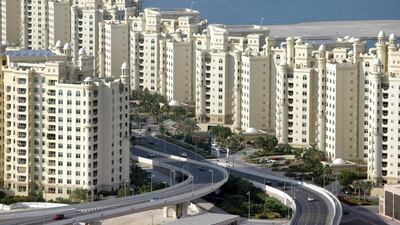
The Palm Jumeirah. The value of property deals in Dubai more than doubled in 2021 and broke a 12-year record in terms of real estate sales transactions. Jaime Puebla / The National -
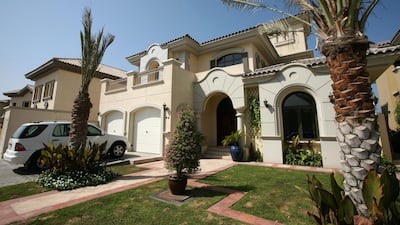
A villa on The Palm. Dubai registered 84,196 property transactions worth Dh300 billion ($82bn) in 2021, which is the highest annual value recorded in the emirate’s history, according to the Dubai Land Department. Paulo Vecina / The National -
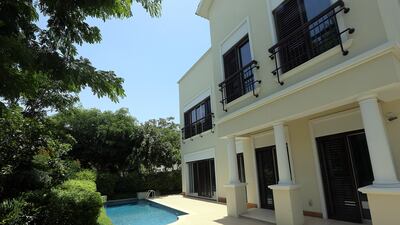
A Mediterranean villa in Dubai's Mohammed bin Rashid Al Maktoum City. Satish Kumar / The National -
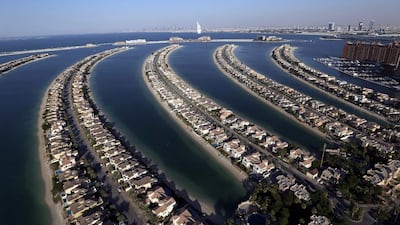
The Palm in Dubai. The UAE's move to provide more flexible visas has fuelled interest by wealthy foreign buyers in Dubai's property market. Bloomberg -

A two-bedroom apartment in Dubai Marina. Satish Kumar / The National -
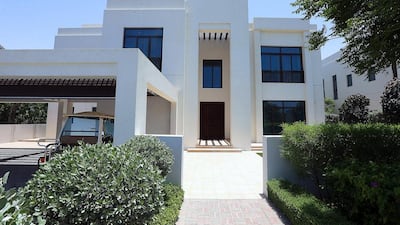
A modern Arabic villa in Mohammed bin Rashid Al Maktoum City's District One development in Dubai. Satish Kumar / The National


London’s housing market is also overvalued, UBS said, although the danger level declined over the past year. Price growth has slowed as Londoners embark on a “race for space” in the suburbs and foreign buyers are locked out.
Madrid, Milan and Warsaw remain fairly valued while Dubai is now the only undervalued market on its list and the only one to be classified in a lower risk category than last year.
The Covid-19 pandemic confined many to their own four walls and people are willing to pay more for decent housing, says Claudio Saputelli, head of real estate at UBS Global Wealth Management.
Mortgage rates are still cheap, owning costs less than renting and consumers have built up their savings during lockdown, all of which should support prices.
The danger is that households have to borrow ever larger sums to keep up and debt-to-income ratios are starting to rise as a result, Mr Saputelli says.
“Markets have become even more dependent on very low interest rates, so the tightening of lending standards could bring house price appreciation to an abrupt halt.”
The big question is whether the US Federal Reserve will respond to the rising inflation threat by tapering stimulus and increasing interest rates.
So far, central bankers have stuck to their guns by insisting the current inflation surge is “transitory”, clearly terrified of tightening in case it chokes off the global recovery.
Concerns over higher prices and stagflation weighed heavily on markets in September but the S&P 500 has rebounded in October as supply chain fears ease and US company earnings impress, says Fawad Razaqzada, market analyst at ThinkMarkets.
Markets are not as scared of aggressive policy tightening as they were only a few weeks ago but he says "this might come back to haunt investors”.
The inflation threat is far from dead. Not with Germany reporting wholesale price inflation of a thundering 13.2 per cent, the highest rate since the early 1970s.
The Fed is expected to start tapering bond purchases before the end of the year but increase rates three times next year. Consensus suggests they will hit 1 per cent in 2023 and 1.8 per cent in 2024.
That is still low by historical standards but high compared with today’s rates.
The Bank of England may be the first to act, with a first increase of 25 basis points coming in as soon as November 4, lifting its base rate from today’s 0.1 per cent to 0.26 per cent.
head of real estate at UBS Global Wealth Management
Markets have been factoring in five rate increases in the next six meetings after BoE governor Andrew Bailey talked about the “need to act” as prices rise. However, Fidelity International’s investment director Tom Stevenson fears he could be walking into a “major policy blunder”.
Today’s inflation is being driven by supply shortages rather than booming demand and raising rates is the wrong solution, he says. It also risks “choking off the recovery and crimping growth”.
Central bankers risk looking out of touch by persisting with the argument that inflation is transitory but “they may well be right”, says Mr Stevenson.
If they are right, anybody with a hefty mortgage can breathe a sigh of relief, while property buyers hoping for a bargain will not be so happy.
Despite these concerns, property prices continue to race ahead.
In the UK, latest official Land Registry figures show UK house prices rising by 10.6 per cent in the year to August. London looked relatively sluggish growing by “just” 7.5 per cent, but things are now beginning to pick up in the capital.
Viewings in September were 30 per cent higher than the three-year average, Nick Barnes, head of research at London-based estate agent Chestertons, says.
“This underpins our view that the buoyant sales market will be with us until the first half of next year at the very least.”
Global property prices can hold their gains if interest rates rise, providing the economy does, too, says Oliver Kettlewell, head of fixed income and global portfolios at Mashreq Capital in Dubai.
Much will depend on local conditions in your chosen market. “In Dubai and Abu Dhabi, for example, prices have fallen by 30 per cent over the past seven years, offering a sizeable discount to international buyers,” Mr Kettlewell says.
Higher yields and policy rates may slow price growth but to a lesser extent than in most prior tightening cycles as many consumers have built up their savings and financial resilience during lockdowns, says Arnab Das, global macro strategist for Europe, the Middle East and Africa at fund manager Invesco.
The effect of higher interest rates may depend on the market, Mr Das says. For example, in the UK, many borrowers have variable rate mortgages or fixed for only two years, making them more vulnerable to interest rate increases, while in the US, most mortgages are long-term fixed rates and therefore relatively immune.
There is no reason why house prices should fall even if interest rates rise, Anna Clare Harper, chief executive of property consultancy SPI Capital, says.
head of fixed income and global portfolios at Mashreq Capital
Homeowners and property investors do not tend to sell at a lower price than they paid, unless they really need to, she says.
“Many homeowners are fixing their mortgage rates at today’s lows, which makes a mass sell-off seem unlikely. Transactions may slow over the next year but we don’t expect prices to fall.”
Even if interest rates do start rising, there are three reasons why people should not be too worried about a potential house price crash.
First, few expect interest rates to climb that high. Second, most owners will sit tight or rent rather than sell at a loss. Finally, demand for prime property continues to outstrip supply.
If you buy in a desirable location, you have another layer of protection.
The days of steep house price increases may be over but that does not mean they have to fall back to earth with a bump.

