


The world’s first research facility aimed at finding a way to grow both food and biofuels using desert land irrigated with seawater has opened in Abu Dhabi. Take a quick tour of the newly opened research centre based at Masdar City.
-
-

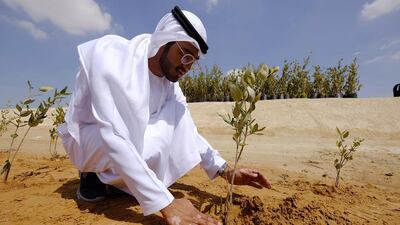
The research hub will use coastal seawater to raise fish and shrimp for food, and the nutrient-rich wastewater then fertilise plants rich in oils that can be harvested for aviation biofuel. Antonie Robertson / The National -
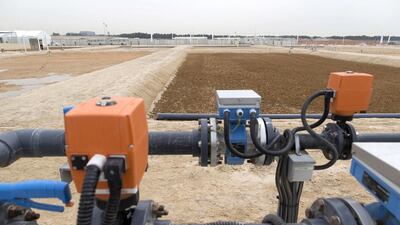
Initially, the technology is being trialled on a small scale, but if the technology proves viable a 200-hectare demonstration site is planned. Antonie Robertson / The National -

Aquaculture has been a fast-growing global food market – increasing at about 6 per cent each year, but there have been concerns about the environmental damage that can be caused by nutrient-rich effluent discharged by the fish stocks. Courtesy Masdar -
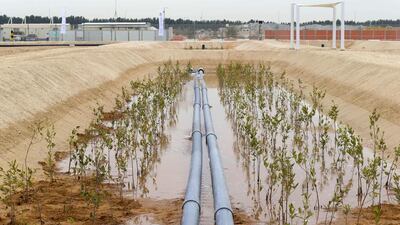
The salt-tolerant halophyte plants thrive in arid, desert conditions and do not require fresh water or arable land to grow. Any remaining wastewater passes through a cultivated mangrove, which naturally filters more of the nutrients before it is discharged back into the sea. Antonie Robertson / The National -

Initially, the technology is being trialled on a small scale, but if the technology proves viable a 200-hectare demonstration site is planned. Antonie Robertson / The National -

Initially, the technology is being trialled on a small scale, but if the technology proves viable a 200-hectare demonstration site is planned. Antonie Robertson / The National -
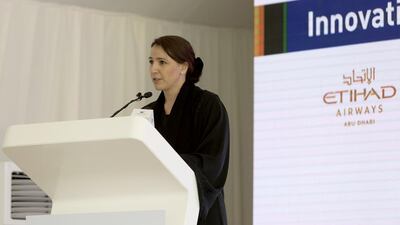
Maryam Hareb, Assistant Undersecretary of the Water Resources and Nature Conservation Affairs Department at the Ministry of Environment and Water, delivers a speech during the launch event of the world’s first research facility that harmoniously grows food and biomass for fuel production. Antonie Robertson / The National -
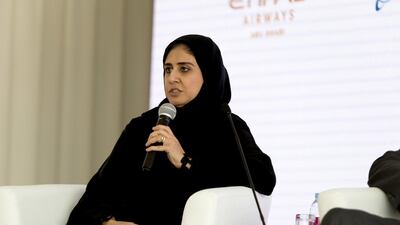
Dr Behjat Al Yousuf, interim provost of Masdar Institute, during the launch event of the world’s first research facility that harmoniously grows food and biomass for fuel production. Antonie Robertson / The National -
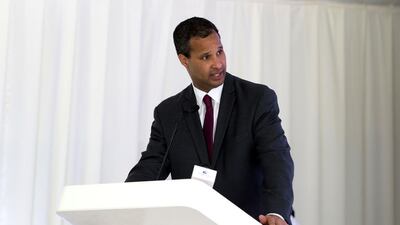
Marc Allen, president of Boeing International, during the launch event of the world’s first research facility that harmoniously grows food and biomass for fuel production. Antonie Robertson / The National -
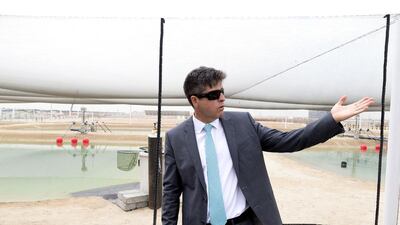
Dr Alejandro Ríos Galvan, director of the Sustainable Bioenergy Research Consortium at Masdar Institute, talks about the research project during the launch event. Antonie Robertson / The National -

Jim Andersen, business director for renewable energy and chemicals at UOP – Honeywell, during the launch event. Antonie Robertson / The National -
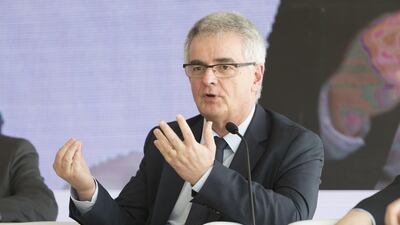
Pierre Fabre, a senior executive at Safran, during the launch event. Antonie Robertson / The National
Masdar opens food and biofuel research facility in Abu Dhabi – in pictures
Most popular today

