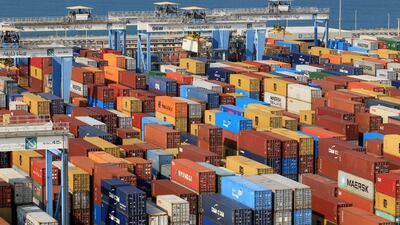
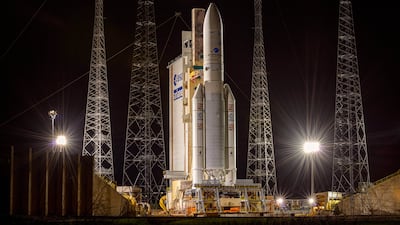
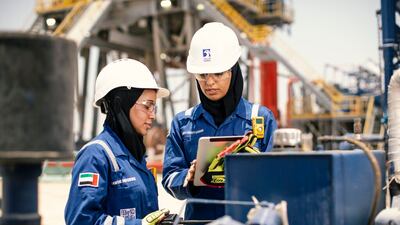
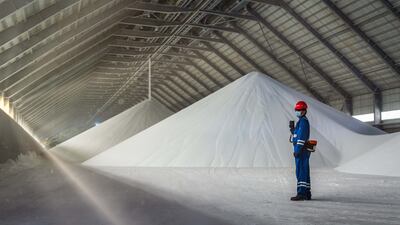
Salik is one of 10 state-owned companies that are going public as part of Dubai's plan to increase the size of its financial market. Satish Kumar / The National

Salik IPO: Dubai toll operator to sell 20% stake and list on DFM


  • English
  • Arabic

Dubai's government plans to sell a 20 per cent stake in the emirate's toll operator, Salik, through an initial public offering as it looks to boost the size of its capital markets.

The government will sell 1.5 billion shares in Salik and reserve the right to amend the size of the offering, it said on Monday.

The offer price will be published before the start of the offering, which begins on September 13 and closes on September 20 for the first and third tranche of subscribers. The second tranche closes on September 21.

The government will retain 80 per cent in the company after the offering and Salik is expected to list on the Dubai Financial Market on September 29.

“The float size will be the right amount to attract strategic investors and also allow us to price according to our need and the market feedback,” Ibrahim Al Haddad, Salik's chief executive, told The National.

“The market feedback was very encouraging, very positive. We met investors from all over the world.”

Salik outlined additional future growth plans, including the potential to introduce dynamic pricing at its toll gates that would increase revenue and reduce congestion, it said.

“The RTA could implement dynamic pricing through optimising the toll rates depending on the time of the day, for example, by charging a higher toll fee for specific lanes or during peak hours,” said the prospectus.

This would be modelled on similar systems used elsewhere around the world, such as the Dallas-Fort Worth LBJ Express system, Singapore's Electronic Road Pricing System and the Stockholm dynamic congestion zone and bridge toll system.

“The directors believe company’s technology integration through its app and gates would make the transition to a dynamic system relatively easy,” it said.

Other revenue streams include the addition of new toll gates, toll gate and in-app advertisements, the monetisation of traffic data it collects and the provision of consulting services to other major cities looking to introduce toll gates or improve existing ones.

Dubai announced plans in November to list 10 state-owned companies to increase the size of its financial market to about Dh3 trillion ($817 billion), as well as set up a Dh2bn market maker fund to encourage the listing of more private companies from sectors such as energy, logistics and retail.

The Dubai Water and Electricity Authority raised Dh22.41bn from its IPO, making it the largest public float in the Middle East and Europe since Saudi Aramco went public in 2019.

Tecom, the operator of business districts in the emirate, also made its debut on the DFM in early July, having raised Dh1.7bn from its IPO a month earlier.

  • Abu Dhabi Ports - $1.1 billion IPO in February 2022: AD Ports Group raised $1.1bn from its share sale to help expand its operations globally and boost growth. ADQ, one of the region’s largest holding companies, remains a majority shareholder in AD Ports Group with a 75.44 per cent stake in the listed entity. Reuters
    Abu Dhabi Ports - $1.1 billion IPO in February 2022: AD Ports Group raised $1.1bn from its share sale to help expand its operations globally and boost growth. ADQ, one of the region’s largest holding companies, remains a majority shareholder in AD Ports Group with a 75.44 per cent stake in the listed entity. Reuters
  • Dewa became the first public entity to list on the Dubai Financial Market, raising Dh22.41bn in an oversubscribed share sale. The IPO of the Dubai utility in April was the largest in Europe and the Middle East since Saudi Aramco’s debut in 2019. It has a market value of about $39bn and is the largest on the exchange. AFP
    Dewa became the first public entity to list on the Dubai Financial Market, raising Dh22.41bn in an oversubscribed share sale. The IPO of the Dubai utility in April was the largest in Europe and the Middle East since Saudi Aramco’s debut in 2019. It has a market value of about $39bn and is the largest on the exchange. AFP
  • Yahsat – $730.6 million in July 2021: a unit of Mubadala Investment Company, it raised about $731m from its initial public offering last July. It sold 975.9 million shares, or 40 per cent of equity, through the IPO, which was several times oversubscribed, with significant demand from both qualified institutional and retail investors in the UAE. Photo: Mubadala Investment Company
    Yahsat – $730.6 million in July 2021: a unit of Mubadala Investment Company, it raised about $731m from its initial public offering last July. It sold 975.9 million shares, or 40 per cent of equity, through the IPO, which was several times oversubscribed, with significant demand from both qualified institutional and retail investors in the UAE. Photo: Mubadala Investment Company
  • Adnoc Drilling - $1.1 billion IPO in October 2021: Adnoc Drilling’s share sale, oversubscribed more than 31 times, was the largest listing on the ADX, raising more than $1.1 billion. Adnoc maintains its majority 84 per cent stake in the company while US energy services company Baker Hughes, which entered into a strategic partnership with Adnoc Drilling in October 2018, has a 5 per cent stake, and US contract oil and gas driller Helmerich & Payne holds 1 per cent. Photo: Adnoc
    Adnoc Drilling - $1.1 billion IPO in October 2021: Adnoc Drilling’s share sale, oversubscribed more than 31 times, was the largest listing on the ADX, raising more than $1.1 billion. Adnoc maintains its majority 84 per cent stake in the company while US energy services company Baker Hughes, which entered into a strategic partnership with Adnoc Drilling in October 2018, has a 5 per cent stake, and US contract oil and gas driller Helmerich & Payne holds 1 per cent. Photo: Adnoc
  • Fertiglobe- $795 million in October 2021: a joint venture between Adnoc and Netherlands-listed OCI, raised about $795m in its initial IPO last year, amid strong demand from international, regional and local investors. The company — which is also the Mena region’s largest producer of nitrogen fertilisers by production capacity — sold more than 1.145 billion shares, representing 13.8 per cent of its share capital. Photo: Fertiglobe
    Fertiglobe- $795 million in October 2021: a joint venture between Adnoc and Netherlands-listed OCI, raised about $795m in its initial IPO last year, amid strong demand from international, regional and local investors. The company — which is also the Mena region’s largest producer of nitrogen fertilisers by production capacity — sold more than 1.145 billion shares, representing 13.8 per cent of its share capital. Photo: Fertiglobe

Salik, which is exclusively authorised to operate, manage and develop the traffic toll system in Dubai, runs eight toll gates in the emirate.

“Being the exclusive operator … will allow us to adopt a dividend policy that is really attractive,” Mr Al Haddad said.

The company expects to start paying dividends twice annually, in April and October of each fiscal year.

The company will pay a first dividend for the second half of 2022 by April 2023 and plans to pay 100 per cent of the net profit as dividends, after setting aside statutory reserves required by law.

From 2023, it intends to pay 100 per cent of the net profit available for distribution as dividend.

Salik reported Dh944.9 million in revenue in the first half of 2022, up from Dh792.9m in the same period of 2021.

Profit for the first six months of this year rose to Dh796.7m, compared with Dh634.4m in the same period a year ago.

Full-year revenue is projected to exceed the Dh1.69 billion earned in 2021, Mr Al Haddad said, without providing a specific figure. Last year's revenue grew from Dh1.38bn earned in 2020.

Salik is a “critical asset” for the emirate, where more than 60 per cent of Dubai’s commuters use private cars, and the net toll traffic from 2013 to 2019 grew at a compound annual rate of 5.5 per cent, the document said.

As of April 30, 2022, Salik had 3.6 million vehicles registered, out of which 1.8 million were Dubai vehicles.

Dubai, home to 3.5 million permanent residents and a daytime population of 4.5 million as of December 2021, forecasts that the population will grow more than 70 per cent growth from 2020 to 2040, and expects to host 25 million visitors by 2025.

“Being so well located in the city and connecting all the landmarks and destinations makes us naturally well positioned to benefit from these dynamics,” Mr Al Haddad said.

Proceeds from the sale will go to the Dubai government, represented by the Department of Finance, Mr Al Haddad said.

The company “has played a pivotal role in managing traffic in Dubai for 15 years and will continue to remain at the heart of expansion plans in the road and transport sector, in support of the emirate’s economy”, Salik chairman Mattar Al Tayer, said at a press conference on Monday.

Salik benefits from “strong macroeconomic tailwinds”, Dubai's “ambitious expansion plans” and various growth opportunities, Mr Al Haddad said in a presentation.

In June, new legislation set up Salik Company, with a 99-year term that renews automatically for the same period as per the company’s articles of association.

Salik, which has its headquarters in Dubai, can open branches and offices in and outside the emirate.

The emirate’s Roads and Transport Authority is authorised to outsource all or part of Salik’s functions related to the operation and management of toll gates.

.
.

Existing toll gates in Dubai can be removed or modified subject to a decree by the chairman of the Dubai Executive Council.

New toll gates can also be added subject to the council’s approval, once the Roads and Transport Authority conducts a “comprehensive traffic study in co-ordination with Salik”.

“Today we have an opportunity to add a gate because of traffic needs and we have provided alternatives … the plan from an engineering standpoint is ready. The timing to add a new gate will be subject to final approval,” Mr Al Haddad said.

Joint lead managers of the IPO include Emirates NBD Capital, EFG-Hermes and HSBC.

Moelis & Company has been appointed as independent financial adviser while Emirates NBD Capital, Goldman Sachs and Merrill Lynch are joint global co-ordinators.

Citigroup Global Markets, EFG Hermes UAE and HSBC Bank Middle East are joint bookrunners.

Emirates NBD is the lead receiving bank. Other receiving banks include Emirates Islamic Bank, First Abu Dhabi Bank, Abu Dhabi Islamic Bank, Mashreq Bank, Dubai Islamic Bank, Ajman Bank, Abu Dhabi Commercial Bank, Al Maryah Community Bank, the Commercial Bank of Dubai and Sharjah Islamic Bank.


Match info:

Portugal 1
Ronaldo (4')

Morocco 0

Grand slam winners since July 2003

Who has won major titles since Wimbledon 2003 when Roger Federer won his first grand slam

Roger Federer 19 (8 Wimbledon, 5 Australian Open, 5 US Open, 1 French Open)

Rafael Nadal 16 (10 French Open, 3 US Open, 2 Wimbledon, 1 Australian Open)

Novak Djokovic 12 (6 Australian Open, 3 Wimbledon, 2 US Open, 1 French Open)

Andy Murray 3 (2 Wimbledon, 1 US Open)

Stan Wawrinka 3 (1 Australian Open, 1 French Open, 1 US Open)

Andy Roddick 1 (1 US Open) 

Gaston Gaudio 1 (1 French Open)

Marat Safin 1 (1 Australian Open)

Juan Martin del Potro 1 (1 US Open)

Marin Cilic 1 (1 US Open)

COMPANY%20PROFILE%20
%3Cp%3E%3Cstrong%3EName%3A%3C%2Fstrong%3E%20Haltia.ai%0D%3Cbr%3E%3Cstrong%3EStarted%3A%3C%2Fstrong%3E%202023%0D%3Cbr%3E%3Cstrong%3ECo-founders%3A%3C%2Fstrong%3E%20Arto%20Bendiken%20and%20Talal%20Thabet%0D%3Cbr%3E%3Cstrong%3EBased%3A%3C%2Fstrong%3E%20Dubai%2C%20UAE%0D%3Cbr%3E%3Cstrong%3EIndustry%3A%3C%2Fstrong%3E%20AI%0D%3Cbr%3E%3Cstrong%3ENumber%20of%20employees%3A%3C%2Fstrong%3E%2041%0D%3Cbr%3E%3Cstrong%3EFunding%3A%3C%2Fstrong%3E%20About%20%241.7%20million%0D%3Cbr%3E%3Cstrong%3EInvestors%3A%3C%2Fstrong%3E%20Self%2C%20family%20and%20friends%26nbsp%3B%3C%2Fp%3E%0A
While you're here
Specs

Engine: 51.5kW electric motor

Range: 400km

Power: 134bhp

Torque: 175Nm

Price: From Dh98,800

Available: Now

SPEC%20SHEET
%3Cp%3E%3Cstrong%3EProcessor%3A%3C%2Fstrong%3E%20Apple%20M2%2C%208-core%20CPU%2C%20up%20to%2010-core%20CPU%2C%2016-core%20Neural%20Engine%3C%2Fp%3E%0A%3Cp%3E%3Cstrong%3EDisplay%3A%3C%2Fstrong%3E%2013.6-inch%20Liquid%20Retina%2C%202560%20x%201664%2C%20224ppi%2C%20500%20nits%2C%20True%20Tone%2C%20wide%20colour%3C%2Fp%3E%0A%3Cp%3E%3Cstrong%3EMemory%3A%3C%2Fstrong%3E%208%2F16%2F24GB%3C%2Fp%3E%0A%3Cp%3E%3Cstrong%3EStorage%3A%3C%2Fstrong%3E%20256%2F512GB%20%2F%201%2F2TB%3C%2Fp%3E%0A%3Cp%3E%3Cstrong%3EI%2FO%3A%3C%2Fstrong%3E%20Thunderbolt%203%20(2)%2C%203.5mm%20audio%2C%20Touch%20ID%3C%2Fp%3E%0A%3Cp%3E%3Cstrong%3EConnectivity%3A%3C%2Fstrong%3E%20Wi-Fi%206%2C%20Bluetooth%205.0%3C%2Fp%3E%0A%3Cp%3E%3Cstrong%3EBattery%3A%3C%2Fstrong%3E%2052.6Wh%20lithium-polymer%2C%20up%20to%2018%20hours%2C%20MagSafe%20charging%3C%2Fp%3E%0A%3Cp%3E%3Cstrong%3ECamera%3A%3C%2Fstrong%3E%201080p%20FaceTime%20HD%3C%2Fp%3E%0A%3Cp%3E%3Cstrong%3EVideo%3A%3C%2Fstrong%3E%20Support%20for%20Apple%20ProRes%2C%20HDR%20with%20Dolby%20Vision%2C%20HDR10%3C%2Fp%3E%0A%3Cp%3E%3Cstrong%3EAudio%3A%3C%2Fstrong%3E%204-speaker%20system%2C%20wide%20stereo%2C%20support%20for%20Dolby%20Atmos%2C%20Spatial%20Audio%20and%20dynamic%20head%20tracking%20(with%20AirPods)%3C%2Fp%3E%0A%3Cp%3E%3Cstrong%3EColours%3A%3C%2Fstrong%3E%20Silver%2C%20space%20grey%2C%20starlight%2C%20midnight%3C%2Fp%3E%0A%3Cp%3E%3Cstrong%3EIn%20the%20box%3A%3C%2Fstrong%3E%20MacBook%20Air%2C%2030W%20or%2035W%20dual-port%20power%20adapter%2C%20USB-C-to-MagSafe%20cable%3C%2Fp%3E%0A%3Cp%3E%3Cstrong%3EPrice%3A%3C%2Fstrong%3E%20From%20Dh4%2C999%3C%2Fp%3E%0A

Mercer, the investment consulting arm of US services company Marsh & McLennan, expects its wealth division to at least double its assets under management (AUM) in the Middle East as wealth in the region continues to grow despite economic headwinds, a company official said.

Mercer Wealth, which globally has $160 billion in AUM, plans to boost its AUM in the region to $2-$3bn in the next 2-3 years from the present $1bn, said Yasir AbuShaban, a Dubai-based principal with Mercer Wealth.

Within the next two to three years, we are looking at reaching $2 to $3 billion as a conservative estimate and we do see an opportunity to do so,” said Mr AbuShaban.

Mercer does not directly make investments, but allocates clients’ money they have discretion to, to professional asset managers. They also provide advice to clients.

“We have buying power. We can negotiate on their (client’s) behalf with asset managers to provide them lower fees than they otherwise would have to get on their own,” he added.

Mercer Wealth’s clients include sovereign wealth funds, family offices, and insurance companies among others.

From its office in Dubai, Mercer also looks after Africa, India and Turkey, where they also see opportunity for growth.

Wealth creation in Middle East and Africa (MEA) grew 8.5 per cent to $8.1 trillion last year from $7.5tn in 2015, higher than last year’s global average of 6 per cent and the second-highest growth in a region after Asia-Pacific which grew 9.9 per cent, according to consultancy Boston Consulting Group (BCG). In the region, where wealth grew just 1.9 per cent in 2015 compared with 2014, a pickup in oil prices has helped in wealth generation.

BCG is forecasting MEA wealth will rise to $12tn by 2021, growing at an annual average of 8 per cent.

Drivers of wealth generation in the region will be split evenly between new wealth creation and growth of performance of existing assets, according to BCG.

Another general trend in the region is clients’ looking for a comprehensive approach to investing, according to Mr AbuShaban.

“Institutional investors or some of the families are seeing a slowdown in the available capital they have to invest and in that sense they are looking at optimizing the way they manage their portfolios and making sure they are not investing haphazardly and different parts of their investment are working together,” said Mr AbuShaban.

Some clients also have a higher appetite for risk, given the low interest-rate environment that does not provide enough yield for some institutional investors. These clients are keen to invest in illiquid assets, such as private equity and infrastructure.

“What we have seen is a desire for higher returns in what has been a low-return environment specifically in various fixed income or bonds,” he said.

“In this environment, we have seen a de facto increase in the risk that clients are taking in things like illiquid investments, private equity investments, infrastructure and private debt, those kind of investments were higher illiquidity results in incrementally higher returns.”

The Abu Dhabi Investment Authority, one of the largest sovereign wealth funds, said in its 2016 report that has gradually increased its exposure in direct private equity and private credit transactions, mainly in Asian markets and especially in China and India. The authority’s private equity department focused on structured equities owing to “their defensive characteristics.”

Updated: September 06, 2022, 6:26 AM