

World stocks on Friday closed out their steepest weekly slide since the pandemic meltdown of March 2020, as investors worried that tighter monetary policy by inflation-fighting central banks could damage economic growth.
Investors were shaken this week after the US Federal Reserve unleashed its biggest hike in borrowing costs for almost 30 years to tackle red-hot consumer prices.
The third Fed increase was followed by the fifth straight hike by the Bank of England and the first in 15 years by the Swiss central bank, underscoring the growing global concerns about inflation.
The moves caused a global sell-off on Thursday. US and European markets tried to stage a rebound on Friday, but some indices were back in the red later in the day.
The S&P 500 rose 0.2 per cent after waffling between modest losses and gains for most of the day. The Dow Jones Industrial Average dipped 0.1 per cent, while the Nasdaq composite climbed 1.4 per cent.
The relatively quiet trading capped a brutal, tumultuous week for Wall Street. The S&P 500 lost 5.8 per cent for its 10th drop in the last 11 weeks. That’s its worst week since March 2020, when stocks were in free-fall as the global economy suddenly shut down at the onset of the pandemic.
Elsewhere, markets see-sawed. At the close in Europe, London's FTSE 100 dropped 0.4 per cent and Paris's CAC 40 declined 0.1 per cent. Frankfurt's DAX rose 0.7 per cent.
Earlier in Asia, Hong Kong's Hang Seng index rose 1.1 per cent and the Shanghai Composite climbed 1 per cent at the close, while Tokyo's Nikkei settled down 1.8 per cent.
“Any lack of clarity or lack of confidence in the Federal Reserve is going to create a lot of volatility in the market,” said Megan Horneman, chief investment officer at Verdence Capital advisers.
“There's a lot of uncertainty right now about the timing of a recession, but the risks are clearly rising."
The S&P 500 remains in a bear market after it earlier this week dropped more than 20 per cent below its record. It's now 23.4 per cent below its highest level set in January and is back to where it was in late 2020.
"Sentiment has been shattered and equities could suffer further," Craig Erlam, an analyst at online trading platform Oanda, said.
Karl Haeling of LBBW agreed, saying "markets are oversold, but probably not oversold enough to call for a bottom."
He said the modest gains on Friday probably mark "a little technical pause".
-

Youssef Ibrahim poses for a picture in the kitchen of his restaurant in York, Pennsylvania. Willy Lowry / The National. -
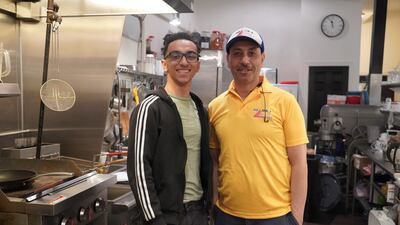
Youssef Ibrahim and his son Felo pose in the kitchen of their family restaurant in York, Pennsylvania. Willy Lowry / The National. -

Youssef Ibrahim chops a carrot in his restaurant's kitchen. Willy Lowry / The National. -
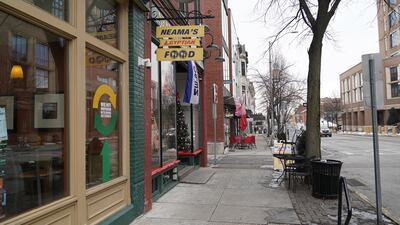
The exterior sign for Neama's Egyptian food in York, Pennsylvania. -

Middle Eastern ingredients line the shelves at Neama's Egyptian Food in York, Pennsylvania. Willy Lowry / The National -
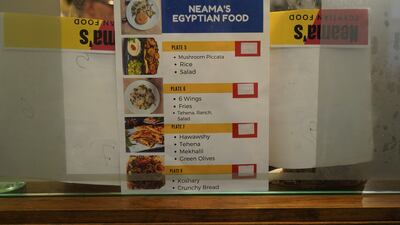
The menu at Neama's Egyptian Food in York, Pennsylvania. It include's Egyptian staples like Koshary. Willy Lowry / The National. -
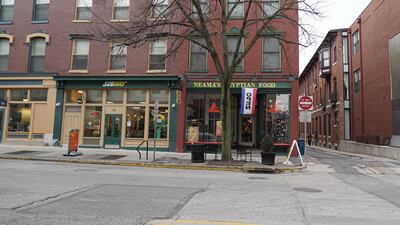
Neama's Egyptian Food is the first Egyptian Restaurant in York, Pennsylvania. Willy Lowry / The National. -
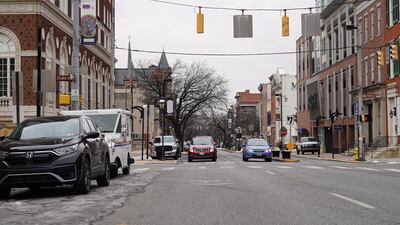
West Market Street in York, Pennsylvania. Willy Lowry / The National. -
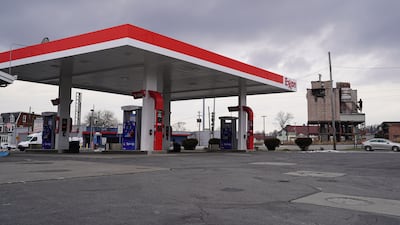
An Exxon Gas station is seen in York, Pennsylvania. Willy Lowry / The National -

Michael Rodenhaber works on a car in his garage in York, Pennsylvania. Willy Lowry / The National. -

It took Michael Rodenhaber six months to repair this Jaguar because of massive supply chain delays. Willy Lowry / The National -

Cars waiting to be fixed in Michael Rodenhaber's garage. Willy Lowry / The National. -
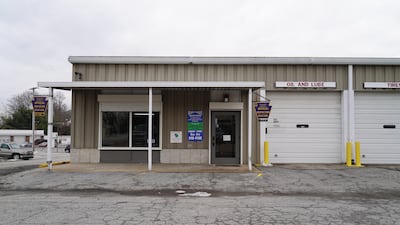
Michael Rodenhaber's garage in York, Pennsylvania. Willy Lowry / The National. -

Joni Stuart shops on Tuesdays so she can get 5% senior discount at Karns Food in York County, Pennsylvania. Willy Lowry / The National -

The meat section at Karns Foods in York County, Pennsylvania. Meat prices are soaring in the US. Willy Lowry / The National. -
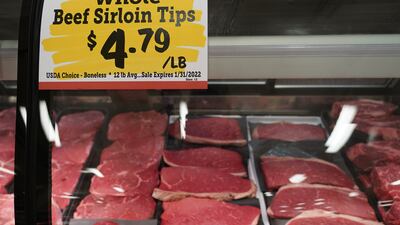
Meat prices have soared in the US. The price of beef is up 20% year on year. Willy Lowry / The National. -
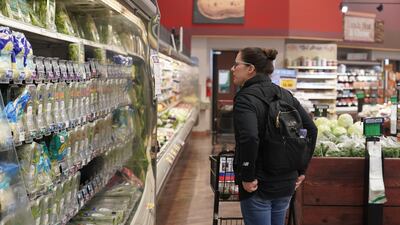
A woman shops for lettuce at Karns Foods in York, Pennsylvania. Willy Lowry / The National. -
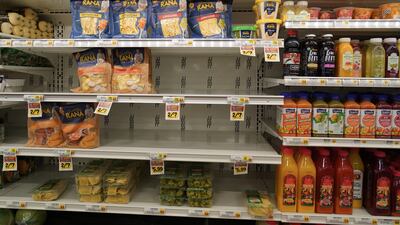
Empty shelves at Karns Foods in York County, Pennsylvania. Supply chain issues have made it more difficult for stores to keep their shelves stocked. Willy Lowry / The National. -
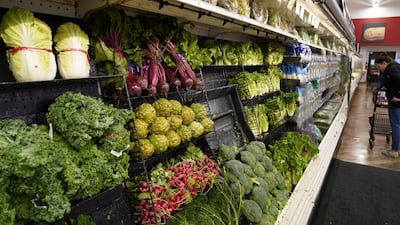
Vegetable line the shelves at Karns Foods, a family run supermarket chain in central Pennsylvania. Willy Lowry / The National. -
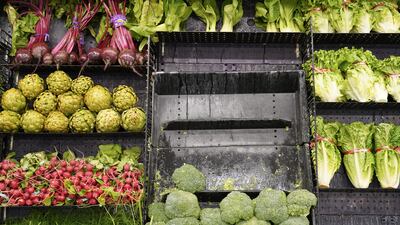
An empty vegetable shelf at Karns Foods in York County, Pennsylvania. Supermarkets across the US have struggled to keep their shelves stocked because of supply chain issues. -
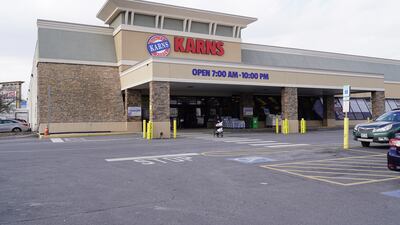
Karns Foods, a small supermarket chain in central Pennsylvania.


Sentiment turned sour again as US official data showed industrial production in May had risen by only 0.2 per cent, much slower than April and weaker than expected.
"We see that the positive attempts get rapidly killed as the market prices in a higher recession risk as inflation doesn't ease," said Ipek Ozkardeskaya, an analyst at Swissquote bank.
The Bank of Japan bucked the global trend on Friday as it stood by its decision not to raise its rate, sending the yen close to the lowest level against the dollar since 1998.
Officials in Tokyo insist that low rates are still needed to nurture a struggling economy, though the BoJ did say it "was necessary to pay due attention to developments in financial and foreign exchange markets".
Bonds and currencies were jittery after a rollercoaster week.
The yen tanked after the BoJ's decision, falling 2.2 per cent by late Friday, bolstering the US dollar, which rose 0.73 per cent against a basket of major currencies.
Sterling fell 1 per cent in New York as investors focused on the gap between US and UK rates.
Gold was off 0.8 per cent at $1,841.13 an ounce, weighed down by a firmer dollar.

