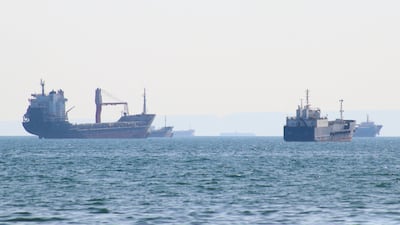

Qatar’s liquefied natural gas exports have surged to their highest level since the start of the Iran war, despite attacks on ships in the Strait of Hormuz.
The Gulf nation has increased its activity, with 41 LNG loadings recorded so far this month, up from 35 last month and 21 in September, data from Kpler shows.
Qatar is to export cargoes to global markets by using ships that switch off their automatic identification systems to avoid being detected and attacked.

“Out of all this loadings, only around 15 per cent of them are being done with AIS on and are the ones that stays within the Gulf going to Kuwait,” a Kpler representative told The National. “The rest all is loading dark and heading out to many different countries including Bangladesh, Pakistan, China, India, Japan and South Korea.”
Having sent almost no vessels through the strait in the early months of the war, Qatar is now using at least 34 LNG tankers to help ferry more fuel through, Bloomberg analysis found.
But LNG volumes have not yet reached prewar levels, with the monthly volume projected at 3.3 million tonnes in November, compared with more than 6.5 million tonnes before the conflict broke out in late February.
The war, in its ninth month, has severely disrupted the supply of crude oil and LNG to global markets as a result of attacks on energy infrastructure in the Gulf and disruption to shipping activity. The strait has been effectively shut since the conflict began, although Gulf nations continue to transport crude using alternative routes.
Qatar’s energy infrastructure has been severely damaged, with Iranian missile strikes in March destroying parts of the Ras Laffan industrial complex that supplies one fifth of the world's super-chilled fuel. Iranian strikes damaged Trains 4 and 6, knocking out 12.8 million tonnes a year, which is equal to about 17 per cent of Qatar's LNG exports.
QatarEnergy declared long-term force majeure on contracts with buyers in China, South Korea, Italy and Belgium. Chief executive Saad Al Kaabi put annual lost revenue at $20 billion and estimated that repairs would take three to five years to complete.

