
Oil prices fell on renewed optimism that the US and Iran could reach a deal to reopen the Strait of Hormuz after US President Donald Trump said another round of talks would begin on Monday.
Brent, the benchmark for two thirds of the world's oil, slid more than 7 per cent during early trade, but recovered some ground to trade 5.09 per cent lower at $83.51 a barrel at 7.27am UAE time. West Texas Intermediate, the gauge that tracks US crude, dropped 5.67 per cent to $79.87 per barrel.
The latest gyration in crude prices follows last week’s wild swings as tensions rose after the US threatened to hit Iran “very hard”.

However, Mr Trump over the weekend said he had paused the planned attack after requests from Saudi Arabia, the UAE, Qatar and Iran, adding that they believed a diplomatic agreement was within reach.
He said the new round of negotiations with Tehran would begin on Monday and that any potential agreement would cover the Strait of Hormuz before addressing Tehran's nuclear programme.
Washington would "hold it" and see how negotiations unfold, he told reporters on Sunday on board Air Force One.
Asked whether there was a deadline for diplomacy, Mr Trump said the US was ready to act at any time but stressed he preferred a deal, saying he was not looking to kill people.
But Kyle Rodda, senior financial market analyst at capital.com, said Mr Trump was following a playbook he had used before.
“In a familiar turn of events, the threats turned into another so-called TACO [Trump always chickens out], with US President Donald Trump calling off the strikes, apparently due to the pleading of Gulf allies,” he said.
“Fridays are for fighting but Mondays are for the markets in Trump’s world, with crude prices gapping lower at the open.”
The strait conundrum
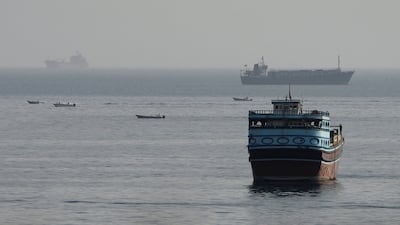
While the two sides prepare for a new round of talks, traffic through the Strait of Hormuz remains almost non-existent, with tankers carrying hydrocarbons still being attacked by Iran and forced to make a U-turn.
While Iran continues to hit commercial vessels to maintain control of the strait, the US is also enforcing its blockade of Iranian shipping and ports.
With a deal to end the conflict still far in the distance, traders hope the two sides will be able to agree on modalities to at least open the strait, thereby alleviating pressure on global energy supplies.
“If we get something concrete on a peace deal, or more importantly, the reopening of the Strait of Hormuz, then we could see some strong relief rallies across the market,” Bloomberg quoted Nick Twidale, chief market analyst at AT Global Markets, as saying.
Price swings
The Iran war, now in its sixth month, has whipsawed crude oil prices. Brent, which hit the highs of more than $126 per barrel in April, gave up all its war premium to trade below its prewar level of $72 a barrel last month.
However, the agreement in June for a two-month ceasefire unraveled in July. Both US and Iran engaged in tit-for-tat military strikes for 13 consecutive nights , pulling the broader region once again into the conflict.
The recent flare-up sent oil prices soaring and Brent ended July with a more than 24 per cent gain, its biggest monthly advance since March this year.
Analysts have warned crude prices could hit $120 per barrel in the fourth quarter if the free flow of energy supplies through the strait is not restored.
The broadening of the regional conflict and the involvement of Yemen’s Houthi rebels have added another layer of uncertainty to global energy supplies.
The Houthi rebels have launched a blockade of Saudi ports and shipping, and claimed to have attacked several Saudi-flagged oil tankers in the Red Sea.
The Yemeni group, which attacked energy infrastructure in the kingdom last month, has forced ships to make U-turns to avoid attacks, choosing the longer and costlier Suez Canal route.

