

Qatar will sign more long-term liquefied natural gas contracts this year as demand for the supercooled fuel grows in Asia and Europe, the country’s Energy Minister said on Wednesday.
LNG is not difficult to sell but negotiations surrounding the specifics of the sale, such as contractual terms and pricing, can become a “sticking point” in finalising agreements, Saad Al Kaabi, who also the chief executive of QatarEnergy, said during the Qatar Economic Forum on Wednesday.
“There's a huge demand out there, whether it's from Asia or Europe, and I think even Europe is realising now they have to do something different to secure long-term [supplies]. They've been very lucky with two warm winters,” he said.
In February, Qatar announced plans to increase capacity by an additional 13 per cent on top of a previously announced expansion. The move aims to raise the nation's LNG output to 142 million tonnes a year by 2030, from its current 77 million tonnes.
Golden Pass LNG, a joint venture between QatarEnergy and ExxonMobil, will be able to process up to 18 million tonnes of LNG annually once its Texas-based export plant comes online next year.
The technical capability to further increase capacity in Qatar will be assessed in the future, Mr Al Kaabi said, adding that the production target could be raised if oil and gas resources are found in global exploration blocks held by QatarEnergy.

Last week, the state-run energy company signed a farm-in agreement with ExxonMobil to acquire a 40 per cent participating interest in two offshore exploration blocks in Egypt.
There will be a “glut” in the LNG market as several large projects become operational over the next few years, but Mr Al Kaabi said that “reasonable” global economic growth levels would create demand.
“Everybody's trying to get the inflation down, so if we have a reasonable economic growth going forward, I think you'll see that all the supply and demand will catch up and you'll need another phase of development of gas in the [2030s],” he said.
During the same panel session, TotalEnergies chief executive Patrick Pouyanne said the energy company would continue to be listed in France while considering a float in the US.
Mr Pouyanne's remarks came after he told analysts last month that the French energy company was considering a possible primary listing in New York.
“We never said we will leave France,” Mr Pouyanne said on Wednesday. “The question is – can we better offer some shares to our US shareholders?”
TotalEnergies, one of France’s largest companies, has registered growth in the number of its American shareholders while European or French stakes have declined, possibly due to debates surrounding environmental, social and governance targets, Mr Pouyanne said.
Earlier this week, French President Emmanuel Macron told Bloomberg that he was opposed to TotalEnergies moving its main stock listing to New York.
“You see quite a different valuation between the US market and the European market, so it's a fiduciary duty of the board of TotalEnergies to study [the US listing],” Mr Pouyanne said.
“And then when we have studied, we [will] come back. Again, it's not a matter of politics, it's a matter of business.”
-
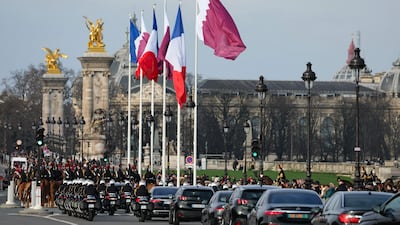
The convoy of Qatar's Emir Sheikh Tamim as he visits in Paris on February 27. AFP -
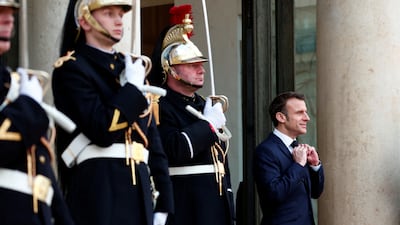
French President Emmanuel Macron prepares for the arrival of Sheikh Tamim for a meeting at the Elysee Palace as part of the emir's two-day state visit to Paris. Reuters -
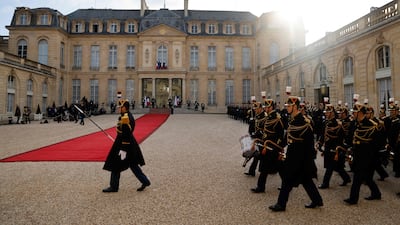
The Republican Guard Orchestra prepares for the arrival at the Elysee Palace. AFP -
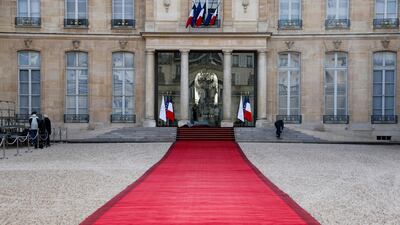
The red carpet is rolled out. AFP -
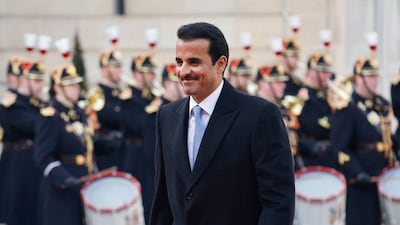
Sheikh Tamim arrives for his official visit. AFP -
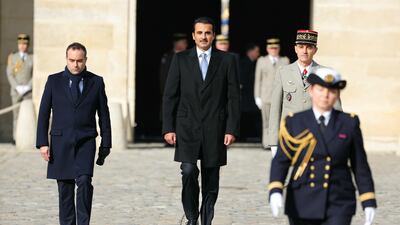
From left, French Minister of the Armed Forces Sebastien Lecornu, Sheikh Tamim and Army Corps General Christophe Abad at an honour ceremony at Les Invalides, Paris. EPA -
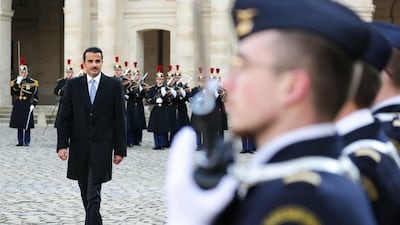
Sheikh Tamim inspects French troops in the courtyard of the Hotel des Invalides. AP -
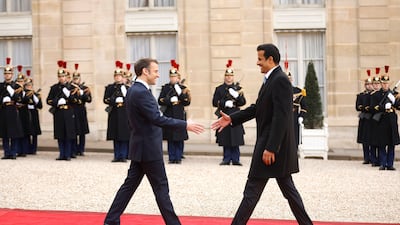
Mr Macron and Sheikh Tamim shake hands. EPA -
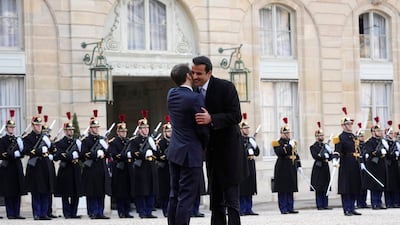
The two men greet each other warmly. AP -
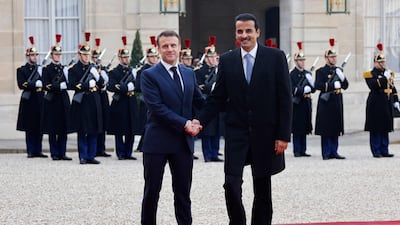
The leaders pose for the cameras. AFP -
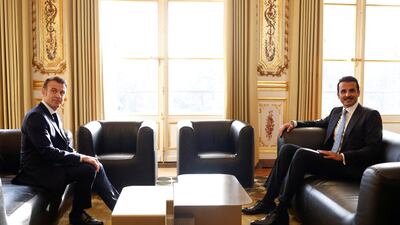
Mr Macron and Sheikh Tamim sit down for talks. Reuters -
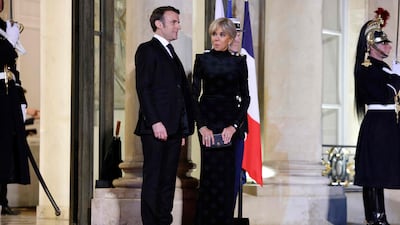
Mr Macron and his wife Brigitte wait for the arrival of Sheikh Tamim. AFP -
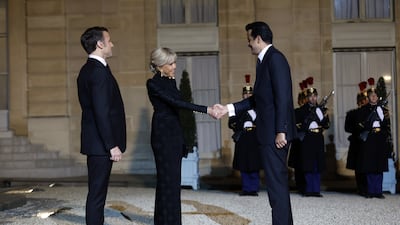
Ms Macron greets Sheikh Tamim as her husband watches on. EPA -
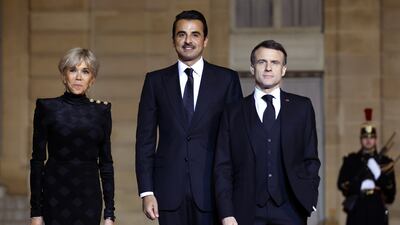
The Macrons and Sheikh Tamim at Elysee Palace. EPA -

Paris Saint-Germain forward Kylian Mbappe arrives for a state dinner with Mr Macron and Sheikh Tamim. AP -
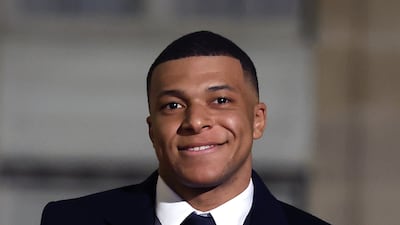
Mbappe is also captain of the French national football team. EPA -
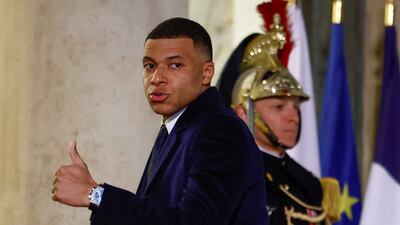
Mbappe gives the thumbs-up before the state dinner in honour of Sheikh Tamim. Reuters -
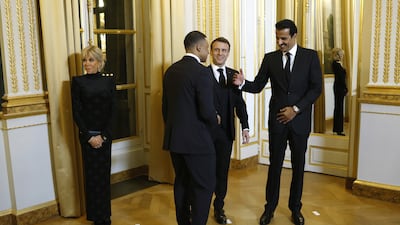
Sheikh Tamim is pleased to greet Mbappe as Mr Macron and his wife watch on. EPA -
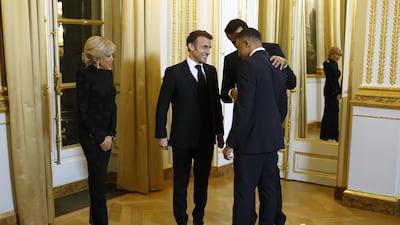
Sheikh Tamim is pleased to greet Mbappe as Mr Macron and his wife watch on. EPA -
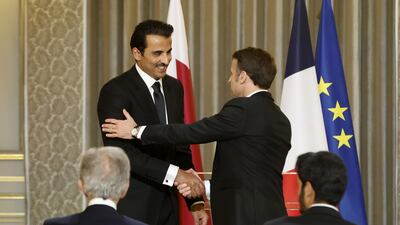
Mr Macron welcomes Sheikh Tamim to the reception. EPA -
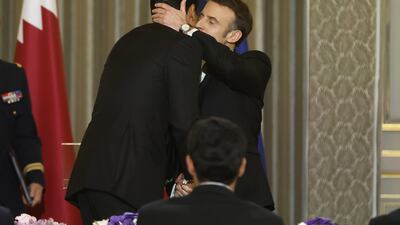
Mr Macron and Sheikh Tamim. EPA -
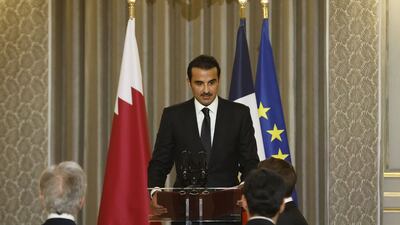
Sheikh Tamim delivers a speech before the official dinner, with flags of Qatar, France and the EU in the background. AFP -
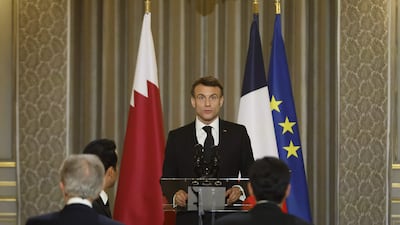
Mr Macron delivers his speech before the dinner. AFP -
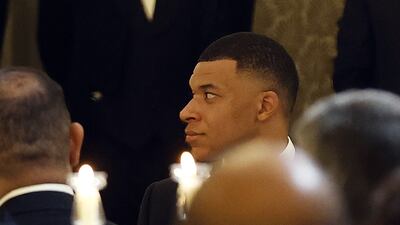
Mbappe at the state dinner. EPA


Energy shift
Meanwhile, energy executives at the event agreed that climate policies should focus on reducing emissions from existing sources rather than solely supporting solar and wind energy.
“We made a big mistake by narrowing the solution set too soon, and we haven't been serious because we've taken out the companies who actually have the best understanding of the system and, frankly, a lot of the capabilities required to transition this system,” said Exxon Mobil chief executive Darren Woods.
“We should stay focused on the problem statement, which is emissions … and let every company, every sector [and] all technologies compete for the most cost-efficient way to reduce those emissions.”
In response to a query about the impact of growing natural gas demand on energy transition goals, Mr Al Kaabi said climate pledges and promises were made by politicians “who don't understand the details of how you can achieve these transitions”.
It became “in vogue” for policymakers to endorse environmentally friendly initiatives, such as aiming for net-zero emissions and supporting green policies, the minister said.
But when the “reality kicks in, you are asking – do you actually back off some of the targets?”, he added.
“I think the targets were overstretched targets that you can't reach anyway.”

