


The International Energy Agency (IEA) agreed on Tuesday to release 60 million barrels of oil from emergency stocks to bring stability to energy markets as the Russia-Ukraine crisis intensifies.
The Paris-based agency said Russia’s military offensive had come against a backdrop of “already tight global oil markets, heightened price volatility, commercial inventories that are at their lowest level since 2014 and a limited ability of producers to provide additional supply in the short term”.
“The situation in energy markets is very serious and demands our full attention. Global energy security is under threat, putting the world economy at risk during a fragile stage of the recovery,” IEA’s executive director Fatih Birol said.
Brent, the global benchmark for two thirds of the world's oil, was 8.75 per cent higher at $106.54 per barrel at 10.42pm UAE time on Tuesday. West Texas Intermediate, the gauge that tracks US crude, was up 9.66 per cent, trading at $104.97 a barrel.
-
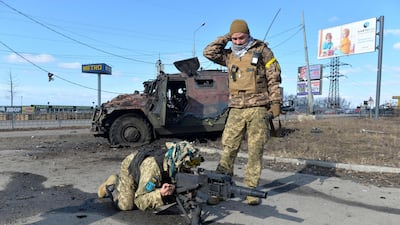
Ukrainian fighters test an automatic grenade launcher taken from a destroyed Russian infantry vehicle in Kharkiv. AFP -
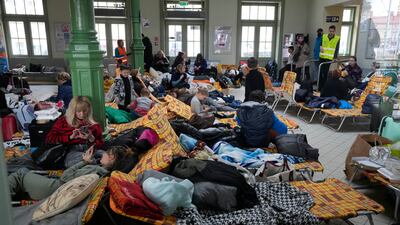
Refugees from Ukraine rest after arriving at a railway station in Przemysl, Poland. AP -
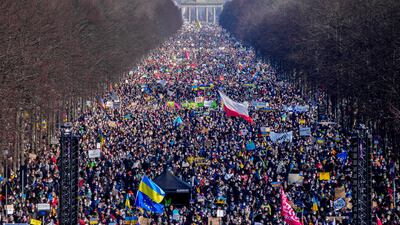
People walk down 17th June Street in Berlin before a rally against Russia’s invasion of Ukraine. AP -
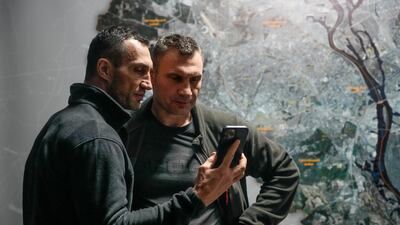
Vitali Klitschko, Mayor of Kiev and former heavyweight boxing champion, right, and his brother, Wladimir. AP -
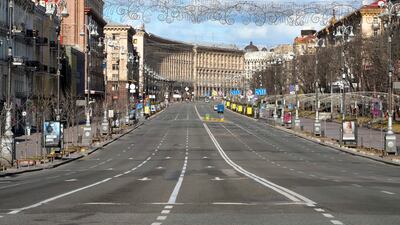
Khreshchatyk, Kiev’s main street, lies empty as a curfew comes into effect. AP -
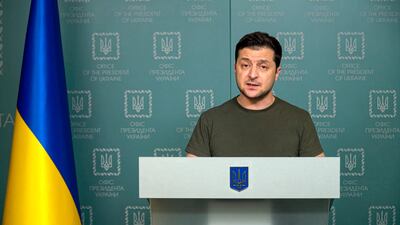
Ukrainian President Volodymyr Zelenskyy speaks to the nation from Kiev. AP -
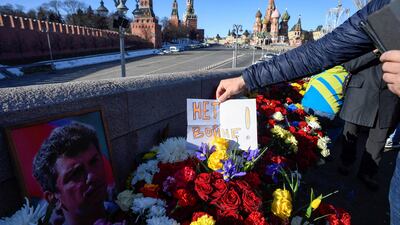
On February 27, the seventh anniversary of the assassination of opposition leader Boris Nemtsov, a note stating ‘No to war!’ is placed among flowers on the central Moscow bridge on which he was shot. AFP -
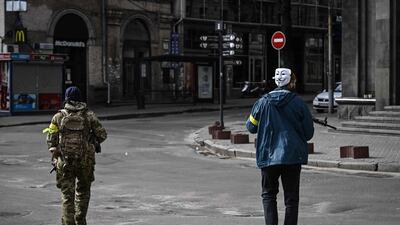
A member of the Ukrainian forces, wearing the Guy Fawkes mask popularised by Anonymous, patrols central Kiev. AFP -
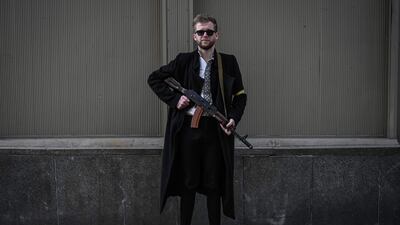
Sviatoslav Yurash, 26, a politician from President Volodymyr Zelenskyy’s Servant of the People party, poses with his assault rifle as he patrols Kiev. AFP -
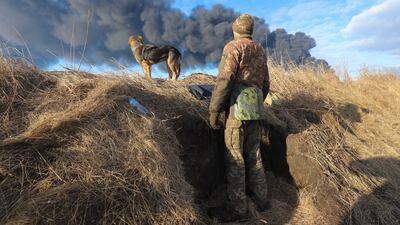
A Ukrainian serviceman and his dog look at smoke from a burning fuel storage depot after a Russian missile attack near Kiev. EPA -
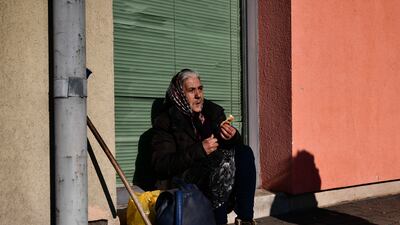
A refugee who fled conflict in Ukraine rests at a railway station after arriving in Zahony, Hungary. AP -
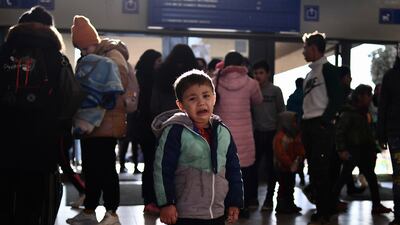
A refugee boy who fled Ukraine cries at the railway station in Zahony, Hungary. AP -
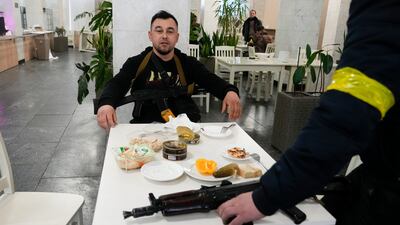
Civil defence members eat during a break at City Hall in Kiev. AP -

An Indian student is embraced by his family at Chennai Airport after returning from Ukraine. EPA -

Smoke is seen rising from behind buildings following bombings in Kiev. Getty -

An armed civil defence woman holds a Kalashnikov assault rifle while patrolling an empty street in Kiev. AP -
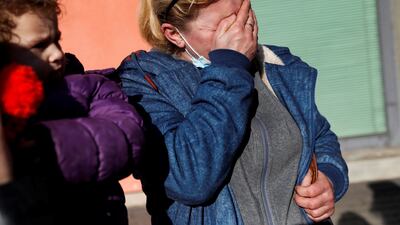
A woman fleeing from Ukraine cries as she waits to be taken to a shelter in Zahony, Hungary. Reuters -
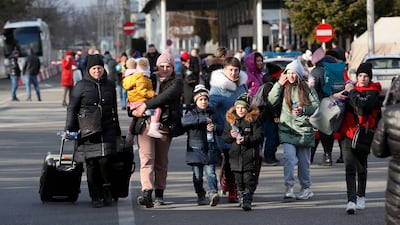
Ukrainian refugees cross the Romanian border at Siret, northern Romania. EPA -
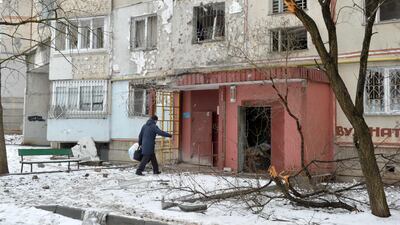
A residential building damaged by shelling in Kharkiv, north-eastern Ukraine. AFP -
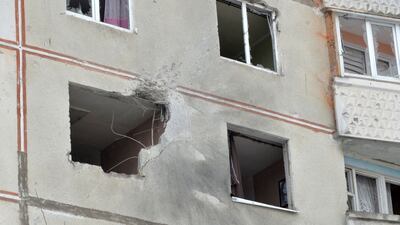
Apartments damaged by shelling in Kharkiv. AFP -

A girl protests against Russia's military operation in Ukraine, in front of the Russian embassy in Tel Aviv. AFP -

Young women protest in Tbilisi, Georgia with their hands painted in the colors of the Ukrainian flag. Getty -
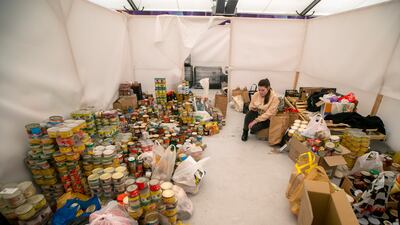
Supplies for Ukrainian refugees at one of three camps set up at the MoldExpo exhibition center, in Chisinau, Moldova. EPA -
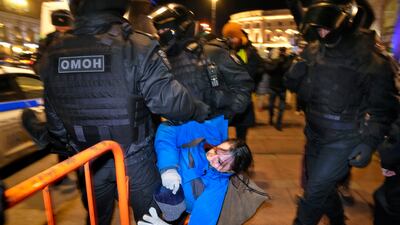
Police detain a demonstrator during a protest against Russia's incursion into Ukraine in St Petersburg. AP -
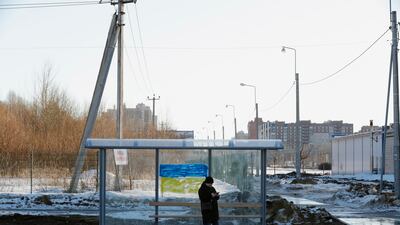
A man waits at a bus stop in St Petersburg, which has been with a painted in the colours of Ukraine's national flag. EPA -
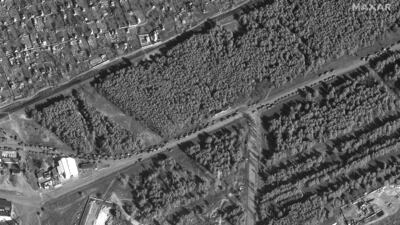
Russian ground forces approaching Nova Kakhovka, southern Ukraine. AP -

A woman holds her daughter's hand as they arrive by bus from the Polish-Ukrainian border. Getty -

A man drives his car full of food supplies to deliver to the Ukrainian side of the border, where thousands wait to enter Poland. Getty -
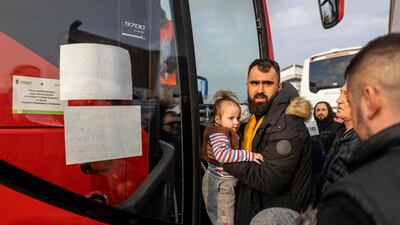
Refugees arrive with buses from the Medyka pedestrian border crossing, in Przemsyl, eastern Poland. AFP -
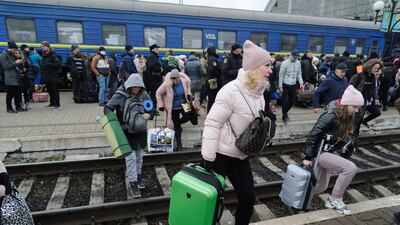
People gather to catch a train and leave Ukraine for neighboring countries at the railway station in Lviv, western Ukraine. AP -
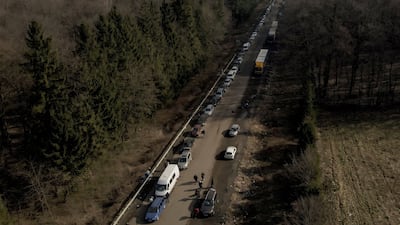
Cars form a line that stretches 35 kilometres from the Shehyni border crossing to Poland as people try to flee Russia's military operation against Ukraine. Reuters -
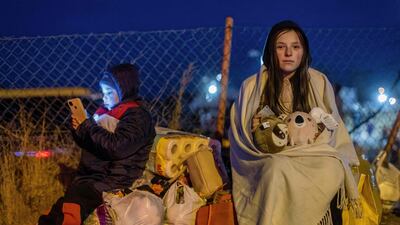
Helena, right, and her brother Bodia, left, from Lviv, wait at the Medyka border crossing in eastern Poland. AFP -
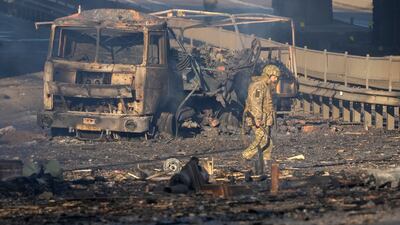
A Ukrainian soldier walks past debris of a burning military truck, on a street in Kiev. AP -
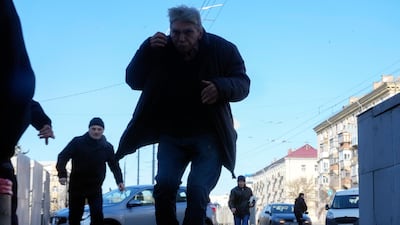
People run for cover during the shelling on the city of Kiev. AP -
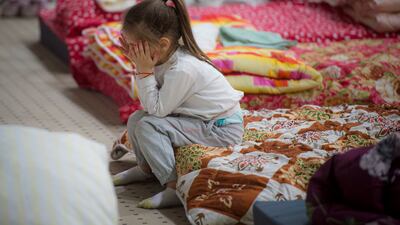
A child refugee who fled the conflict in Ukraine covers her face in the event hall of a hotel offering shelter in Siret, Romania. AP -
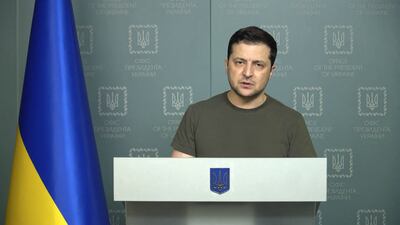
Ukrainian President Volodymyr Zelenskyy holding a briefing in Kyiv. He said that Azerbaijan's President Ilham Aliyev and Turkey's Recep Tayyip Erdogan have suggested talks with Russia, which 'can only be welcomed'. AFP -
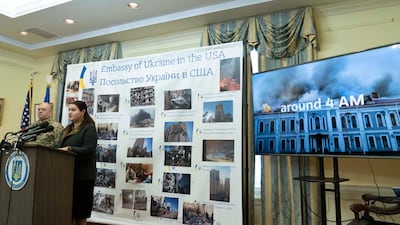
Ukraine's ambassador to the US, Oksana Markarova, at a news conference in the embassy of Ukraine, Washington. AP -
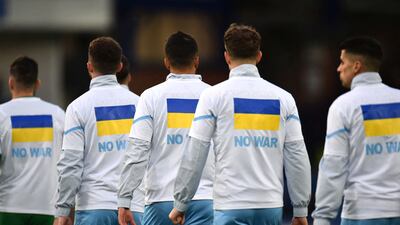
Manchester City footballers wear t-shirts in support of Ukraine before a match. Reuters -

Ukrainian refugees arrive in Warsaw by train from Kiev. EPA -
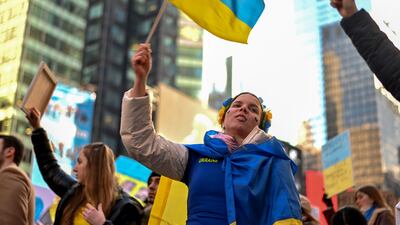
A woman waves a Ukrainian flag during a rally in Times Square, New York City. AFP -
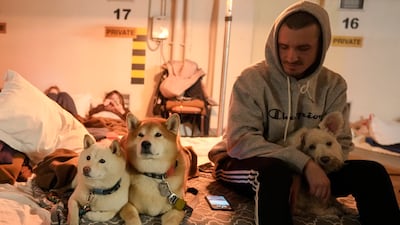
A man sits next to his dogs in an underground car park turned into a bomb shelter during an air raid alert in Kiev. AP -
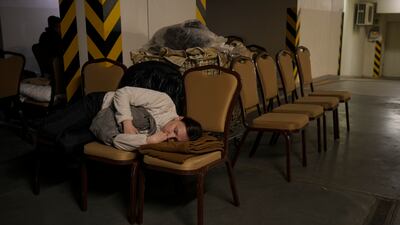
A woman sleeps on chairs in a Kiev bomb shelter. AP -
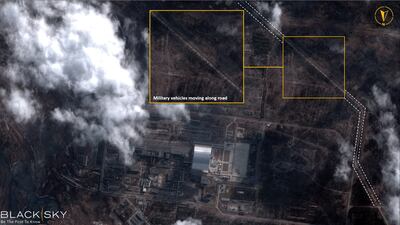
A satellite image with overlaid graphics shows military vehicles alongside the Chernobyl Nuclear Power Plant. Reuters -
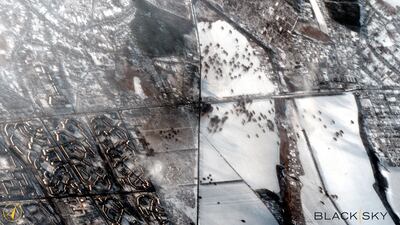
A satellite image shows the effects of shelling in open fields along Soborna Street in the north-east suburbs of Kharkiv. Reuters -
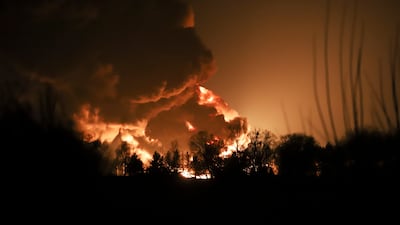
A big fire at a petroleum storage depot after a Russian missile attack, in Vasylkiv, near Kiev. EPA -
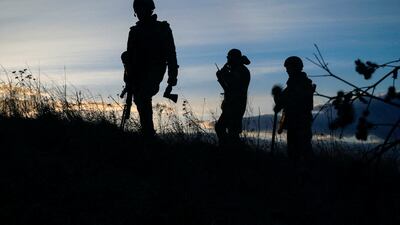
Ukrainian servicemen take positions at a military airbase in the Kyiv region. Reuters


IEA held its extraordinary governing board meeting — at the ministerial level — on Tuesday to discuss the impact of Russia's military offensive in Ukraine on the oil market. The meeting was chaired by the US Secretary of Energy Jennifer Granholm.
IEA’s executive director
IEA said it wanted to send a “unified and strong message to global oil markets" that there would be no shortfall in supplies.
IEA members hold emergency stockpiles of 1.5 billion barrels. The announcement of an initial release of 60 million barrels, or 4 per cent of the reserves, is equivalent to 2 million barrels per day for 30 days.
The co-ordinated drawdown is the fourth in the history of the IEA, which was created in 1974. Previous collective actions were taken in 2011, 2005 and 1991.
The energy body supported sanctions imposed by the international community against Russia.
“I am also happy that our member countries committed to do their utmost to support Ukraine in terms of fuel supply,” Mr Birol said. The IEA governing board, he said, would invite Ukraine's Energy Minister German Galushchenko as a special guest to its ministerial meeting later this month.
Commenting on IEA's move, the White House press secretary Jen Psaki said it was another "example of partners around the world condemning Russia’s unprovoked and unjustified invasion of Ukraine and working together to address the impact of President (Vladimir) Putin’s war of choice”.
“As part of this agreement, President (Joe) Biden will authorise the Department of Energy to release 30 million barrels from the US Strategic Petroleum Reserve,” he said.
IEA member states also agreed to continue monitoring markets and consider further releases as necessary, Mr Psaki said. “We are prepared to use every tool available to us to limit disruption to global energy supply.
“We will also continue our efforts to accelerate diversification of energy supplies away from Russia and to secure the world from Moscow’s weaponisation of oil and gas.”
Russia is one of the top crude producers in the world.
It is the world’s third largest oil producer and the largest exporter, according to IEA. Its exports of about 5 million bpd of crude oil represent roughly 12 per cent of global trade — and its approximately 2.85 million bpd of petroleum products represent about 15 per cent of global refined product trade. About 60 per cent of Russia’s oil exports go to Europe and another 20 per cent to China.
Russia is also the second-largest producer of natural gas in the world. In 2020, the country produced about 10.2 million bpd of crude oil and natural gas condensate, placing it second after the US, with Saudi Arabia in third place, according to the 2021 BP Statistical Review of World Energy.
Industry analysts said they were starting to see the impact of sanctions on Russian oil exports and the challenges they pose.
“The oil rally has seriously accelerated today, breezing past $100 and gathering momentum along the way. That's despite the US once again leading discussions around a co-ordinated release of oil reserves of about 60-70 million barrels, which is clearly doing little to calm the nerves,” said Craig Erlam, senior market analyst for the UK and Europe, Middle East and Africa at Oanda.
“We saw an underwhelmed reaction when this happened in November as well and that was before Russia invaded Ukraine.”
IEA also discussed Europe’s significant reliance on Russian natural gas and the need to reduce it by looking to other suppliers. On Thursday, the IEA secretariat will release a 10-point plan for how European countries can reduce their reliance on Russian gas supplies by next winter.
The Opec+ group of oil producers is expected to meet on Wednesday amid heightened geopolitical tensions due to the escalation of the Russia-Ukraine crisis that propelled crude prices above $100 a barrel.
The situation for the super group that has been shepherding oil prices since 2016 could not be more sensitive as energy ministers of the bloc prepare to convene an online meeting.

