


Global oil demand will increase beyond pre-pandemic levels of 100 million barrels per day in 2023, accelerated by economic recovery in India and China, according to the president and chief executive of Occidental Petroleum.
“I think we will get to a solid 100 million [bpd] demand or maybe a little bit more next year. But I think that by 2023 we'll start seeing those [levels] because I think China and India certainly have the opportunity to grow … both will have healthy economies once we get past the pandemic”, Vicki Hollub told The National in an interview.
Oil demand is expected to grow by 5.5 million bpd in 2021 and 3.3 million bpd in 2022 to 99.6 million bpd, according to the International Energy Agency. Opec expects demand for crude to be higher, reaching 100.6 million bpd next year.
The 100 million bpd mark for global oil demand has already been reached, according to "Big Oil" companies such as BP.
Demand for crude and linked products slumped last year as the spread of Covid-19 curtailed air and ground transportation. Oil prices fell, with US crude benchmark West Texas Intermediate trading briefly below zero as supply outpaced demand.
However, with border restrictions being eased and economies opening up, oil prices are currently trading at multiyear highs.
Key oil benchmarks – Brent and West Texas Intermediate – have gained more than 60 per cent since the beginning of the year and are hovering above $80 per barrel.
However, oil trading between $80 and $85 per barrel “is too high”, said Ms Hollub.
“What Opec+ has done has been what the world needed and [we] applaud them for being able to accomplish what they did because again, you'd have to have a market where supply and demand are balanced.”
Opec+, the group of producers headed by Saudi Arabia and Russia, is on track to add 2 million bpd of supply by the end of the year, reversing historic curbs it executed in 2020 amid a record demand crunch.
Ms Hollub, who heads the Permian basin's largest producer, said output from the US, the world's largest producer of crude, will remain constrained.
-
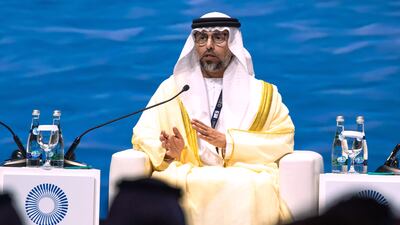
Suhail Al Mazrouei, Minister of Energy and Infrastructure, speaks at the Abu Dhabi International Petroleum Exhibition and Conference. All photos: Victor Besa / The National -
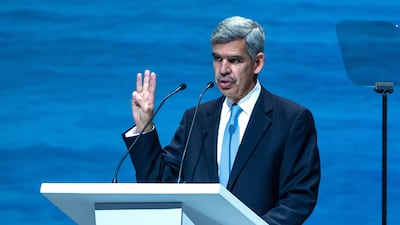
Mohamed El-Erian, chief economic adviser of Allianz, addresses a session at Adipec. -
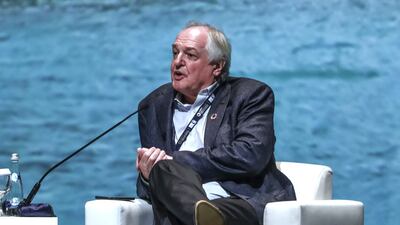
Paul Polman, former chief executive of Unilever and co-chair at Global Commission for Economy and Climate, attends a session at Adipec. -
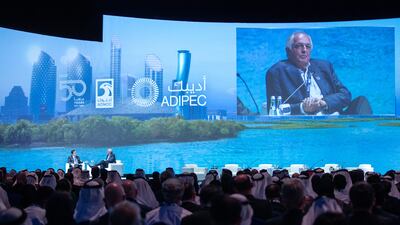
Adipec participants attend a session with Paul Polman, former chief executive of Unilever and co-chair at Global Commission for Economy and Climate, holding centre stage. -
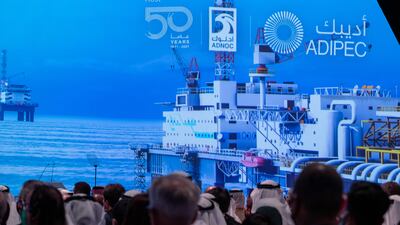
Adipec will run from November 15 to November 18 at the Abu Dhabi National Exhibition Centre. -
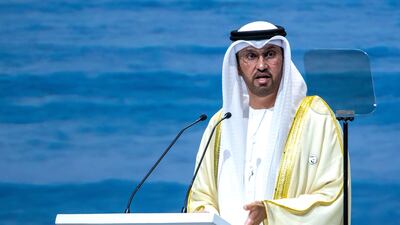
Dr Sultan Al Jaber, Minister of Industry and Advanced Technology, says oil and gas industry will have to invest more than $600bn annually until 2030 to keep up with expected demand. -
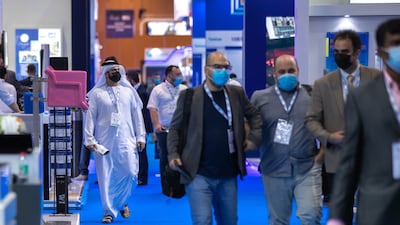
Adipec 2021 is the first major global event after Cop26, which concluded on Sunday. -

Adipec is said to be a critical bellwether for the fortunes of the energy industry in the middle of great change. -
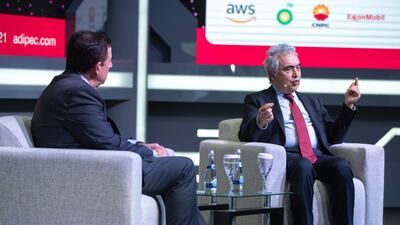
Dr Fatih Birol, left, executive director of International Energy Agency, and John Defterios, Professor of Business at NYU Abu Dhabi attend an Adipec session. -

This year's event is taking place after the UAE, Saudi Arabia and Bahrain all committed to achieving a net-zero future by the middle of the century. -
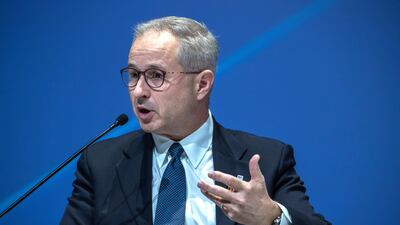
Alfred Stern, chief executive of OMV, attends a panel discussion on 'What is the New Normal for Demand?' -
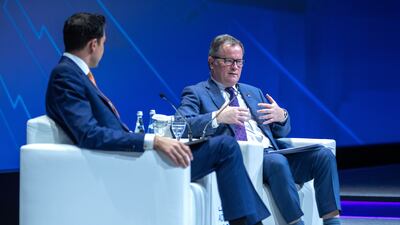
Yousef Gamal El Din, anchor of Bloomberg, and Russell Hardy, chief executive at Vitol, during a session on 'Trading Spotlight: The Diversification of Energy Markets'. -
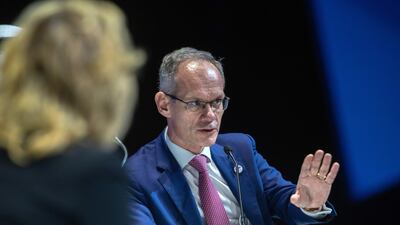
Nicolas Terraz, of TotalEnergies, attends Adipec session on 'What is the New Normal for Demand?' -
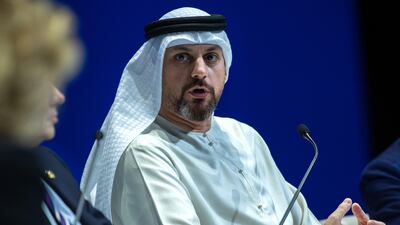
Yaser Al Mazrouei, executive director of Upstream Directorate at Adnoc, attends the Adipec session on 'What is the New Normal for Demand?' -
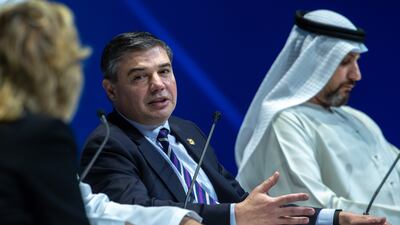
Lorenzo Simonelli, chairman and chief executive of Baker and Hughes, during the Adipec session on 'What is the New Normal for Demand?' -
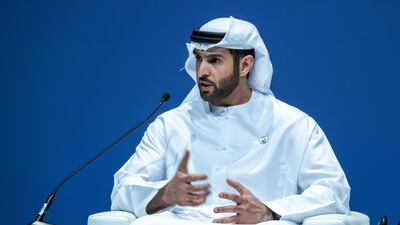
Mansoor Al Hamed, chief executive of Mubadala Petroleum, attends the Adipec session on 'What is the New Normal for Demand?' -

Sheikh Mansour bin Zayed, Deputy Prime Minister and Minister of Presidential Affairs, attends the opening ceremony at the 37th Abu Dhabi International Petroleum Conference and Exhibition. Photo: @HHMansour via Twitter -
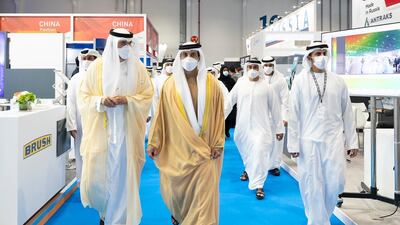
Sheikh Mansour bin Zayed and Dr Sultan Al Jaber take in the atmosphere at the 37th Adipec. Photo: @HHMansour via Twitter


“Ultimately, I still think that production in the US would not get back above probably 12 [million bpd] and a half or so. So, we won't get back to 13 [million bpd]," she said.
Occidental will continue to tap into output growth from its concessions in the Middle East, particularly in the UAE and Oman.
The company recently won rights to develop Blocks 3 and 5 in Abu Dhabi as part of the national oil company's second bidding round.
Ms Hollub, who declined to comment on the potential volumes of the untapped reserves, said exploration of Block 5, which is across the border from its concession in Oman, was “very exciting".
Occidental is also trying to lower the carbon intensity of barrels produced in the US and around the world through its direct air carbon capture programme, in line with its pledge to reach net-zero emissions by the middle of the century.
The company is developing a complex in Texas with the capacity to capture and sequester 1 million tonnes of carbon dioxide annually. The project, currently at the design phase, will be completed by 2024.
The energy industry is the biggest source of carbon dioxide emissions globally and faces growing scrutiny over its impact on global warming.
The carbon capture and sequestration sector could have the potential to become “a $3 trillion to $5 trillion industry”, Ms Hollub, said.
“It is going to be a big industry and that is why when we talk about Oxy becoming a carbon management company. That is what we are referring to.
“We can pretty much offset the carbon emissions from any barrels that we operate anywhere by using this direct air capture technology,” she said.

