

Tension between the White House and the Federal Reserve is reaching a boiling point, with US President Donald Trump increasing his attacks on chairman Jerome Powell in recent days.
Fears that the US President could fire Mr Powell rose on Wednesday after reports that Mr Trump had indicated to House Republicans that he would be open to the move.
Mr Trump confirmed that he polled Republicans on the issue on Tuesday night but denied that he was planning to fire Mr Powell. The episode prompted whiplash in US markets.
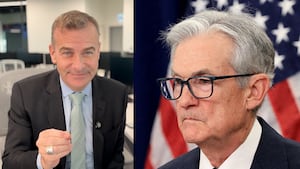
Sacking the Fed chair could lead to a constitutional crisis that would probably upset financial markets, shatter decades of historical norms and lead to significant uncertainty in the US economy.
Here is what could happen if Mr Trump does try to fire the Fed chairman.
Federal Open Market Committee in question
Unlike most federal agencies, the Federal Reserve enjoys broad independence from the White House.
The Federal Reserve Act states that the Fed can make monetary policy decisions without interference from the executive or legislative branches. Fed officials can only be fired “for cause”, which is generally thought to mean malfeasance or neglect of duty. No Fed chair has ever been fired.
Mr Powell maintains that Mr Trump has no authority to fire him – “not permitted under the law”, he said in November – and that he will serve out his term as Fed chairman until May 2026. He has not indicated if he will serve out his term as Fed governor, which is up in 2028.
“Powell would almost certainly sue against any removal in court,” Derek Tang, an economist at LHMeyer/Monetary Policy Analytics in Washington, wrote to clients.
Should that happen, the case would probably go before the Supreme Court. The court signalled in a May ruling that, unlike other independent agencies, a president cannot fire a Fed official over a policy dispute.
Mr Trump said he wants a “low interest” person to helm the Federal Reserve after Mr Powell. National Economic Council director Kevin Hassett, former Fed governor Kevin Warsh and Treasury Secretary Scott Bessent are considered to be the front-runners for the job. Fed Governor Christopher Waller is believed to be a possible contender, but a long shot.
Mr Bessent, who is leading the replacement search, told Bloomberg on Monday the process to pick a new Fed chair has begun.

But replacing Mr Powell with someone who backs Mr Trump's low-interest rate regime would not guarantee lower interest rates.
The president appoints only eight of the 12 members on the Federal Open Market Committee. Regional Fed banks appoint their own presidents who serve rotating terms on the committee. The New York Fed, which has a permanent vote on the committee, also selects its own president.
Minutes released from the Fed's most recent meeting showed that only a couple Fed officials would support a rate cut this month. Public comments from officials show that they support Mr Powell's wait-and-see approach.
“Firing Powell alone would not satisfy Trump’s ideal, but the mere discussion certainly undermines independence. The damage might be done,” Mr Tang wrote.
A financial market meltdown?
The integrity of the Federal Reserve's independence will also be closely monitored by financial markets. The Fed's independence is seen as sacrosanct, with officials' staggered terms designed to ensure that monetary policy decisions are made with a long-view approach rather than for short-term political gains.
“We have all been schooled in the independence of the Fed,” said Peter Andersen, founder of Andersen Capital Management in Boston.
“If that were to be somewhat more nuanced and maybe a grey area … I think that would weaken the confidence that capital markets have in the Federal Reserve system.”
US markets gave Mr Trump something of a preview of what would happen if he were to fire Mr Powell.
Andersen Capital Management
The Dow Jones Industrial Average and S&P 500 both fell 0.6 per cent after reports that Mr Trump was moving closer to firing the Fed chairman, only to rebound after he said such an action was unlikely.
The two-year Treasury yield fell to 3.892 per cent while the yield on the 10-year Treasury rose to 4.48 per cent before settling at 4.46 per cent. The two-year Treasury is more sensitive to Fed rate moves, while the 10-year is more influenced by inflation expectations and future policy decisions.
It could also call into question foreign investment in the Treasury market at a time when Mr Trump's tariff policy has already brought fears of the possible reallocation of global capital. The US market has for decades been considered one of the most stable investment destinations, with the 10-year Treasury considered to be a safe-haven asset.
“It could have ripple effects in that foreign markets tend to hold on high esteem US Treasuries and the Treasury market,” said Mr Andersen.
“If that were to be questioned, even a subtle basis of the independence and how that would impact the overall impact of the Treasury, and the fact it is the highest calibre of currency in the world, that would come under some stress.”
US banking executives this week have voiced support for the Federal Reserve's independence, with JPMorgan Chase chief executive Jamie Dimon saying that interfering with the Fed could have “adverse consequences”.
Goldman Sachs chief executive David Solomon told CNBC that the Fed's independence is critical. “Stability in the Fed seat, I think, is important,” he said.
Bank of America Group chief executive Brian Moynihan also told CNBC that the Fed's independence is “critical” to the US.

