


Live updates: Follow the latest news on Israel-Gaza
Israel’s economy contracted by an annualised 19.4 per cent in the fourth quarter as the war in Gaza rages on, the country's Central Bureau of Statistics said on Monday.
Overall, its economy grew 2 per cent for the whole of 2023, compared to 6.5 per cent in the previous year.
“The contraction of the economy in the fourth quarter of 2023 was directly affected by the outbreak of the Iron Swords War on October 7,” the statistics agency said in an initial estimate on Monday.
The war in Gaza, which began when Hamas attacked southern Israel, killing about 1,200 people and taking about 240 hostages, has turned into a humanitarian crisis.
More than 29,000 Palestinians have been killed, with 85 per cent of the enclave's 2.3 million people displaced, and the country's economy has collapsed.
Israel's economy has also been hit hard, with Moody’s Investors Service downgrading the country's credit rating this month due to the war.
The country, which had a credit rating of A1, was downgraded to A2 with a negative outlook, the ratings agency said.
“The main driver for the downgrade of Israel's rating is Moody's assessment that the continuing military conflict with Hamas, its aftermath and wider consequences materially raise political risk for Israel as well as weaken its executive and legislative institutions and its fiscal strength, for the foreseeable future,” it said.
In the coming years, Israel's budget deficit will be significantly larger than expected before the conflict, Moody’s said.
"This downgrade [in GDP] reflects our view that the war will continue to hit the economy in 2024, through weak travel and tourism, slower private consumption growth and extended delays to fixed investment,” Elliot Garside, economist (Israel) at Oxford Economics, told The National.
“We think that the peak impacts of the war are over and expect the recovery to slowly begin over the next few quarters, with tourist arrivals remaining below prewar levels for the duration of 2024.”
The “larger-than-expected” GDP contraction in the fourth quarter “highlights the degree to which the Israeli economy has been affected by the conflict, particularly on the private activity side”, Goldman Sachs said in a report.
“That said, we view this release as mostly backward-looking, as high-frequency indicators [such as] Bank of Israel’s State of the Economy Index, our Current Activity Indicator and credit card activity data are showing signs that activity has recovered materially from the initial shock,” said Tadas Gedminas, economic research analyst at Goldman Sachs.
The GDP release also raises the likelihood that the Bank of Israel will deliver further near-term rate cuts, he added.
-
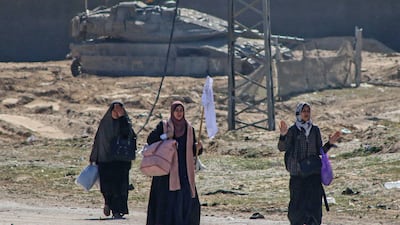
Displaced Palestinians hold a white flag as they pass an Israeli tank position while fleeing the Hamad Town district of Khan Younis. Bloomberg -
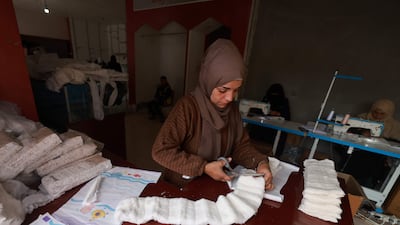
A Palestinian woman cuts material to be used for sewing nappies at a workshop in Rafah. AFP -
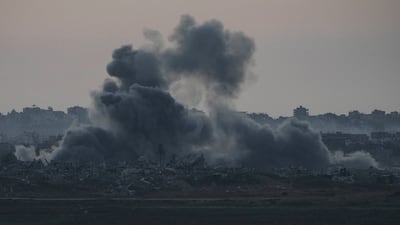
Smoke rises following an explosion in Gaza, as seen from southern Israel. AP -
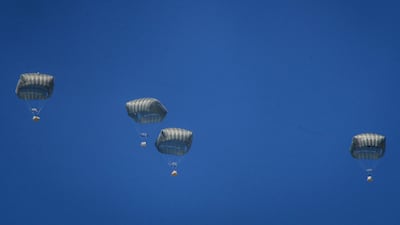
Parachutes carrying relief for Palestinians drop from an Egyptian Air Force cargo plane over central Gaza. Bloomberg -
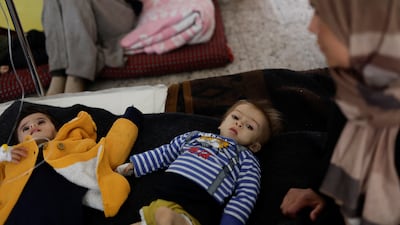
A Palestinian boy who is suffering from malnutrition is treated at a healthcare centre amid widespread hunger. Reuters -
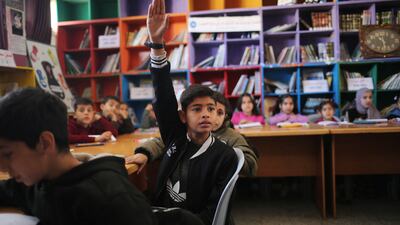
Palestinian children attend an English class in the library of the school housing displaced people in Rafah, the southern Gaza Strip. AFP -
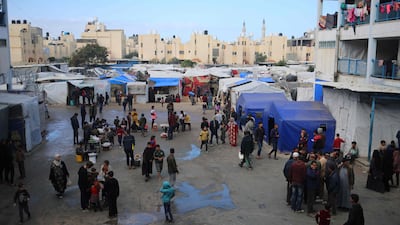
An UNRWA-run school housing displaced Palestinians in Rafah. AFP -
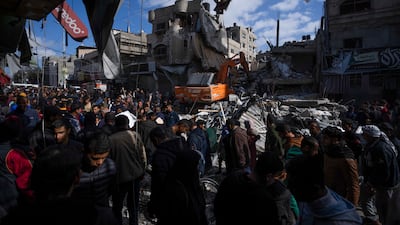
Palestinians search for bodies and survivors in the rubble of a residential building destroyed in an Israeli air strike in Rafah. AP -
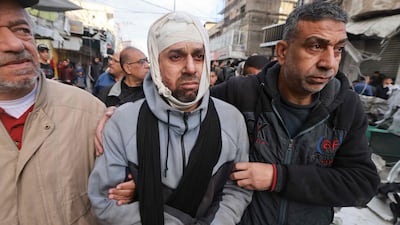
A wounded Palestinian man who lost his wife and daughter walks past a neighbours' house destroyed by Israeli bombing in Rafah. AFP -
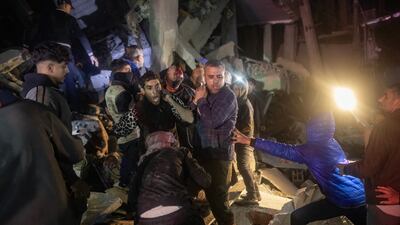
An injured man is rescued from the rubble after an Israeli air strike on the Rafah camp in Gaza. EPA -
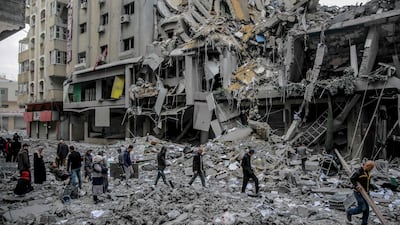
Palestinians walk amid the rubble of houses destroyed by the Israeli bombardment of Gaza city. AFP -

Aid is dropped into Gaza from US military aircraft. Reuters -
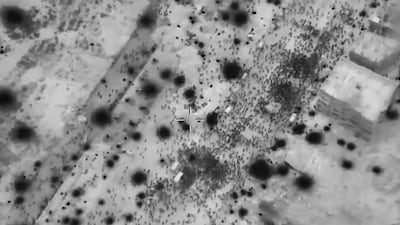
Palestinians gather at air lorries in Gaza. More than 100 were killed when Israeli troops opened fire. AP -
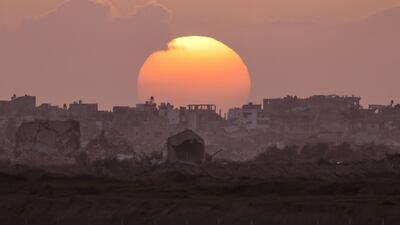
The sun sets behind destroyed buildings in Gaza. AFP -

A Palestinian man enters a heavily damaged house following an Israeli strike in Rafah, in the southern Gaza Strip. AFP -
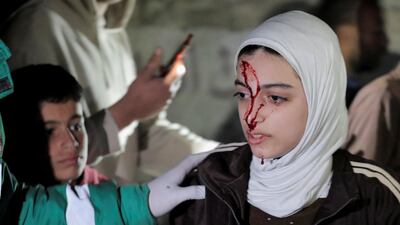
A wounded Palestinian is assisted at the site of an Israeli strike in Deir Al Balah, in the central Gaza Strip. Reuters -
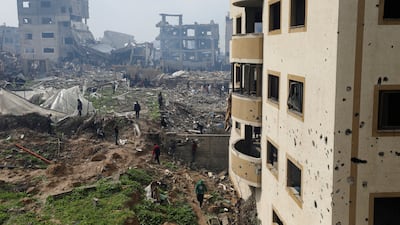
Palestinians gather in the hope of getting bags of flour carried by air lorries near an Israeli checkpoint in Gaza city, as the enclave's residents face crisis levels of hunger. Reuters -

Palestinian children wait to receive food cooked by a charity kitchen as the conflict between Israel and Hamas continues in Gaza. Reuters -
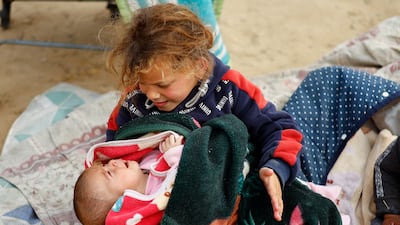
A displaced Palestinian child holds a crying baby in a camp in Rafah, in the southern Gaza Strip. Reuters


Israel’s central bank chief said this month that the government must take action to tackle the economic challenges raised by Moody's.
“In order to strengthen the trust of the markets and of the ratings agencies in the Israeli economy, it is important that the government and the Knesset act to deal with the economic issues raised in the report,” Bank of Israel governor Amir Yaron said this month.
In October, S&P lowered Israel’s credit outlook to negative, from stable, citing the risk that the conflict could broaden, with a more pronounced effect on the country's economy.
Last month, the Bank of Israel cut interest rates by 0.25 basis points, marking the first reduction since April 2020, as part of efforts to stabilise the markets, support the economy and “reduce uncertainty” amid the Gaza war.
The Bank of Israel estimates the cost of the conflict for the years 2023-2025 to stand at about 255 billion shekels ($64.4 billion) or 13 per cent of the 2024 forecast GDP, which includes both higher defence and civilian spending as well as lower tax revenue.
Last year's budget deficit was raised from less than 2 per cent to 4.2 per cent of GDP in the supplementary budget approved in mid-December. The revised budget for this year sets a deficit of 6.6 per cent of GDP, compared with a pre-conflict forecast of about 2.5 per cent.

