The World Bank's Ajay Banga and the IMF's Kristalina Georgieva fist-bump during a panel discussion in Marrakesh. EPA

World needs to come together to boost climate change mitigation efforts


Sarmad Khan
  • English
  • Arabic

The world needs to come together, end the culture of pointing fingers, tap every pool of available resource and adopt innovative financing solutions to accelerate climate change mitigation efforts, the heads of the World Bank and the International Monetary Fund have said.

Solutions including a voluntary carbon market as well as mobilising private sector financing should be prioritised, as the world is running out of time in its bid to achieve its climate goals, Ajay Banga, president of World Bank, and Kristalina Georgieva, managing director of the IMF, said during a panel discussion on Wednesday.

With stretched finances and a higher interest rate environment, governments alone do not have the financial muscle for all that is required for mitigation and adaptation.

“All this comes from the fact that if all this money is required to get mitigation or adaptation [going], then where's it going to come from? It cannot come from government coffers,” Mr Banga told delegates on the sidelines of the IMF and World Bank annual meetings in Marrakesh.

“It's not going to come from only the multilateral development banks, no matter how much I would like to believe that we are the solution to everything. All of us put together, our balance sheets and our capacity is up to a certain amount, very valuable, but not enough.”

Part of the solution is mobilising capital from the private sector. However, that is time-consuming process as private sector investors face risks including political volatility, sudden change in regulations as well as foreign currency fluctuations.

The financing needed to meet global adaptation and mitigation goals is estimated at trillions of dollars annually until 2050. However, only about $630 billion a year is being spent currently around the world, with only a fraction of that amount going to developing countries, IMF deputy managing director Bo Li said in February.

Emerging market and developing economies will require substantial investment to mitigate climate changes, 80 per cent of which will have to come from the private sector, for these countries to achieve their net-zero emissions goals by 2050.

Emerging and developing nations, which currently emit about two thirds of greenhouse gases globally, will need about $2 trillion annually by 2030 to reach their climate targets, the IMF said in a report in earlier this month, citing International Energy Agency estimates.

The projected investment is a fivefold increase from the current $400 billion of climate investments planned over the next seven years, and the majority of the required funding needs to flow into the energy industry, the Washington-based fund said at the time.

The World Bank president, however said “we should be careful how much we tout the private sector as a solution”.

“In terms of pace, I believe it takes time, because these things don't change overnight,” added Mr Banga, who had a long corporate career and was chief executive of MasterCard before taking the helm of the World Bank.

The world currently spends about $1.25 trillion on subsidising fuel, agriculture and fisheries, which in turn have an environmental impact of between $5 trillion to $6 trillion a year, and withdrawing some of those subsidies could free up resources for climate action.

“I'm not saying you can get rid of all of those. I consider some of those subsidies mission critical for the social contract between a government and its citizens, [but] I don't believe that $1.25 trillion qualifies” for these subsidies, Mr Banga said.

  • Kristalina Georgieva, managing director of the International Monetary Fund, on the opening day of the fund's annual meetings. Bloomberg
    Kristalina Georgieva, managing director of the International Monetary Fund, on the opening day of the fund's annual meetings. Bloomberg
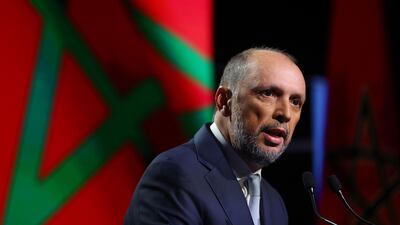
  • Mohcine Jazouli, Morocco's delegate minister in charge of investment and public policies, speaks on the opening day of the annual meetings of the IMF and World Bank in Marrakesh. Bloomberg
    Mohcine Jazouli, Morocco's delegate minister in charge of investment and public policies, speaks on the opening day of the annual meetings of the IMF and World Bank in Marrakesh. Bloomberg
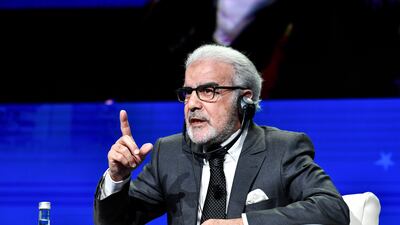
  • Abdellatif Jouahri, governor of Morocco's central bank, at the IMF meeting in Marrakesh. EPA
    Abdellatif Jouahri, governor of Morocco's central bank, at the IMF meeting in Marrakesh. EPA
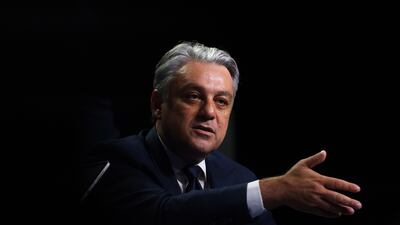
  • Luca de Meo, chief executive of Renault, speaks during a panel session on the opening day of the annual meetings of the IMF and World Bank. Bloomberg
    Luca de Meo, chief executive of Renault, speaks during a panel session on the opening day of the annual meetings of the IMF and World Bank. Bloomberg
  • Chakib Benmoussa, Morocco's Education Minister. Bloomberg
    Chakib Benmoussa, Morocco's Education Minister. Bloomberg
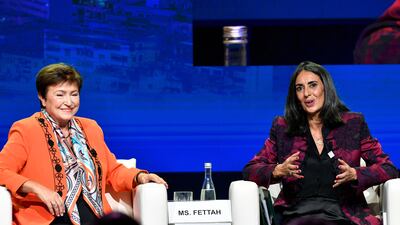
  • Ms Georgieva with Morocco's Minister of Economy and Finance Nadia Fettah. EPA
    Ms Georgieva with Morocco's Minister of Economy and Finance Nadia Fettah. EPA
  • Morocco's Prime Minister Aziz Akhannouch delivers a speech. EPA
    Morocco's Prime Minister Aziz Akhannouch delivers a speech. EPA
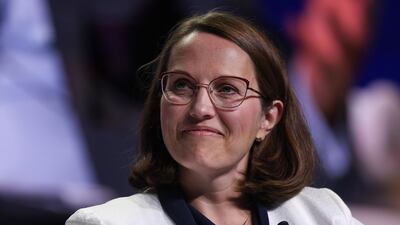
  • Magdalena Rzeczkowska, Poland's Finance Minister, during a panel session. Bloomberg
    Magdalena Rzeczkowska, Poland's Finance Minister, during a panel session. Bloomberg
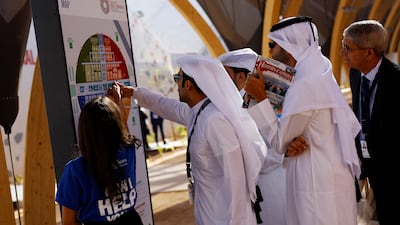
  • Participants ask for directions. Reuters
    Participants ask for directions. Reuters
  • The event campus in the Moroccan city. Bloomberg
    The event campus in the Moroccan city. Bloomberg
  • IMF African Department director Abebe Aemro Selassie. Reuters
    IMF African Department director Abebe Aemro Selassie. Reuters
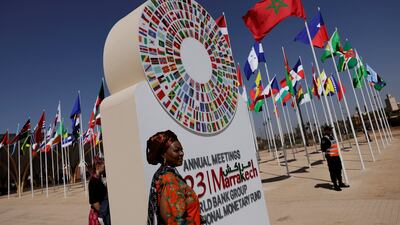
  • A woman has her photo taken at the main entrance of the venue. Reuters
    A woman has her photo taken at the main entrance of the venue. Reuters
  • Inside the venue. Reuters
    Inside the venue. Reuters
  • A police officer stands guard next to the main entrance. Reuters
    A police officer stands guard next to the main entrance. Reuters
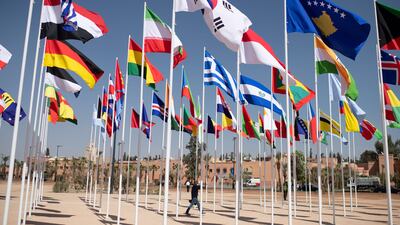
  • Flags at the entrance. EPA
    Flags at the entrance. EPA
  • A security officer stands guard. EPA
    A security officer stands guard. EPA

Another solution, he said, is a carbon credit market, where credits are certified from the World Bank for countries and corporations and greenwashing is minimised.

“If we get this carbon market going with the certification from the bank, that is [going to be] a true check of green credit, meaning nobody's deforesting here and reforesting there and trying to greenwash,” he said.

Ms Georgieva called for the world to come together and deal with problem at hand rather than continuing the blame game.

“We need to work together … and basically get governments to remove barriers for private sector participation, then we would see it happening,” she said.

“Above all, we need to move from the culture of pointing fingers to the culture of holding hands. We are in this together.”

As a financial institution, the IMF puts its money “where our mouth is” and has created a resilience and sustainability trust, whose members receive allocation through special drawing rights.

“It is about $40 billion strong today, 11 programmes already in one year in place and six of them on the continent of Africa,” Ms Georgieva said.


French business

France has organised a delegation of leading businesses to travel to Syria. The group was led by French shipping giant CMA CGM, which struck a 30-year contract in May with the Syrian government to develop and run Latakia port. Also present were water and waste management company Suez, defence multinational Thales, and Ellipse Group, which is currently looking into rehabilitating Syrian hospitals.

Who's who in Yemen conflict

Houthis: Iran-backed rebels who occupy Sanaa and run unrecognised government

Yemeni government: Exiled government in Aden led by eight-member Presidential Leadership Council

Southern Transitional Council: Faction in Yemeni government that seeks autonomy for the south

Habrish 'rebels': Tribal-backed forces feuding with STC over control of oil in government territory

Super Rugby play-offs

Quarter-finals

  • Hurricanes 35, ACT 16
  • Crusaders 17, Highlanders 0
  • Lions 23, Sharks 21
  • Chiefs 17, Stormers 11

Semi-finals

Saturday, July 29

  • Crusaders v Chiefs, 12.35pm (UAE)
  • Lions v Hurricanes, 4.30pm
Some of Darwish's last words

"They see their tomorrows slipping out of their reach. And though it seems to them that everything outside this reality is heaven, yet they do not want to go to that heaven. They stay, because they are afflicted with hope." - Mahmoud Darwish, to attendees of the Palestine Festival of Literature, 2008

His life in brief: Born in a village near Galilee, he lived in exile for most of his life and started writing poetry after high school. He was arrested several times by Israel for what were deemed to be inciteful poems. Most of his work focused on the love and yearning for his homeland, and he was regarded the Palestinian poet of resistance. Over the course of his life, he published more than 30 poetry collections and books of prose, with his work translated into more than 20 languages. Many of his poems were set to music by Arab composers, most significantly Marcel Khalife. Darwish died on August 9, 2008 after undergoing heart surgery in the United States. He was later buried in Ramallah where a shrine was erected in his honour.

COMPANY%20PROFILE
%3Cp%3E%3Cstrong%3ECompany%20name%3A%3C%2Fstrong%3E%20Dresos%3C%2Fp%3E%0A%3Cp%3E%3Cstrong%3EStarted%3A%3C%2Fstrong%3E%20September%202020%3C%2Fp%3E%0A%3Cp%3E%3Cstrong%3EFounders%3A%3C%2Fstrong%3E%20Vladimir%20Radojevic%20and%20Aleksandar%20Jankovic%3C%2Fp%3E%0A%3Cp%3E%3Cstrong%3EBased%3A%3C%2Fstrong%3E%20Dubai%2C%20UAE%3C%2Fp%3E%0A%3Cp%3E%3Cstrong%3EIndustry%3A%3C%2Fstrong%3E%20Fashion%3C%2Fp%3E%0A%3Cp%3E%3Cstrong%3EFunding%3A%3C%2Fstrong%3E%20%24285%2C000%3B%20%24500%2C000%20currently%20being%20raised%3C%2Fp%3E%0A%3Cp%3E%3Cstrong%3EInvestors%3A%3C%2Fstrong%3E%20Crowdfunding%2C%20family%2C%20friends%20and%20self-funding%3C%2Fp%3E%0A
THREE
%3Cp%3EDirector%3A%20Nayla%20Al%20Khaja%3C%2Fp%3E%0A%3Cp%3EStarring%3A%20Jefferson%20Hall%2C%20Faten%20Ahmed%2C%20Noura%20Alabed%2C%20Saud%20Alzarooni%3C%2Fp%3E%0A%3Cp%3ERating%3A%203.5%2F5%3C%2Fp%3E%0A

Mercer, the investment consulting arm of US services company Marsh & McLennan, expects its wealth division to at least double its assets under management (AUM) in the Middle East as wealth in the region continues to grow despite economic headwinds, a company official said.

Mercer Wealth, which globally has $160 billion in AUM, plans to boost its AUM in the region to $2-$3bn in the next 2-3 years from the present $1bn, said Yasir AbuShaban, a Dubai-based principal with Mercer Wealth.

Within the next two to three years, we are looking at reaching $2 to $3 billion as a conservative estimate and we do see an opportunity to do so,” said Mr AbuShaban.

Mercer does not directly make investments, but allocates clients’ money they have discretion to, to professional asset managers. They also provide advice to clients.

“We have buying power. We can negotiate on their (client’s) behalf with asset managers to provide them lower fees than they otherwise would have to get on their own,” he added.

Mercer Wealth’s clients include sovereign wealth funds, family offices, and insurance companies among others.

From its office in Dubai, Mercer also looks after Africa, India and Turkey, where they also see opportunity for growth.

Wealth creation in Middle East and Africa (MEA) grew 8.5 per cent to $8.1 trillion last year from $7.5tn in 2015, higher than last year’s global average of 6 per cent and the second-highest growth in a region after Asia-Pacific which grew 9.9 per cent, according to consultancy Boston Consulting Group (BCG). In the region, where wealth grew just 1.9 per cent in 2015 compared with 2014, a pickup in oil prices has helped in wealth generation.

BCG is forecasting MEA wealth will rise to $12tn by 2021, growing at an annual average of 8 per cent.

Drivers of wealth generation in the region will be split evenly between new wealth creation and growth of performance of existing assets, according to BCG.

Another general trend in the region is clients’ looking for a comprehensive approach to investing, according to Mr AbuShaban.

“Institutional investors or some of the families are seeing a slowdown in the available capital they have to invest and in that sense they are looking at optimizing the way they manage their portfolios and making sure they are not investing haphazardly and different parts of their investment are working together,” said Mr AbuShaban.

Some clients also have a higher appetite for risk, given the low interest-rate environment that does not provide enough yield for some institutional investors. These clients are keen to invest in illiquid assets, such as private equity and infrastructure.

“What we have seen is a desire for higher returns in what has been a low-return environment specifically in various fixed income or bonds,” he said.

“In this environment, we have seen a de facto increase in the risk that clients are taking in things like illiquid investments, private equity investments, infrastructure and private debt, those kind of investments were higher illiquidity results in incrementally higher returns.”

The Abu Dhabi Investment Authority, one of the largest sovereign wealth funds, said in its 2016 report that has gradually increased its exposure in direct private equity and private credit transactions, mainly in Asian markets and especially in China and India. The authority’s private equity department focused on structured equities owing to “their defensive characteristics.”

The Birkin bag is made by Hermès. 
It is named after actress and singer Jane Birkin
Noone from Hermès will go on record to say how much a new Birkin costs, how long one would have to wait to get one, and how many bags are actually made each year.

UK's plans to cut net migration

Under the UK government’s proposals, migrants will have to spend 10 years in the UK before being able to apply for citizenship.

Skilled worker visas will require a university degree, and there will be tighter restrictions on recruitment for jobs with skills shortages.

But what are described as "high-contributing" individuals such as doctors and nurses could be fast-tracked through the system.

Language requirements will be increased for all immigration routes to ensure a higher level of English.

Rules will also be laid out for adult dependants, meaning they will have to demonstrate a basic understanding of the language.

The plans also call for stricter tests for colleges and universities offering places to foreign students and a reduction in the time graduates can remain in the UK after their studies from two years to 18 months.

Company%20profile
%3Cp%3E%3Cstrong%3ECompany%20name%3A%3C%2Fstrong%3E%20Fasset%0D%3Cbr%3E%3Cstrong%3EStarted%3A%20%3C%2Fstrong%3E2019%0D%3Cbr%3E%3Cstrong%3EFounders%3A%3C%2Fstrong%3E%20Mohammad%20Raafi%20Hossain%2C%20Daniel%20Ahmed%0D%3Cbr%3E%3Cstrong%3EBased%3A%3C%2Fstrong%3E%20Dubai%0D%3Cbr%3E%3Cstrong%3ESector%3A%20%3C%2Fstrong%3EFinTech%0D%3Cbr%3E%3Cstrong%3EInitial%20investment%3A%3C%2Fstrong%3E%20%242.45%20million%0D%3Cbr%3E%3Cstrong%3ECurrent%20number%20of%20staff%3A%3C%2Fstrong%3E%2086%0D%3Cbr%3E%3Cstrong%3EInvestment%20stage%3A%3C%2Fstrong%3E%20Pre-series%20B%0D%3Cbr%3E%3Cstrong%3EInvestors%3A%3C%2Fstrong%3E%20Investcorp%2C%20Liberty%20City%20Ventures%2C%20Fatima%20Gobi%20Ventures%2C%20Primal%20Capital%2C%20Wealthwell%20Ventures%2C%20FHS%20Capital%2C%20VN2%20Capital%2C%20local%20family%20offices%3C%2Fp%3E%0A
What the law says

Micro-retirement is not a recognised concept or employment status under Federal Decree Law No. 33 of 2021 on the Regulation of Labour Relations (as amended) (UAE Labour Law). As such, it reflects a voluntary work-life balance practice, rather than a recognised legal employment category, according to Dilini Loku, senior associate for law firm Gateley Middle East.

“Some companies may offer formal sabbatical policies or career break programmes; however, beyond such arrangements, there is no automatic right or statutory entitlement to extended breaks,” she explains.

“Any leave taken beyond statutory entitlements, such as annual leave, is typically regarded as unpaid leave in accordance with Article 33 of the UAE Labour Law. While employees may legally take unpaid leave, such requests are subject to the employer’s discretion and require approval.”

If an employee resigns to pursue micro-retirement, the employment contract is terminated, and the employer is under no legal obligation to rehire the employee in the future unless specific contractual agreements are in place (such as return-to-work arrangements), which are generally uncommon, Ms Loku adds.

COMPANY PROFILE
Name: Kumulus Water
 
Started: 2021
 
Founders: Iheb Triki and Mohamed Ali Abid
 
Based: Tunisia 
 
Sector: Water technology 
 
Number of staff: 22 
 
Investment raised: $4 million 
'The worst thing you can eat'

Trans fat is typically found in fried and baked goods, but you may be consuming more than you think.

Powdered coffee creamer, microwave popcorn and virtually anything processed with a crust is likely to contain it, as this guide from Mayo Clinic outlines: 

Baked goods - Most cakes, cookies, pie crusts and crackers contain shortening, which is usually made from partially hydrogenated vegetable oil. Ready-made frosting is another source of trans fat.

Snacks - Potato, corn and tortilla chips often contain trans fat. And while popcorn can be a healthy snack, many types of packaged or microwave popcorn use trans fat to help cook or flavour the popcorn.

Fried food - Foods that require deep frying — french fries, doughnuts and fried chicken — can contain trans fat from the oil used in the cooking process.

Refrigerator dough - Products such as canned biscuits and cinnamon rolls often contain trans fat, as do frozen pizza crusts.

Creamer and margarine - Nondairy coffee creamer and stick margarines also may contain partially hydrogenated vegetable oils.

Jeff Buckley: From Hallelujah To The Last Goodbye
By Dave Lory with Jim Irvin

Updated: October 11, 2023, 7:34 PM