

Oman posted a budget surplus of more than 1.2 billion rials ($3.11 billion) in the first 10 months of 2022, compared with a deficit of about 1 billion rials in the same period a year ago, driven by higher oil revenue.
The Gulf country's total public revenue from January to October surged more than 42 per cent to about 11.86 billion rials, up from 8.33 billion rials a year earlier, according to preliminary data from the Ministry of Finance.
Total public spending during the same period increased by 14 per cent to 10.65 billion rials ($27.66 billion).
The sultanate surpassed last year's total of 8.4 billion rials when public spending hit 9.4 billion rials at the end of September, after coming close to matching it in August.
Development expenditure rose 10 per cent annually to 765 million rials, which represents 70 per cent of the 1.1 billion rials allocated for total developmental spending.
Oman is poised to post its first yearly fiscal surplus in a decade this year, a Fitch Solutions report released in August showed.
The sultanate's 12-month fiscal surplus is expected to amount to 6.5 per cent of its total gross domestic product while revenue is expected to rise further in the second half of the year because of high energy prices, it said.
In November, S&P Global Ratings upgraded Oman’s credit ratings from “BB-” to “BB” with a stable outlook, with the agency indicating that the “significant improvement” in Oman’s fiscal performance and balance of payments positions was driven by continuing fiscal consolidations and higher oil prices.
Hydrocarbon revenue at the end of October by increased more than half to 9.24 billion riyals, compared with 6.14 billion riyals in the same period in 2021.
“Such increase is supported by higher average oil price of $95 per barrel, as well as an increase in oil crude production to 1.056 million barrels per day,” the ministry said.
Net oil revenue in the first 10 months of 2022 jumped about 40 per cent to 6.19 billion rials while gas revenue surged about 80 per cent to 3.05 billion rials.
Brent, the benchmark for two thirds of the world's oil, is expected to average $92 a barrel in 2023, according to the latest estimates from the US Energy Information Administration. That is now $3 less than its previous forecast last month.
The International Monetary Fund predicts that Oman’s real GDP will grow to 4.4 per cent and 4.1 per cent in 2022 and 2023, respectively, from 3 per cent in 2021.
_________________________________
Places to visit in Oman: Nizwa Fort, Mutra Souq, Sultan Qaboos Grand Mosque and more - in pictures
-

Nizwa Fort in Nizwa, Oman. All pictures: Victor Besa / The National -
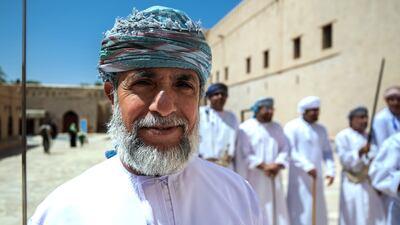
It was built in the 1650s by Imam Sultan Bin Saif Al Ya'rubi. -

It is Oman's most visited national monument. -

Imam Sultan Bin Saif Al Ya'rubi was the second of the Ya'rubi dynasty of imams. -
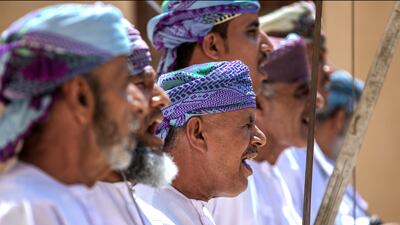
The fort's underlying structure dates back to the 12th century. -
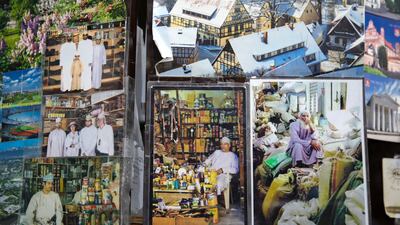
Ahmed bin Abdullah Al Amri Trading. The souq has different parts depending on what you want to shop for. -
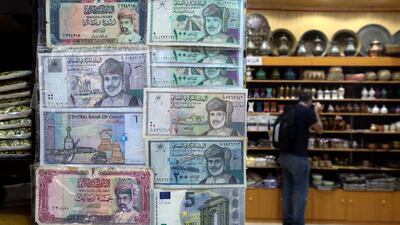
In the mornings you will see locals buying vegetables and meat. The rest of the souq sells unique souvenirs like taqiya caps, lamps and fresh dates. -
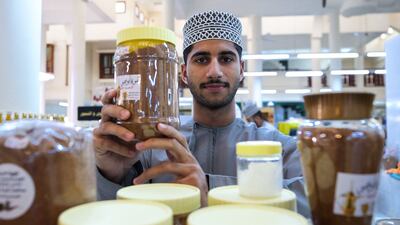
Located near the castle, the souq offers a glimpse of old Oman. -
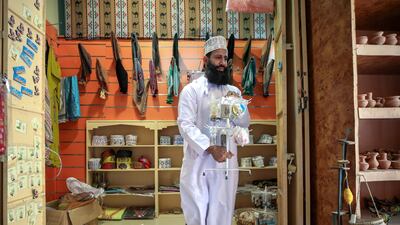
A shop owner brings out his wares. Some sections of the souq have retained its ancient architecture and unrenovated structures. -
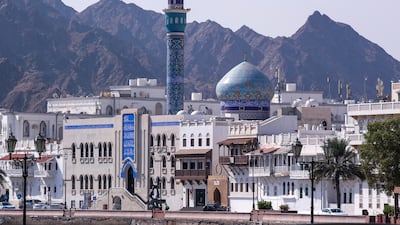
Masjid Al Rasool Al A'dham at Mutrah Fish Market. -
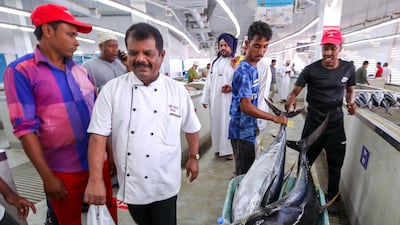
The fish market stretches along the Mutrah waterfront in Muscat. Omani fishermen arrive early to unload, prepare and then sell their day’s catch. -

The Mutrah Souq is located along the corniche in Muscat. -

It is one of the oldest souqs on the Arabian Peninsula. -
However, the souq was rebuilt in the 1970s. -

Jamal Muhammad Ali Al Balooshi, shopowner at Mutrah Souq. -
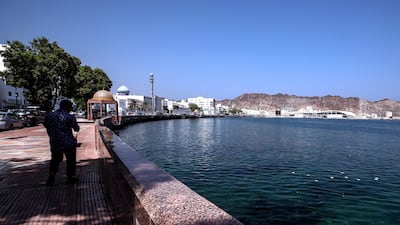
Mutrah Corniche in Muscat. -
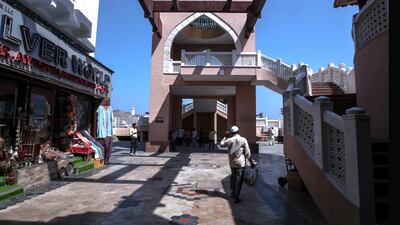
A shopper at Mutrah Souq. -
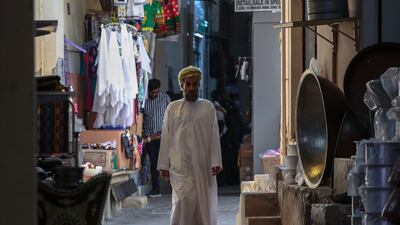
Another person browses at Mutrah Souq. -

Oman's Royal Opera House of Musical Arts in Muscat. -

The 'Oman and the World: A Musical Journey Exhibition' at the opera house. -
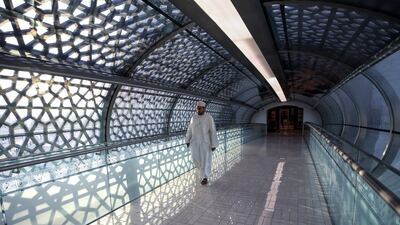
A person looking around the exhibition. -
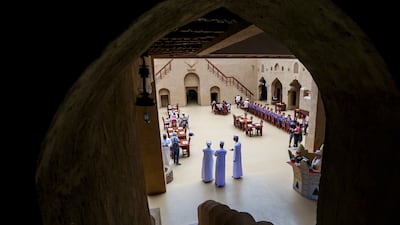
A restaurant that looks like a fort, located along Sultan Qaboos Street in Muscat. -

Mandi, made with Omani samar wood. -
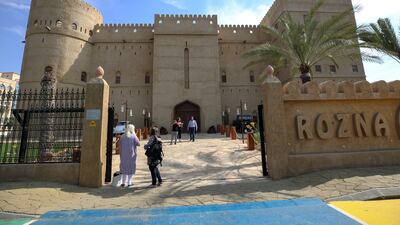
The Rozna restaurant is known for serving the best authentic Omani food in Muscat. -

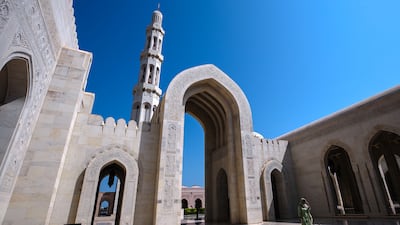
The Sultan Qaboos Grand Mosque in Muscat. The chandelier sits 14 metres above the praying hall. -
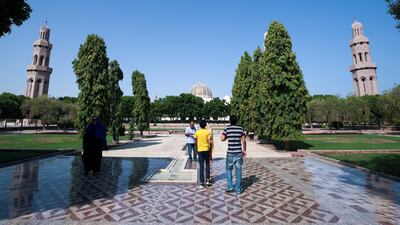
In 1992, Qaboos bin Said Al Said, then Sultan of Oman, ordered the building of the grand mosque. -
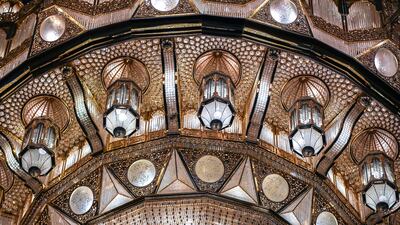
The chandelier was manufactured by the Italian company Faustig. -
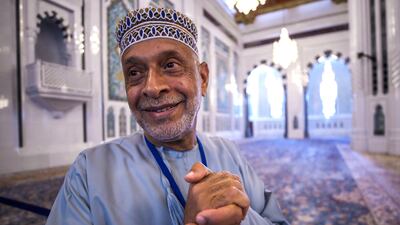
Khalifa Nasser Al Maskery, 70, has been a volunteer tour guide at the mosque for more than eight years. -
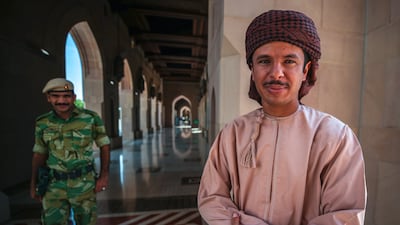
A competition for the mosque's design took place in 1993. -

Construction started in December 1994. -
The chandelier used to be the world's largest, before being replaced by one at the Sheikh Zayed Mosque in Abu Dhabi.



