
Oman posted a budget surplus of more than 1.2 billion rials ($3.11 billion) in the first 10 months of 2022, compared with a deficit of about 1 billion rials in the same period a year ago, driven by higher oil revenue.
The Gulf country's total public revenue from January to October surged more than 42 per cent to about 11.86 billion rials, up from 8.33 billion rials a year earlier, according to preliminary data from the Ministry of Finance.
Total public spending during the same period increased by 14 per cent to 10.65 billion rials ($27.66 billion).
The sultanate surpassed last year's total of 8.4 billion rials when public spending hit 9.4 billion rials at the end of September, after coming close to matching it in August.
Development expenditure rose 10 per cent annually to 765 million rials, which represents 70 per cent of the 1.1 billion rials allocated for total developmental spending.
Oman is poised to post its first yearly fiscal surplus in a decade this year, a Fitch Solutions report released in August showed.
The sultanate's 12-month fiscal surplus is expected to amount to 6.5 per cent of its total gross domestic product while revenue is expected to rise further in the second half of the year because of high energy prices, it said.
In November, S&P Global Ratings upgraded Oman’s credit ratings from “BB-” to “BB” with a stable outlook, with the agency indicating that the “significant improvement” in Oman’s fiscal performance and balance of payments positions was driven by continuing fiscal consolidations and higher oil prices.
Hydrocarbon revenue at the end of October by increased more than half to 9.24 billion riyals, compared with 6.14 billion riyals in the same period in 2021.
“Such increase is supported by higher average oil price of $95 per barrel, as well as an increase in oil crude production to 1.056 million barrels per day,” the ministry said.
Net oil revenue in the first 10 months of 2022 jumped about 40 per cent to 6.19 billion rials while gas revenue surged about 80 per cent to 3.05 billion rials.
Brent, the benchmark for two thirds of the world's oil, is expected to average $92 a barrel in 2023, according to the latest estimates from the US Energy Information Administration. That is now $3 less than its previous forecast last month.
The International Monetary Fund predicts that Oman’s real GDP will grow to 4.4 per cent and 4.1 per cent in 2022 and 2023, respectively, from 3 per cent in 2021.
_________________________________
Places to visit in Oman: Nizwa Fort, Mutra Souq, Sultan Qaboos Grand Mosque and more - in pictures
-

Nizwa Fort in Nizwa, Oman. All pictures: Victor Besa / The National -
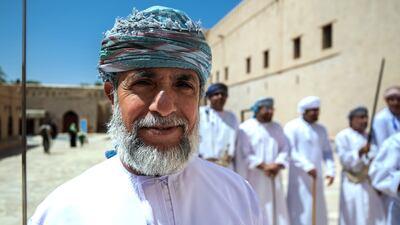
It was built in the 1650s by Imam Sultan Bin Saif Al Ya'rubi. -

It is Oman's most visited national monument. -

Imam Sultan Bin Saif Al Ya'rubi was the second of the Ya'rubi dynasty of imams. -
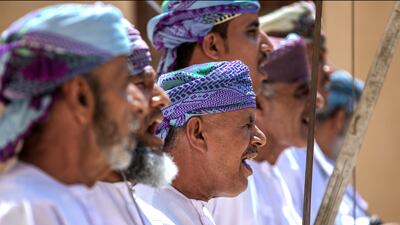
The fort's underlying structure dates back to the 12th century. -
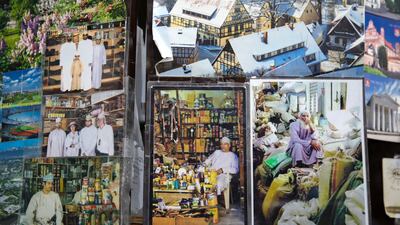
Ahmed bin Abdullah Al Amri Trading. The souq has different parts depending on what you want to shop for. -
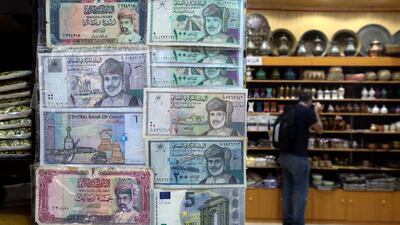
In the mornings you will see locals buying vegetables and meat. The rest of the souq sells unique souvenirs like taqiya caps, lamps and fresh dates. -
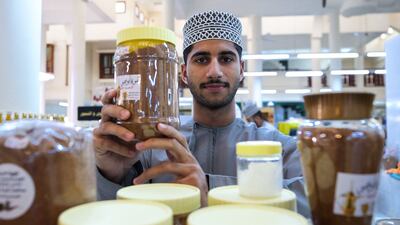
Located near the castle, the souq offers a glimpse of old Oman. -
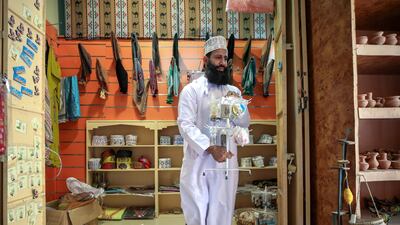
A shop owner brings out his wares. Some sections of the souq have retained its ancient architecture and unrenovated structures. -
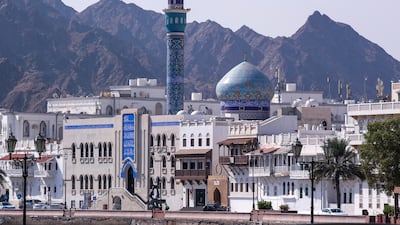
Masjid Al Rasool Al A'dham at Mutrah Fish Market. -
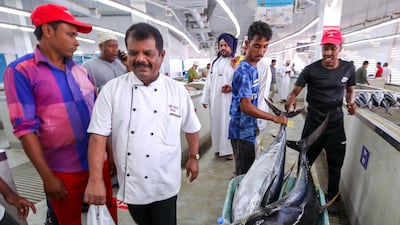
The fish market stretches along the Mutrah waterfront in Muscat. Omani fishermen arrive early to unload, prepare and then sell their day’s catch. -

The Mutrah Souq is located along the corniche in Muscat. -

It is one of the oldest souqs on the Arabian Peninsula. -
However, the souq was rebuilt in the 1970s. -

Jamal Muhammad Ali Al Balooshi, shopowner at Mutrah Souq. -
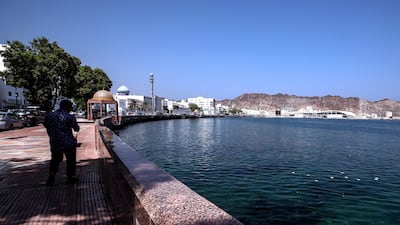
Mutrah Corniche in Muscat. -
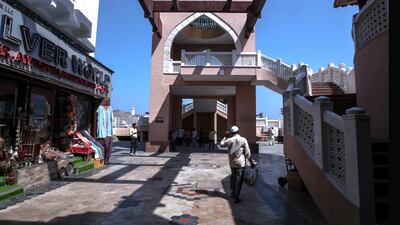
A shopper at Mutrah Souq. -
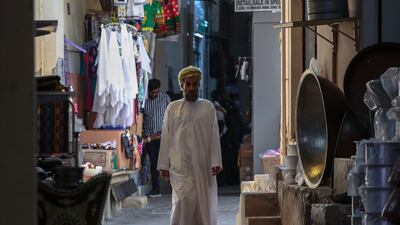
Another person browses at Mutrah Souq. -

Oman's Royal Opera House of Musical Arts in Muscat. -

The 'Oman and the World: A Musical Journey Exhibition' at the opera house. -
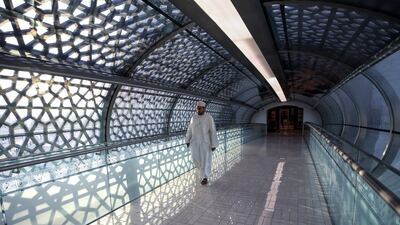
A person looking around the exhibition. -
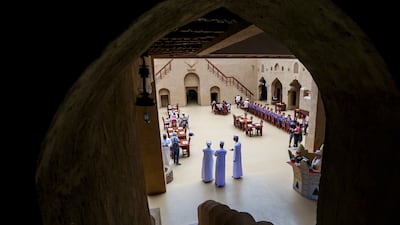
A restaurant that looks like a fort, located along Sultan Qaboos Street in Muscat. -

Mandi, made with Omani samar wood. -
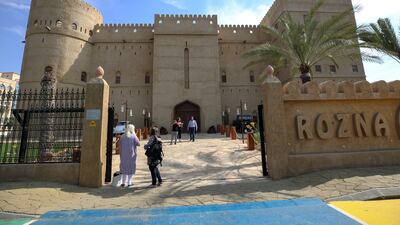
The Rozna restaurant is known for serving the best authentic Omani food in Muscat. -

The Sultan Qaboos Grand Mosque in Muscat. The chandelier sits 14 metres above the praying hall. -
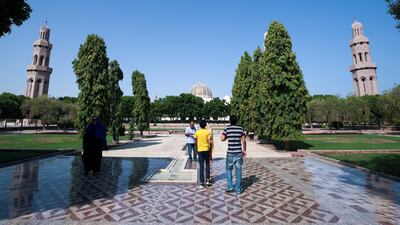
In 1992, Qaboos bin Said Al Said, then Sultan of Oman, ordered the building of the grand mosque. -
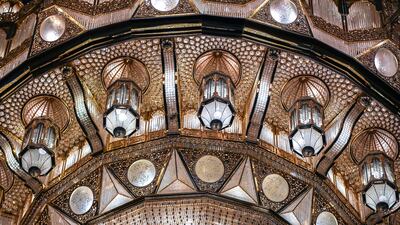
The chandelier was manufactured by the Italian company Faustig. -
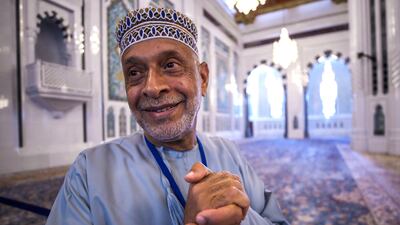
Khalifa Nasser Al Maskery, 70, has been a volunteer tour guide at the mosque for more than eight years. -
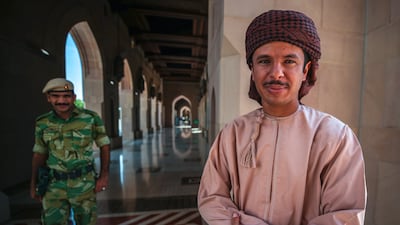
A competition for the mosque's design took place in 1993. -

Construction started in December 1994. -
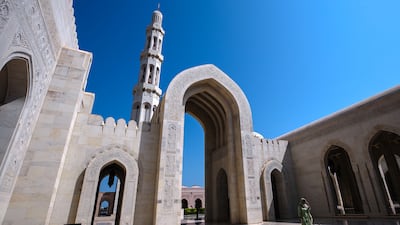
The chandelier used to be the world's largest, before being replaced by one at the Sheikh Zayed Mosque in Abu Dhabi.
The biog
Age: 59
From: Giza Governorate, Egypt
Family: A daughter, two sons and wife
Favourite tree: Ghaf
Runner up favourite tree: Frankincense
Favourite place on Sir Bani Yas Island: “I love all of Sir Bani Yas. Every spot of Sir Bani Yas, I love it.”
Our commentary on Brexit
- Alistair Burt: Despite Brexit, Britain can remain a world power
- Sam Williams: Departure is influenced by its sense of place
COMPANY%20PROFILE
Read
More on women's right
COMPANY%20PROFILE
if you go
The flights
Flydubai offers three daily direct flights to Sarajevo and, from June, a daily flight from Thessaloniki from Dubai. A return flight costs from Dhs1,905 including taxes.
The trip
The Travel Scientists are the organisers of the Balkan Ride and several other rallies around the world. The 2018 running of this particular adventure will take place from August 3-11, once again starting in Sarajevo and ending a week later in Thessaloniki. If you’re driving your own vehicle, then entry start from €880 (Dhs 3,900) per person including all accommodation along the route. Contact the Travel Scientists if you wish to hire one of their vehicles.
Company%20profile
Company%20profile
Red flags
- Promises of high, fixed or 'guaranteed' returns.
- Unregulated structured products or complex investments often used to bypass traditional safeguards.
- Lack of clear information, vague language, no access to audited financials.
- Overseas companies targeting investors in other jurisdictions - this can make legal recovery difficult.
- Hard-selling tactics - creating urgency, offering 'exclusive' deals.
Courtesy: Carol Glynn, founder of Conscious Finance Coaching
The%20Boy%20and%20the%20Heron
Mercer, the investment consulting arm of US services company Marsh & McLennan, expects its wealth division to at least double its assets under management (AUM) in the Middle East as wealth in the region continues to grow despite economic headwinds, a company official said.
Mercer Wealth, which globally has $160 billion in AUM, plans to boost its AUM in the region to $2-$3bn in the next 2-3 years from the present $1bn, said Yasir AbuShaban, a Dubai-based principal with Mercer Wealth.
“Within the next two to three years, we are looking at reaching $2 to $3 billion as a conservative estimate and we do see an opportunity to do so,” said Mr AbuShaban.
Mercer does not directly make investments, but allocates clients’ money they have discretion to, to professional asset managers. They also provide advice to clients.
“We have buying power. We can negotiate on their (client’s) behalf with asset managers to provide them lower fees than they otherwise would have to get on their own,” he added.
Mercer Wealth’s clients include sovereign wealth funds, family offices, and insurance companies among others.
From its office in Dubai, Mercer also looks after Africa, India and Turkey, where they also see opportunity for growth.
Wealth creation in Middle East and Africa (MEA) grew 8.5 per cent to $8.1 trillion last year from $7.5tn in 2015, higher than last year’s global average of 6 per cent and the second-highest growth in a region after Asia-Pacific which grew 9.9 per cent, according to consultancy Boston Consulting Group (BCG). In the region, where wealth grew just 1.9 per cent in 2015 compared with 2014, a pickup in oil prices has helped in wealth generation.
BCG is forecasting MEA wealth will rise to $12tn by 2021, growing at an annual average of 8 per cent.
Drivers of wealth generation in the region will be split evenly between new wealth creation and growth of performance of existing assets, according to BCG.
Another general trend in the region is clients’ looking for a comprehensive approach to investing, according to Mr AbuShaban.
“Institutional investors or some of the families are seeing a slowdown in the available capital they have to invest and in that sense they are looking at optimizing the way they manage their portfolios and making sure they are not investing haphazardly and different parts of their investment are working together,” said Mr AbuShaban.
Some clients also have a higher appetite for risk, given the low interest-rate environment that does not provide enough yield for some institutional investors. These clients are keen to invest in illiquid assets, such as private equity and infrastructure.
“What we have seen is a desire for higher returns in what has been a low-return environment specifically in various fixed income or bonds,” he said.
“In this environment, we have seen a de facto increase in the risk that clients are taking in things like illiquid investments, private equity investments, infrastructure and private debt, those kind of investments were higher illiquidity results in incrementally higher returns.”
The Abu Dhabi Investment Authority, one of the largest sovereign wealth funds, said in its 2016 report that has gradually increased its exposure in direct private equity and private credit transactions, mainly in Asian markets and especially in China and India. The authority’s private equity department focused on structured equities owing to “their defensive characteristics.”
Who was Alfred Nobel?
The Nobel Prize was created by wealthy Swedish chemist and entrepreneur Alfred Nobel.
- In his will he dictated that the bulk of his estate should be used to fund "prizes to those who, during the preceding year, have conferred the greatest benefit to humankind".
- Nobel is best known as the inventor of dynamite, but also wrote poetry and drama and could speak Russian, French, English and German by the age of 17. The five original prize categories reflect the interests closest to his heart.
- Nobel died in 1896 but it took until 1901, following a legal battle over his will, before the first prizes were awarded.
The Buckingham Murders
Starring: Kareena Kapoor Khan, Ash Tandon, Prabhleen Sandhu
Director: Hansal Mehta
Rating: 4 / 5
Results:
6.30pm: Maiden Dh 165,000 1,400m.
Winner: Walking Thunder, Connor Beasley (jockey), Ahmad bin Harmash (trainer).
7.05pm: Handicap (rated 72-87) Dh 165,000 1,600m.
Winner: Syncopation, George Buckell, Doug Watson.
7.40pm: Maiden Dh 165,000 1,400m.
Winner: Big Brown Bear, Pat Dobbs, Doug Watson.
8.15pm: Handicap (75-95) Dh 190,000 1,200m.
Winner: Stunned, Pat Dobbs, Doug Watson.
8.50pm: Handicap (85-105) Dh 210,000 2,000m.
Winner: New Trails, Connor Beasley, Ahmad bin Harmash.
9.25pm: Handicap (75-95) Dh 190,000 1,600m.
Winner: Pillar Of Society, Pat Dobbs, Doug Watson.
The specs
Engine: 4.0-litre V8 twin-turbocharged and three electric motors
Power: Combined output 920hp
Torque: 730Nm at 4,000-7,000rpm
Transmission: 8-speed dual-clutch automatic
Fuel consumption: 11.2L/100km
On sale: Now, deliveries expected later in 2025
Price: expected to start at Dh1,432,000
• Remittance charges will be tackled by blockchain
• UAE's monumental and risky Mars Mission to inspire future generations, says minister
• Could the UAE drive India's economy?
• News has a bright future and the UAE is at the heart of it
• Architecture is over - here's cybertecture
• The National announces Future of News journalism competition
• Round up: Experts share their visions of the world to come
• Remittance charges will be tackled by blockchain
• UAE's monumental and risky Mars Mission to inspire future generations, says minister
• Could the UAE drive India's economy?
• News has a bright future and the UAE is at the heart of it
• Architecture is over - here's cybertecture
• The National announces Future of News journalism competition
• Round up: Experts share their visions of the world to come
Related
Our commentary on Brexit
- Alistair Burt: Despite Brexit, Britain can remain a world power
- Con Coughlin: Choice of the British people will be vindicated
Recommended
Women are on the front line of the coronavirus fight, and we should all remember that by Phumzile Mlambo-Ngcuka
Coronavirus: How the world can end the pandemic by Bill Gates
Famine on the rise in the Middle East and North Africa
Inside the UN's Dubai aid facility delivering support to people in need across the globe
More from Neighbourhood Watch:
3%20Body%20Problem
Europe’s rearming plan
- Suspend strict budget rules to allow member countries to step up defence spending
- Create new "instrument" providing €150 billion of loans to member countries for defence investment
- Use the existing EU budget to direct more funds towards defence-related investment
- Engage the bloc's European Investment Bank to drop limits on lending to defence firms
- Create a savings and investments union to help companies access capital
TOURNAMENT INFO
Women’s World Twenty20 Qualifier
Jul 3- 14, in the Netherlands
The top two teams will qualify to play at the World T20 in the West Indies in November
UAE squad
Humaira Tasneem (captain), Chamani Seneviratne, Subha Srinivasan, Neha Sharma, Kavisha Kumari, Judit Cleetus, Chaya Mughal, Roopa Nagraj, Heena Hotchandani, Namita D’Souza, Ishani Senevirathne, Esha Oza, Nisha Ali, Udeni Kuruppuarachchi
Inside Palestine-Israel
Saeb Erakat: Palestine can overcome coronavirus
Michael Young: The issue with Israel's 'iron wall'
Michael Young: What Israel's divisions mean for Arabs
SPEC%20SHEET%3A%20APPLE%20M3%20MACBOOK%20AIR%20(13%22)
Mina Al-Oraibi: Iraq is in a fight to show its people who is really in charge
Khaled Yacoub Oweis: Iraq PM goes from shy writer to the political peak
The National Editorial: Iran's 'failed model' should be discontinued
What are NFTs?
Are non-fungible tokens a currency, asset, or a licensing instrument? Arnab Das, global market strategist EMEA at Invesco, says they are mix of all of three.
You can buy, hold and use NFTs just like US dollars and Bitcoins. “They can appreciate in value and even produce cash flows.”
However, while money is fungible, NFTs are not. “One Bitcoin, dollar, euro or dirham is largely indistinguishable from the next. Nothing ties a dollar bill to a particular owner, for example. Nor does it tie you to to any goods, services or assets you bought with that currency. In contrast, NFTs confer specific ownership,” Mr Das says.
This makes NFTs closer to a piece of intellectual property such as a work of art or licence, as you can claim royalties or profit by exchanging it at a higher value later, Mr Das says. “They could provide a sustainable income stream.”
This income will depend on future demand and use, which makes NFTs difficult to value. “However, there is a credible use case for many forms of intellectual property, notably art, songs, videos,” Mr Das says.



